


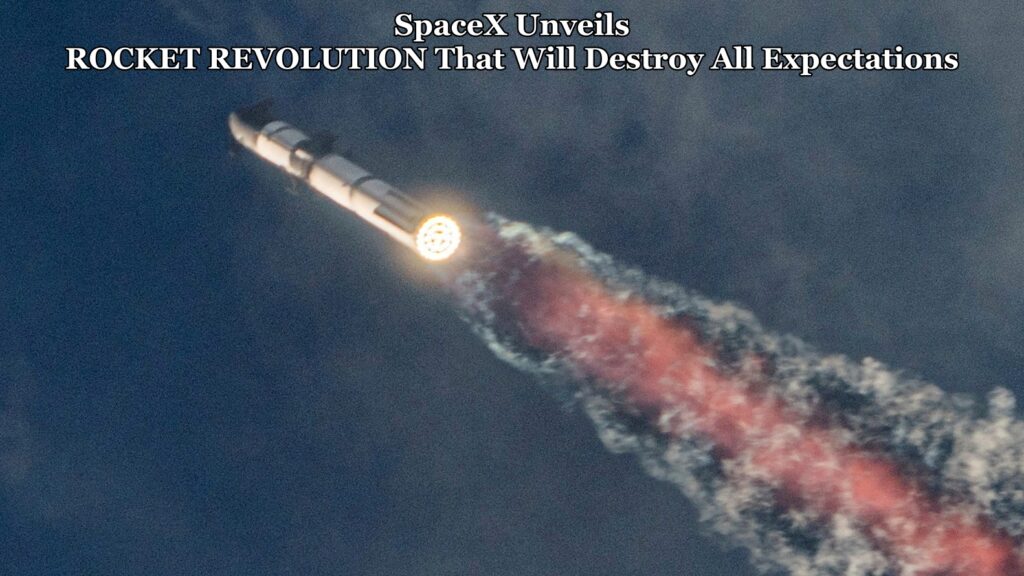
SpaceX is on the brink of a historic leap forward. With Flight 9 of Starship rapidly approaching, the world is watching closely. This isn’t just another test flight—it’s a defining moment that could reshape the future of space exploration.
What makes this mission different? Why does it matter so much? Let’s dive deep into SpaceX’s most ambitious Starship flight yet, and uncover how Elon Musk’s space juggernaut is aiming to achieve what many thought impossible.
Starship Flight 9: A Mission Loaded With Pressure and Promise
The Stakes Are Higher Than Ever
SpaceX has endured setbacks, celebrated progress, and navigated controversy. After Flights 7 and 8 ended in fiery failures, the upcoming ninth Starship flight must do more than just get off the ground—it needs to succeed at multiple complex objectives
- Restore public and investor confidence
- Demonstrate hardware durability
- Validate major design improvements
- Edge closer to full reusability
Failure here would not only be another headline-grabbing explosion but could also derail timelines for Mars colonization, Starlink satellite deployment, and commercial partnerships
Meet the Machines: Booster 14 and Ship 35
Booster 14: The Veteran’s Final Ride
Returning from Flight 7, Booster 14 is slated for one last mission. However, it won’t be caught by Mechazilla. Instead, SpaceX is opting for an ocean splashdown, suggesting one of two things:
- Booster 14 is expendable, useful only for reentry data.
- SpaceX is reevaluating the risks associated with Mechazilla catches.
Either way, the goal is to collect crucial data that can influence future booster designs
Ship 35: The Next Leap in Upper Stage Engineering
The spotlight now turns to Ship 35, the most advanced Starship upper stage yet. This vehicle is expected to:
- Reach orbital velocity
- Survive atmospheric re-entry
- Perform a targeted ocean landing
Controlled re-entry is pivotal. If successful, it confirms SpaceX’s long-promised vision of full-stage reusability, echoing the success of Falcon 9’s first-stage landings
From Fire to Flight: What SpaceX Learned from Failure
Each past Starship test has ended in dramatic explosions or hardware losses—but this was by design. Elon Musk often says:
“Failure is an option here. If things are not failing, you are not innovating enough.”
Lessons from Flights 7 and 8
These flights weren’t in vain. SpaceX gained insight into:
- Heat shield performance
- Raptor engine behavior under stress
- Structural failure points during max-Q
- Mechazilla catch limitations
These lessons are now being implemented in Ship 35 and Booster 14, pushing the company closer to routine orbital operations
Static Fires, Engine Swaps, and Surprises
Rapid Response to Raptor Anomalies
During static fire testing, one of Ship 35’s vacuum-optimized Raptor engines failed. Within 24 hours, SpaceX:
- Diagnosed the issue
- Removed the faulty engine
- Installed a replacement
This kind of rapid turnaround shows SpaceX’s agile problem-solving culture, but it also raises questions:
- Was this a one-off hardware glitch?
- Or a sign of larger issues in the Raptor engine design?
Time will tell, but the urgency to stay on schedule is palpable
The Mystery of the Deluge System Activation
A surprising twist came during cryogenic fueling: the deluge system activated without ignition
What does this mean?
- It could have been a spin prime test—turbo pumps ramped up, but no engine ignition.
- Alternatively, an automated abort may have occurred due to sensor anomalies.
SpaceX has not commented, but the speculation highlights just how closely Starship’s development is being monitored by fans and regulators alike
FAA and Coast Guard: What the Warnings Reveal
Two key warnings offer clues about Flight 9’s trajectory
Coast Guard Hazard Zone
- Covers a section of the Gulf of Mexico near Boca Chica
- Indicates risk of debris or falling hardware
- Implies caution during early launch phases
FAA NOTAM (Notice to Air Missions)
- Features a much wider exclusion zone
- Spans from Cuba to the Bahamas
- Strongly suggests an orbital attempt, far beyond suborbital hops
This shows how seriously regulatory agencies are taking the test. The FAA’s involvement in defining such a large zone reflects both high stakes and high confidence in reaching orbital altitude.
Manufacturing Miracles: Starbase and the Star Factory
From Muddy Tents to Mass Production
Five years ago, Starbase was a joke—dusty tents, birds overhead, engineers working in chaotic conditions. Today, it’s home to the Star Factory, a manufacturing powerhouse producing next-gen rockets
What’s changed?
- Starship builds used to take 8+ months
- Now, new vehicles are rolling out every few weeks
- Ship 40 is already being assembled while Ship 35 is still prepping for launch
Why Manufacturing Is Harder Than Design
According to Musk:
“Manufacturing is 100 times harder than making the prototype.”
And it shows. The new Star Factory includes:
- Custom-built tools like the knuckle seamer
- Precision jigs, automated welding systems, and robotics
- 1 million square feet of floor space—and growing
The goal? Build one Starship per day. That’s 1,000 a year, a number that could revolutionize global access to space
Starship’s Long-Term Vision: Starlink, Mars, and Beyond
Payload Power: 300x to 400x the Falcon 1
Starship isn’t just big—it’s transformative:
- 300–400x more payload than Falcon 1
- Fully reusable architecture
- Capable of launching massive Starlink payloads
- Potential to deploy large space telescopes, lunar bases, and crewed Mars missions
Starlink 2.0 and the Future of Internet Access
With Starship, entire Starlink constellations can be deployed in a single launch. This would:
- Drastically reduce cost-per-satellite
- Improve global broadband coverage
- Accelerate access to remote and underserved regions
If Flight 9 Fails—What Then?
This is the elephant in the room. What if Flight 9 fails again?
Consequences of Failure
- FAA could increase scrutiny, delaying future launches
- Investors may question timeline feasibility
- Competing programs (Blue Origin, China’s Long March) could gain momentum
But let’s not forget: SpaceX thrives on iteration. Even if Flight 9 fails, valuable data will be gained, and another prototype will be ready to fly within weeks
If Flight 9 Succeeds—Everything Changes
A successful orbital flight and splashdown would be:
- A landmark milestone for reusability
- A massive win for SpaceX’s engineering credibility
- The green light for Starship 53 and larger-scale missions
This moment would validate years of risk, investment, and innovation. It could signal the start of:
- Daily Starship launches
- Cargo and crew missions to the Moon and Mars
- A new era of affordable, scalable space travel
So… Will They Stick the Landing?
The countdown has begun
Ship 35 is prepped. Booster 14 awaits. The eyes of the world are locked on Boca Chica, where history is about to unfold
We’ve seen the setbacks. We’ve studied the lessons. And now, it’s time to see if Elon Musk’s boldest dream can lift off—and return—in one piece
Join the Conversation
What do you think?
- Will Flight 9 be SpaceX’s turning point?
- Are we witnessing the dawn of a new space age?
- Or will technical gremlins delay humanity’s push to Mars once again?
Share your thoughts in the comments below! Your voice helps shape our understanding of this monumental moment in history
FAQs
1. What is SpaceX Starship Flight 9?
SpaceX Starship Flight 9 is the ninth integrated test flight of the fully reusable Starship launch system. It aims to achieve orbital velocity, perform a controlled re-entry, and culminate in a splashdown, marking a critical milestone in SpaceX’s journey toward interplanetary travel.
2. When is Starship Flight 9 scheduled to launch?
While SpaceX hasn’t released an exact date, FAA and Coast Guard notices suggest the launch is imminent, likely within days or weeks. The company is currently completing final static fire tests and safety checks.
3. What makes Flight 9 different from previous Starship launches?
Flight 9 is expected to be the first full orbital attempt with enhanced reentry controls and more refined hardware. Unlike previous tests, this mission prioritizes demonstrating reusability and precise landing capabilities.
4. Why is SpaceX opting for an ocean splashdown instead of Mechazilla recovery?
SpaceX plans to splash down Booster 14 to collect re-entry data without risking the Mechazilla catching system. This strategy may reduce risk while still providing essential feedback for future recoveries.
5. What are the key vehicles involved in Flight 9?
Booster 14 is a returning first-stage booster used in Flight 7.
Ship 35 is a next-generation upper stage designed for orbital reentry and splashdown.
Together, they form the complete Starship system, designed for full reusability.
6. What went wrong in previous Starship test flights?
Flights 7 and 8 ended in structural failures and explosions. These incidents provided valuable insights into:
– Heat shield behavior
– Engine stability
– Structural resilience
SpaceX has applied these lessons to improve Flight 9’s systems.
7. Is Starship Flight 9 trying to reach orbit?
Yes. FAA NOTAMs indicate an orbital flight path, suggesting that SpaceX is aiming for a full orbital attempt with Ship 35, including a controlled re-entry and splashdown phase.
8. How does Starship compare to previous SpaceX rockets?
Starship is designed to carry 300–400x the payload of Falcon 1 and is significantly larger than Falcon 9 or Falcon Heavy. It represents a fully reusable space vehicle, built for missions to the Moon, Mars, and beyond.
9. What will happen if Flight 9 fails?
Failure could lead to:
– FAA investigations or added restrictions
– Schedule delays for future flights
– Short-term PR and investor challenges
However, any failure still provides data critical to SpaceX’s iterative engineering process.
10. What happens next if Flight 9 is successful?
A successful Flight 9 would:
– Prove the viability of full reusability
– Fast-track Starship 53 and future flights
– Enable mass Starlink deployments
– Bring SpaceX significantly closer to Mars colonization
It would be a watershed moment in aerospace history.
Read More: