
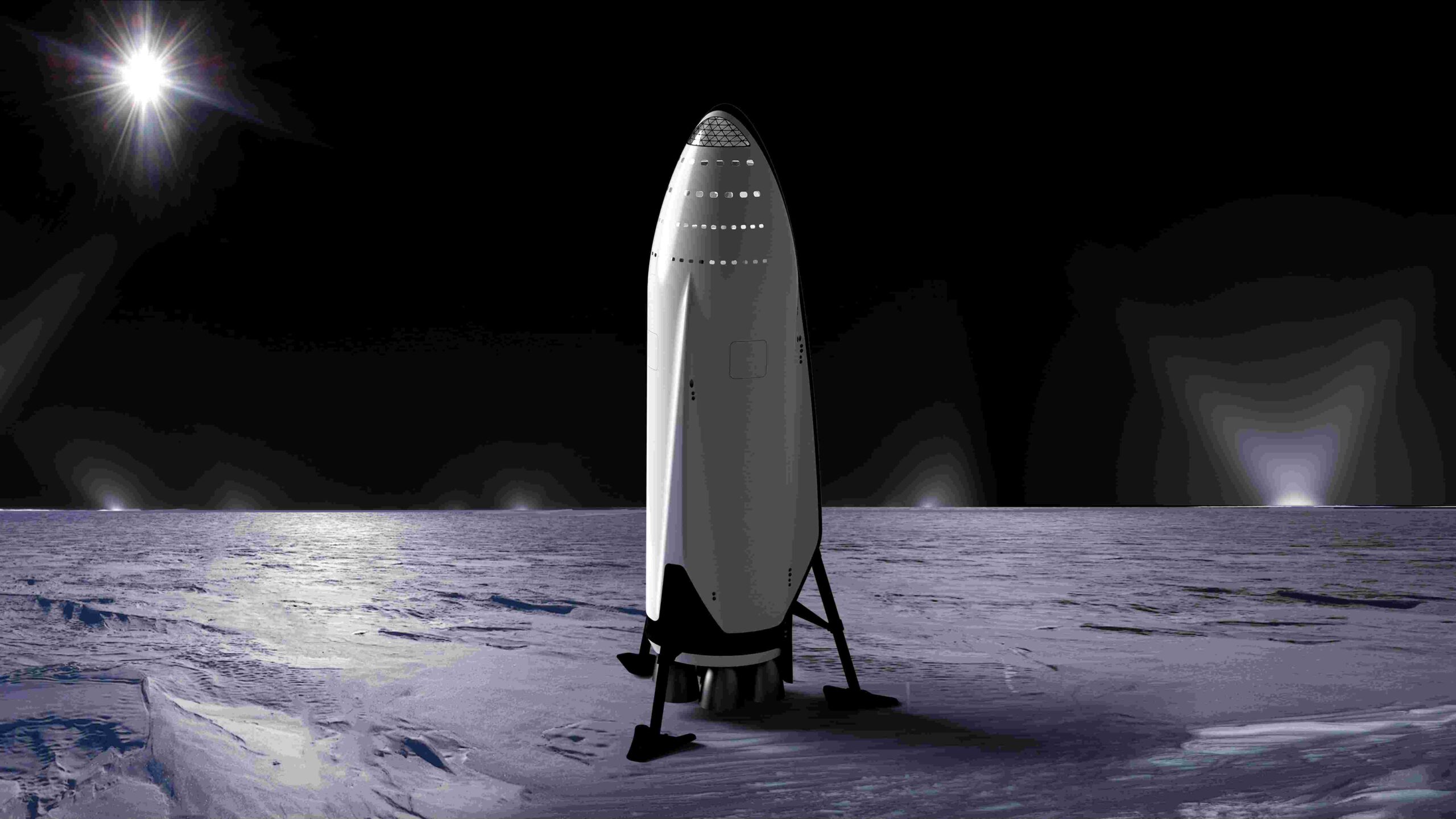
The world is witnessing a historic shift as humanity prepares not just to return to the Moon, but to stay there permanently. The renewed race to the lunar surface isn’t simply about national pride or planting flags—it’s about establishing the first long-term human presence beyond Earth. And leading this charge with a wildly ambitious yet brilliantly simple idea is SpaceX, whose plan for a Moon base has shocked NASA, surprised China, and captivated millions around the globe.
In this comprehensive guide, we explore the strategic objectives behind the modern moon race, SpaceX’s groundbreaking approach to constructing a lunar outpost, how Starship could be converted into a lunar habitat, and the global competition driving this effort.
Why Today’s Moon Race Matters More Than Ever
The original Moon race of the 20th century proved that humans could reach Earth’s nearest neighbor. But that victory, while historic, was only the beginning. Today’s lunar competition is dramatically different—and the stakes are much higher.
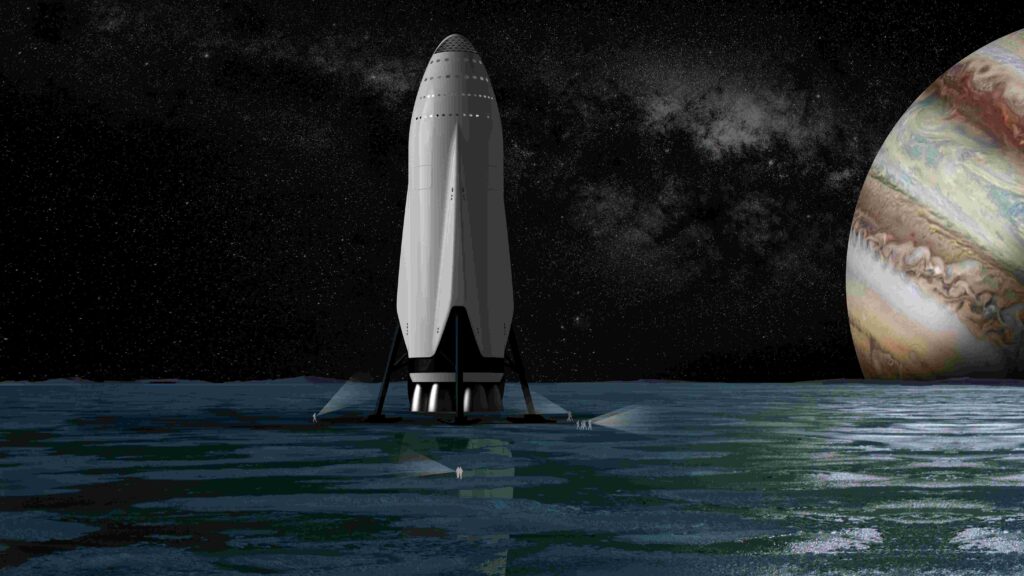
More Than Planting a Flag
This time, nations aren’t interested in brief visits. They aim to:
- Build permanent bases
- Learn to live off-world
- Use the Moon as a gateway for deeper solar system exploration
- Mine lunar resources that could reduce dependence on Earth
- Construct large spacecraft that cannot be efficiently built under Earth’s gravity
Humanity’s next giant leap is not a footprint—it’s a foothold.
A Launchpad for the Solar System
A permanent lunar base could eventually support:
- Long-duration scientific missions
- Helium-3 mining for future fusion reactors
- Fuel depots created from lunar ice
- Deep space vessel assembly yards
The Moon is becoming the gateway to Mars and beyond. Whoever builds the first sustainable base gains a defining advantage for decades.
The Big Question: How Will Future Moon Bases Be Built?
When people imagine lunar settlements, they often think of prefabricated modules built on Earth and shipped to the Moon. This idea seems logical—but it’s seriously flawed.
The Problems With Traditional Construction Methods
- Expensive transportation
Launching huge, heavy modules is extremely costly. - Slow deployment
Each module requires a separate mission, delaying construction. - Logistical complexity
Building a base piece-by-piece requires specialized equipment. - Heavy machinery dilemma
Transporting construction vehicles to the Moon is nearly impossible with current technology.
Space agencies have debated using lunar materials (regolith) to build habitats, but that also demands an infrastructure we don’t have yet.
So what’s the alternative?
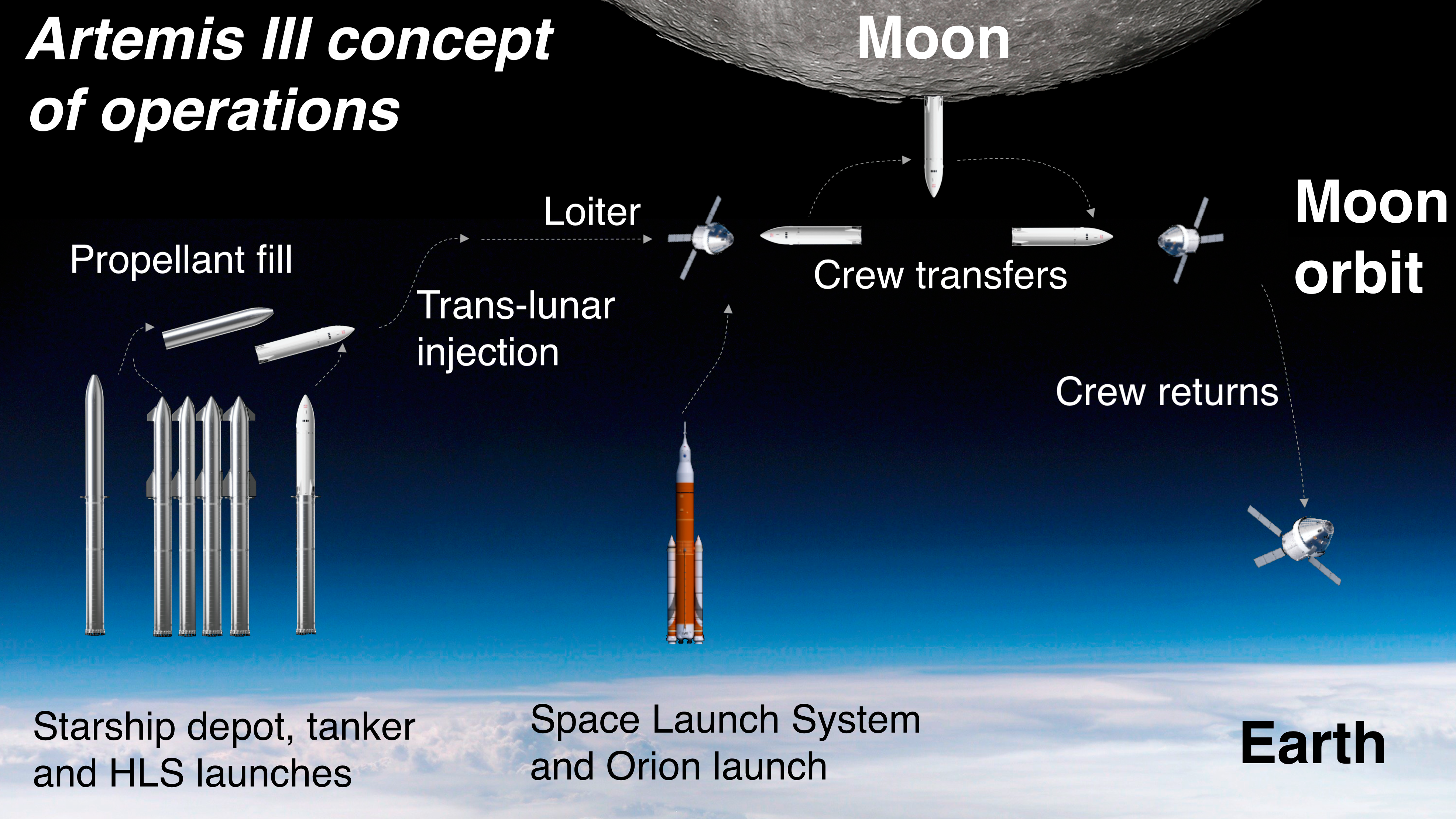
SpaceX’s Brilliantly Simple Answer: Turn the Lander Into the Base
Instead of launching base components separately, SpaceX proposed something revolutionary:
Use Starship itself as the Moon base.
This approach eliminates the need for:
- Modular station parts
- Heavy construction machinery
- Complex lunar assembly operations
Starship becomes both the transport vehicle and the first habitat.
It’s a bold idea—but surprisingly practical.
How Can Starship Become a Lunar Base?
There’s one major obstacle: Starship is enormous and stands vertically.
A vertical layout isn’t ideal for long-term living or expansion.
So SpaceX plans something remarkable.
H2: Step-By-Step: How a Vertical Starship Could Be Lowered Horizontally
Lowering a 50-meter-tall rocket on the Moon sounds impossible—unless you rethink construction completely.
1. Preparing the Lunar Terrain
Rovers would:
- Clear and level the surface
- Fill low areas
- Break down small hills
This creates a perfectly stable platform for Starship to tip over safely.
2. Deploying a Giant Air Cushion
A wide, heavy-duty air cushion would be placed next to Starship.
Its purpose:
- Absorb weight
- Soften the descent
- Prevent structural damage
3. Controlled Tilting Using Retractable Landing Legs
Starship’s landing legs will be adjustable.
SpaceX could:
- Retract two legs slowly
- Allow the rocket to lean gently onto the air cushion
This prevents the violent impact that a crane-less tip-over would cause.
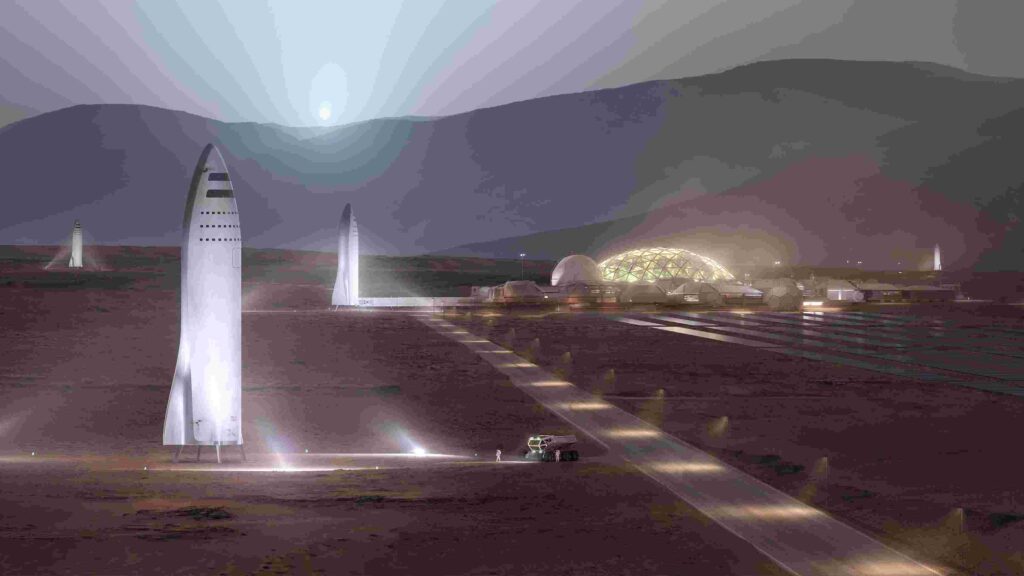
4. Deflating the Cushion
Once Starship rests safely on the cushion:
- Air is released slowly
- The vehicle settles onto the lunar surface
The cushion may then be removed or repurposed.
5. Burying Starship in Lunar Regolith
To protect the new habitat from harsh lunar conditions, rovers would cover the horizontally positioned Starship with regolith, providing:
- Radiation shielding
- Micrometeorite protection
- Thermal stability
6. Transforming the Interior for Horizontal Living
SpaceX could pre-design the interior to allow easy reorientation.
Astronauts would then convert:
- Living quarters
- Workspaces
- Storage areas
- Laboratory sections
This transforms Starship into a complete lunar habitat.
Why SpaceX’s Plan Could Outperform All Other Moon Base Concepts
There are several massive advantages.
1. Unmatched Speed of Deployment
Traditional base construction requires:
- Numerous launches
- Complex assembly
- Heavy equipment
SpaceX’s method requires:
- A Starship
- A cushion
- A few rovers
A functional base could be ready within weeks—not years.
2. Maximizes Starship’s Enormous Potential
Starship is:
- Fully reusable
- Able to carry huge cargo
- Equipped with advanced life support
- Spacious (thousands of cubic meters potential)
Using it only as a lander would waste most of its value.
Using it as a base unlocks its full capability.
3. Incredible Expansion Potential
Initial Starship habitats could evolve dramatically:
- Fuel tanks can be converted into massive living volumes
- Additional Starships can be placed nearby
- Pressurized tunnels can connect them
- Hundreds of cubic meters of space can be added over time
This creates an expandable lunar village, not just a small research hut.
4. A Strategic Advantage in the Global Moon Race
Speed + scalability + simplicity = dominance.
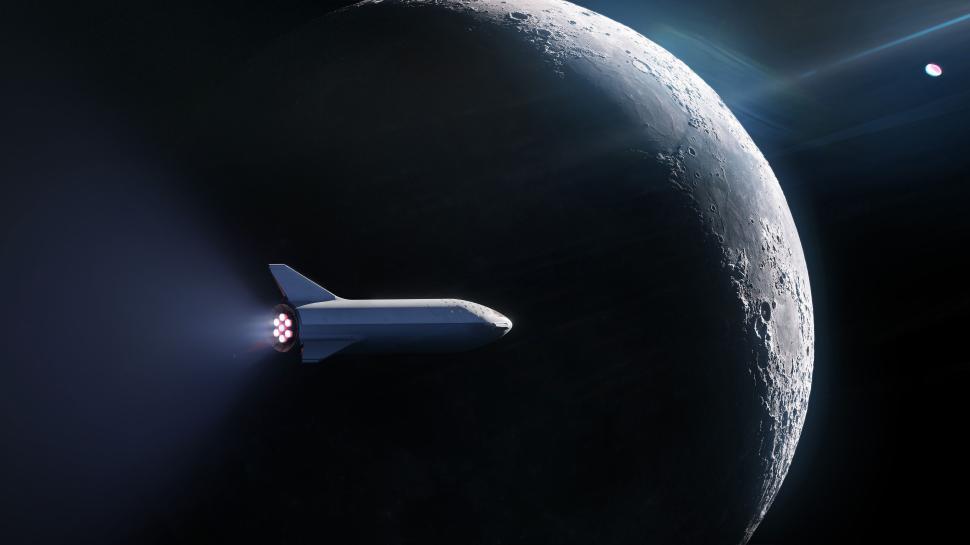
Why NASA Feels Pressure: China’s Fast-Advancing Lunar Program
China plans to:
- Land astronauts in 2030
- Build the International Lunar Research Station by 2035
Their progress has been consistent:
- Far-side landings
- Sample return missions
- Robotic lunar operations
If NASA and SpaceX don’t act quickly, China may become the first nation to establish a permanent presence on the Moon.
This makes Starship’s rapid deployment ability extremely valuable.
The Challenges SpaceX Must Overcome
While Starship’s potential is breathtaking, the road ahead is demanding.
1. Completing the Human Landing System (HLS)
SpaceX must reveal:
- A full HLS prototype
- Final design features
- Lunar landing specifics
This must happen soon to stay on schedule.
2. Proving Starship’s Core Abilities
Before reaching the Moon, Starship must:
- Reach orbit reliably
- Return safely
- Land both stages consistently
These milestones are still in progress.
3. Perfecting In-Orbit Refueling
This is one of Starship’s most complex requirements.
It needs:
- Multiple tanker flights
- Zero-gravity fluid transfer
- Precision docking
SpaceX compares this challenge to ISS docking—something they’ve mastered.
4. Designing the Base Conversion System
They must finalize:
- Horizontal tilting mechanisms
- Air cushion design
- Interior reconfiguration plans
- Regolith shielding systems
All of this must be safe, reliable, and repeatable.
Beyond Engineering: The Vision That Drives This Race
Humanity is approaching the Moon with a new mindset.
This is not exploration—it is settlement.
A lunar base is the first step toward:
- Becoming a multi-planetary species
- Building interplanetary spacecraft
- Establishing extraterrestrial supply chains
- Creating human civilization beyond Earth
SpaceX believes that Starship is the fastest and most powerful way to make this vision real.
Will SpaceX’s Moon Base Strategy Win the Lunar Race?
SpaceX’s plan delivers:
- Speed
- Simplicity
- Massive long-term growth potential
No other lander currently matches Starship’s scale, flexibility, or transformative capability.
If SpaceX succeeds, humanity’s first true home beyond Earth could be built not from modules—
but from a reused interplanetary starship lying horizontally on the Moon.
Final Thoughts
The coming years will decide the future of the Moon race.
China is accelerating.
NASA is under pressure.
SpaceX is pushing boundaries like never before.
If Starship fulfills its promise, it won’t just win the race—
it will change humanity’s relationship with space forever.
A lunar base created from a Starship is bold, brilliant, and potentially revolutionary.
And it might just be the foundation of the first off-Earth civilization.
FAQs
1. What is the main objective of today’s renewed Moon race?
The primary goal is to establish a permanent human presence on the Moon, enabling long-term research, resource extraction, and preparation for deeper space exploration.
2. Why is building a lunar base more important than landing astronauts?
Landing is only the first step. A sustainable lunar base allows continuous missions, scientific studies, and infrastructure development—marking humanity’s true expansion beyond Earth.
3. How does SpaceX plan to build a Moon base using Starship?
SpaceX proposes using the Starship lander itself as the habitat, laying it horizontally on the surface and converting its interior into a functional base.
4. Why convert Starship from vertical to horizontal on the Moon?
A horizontal orientation makes living, working, and future expansions far more practical. It also integrates better with lunar terrain and allows safer shielding.
5. How will SpaceX tip over the massive Starship vehicle safely?
Rovers will level the terrain and deploy a large air cushion. Starship’s legs retract gradually, letting the vehicle lean onto the cushion before settling horizontally.
6. What protects the Starship Moon base from radiation and micrometeorites?
Rovers will cover the vehicle with lunar regolith, creating natural shielding and improving temperature stability.
7. Can Starship support long-term lunar habitation?
Yes. Its large internal volume can be reconfigured into living areas, labs, workshops, and storage—making it ideal for extended missions.
8. How does Starship compare to traditional lunar landers?
Traditional landers are smaller and limited. Starship offers more cargo, more space, and the ability to expand, making it superior for permanent bases.
9. Why is China’s lunar program important in this race?
China aims to land astronauts by 2030 and build a permanent base by 2035. Their rapid progress increases pressure on NASA to move quickly.
10. What challenges must SpaceX overcome before building a Moon base?
They must finalize the Starship HLS design, achieve consistent orbital flights, demonstrate safe landings, and perfect in-orbit refueling.
11. Why is in-orbit refueling essential for Starship?
Starship needs multiple tanker flights to carry enough fuel to reach the Moon. Refueling is a critical technology for all deep-space missions.
12. Could Starship be expanded into a larger lunar settlement?
Absolutely. Fuel tanks and added modules can create thousands of cubic meters of usable space, forming a multi-vehicle lunar outpost.
13. How fast could SpaceX deploy a functional lunar base?
Using Starship as the base drastically shortens timelines—allowing a basic habitat to be ready within weeks, not years.
14. Is using local lunar materials necessary for the first base?
Not initially. SpaceX’s approach allows habitation without complex resource extraction equipment, which can be introduced later.
15. What makes Starship a game-changer for lunar exploration?
Its unprecedented size, reusability, cargo capacity, and adaptability allow it to serve multiple roles—lander, habitat, supply ship, and expansion module.
16. Could Starship become humanity’s first home beyond Earth?
Yes. If successful, a horizontally converted Starship could become the first permanent human habitat on another world, marking the start of lunar civilization.
Read More:
- SpaceX reaches incredible milestone with Starlink program
- SpaceX reportedly mulling IPO, eyeing largest of all time: report
- Tesla CEO Elon Musk confirms Robotaxi safety monitor removal in Austin: here’s when
- Tesla discloses interesting collaboration partner for Supercharging
- Tesla announces major milestone at Gigafactory Shanghai
1 thought on “SpaceX’s Genius Solution to Build First Moon Base Shocked NASA, even China”