

SpaceX has never followed conventional rules. From reusable rockets to ambitious interplanetary plans, the company consistently redefines what is possible in aerospace engineering. One of the most fascinating discussions emerging today centers on how Starship might land in the future—not just with the iconic Mechazilla catch arms, but also by returning to a proven and highly flexible method: landing on drone ships using deployable landing legs.
This concept, inspired by Falcon 9’s legendary recoveries, could transform Starship operations across Earth and beyond. Let’s explore why this idea matters, how it could work, and what challenges SpaceX must overcome to make it a reality.
Understanding SpaceX’s Current Starship Landing Strategy
Mechazilla Arms: The Primary Landing Method
SpaceX originally designed Starship to be caught mid-air by massive robotic arms known as Mechazilla. This system, located on towering launch structures, allows both Super Heavy boosters and Starship spacecraft to return directly to the launch site.
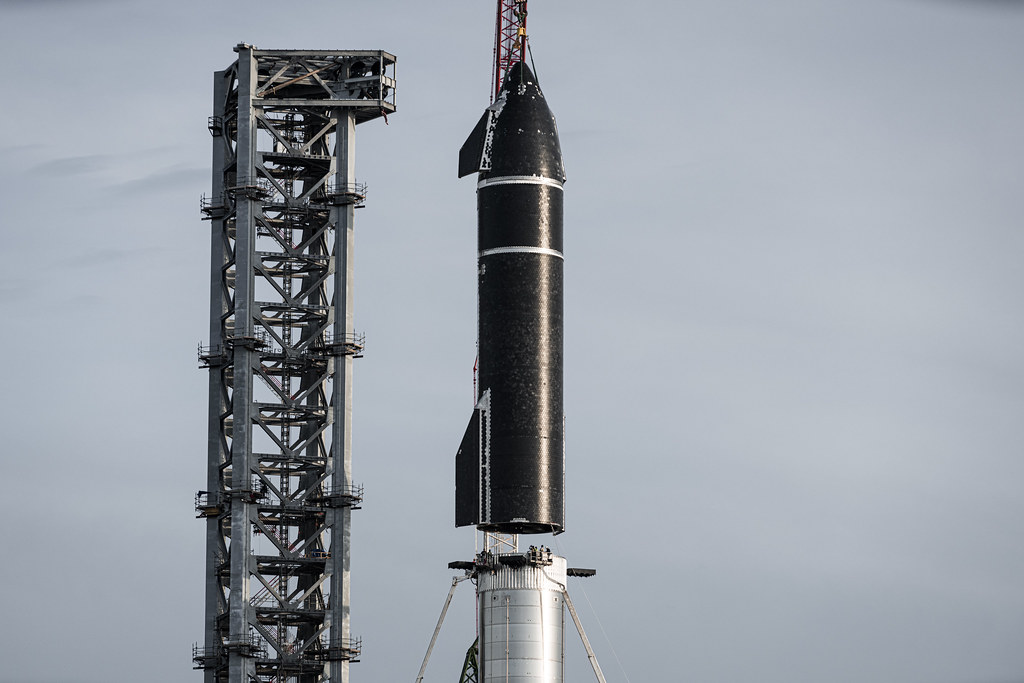
The benefits are clear:
- Rapid reusability
- Minimal hardware on the vehicle
- Faster turnaround times
- Reduced refurbishment needs
This method has already shown promise, especially with successful Super Heavy catches in late 2024 and early 2025. However, as bold as it is, Mechazilla is not always the perfect solution.
Why SpaceX Needs an Alternative Landing Method
Mission Diversity Demands Flexibility
Starship is not a one-mission vehicle. It is designed to support:
- NASA missions
- National security launches
- Military payloads
- High-energy orbital missions
- Future Moon and Mars landings
Launch sites like LC-39A (NASA-focused) and SLC-37 (approved for U.S. Air Force missions) will host a wide variety of flight profiles. Some missions will push Starship to higher altitudes and farther downrange, leaving insufficient fuel to return to a fixed launch tower.
This is where drone ship landings become a game-changer.
Landing Starship on a Drone Ship: How It Would Work
The Role of Deployable Landing Legs
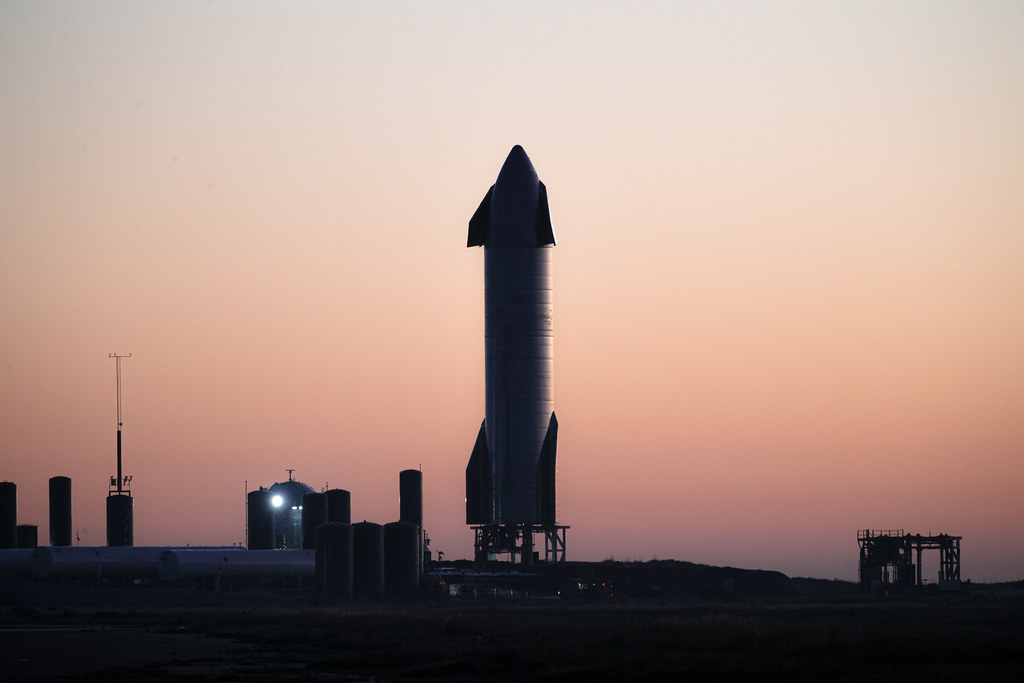
To land on a floating platform, Starship would require foldable landing legs, similar in concept to Falcon 9 but far larger and stronger.
Key features of this approach include:
- Legs folded during ascent and re-entry
- Deployment during final descent
- Stability on a moving ocean platform
- Extended legs during transport back to port
Unlike Falcon 9, this method would apply to both stages—Super Heavy and Starship—making it significantly more complex but also far more versatile.
Why Not Secure Starship Without Landing Legs?
Some have suggested designing a mechanical holding or securing system on the drone ship itself. While theoretically possible, this idea introduces major drawbacks:
- Increased drone ship mass
- Greater mechanical complexity
- Higher maintenance and failure risk
Landing legs, by contrast, keep complexity on the vehicle—where SpaceX already excels in advanced engineering and rapid iteration.
Drone Ship Landings Offer Unmatched Flexibility
Anywhere the Ocean Exists
One of the strongest advantages of drone ships is mobility. Unlike fixed towers, drone ships can be positioned wherever they are needed.
According to environmental impact statements (EIS), potential Starship landing zones include:
- Indian Ocean
- Southeastern Pacific
- Northeastern Pacific
- Atlantic Ocean
- Gulf region
This allows SpaceX to optimize fuel usage, support high-energy missions, and recover vehicles that simply cannot return to their launch sites.
Safety Benefits of Offshore Landings
Protecting People and Infrastructure
Drone ship landings take place far from populated areas, offering critical safety advantages:
- Reduced noise impact
- Minimal vibration concerns
- Isolation from potential explosion risks
- Lower risk to nearby infrastructure
As launch cadence increases, these safety benefits become increasingly important—especially for operations near major spaceports.
Operational Redundancy and Scalability
A Backup When Towers Are Unavailable
Relying solely on Mechazilla arms creates a single point of failure. Drone ships provide:
- Operational redundancy
- Backup recovery options
- Distributed landing capacity
- Higher launch frequency support
This strategy mirrors Falcon 9 operations, where drone ships enabled SpaceX to achieve industry-leading reusability.
Falcon 9: Proof That Drone Ships Work
SpaceX has successfully landed Falcon 9 boosters on drone ships for more than a decade, achieving an exceptionally high success rate.
While Starship is much larger and more powerful, the core technologies are already mastered, including:
- Autonomous landing guidance
- Precision throttle control
- Ocean-based recovery operations
- Rapid refurbishment workflows
Starship simply scales these systems to a new level.
What SpaceX Must Build to Enable Starship Drone Landings
1. A Starship Variant With Landing Legs
Since the transition from the Big Falcon Rocket to Starship, landing legs have been removed from the design. Reintroducing them would require:
- Major redesign of the aft section
- Reconfiguration of engine bays
- Adjustments to propellant plumbing
- Structural reinforcement for extreme loads
Despite the complexity, this step is unavoidable—not just for Earth landings, but also for Moon and Mars missions, where no catching systems exist.
2. A Massive Fleet of Next-Generation Drone Ships
Starship recovery would demand a much larger fleet than Falcon 9 currently uses.
Important considerations include:
- At least five or more drone ships
- Platforms potentially twice the size of current ones
- Reinforced decks to withstand hundreds of tons of landing force
- Thrust loads comparable to Falcon 9 liftoff
- Possible platforms approaching aircraft carrier scale
These ships must also support long-distance operations and heavy transport logistics.
The Challenge of Turnaround Time
Recoveries in distant regions like the Indian Ocean or deep Pacific introduce new problems:
- Transport back to Starbase could take weeks
- Vehicles may need regional processing facilities
- Operations must rotate drone ships efficiently
Potential solutions include building facilities in:
- California for Pacific operations
- Australia for Indian Ocean recoveries
However, international facilities bring regulatory and logistical hurdles.
Navigating Busy Global Shipping Routes
The proposed landing regions overlap with some of the busiest maritime corridors in the world.
SpaceX must ensure:
- Safe landings
- Minimal disruption to global shipping
- Clear coordination with international maritime authorities
This adds another layer of complexity to Starship’s global operations.
Technical Challenges Still Ahead
Vehicle Control and Precision
Super Heavy has already demonstrated impressive control, but SpaceX continues to refine:
- Flip maneuvers
- Higher angle-of-attack landings
- Reduced-engine landings
These experiments temporarily reduce landing “smoothness” but are essential for long-term optimization.
Starship Heat Shield and Re-Entry
The ship itself remains the bigger challenge. Early 2025 flights revealed persistent issues with:
- Thermal protection tiles
- Re-entry survivability
- Controlled descent accuracy
Before any drone ship landings can occur, Starship must consistently survive:
- Long-duration missions
- Extreme re-entry heating
- Precision terminal descent
Why Re-Entry Is the Ultimate Gateway
No matter the landing method, re-entry success is non-negotiable. Systems such as:
- Aerodynamic flip maneuvers
- Heat-resistant tiles
- Structural integrity under stress
must work flawlessly. SpaceX’s V3 Starship design places heavy emphasis on these systems, but real-world flight data will be the final judge.
2026: A Pivotal Year for Starship
All signs point to 2026 as a defining year. By then, SpaceX aims to:
- Achieve consistent orbital operations
- Refine re-entry and landing performance
- Expand launch cadence dramatically
- Potentially introduce drone ship landings for Starship
This would mark a historic expansion of SpaceX’s recovery capabilities.
Two Landing Methods, One Vision
Starship’s greatest strength is versatility. SpaceX is not choosing between Mechazilla and drone ships—it is building a system capable of both.
- Mechazilla arms for rapid, high-frequency operations
- Drone ships for flexibility, safety, and global reach
Together, they form a robust recovery ecosystem unmatched in aerospace history.
Final Thoughts: Is This Worth the Effort?
From an engineering and operational standpoint, yes. While the challenges are immense, the benefits are even greater:
- Global mission flexibility
- Enhanced safety
- Operational redundancy
- Proven reusability principles
- Preparation for lunar and Martian landings
This is classic SpaceX—ambitious, complex, and transformative.
Conclusion
Landing Starship on drone ships using deployable legs is not just a backup idea—it is a strategic evolution. It builds on proven Falcon 9 technology while unlocking new mission profiles and global scalability. Though many obstacles remain, SpaceX has a long history of turning skepticism into success.
As always, the future of spaceflight belongs to those willing to rethink the impossible. And once again, SpaceX is doing exactly that.
Curiosity, imagination, and inspiration will always follow—so long as we keep looking up. 🚀
FAQs
1. What is SpaceX’s primary landing method for Starship?
SpaceX’s primary landing method for Starship is catching the vehicle using Mechazilla arms, a robotic system mounted on launch towers that enables rapid and complete reusability.
2. Why is SpaceX considering drone ship landings for Starship?
Drone ship landings offer greater mission flexibility, especially for high-energy or long-range missions where returning to a fixed launch tower is not feasible.
3. Has SpaceX used drone ships successfully before?
Yes. SpaceX has used drone ships for Falcon 9 booster landings for over a decade, achieving a very high success rate.
4. How would Starship land on a drone ship?
Starship would land vertically using deployable landing legs, similar to Falcon 9, which would deploy during final descent to ensure stability on the platform.
5. Would both stages of Starship land on drone ships?
Potentially yes. Unlike Falcon 9, both Super Heavy and the Starship spacecraft could land on drone ships depending on mission requirements.
6. Why not rely only on Mechazilla arms?
Mechazilla requires precise alignment and fixed infrastructure. Drone ships provide redundancy, flexibility, and offshore safety advantages.
7. Do drone ship landings improve safety?
Yes. Offshore landings reduce noise, vibration, and explosion risks near populated areas and critical infrastructure.
8. Where could Starship drone ship landings occur?
Proposed landing zones include the Indian Ocean, Atlantic Ocean, Gulf region, and the Pacific Ocean.
9. Will Starship need a redesign to support landing legs?
Yes. Adding landing legs would require significant modifications to the aft section, engine bays, and internal systems.
10. Why are landing legs important for future missions?
Landing legs are essential for Moon, Mars, and early Earth-to-Earth missions, where no catching systems exist.
11. How large would Starship drone ships need to be?
They may need to be twice the size of current Falcon 9 drone ships, potentially approaching the scale of aircraft carriers.
12. Why are Starship landings more demanding than Falcon 9 landings?
Starship is far larger and more powerful, generating landing thrust comparable to Falcon 9 liftoff forces.
13. How many drone ships might SpaceX need for Starship?
Estimates suggest at least five or more drone ships to support global operations and high launch cadence.
14. What challenges do distant ocean recoveries create?
Long-distance recoveries increase transport time, logistics complexity, and turnaround duration, sometimes taking weeks.
15. Could SpaceX build recovery facilities outside the U.S.?
Possibly. Locations like Australia or California could support regional operations, though regulatory challenges exist.
16. Is Starship ready for drone ship landings today?
Not yet. Starship must first demonstrate reliable re-entry, heat shield durability, and precise ocean landings.
17. What is the biggest technical challenge for Starship recovery?
Atmospheric re-entry and thermal protection remain the largest hurdles before consistent recoveries are possible.
18. When could drone ship landings for Starship become operational?
If testing continues successfully, 2026 is widely viewed as a potential timeframe for operational adoption.
Read More:
- Elon Musk Finally LAUNCH 2,000 Tesla Robotaxi CyberCab Rides! Unsupervised AI SHOCKED Waymo
- SpaceX finally Catching Both Starship and Booster in mid-air! Flight 13 will be Crazy
- Tesla Cybertruck undergoes interior mod that many owners wanted
- Tesla analyst breaks down delivery report: ‘A step in the right direction’
- Tesla Q4 delivery numbers are better than they initially look: analyst