


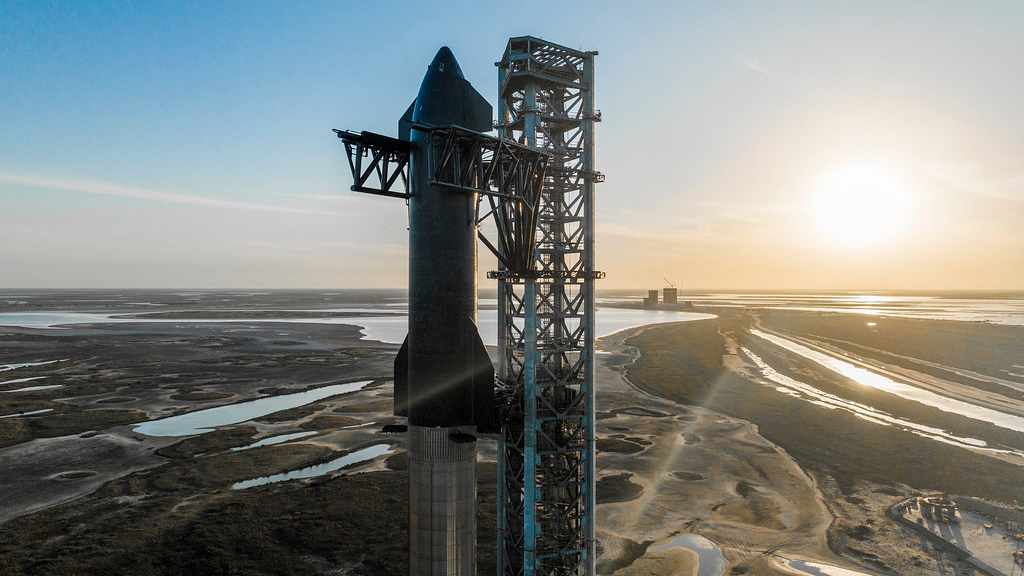
Space exploration is entering a revolutionary phase, and at the heart of this transformation lies one critical challenge—safe and reusable atmospheric re-entry. SpaceX, known for pushing engineering boundaries, is now aggressively refining its Starship Heat Shield Technology to unlock rapid and cost-effective space travel.
The company’s latest innovations reveal a genius approach to solving one of aerospace engineering’s toughest problems. From experimenting with different tile materials to turning Falcon 9 rockets into testing platforms, SpaceX is redefining how spacecraft survive the extreme heat of re-entry.
This blog explores the evolution, science, testing strategies, and future implications of SpaceX’s groundbreaking heat shield solutions.
Why Heat Shields Are Crucial for Spacecraft Survival
When a spacecraft re-enters Earth’s atmosphere, it travels at hypersonic speeds—often exceeding 25,000 km/h. At these velocities, air molecules compress violently in front of the vehicle, forming a superheated plasma layer.
Extreme Heat Conditions
- Temperatures can reach over 1,600°C
- Friction is not the primary cause—compression heating is
- Without protection, the spacecraft would burn up instantly
This is where thermal protection systems (TPS) come into play. For SpaceX, the heat shield is not just about survival—it is the key to rapid reusability.
If the heat shield requires long refurbishment after each flight, the dream of frequent and affordable space missions collapses.
The Starship Heat Shield: A Technological Marvel
Starship uses approximately 18,000 hexagonal ceramic tiles to protect its surface during re-entry. These tiles are:
- Made from silica-based ceramic material
- Coated with specialized glass layers
- Designed to withstand extreme thermal stress
Why Hexagonal Tiles?
The hexagonal design is not random. It ensures:
- No straight gaps, reducing heat leakage
- Better surface coverage
- Improved structural integrity
These tiles are primarily black, but recent developments have introduced a new white variant, sparking curiosity and speculation.
Black vs White Tiles: The Science Explained
Understanding the difference between black and white tiles requires a look into thermal radiation physics.
The Stefan-Boltzmann Principle
At extreme temperatures, heat is primarily dissipated through radiation, not conduction or convection. The efficiency of this process depends on emissivity.
Black Tiles: Built for Extreme Heat
Black tiles are designed for areas experiencing the highest thermal loads, such as the belly of Starship.
Key Properties:
- High emissivity
- Efficient heat radiation
- Rapid cooling after re-entry
These tiles:
- Absorb intense heat during plasma exposure
- Quickly radiate it back into space
This makes them ideal for temperatures between 1,200°C to 1,650°C.
White Tiles: Designed for Space Environments
White tiles, on the other hand, are optimized for reflecting heat rather than emitting it.
Key Properties:
- High reflectivity
- Low solar absorption
- Excellent for long-duration space exposure
However, they are not suitable for high-heat re-entry zones, as they retain heat longer and may fail under extreme conditions.
The Mystery Behind White Starship Tiles
The appearance of white tiles on newer Starship prototypes has led to widespread speculation.
Where Were They Found?
- Installed on the nose cone
- Seen inside SpaceX’s Starship production facility
Possible Purpose
While some believed they were for general spacecraft use, a more compelling explanation links them to specialized Starship variants.
Why Lunar Starships Need White Tiles
The Human Landing System (HLS) version of Starship is designed for Moon missions, not Earth re-entry.
Key Differences from Standard Starship
- No need for heavy heat shields
- Removal of aerodynamic flaps
- Optimized for space and lunar operations
1. Protection from Space Debris
In space, spacecraft face constant threats from:
- Micrometeoroids
- Orbital debris
White tiles act as a protective layer, absorbing and dispersing impact energy.
2. Solar Heat Management
On the Moon, temperatures can exceed 120°C during the day.
White tiles:
- Reflect 90%–98% of sunlight
- Prevent overheating
- Protect internal systems
3. Preserving Cryogenic Fuel
Starship uses:
- Liquid oxygen
- Liquid methane
These fuels must remain extremely cold. White tiles help by:
- Reducing heat absorption
- Preventing fuel from boiling off
- Enhancing mission duration
Engineering Innovation: Same Structure, Different Coating
Interestingly, white and black tiles are structurally identical.
What Changes?
- The outer coating
- Black tiles use borosilicate glass
- White tiles incorporate aluminum oxide and silica compounds
This simple modification completely changes thermal behavior, showcasing SpaceX’s efficient engineering approach.
Falcon 9: A Flying Test Laboratory
One of the most innovative strategies SpaceX has adopted is using Falcon 9 rockets as real-world testing platforms.
What’s Happening?
- Starship tiles are attached to Falcon 9 payload fairings
- Tested during routine launches
Why Falcon 9?
Falcon 9 offers:
- Frequent launch opportunities
- Lower testing costs
- Real flight conditions
Understanding the Difference in Re-entry Conditions
Falcon 9 fairings:
- Experience lower temperatures (1,000°C–1,200°C)
- Re-enter for a shorter duration
Starship:
- Faces higher temperatures (~1,650°C)
- Endures longer and more intense stress
What SpaceX Is Actually Testing
SpaceX already knows the tiles can survive heat. The real challenge lies elsewhere.
The Hidden Problems
Early Starship tests revealed issues like:
- Tiles falling off
- Cracking under stress
- Adhesive failure
These were caused by:
1. Vibration and Acoustic Stress
Rocket engines produce intense vibrations during liftoff.
2. Pressure Changes
Rapid transitions from:
- Sea level pressure
- Vacuum
- Back to atmosphere
3. Structural Flexing
The spacecraft structure bends under load, causing rigid tiles to detach.
Solving the Attachment Problem
By testing tiles on Falcon 9, SpaceX can:
- Observe real-world stress effects
- Improve adhesive materials
- Refine mounting techniques
After recovery from the ocean, engineers analyze:
- Tile condition
- Adhesive performance
- Structural integrity
This allows rapid iteration and improvement.
Crunch Wrap: The Hidden Hero
Another major innovation is the introduction of “Crunch Wrap” insulation.
What Is Crunch Wrap?
- A felt-like insulating material
- Placed beneath and between tiles
Why Is It Important?
It prevents gap heating, where hot plasma seeps through tile gaps.
This issue previously caused:
- Severe damage to Starship flaps
- Structural vulnerabilities
Crunch Wrap acts as a secondary defense layer, ensuring:
- Heat does not reach the steel body
- Improved overall thermal protection
The Philosophy: Fail Fast, Learn Faster
SpaceX operates on a powerful engineering philosophy:
Iterate Rapidly
Instead of waiting months between major tests:
- Conduct smaller, frequent experiments
- Use existing rockets for testing
Why This Matters
Earlier, SpaceX focused on:
- Engine reliability
- Flight stability
- Preventing explosions
Now that those challenges are largely solved, the heat shield has become the primary bottleneck.
Accelerating Development with Falcon 9
By leveraging Falcon 9’s high launch rate, SpaceX can:
- Run dozens of experiments quickly
- Test different configurations
- Collect massive amounts of data
This dramatically reduces:
- Development time
- Costs
- Risk
The Future of Starship Heat Shield Technology
These innovations are paving the way for:
1. Fully Reusable Spacecraft
Minimal refurbishment between flights
2. Orbital Refueling Missions
Reliable tankers for deep space travel
3. Mars Exploration
Durable systems capable of handling:
- Multiple entries
- Harsh planetary environments
Conclusion: A Breakthrough in Space Engineering
SpaceX’s new approach to heat shield development is nothing short of revolutionary. By combining:
- Advanced material science
- Real-world testing strategies
- Rapid iteration cycles
the company is solving one of the most complex challenges in spaceflight.
The introduction of white tiles, Falcon 9 testing, and Crunch Wrap insulation demonstrates a level of innovation that could redefine space travel as we know it.
As Starship continues to evolve, these advancements bring humanity closer to a future where space travel is routine, affordable, and sustainable.
Final Thoughts
The genius of SpaceX’s solution lies not just in the technology itself, but in how it is being developed. Instead of relying solely on theoretical models or limited testing, SpaceX is using real missions as laboratories, accelerating progress at an unprecedented pace.
If successful, this heat shield system will not only protect Starship—but also unlock the next era of interplanetary exploration.
FAQs
1. What is the purpose of Starship’s heat shield?
The heat shield protects Starship from extreme temperatures during atmospheric re-entry, preventing it from burning up and enabling safe reuse.
2. How hot does Starship get during re-entry?
Starship can experience temperatures of up to 1,650°C (3,000°F) due to compression heating and plasma formation.
3. Why does SpaceX use hexagonal tiles on Starship?
Hexagonal tiles provide better coverage with minimal gaps, reducing the risk of heat penetration and improving structural durability.
4. What are Starship heat shield tiles made of?
They are made from silica-based ceramic materials with a protective glass coating designed to handle extreme heat.
5. What is the difference between black and white heat shield tiles?
- Black tiles: High emissivity, ideal for re-entry heat
- White tiles: High reflectivity, ideal for space environments and sunlight exposure
6. Why can’t white tiles be used for re-entry?
White tiles retain heat longer and are less efficient at radiating it away, making them unsuitable for extreme re-entry temperatures.
7. Where are white tiles used on Starship?
White tiles are expected to be used on lunar variants like the Human Landing System (HLS) and possibly on upper surfaces exposed to sunlight.
8. What is Starship HLS?
Starship HLS (Human Landing System) is a Moon-optimized version of Starship designed for NASA’s lunar missions, without the need for Earth re-entry.
9. How do white tiles help in space missions?
They reflect 90%–98% of solar radiation, keeping the spacecraft cool and preventing overheating.
10. What is “Crunch Wrap” in Starship’s heat shield?
Crunch Wrap is a felt-like insulation layer placed between tiles to prevent hot plasma from entering gaps and damaging the spacecraft.
11. Why do Starship tiles fall off during testing?
Tile loss is usually caused by:
- Vibrations during launch
- Pressure changes
- Structural flexing
12. Why is SpaceX testing tiles on Falcon 9 rockets?
Falcon 9 acts as a “flying laboratory”, allowing SpaceX to test tile attachment systems under real flight conditions more frequently.
13. Does Falcon 9 experience the same heat as Starship?
No, Falcon 9 fairings face lower temperatures (around 1,000°C–1,200°C) compared to Starship’s much harsher re-entry conditions.
14. What is the biggest challenge with Starship’s heat shield?
The main challenge is tile attachment reliability, not heat resistance. Ensuring tiles stay intact under stress is critical.
15. How does SpaceX improve its heat shield technology so quickly?
SpaceX follows a “fail fast, learn fast” approach, using frequent launches to rapidly test and refine designs.
16. Why is a reusable heat shield important for space travel?
A reusable heat shield reduces:
- Costs
- Turnaround time
- Maintenance
This makes frequent and affordable space missions possible, which is essential for future Mars exploration.
Read More:
- Elon Musk’s Tesla Future: 5 New Models, AI Breakthroughs, and the Reality of Flying Cars (2026 Guide)
- Tesla Pi Phone 2026: Release Date, Price, Features & Truth Behind the $199 No-Bill Rumor
- Elon Musk teases expectations for Tesla’s AI6 self-driving chip
- Rolls-Royce makes shocking move on its EV future
- Elon Musk Announces All-New Solid State Battery For Tesla 2026