

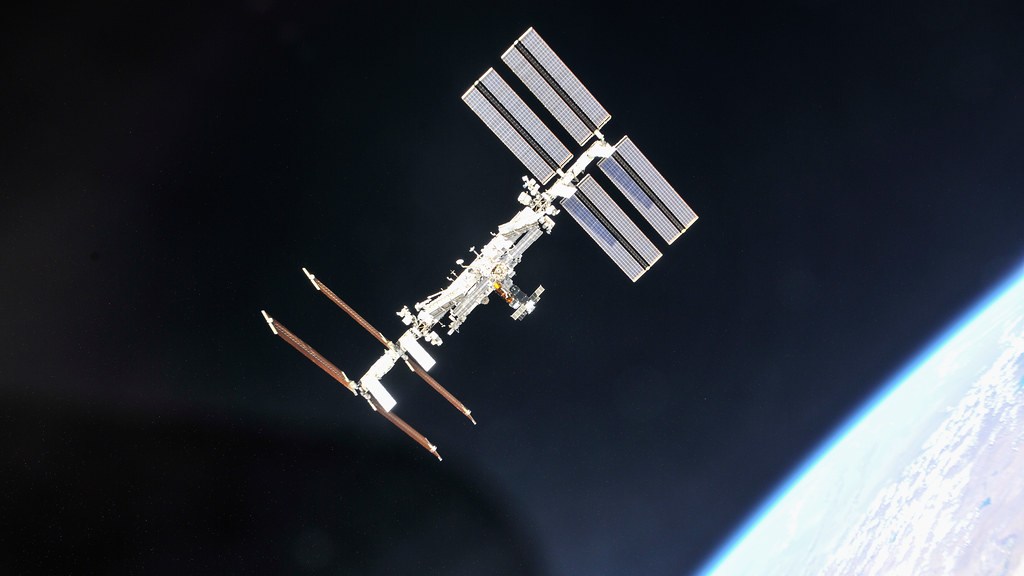
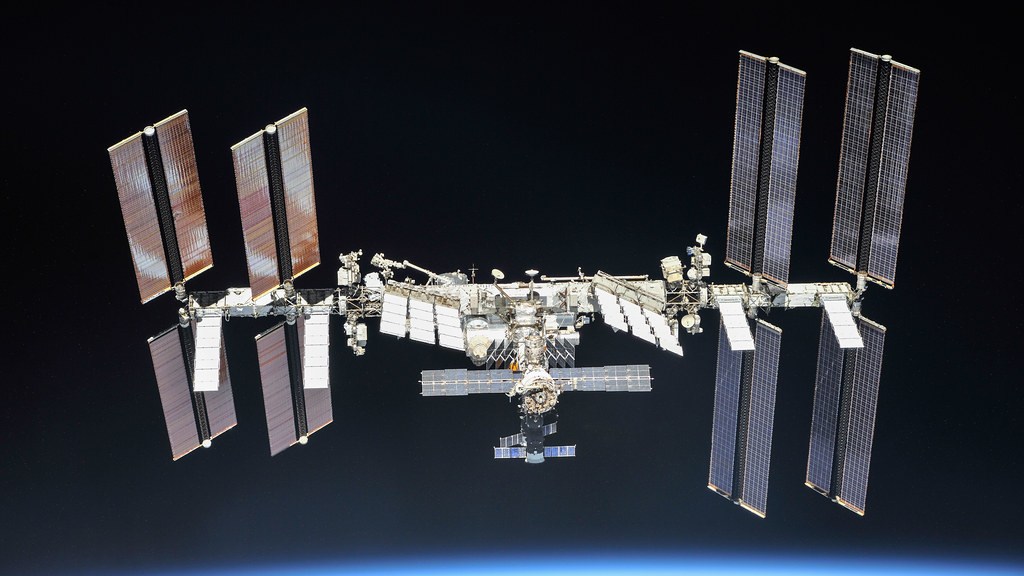
SpaceX’s new Gravity Space Station just Did Something Never Seen Before! Ready to replace NASA ISS: For more than two decades, the International Space Station (ISS) has represented the greatest symbol of human cooperation in orbit. But now, humanity stands less than five years away from an uncomfortable milestone—one that scientists, governments, and space agencies have all tried to delay.
The ISS is nearing its end.
As its retirement window approaches, the station will ultimately be guided into a controlled descent and burn up in Earth’s atmosphere. And once it’s gone, the nation or company with the next operational station will immediately dominate low Earth orbit (LEO).
Until recently, China was the only country positioned to take that leadership role with its growing Tiangong Space Station. But a groundbreaking development has changed everything—and it didn’t come from NASA.
It came from a fast-moving, privately funded American company called Vast Space, working hand-in-hand with SpaceX.
Vast Space and the Birth of Haven 1—The First Fully Private Space Station Module
In a move that stunned the aerospace industry, Vast Space revealed Haven 1, a fully commercial, fully self-funded space station module. Unlike competitors such as Axiom Space, Blue Origin’s Orbital Reef, or Starlab—which all received hundreds of millions of dollars in NASA contracts—Vast built its station without taking a single government dollar.
And yet, somehow, they are ahead of everyone else.
Rapid Development That Shocked the Industry
Vast Space didn’t just announce Haven 1—they built it at breakneck speed:
- July 2025: Primary structure completed
- October 2025: Final hull welding and integration work began
- Late October 2025: The entire module rolled out to the Mojave Desert for structural testing
Images of Haven 1 sitting on its stand showed a module that looked shockingly flight-ready.
As of today, Vast has completed 18 of 22 major milestones, with full completion expected by May 2026, the same month they plan to launch the station.
This pace is unheard of in aerospace. Traditional station modules take 5–10 years to design, test, and assemble. Haven 1 is doing it in less than three.
But this rapid progress isn’t luck. It’s strategy. A strategy inspired by SpaceX’s proven “build-test-fail-fix” philosophy.
Haven Demo — The Satellite Test That Changed Everything
Vast didn’t want to risk Haven 1 without testing its core technologies in space. So they built Haven Demo, a 515 kg test satellite containing:
- The propulsion system
- Guidance, navigation, and control software
- Communications systems
- Power and avionics
- Structural and thermal components
In other words, a mini Haven 1, designed to prove the tech before the station goes up.
The Mission That Proved Vast Could Really Do It
On November 2nd, 2025, Haven Demo launched aboard a SpaceX Falcon 9 during the Bandwagon-4 rideshare mission from Cape Canaveral.
Within minutes of deployment:
- Solar arrays unfolded perfectly
- The spacecraft reached stable power
- Ground stations established a solid connection
- 4K footage of the deployment sequence was transmitted
- All subsystems checked out “green”
Inside Vast’s mission control, engineers erupted in celebration—similar to SpaceX’s now-famous reaction when Falcon Heavy flew for the first time.
The biggest shock?
Haven Demo went from concept to orbit in just two years.
This speed is unprecedented in the space-station industry. And it cemented confidence that Haven 1 is on track for a successful launch in 2026.
SpaceX — The Power Behind Vast’s Ambition
Vast isn’t building Haven 1 alone. Its greatest strategic advantage is partnering with SpaceX, the world’s most reliable launch provider.
Falcon 9 now boasts an extraordinary 99.4% success rate across nearly 600 flights—and recently flew the same booster 30 times, setting a record in modern rocketry.
The Full-Spectrum Partnership
SpaceX provides Vast with:
- Launch services (Falcon 9)
- Crew transport (Dragon)
- Life support integration
- Communications via Starlink systems
- Training infrastructure
It’s practically a turnkey system for getting a fully commercial space station online quickly and safely.
And when Haven 1 launches in 2026, SpaceX’s Crew Dragon will remain docked to the station as:
- An escape lifeboat
- A reboost vehicle to maintain orbital altitude
- The crew transport vehicle
This close integration is one of Vast’s biggest advantages over competitors.
Life on Haven 1 — Humanity’s First Private Orbital Habitat
Once operational, Haven 1 will host four crewed missions over its initial three-year lifespan.
The Interior — Compact, Modern, and Efficient
The habitat offers 45 cubic meters of volume, similar to a city bus. Yet it’s designed to feel open and functional, featuring:
- Four private sleeping quarters
- A common lounge with large observation windows
- A microgravity research lab
- Storage areas and docking corridors
- Ultra-modern, minimalist interior design
Vast CEO Max Haot insists Haven 1 isn’t about luxury—it’s about optimizing astronaut productivity.
Even so, the design looks more like a five-star orbital hotel than a traditional space station module.
The first crewed mission—Vast-1—is scheduled for June 2026, using a SpaceX Crew Dragon capsule.
The Next Leap — Haven 2, a Full ISS Replacement
While Haven 1 is a test bed, Haven 2 is the true ISS successor. It will be built in space just like the ISS:
- First modules launch in 2028
- Final assembly completes after 2030
- A total of eight connected modules
And the standout feature?
A 12.5-meter-wide panoramic window—one of the largest ever built for space.
Haven 2 isn’t a bus in orbit. It’s an orbital city block. And it may define the future of human space presence.
The Competition — Starlab and the Commercial LEO Race
Vast isn’t alone. NASA’s new strategy, the Commercial Low Earth Orbit Destinations (CLD) program, is transforming space from government-built stations to privately operated habitats.
Competing for this future is Starlab, backed by:
- Airbus
- Northrop Grumman
- Mitsubishi
- Palantir
- And recently, Janus Henderson Group, a financial titan managing over $484 billion
Why Wall Street Is Betting on Starlab
Janus Henderson claims Starlab has:
- The “best design”
- The “lowest cost structure”
- The “strongest long-term business model”
Meanwhile:
- 55% of Starlab’s research capacity is already sold, especially for pharmaceuticals and cancer research
- Their design review begins soon
- A single massive launch aboard SpaceX Starship is planned for 2028
Starlab aims to be the “official” ISS successor—while Vast aims to be first.

A Tale of Two Strategies — Speed vs Scale
The commercial space race now has two very different competitors:
Vast Space
- Fast, lean, startup mentality
- Self-funded
- Going to orbit first
- Heavy reliance on SpaceX infrastructure
- Iterative and agile
Starlab
- Backed by aerospace giants
- Massive financial support
- Slower, but highly structured development
- Targeting post-2030 dominance
Both are racing hard.
Both want NASA, private customers, and international partners.
Both are shaping the future of LEO.
But only one can be first.
The Changing Landscape — ULA Falls Behind as SpaceX Surges Ahead
While the commercial race heats up, one legacy player is losing momentum: United Launch Alliance (ULA).
A year ago, ULA predicted 20 launches in 2025. Instead, they will finish with just six:
- 5 Atlas V launches
- 1 Vulcan launch
Their final launch of the year is scheduled for December 15th, carrying Amazon’s Kuiper internet satellites.
SpaceX, meanwhile, is setting annual global launch records, rapidly expanding Starship testing, and powering the commercial station revolution.
The contrast couldn’t be clearer.
What This All Means — And Who Will Win the Space Station Race
Humanity is entering a new era—one where private companies build and operate the infrastructure of space.
- Haven 1 aims to be the first commercial space station in orbit
- Haven 2 could become the largest private station ever built
- Starlab may become the official ISS successor
- SpaceX is becoming the foundation upon which all of this is built
The ISS era is ending.
The commercial era is beginning.
And the company that reaches orbit first will define the next decade of human spaceflight.
So the question remains:
Who will win—Vast’s Haven or Starlab?
Let me know your thoughts in the comments!
FAQs
1. What is Haven 1?
Haven 1 is the world’s first fully commercial, privately funded space station module developed by Vast Space. It is designed to support four-person astronaut crews and act as an early replacement for the ISS.
2. When will Haven 1 launch?
Haven 1 is currently scheduled to launch in May 2026 aboard a SpaceX Falcon 9 rocket.
3. What is Haven Demo, and why was it important?
Haven Demo is a test satellite built by Vast Space to validate the technologies and software used in Haven 1. Its successful launch in November 2025 proved the station’s core systems are ready for orbital deployment.
4. How does SpaceX support Haven 1?
SpaceX provides launch services (Falcon 9), crew transportation (Crew Dragon), training, communications via Starlink, and integration support. A Dragon capsule will stay docked to Haven 1 as a lifeboat and reboost vehicle.
5. How big is Haven 1 inside?
The interior volume of Haven 1 is 45 cubic meters, comparable to a city bus. It features sleeping quarters, a research lab, a common area, and large observation windows.
6. How long will Haven 1 operate?
Haven 1 is planned to operate for three years, hosting up to four crewed missions.
7. What is Haven 2, and how is it different from Haven 1?
Haven 2 is a much larger, modular space station planned for launch starting in 2028. It will feature eight connected modules and a massive 12.5-meter-wide observation window, making it a true successor to the ISS.
8. Why is the ISS being retired?
The ISS is aging, expensive to maintain, and approaching structural and operational limits. NASA plans to retire it before 2030, allowing commercial stations to take over LEO operations.
9. How is Vast Space different from other space station companies?
Vast Space is fully self-funded, uses a fast, iterative design approach, and partners closely with SpaceX. Their development timeline is significantly faster than traditional aerospace companies.
10. Who are Vast’s competitors in the commercial space station race?
Major competitors include Starlab, Axiom Space, and Orbital Reef (Blue Origin + partners). All aim to build commercial stations to replace the ISS.
11. What is Starlab, and why is it important?
Starlab is a commercial space station backed by Airbus, Northrop Grumman, Mitsubishi, Palantir, and major financial groups. It is designed for biomedical research and is targeting a 2028 launch aboard SpaceX’s Starship.
12. Why is Wall Street investing in Starlab?
Financial firms see Starlab as having a strong business model, low operational costs, and significant demand—especially from pharmaceutical companies seeking microgravity research opportunities.
13. Will China take the lead in low Earth orbit once the ISS retires?
Not necessarily. With Haven 1 and other commercial stations on the horizon, the U.S. and private companies are positioned to maintain leadership in LEO.
14. Why is a Dragon spacecraft needed for Haven 1?
A Dragon capsule must remain docked to Haven 1 to serve as a lifeboat, provide reboost capability, and support astronaut transport to and from the station.
15. How reliable is SpaceX’s Falcon 9 for launching space station modules?
Falcon 9 has a 99.4% success rate over nearly 600 launches and has flown the same booster 30 times, making it the most reliable operational rocket in history.
16. Which station will reach orbit first—Haven or Starlab?
Based on current timelines, Haven 1 is expected to reach orbit first in 2026, while Starlab targets 2028. However, both are key milestones in the commercial space era.
Read More:
- Elon Musk and Tesla try to save legacy automakers from Déjà vu
- Tesla Optimus shows off its newest capability as progress accelerates
- Tesla FSD (Supervised) blows away French journalist after test ride
- Tesla hosts Rome Mayor for first Italian FSD Supervised road demo
- Tesla Full Self-Driving shows confident navigation in heavy snow
1 thought on “SpaceX’s new Gravity Space Station just Did Something Never Seen Before! Ready to replace NASA ISS”