


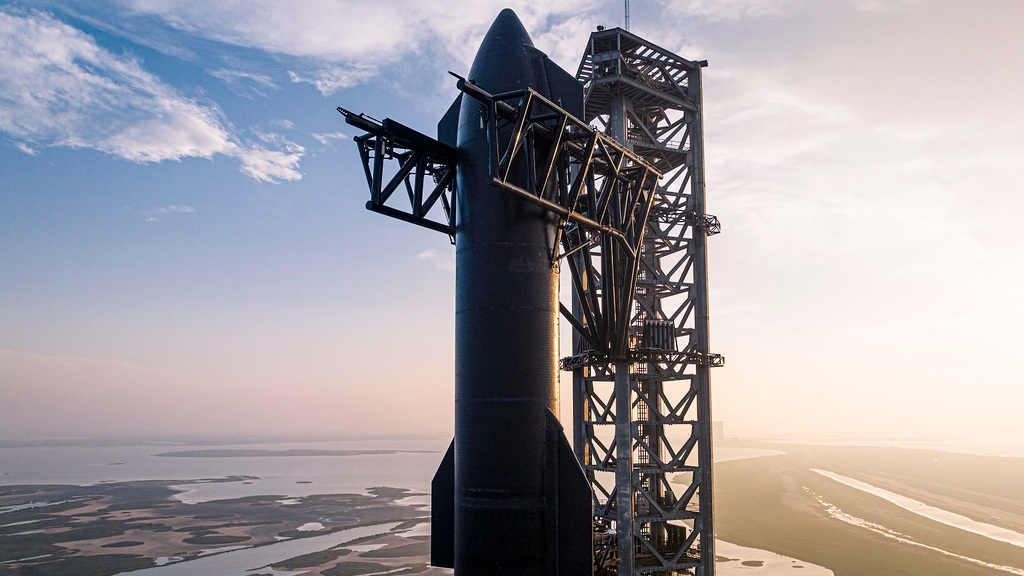
Refueling has long been one of the most debated aspects of Starship architecture. For years, the concept of launching multiple tanker flights to refill a single ship in orbit has sparked questions. Critics asked: How many launches would it take? Could orbital propellant transfer truly scale for deep space missions?
At SpaceX, complexity isn’t an obstacle—it’s a design variable. Elon Musk recently unveiled significant upgrades planned for Starship V4, targeting improvements aimed at relieving the refueling bottleneck. In this article, we’ll break down what defines Starship V4, how it changes orbital refueling, and what it means for lunar and deep space missions.
The Evolution from Starship V1 to V4
SpaceX has yet to fully enter the V3 era, with prototypes currently under testing. The first V3 flight is expected between mid to late March. However, Starship V4 has already started taking shape. Early projections indicate:
- Introduction: Around 2027
- Total stack height: 142–150 meters
- Payload capacity: Exceeding 200 tons to orbit

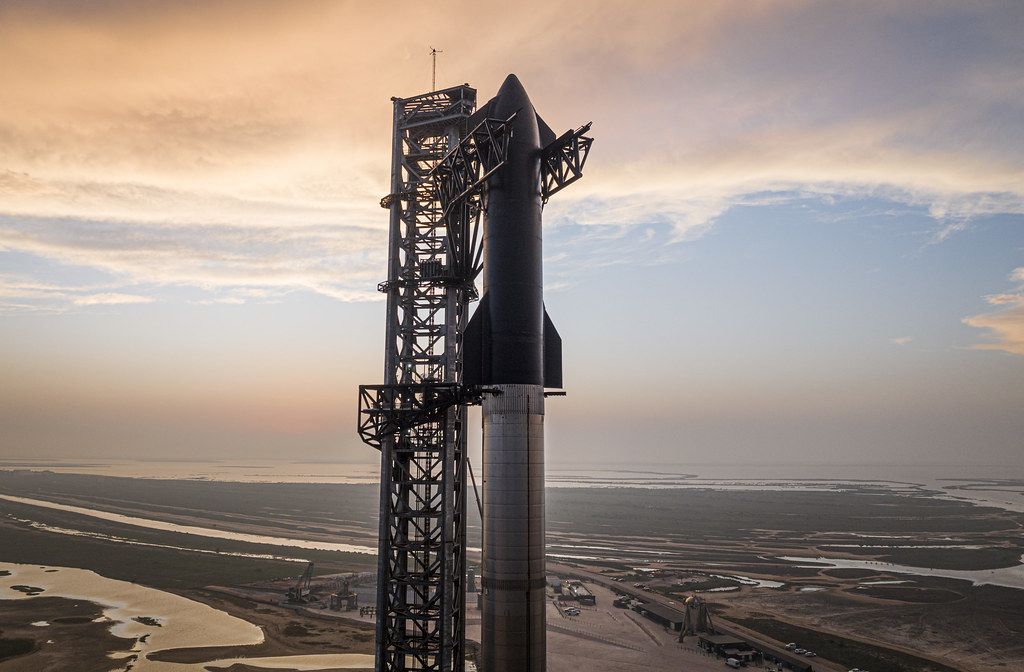
The defining change in V4 isn’t just its size—it’s refueling efficiency. Starship’s architecture relies on orbital propellant transfer using two variants:
- Primary Ship (Target) – Cargo or NASA’s Human Landing System (HLS) configuration.
- Tanker Variant – Optimized solely for carrying and transferring propellant in orbit.
While V4 preserves the dual-vehicle approach, it significantly expands performance margins, which is critical for ambitious missions to the Moon and Mars.
V4 Tanker Performance – A Step Change
Elon Musk recently stated that the Starship V3 tanker version will deliver over 200 tons of propellant per flight. To clarify:
- This refers to transferable propellant, not payload mass.
- Each tanker flight could deliver more than 200 tons of usable fuel to a waiting starship in orbit.
Comparing V4 to Previous Versions
- V1: Ship propellant capacity roughly 1,200 tons
- V2 & V3: Only modest growth; total capacity still around 1,200–1,600 tons
- V4: Superheavy booster ~81 m, ship ~61 m
- Superheavy propellant: ~4,500 tons
- Starship propellant: ~2,300 tons
This increase in tank size translates to:
- Higher thrust margins
- Improved ascent performance
- Greater transferable propellant per tanker mission
Of the ~2,300 tons aboard a V4 ship, ~2,100 tons are consumed reaching orbit, leaving about 200 tons available for transfer.
Orbital Refueling Efficiency
For a lunar-bound Starship (HLS configuration), full refueling requires ~1,200 tons. Under V4:
- 5–6 tanker launches could complete refueling
- Compared to V1–V3, which required over 10 launches
This is a meaningful reduction in operational complexity, risk, and scheduling pressure.
Implications for Lunar Missions
With V4, orbital propellant transfer becomes operationally tractable, meaning:
- Fewer tanker launches
- Simplified logistics for Artemis lunar missions
- Reduced barriers for sustained lunar operations
Mars Missions
- Larger propellant loads required
- Higher number of tanker flights possible, but efficiency improves
- Mission timelines compressed, making Mars settlement more plausible

Tanker Specialization and Optimization
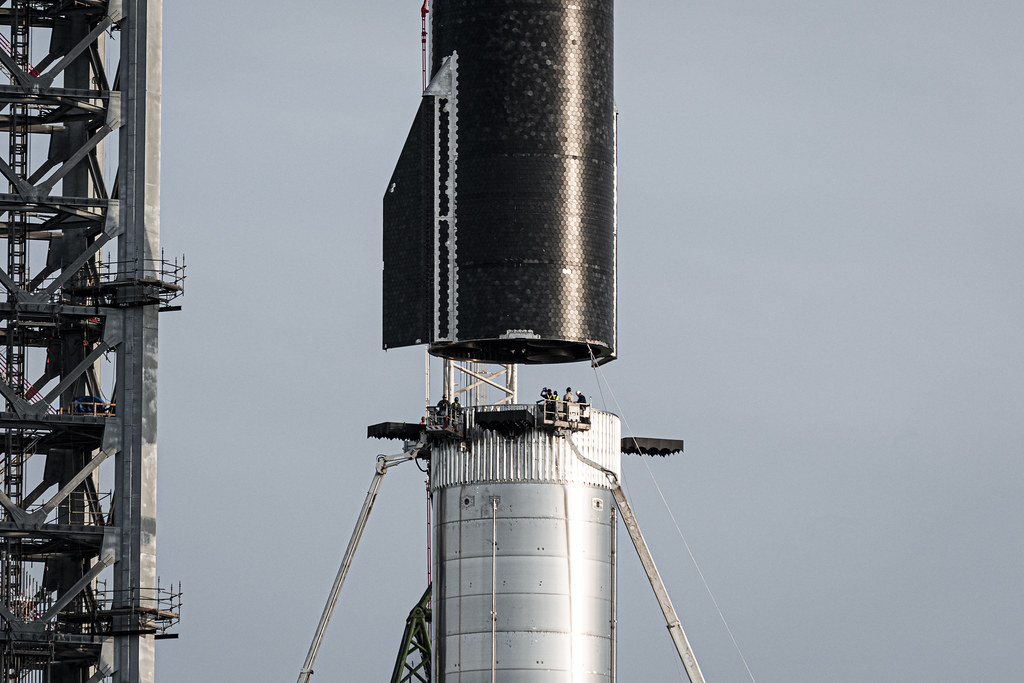
V4’s dedicated tanker configuration offers several advantages:
- No flaps or heat shields required for atmospheric re-entry
- Reduced structural mass, increasing the propellant fraction
- Greater transferable fuel volume per launch
As Musk envisions, high flight cadence is critical:
- Long-term goal: Thousands of launches per year, possibly exceeding 10,000
- Key enabler: Starship’s full reusability, rapid turnaround, and scalable production
If these targets are met, Starship could achieve unprecedented orbital launch rates, transforming deep space operations.
V4’s Impact on Lunar and Deep Space Missions
Near-term, V4 entering service would simplify sustained lunar missions. With 5–6 refueling flights, orbital propellant transfer shifts from uncertainty to repeatable procedure.
Moon Missions
- Reduced tanker launches: 5–6 flights instead of 10+
- Operational simplicity: Refueling becomes a standard process
- Enables Artemis HLS operations with fewer constraints
Mars Missions
- Larger propellant loads required
- Higher number of tanker flights possible, but efficiency improves
- Mission timelines compressed, making Mars settlement more plausible
Scaling Propellant Capacity and Crew Potential
V4’s upgrades allow larger payload margins, reshaping mission architecture:
- Version 3: ~100 tons to orbit
- Version 4: ~200 tons to orbit
This doubles capacity, allowing entire habitats, power systems, and heavy structural elements to fly in a single mission.
Human Transport Potential
- Dozens of astronauts per flight, potentially up to 100 long-term
- Enables sustained lunar and Martian presence
- Reduces need to fragment mass-intensive systems across multiple launches
Elon Musk envisions:
- Lunar city within ~10 years
- Mars settlement within 20–40 years

The Technical Hurdles of Orbital Refueling
Despite the promise, several technical challenges remain:
Cryogenic Propellant Storage
- Methane and liquid oxygen are difficult to store in space
- Boiloff risk due to microgravity, solar heating, and thermal gradients
- Requires advanced insulation, active thermal control, pressure regulation, and possibly sunshielding
Docking and Propellant Transfer
- Two 50 m class vehicles must align precisely
- Maintain attitude stability to prevent slosh and structural stress
- Transfer methods involve pump-fed or pressure-fed systems, each with trade-offs
Production and Launch Cadence
- Rapid reusability is essential
- High-volume manufacturing needed at Starbase and future facilities
- Efficient launch infrastructure, including pads, refurbishment, fueling, and recovery operations, is critical
Transition from V3 to V4
V3 maturity is essential for V4 debut and validation:
- V3 flights test repeatable orbital insertion, payload deployment, and controlled re-entry
- Success ensures baseline reliability before V4 tanker missions
- Lunar-specific variant remains schedule-critical for Artemis
The next two years will determine if Starship can meet its ambitious goals.
Starship’s Transformational Philosophy
Starship isn’t just a rocket—it’s an infrastructure system:
- Full reusability lowers marginal launch costs
- High payload capacity reduces total mission count
- Orbital refueling extends reach beyond Earth orbit
Once refueling is routine, the constraint shifts from can we launch it? to how fast can we build? This is the moment space exploration becomes space expansion.

Conclusion – Starship V4 and the Future of Deep Space
The Starship V4 tanker represents a transformational upgrade:
- Doubles orbital payload
- Reduces tanker launches per mission
- Enables sustained lunar and Martian operations
- Makes large-scale human missions feasible
Orbital refueling remains the decisive hurdle. Overcoming it could shift Starship from impressive to transformational, turning ambition into execution.
Are you excited about the Starship V4 tanker? Its success could redefine deep space exploration and the human presence beyond Earth.
FAQs
1. What is Starship V4?
Starship V4 is the next-generation SpaceX spacecraft designed to improve orbital refueling, payload capacity, and deep space mission performance compared to previous versions.
2. How does Starship V4 differ from V3?
V4 features larger tank volumes, increased thrust margins, and a more efficient tanker configuration, doubling its orbital payload capacity from ~100 tons (V3) to ~200 tons.
3. What is orbital refueling in Starship missions?
Orbital refueling is the process where a tanker Starship transfers propellant to a primary Starship in orbit, enabling long-duration missions to the Moon, Mars, and beyond.
4. How many tanker flights does Starship V4 need to refuel a lunar mission?
A lunar mission requiring ~1,200 tons of propellant could be refueled with approximately 5–6 Starship V4 tanker flights, a significant reduction from earlier designs.
5. What is the tanker variant of Starship V4?
The tanker variant is optimized solely to carry and transfer propellant. It removes unnecessary systems like flaps and heat shields to maximize transferable fuel per launch.
6. How much propellant can each V4 tanker deliver?
Each V4 tanker can transfer over 200 tons of usable fuel to a waiting Starship in orbit, allowing fewer launches per mission.
7. Can Starship V4 support Mars missions?
Yes. V4’s increased payload and refueling capability make Mars missions feasible, although they may require additional tanker flights for full propellant loads.
8. What technical challenges exist for orbital refueling?
Challenges include cryogenic propellant storage, boiloff in microgravity, precision docking, and large-scale propellant transfer, all of which SpaceX is actively testing.
9. How does Starship V4 affect lunar operations?
V4 makes sustained lunar missions more practical by reducing tanker launches, simplifying logistics, and enabling full refueling of lunar landers in fewer flights.
10. What is the payload capacity of Starship V4?
Starship V4 can deliver over 200 tons to orbit, double the capacity of V3, enabling large habitats, power systems, and crew vehicles to fly in a single mission.
11. How many astronauts could Starship V4 carry?
Long-term designs suggest up to 100 astronauts per flight, a major increase compared to current crew vehicles that carry only a handful.
12. What makes Starship different from traditional rockets?
Starship is fully reusable, has high payload capacity, and supports orbital refueling, allowing fewer launches and larger-scale deep space missions.
13. When is Starship V4 expected to launch?
Current projections suggest a potential introduction around 2027, after V3 matures and demonstrates reliable orbital operations.
14. Why is Starship V4 important for Mars settlement?
V4 enables efficient fuel transfer, high payload capacity, and rapid reusability, all of which are critical for sustained human presence and infrastructure on Mars.
15. How does refueling change Starship mission planning?
With orbital refueling, Starship missions can fly fully loaded habitats, power systems, and crew modules in fewer launches, reducing risk, costs, and operational complexity.
Read More:
- Elon Musk shares timeframe for X Money early public access rollout
- Tesla Model Y L spotted on transport trucks in Australia
- Tesla China posts strong February wholesale growth at Gigafactory Shanghai
- Tesla and xAI team up on massive new project
- Tesla Cybercab includes this small but significant feature