


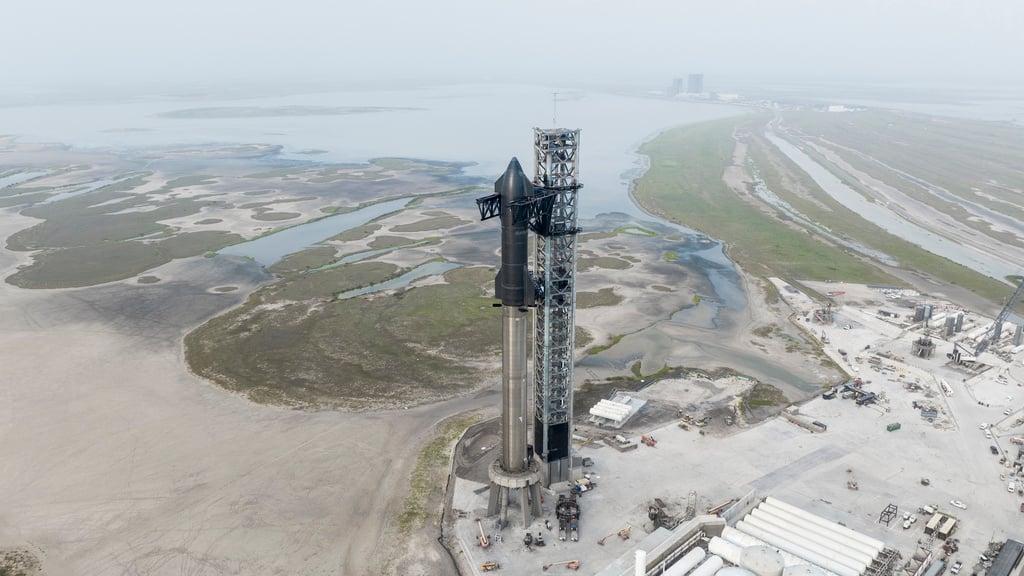
The aerospace world is buzzing with excitement and anticipation—and for good reason. After a series of monumental upgrades and tests, SpaceX is officially transitioning to the Starship V3 platform. This new version promises not only to deliver improved performance but also to redefine the path forward for Elon Musk’s ambitious Mars and lunar goals.
In this blog post, we’ll break down:
- What exactly is new in Starship V3
- How it differs from V2 and earlier versions
- The implications for future SpaceX missions
- And what this means for the broader spaceflight industry
Let’s explore the next chapter in humanity’s journey to the stars
The Road to V3: How We Got Here
From V1 to V2: The Learning Curve
When SpaceX introduced Starship V2 earlier this year, it marked a significant shift from its earlier iterations. V2 brought with it a larger structure, redesigned flaps, a revamped heat shield, and a multitude of internal improvements.
Yet, despite the hype, V2 hasn’t yet shown its full potential in flight. Although it improved various design and performance aspects, its real-world testing has been limited, leaving room for yet another leap forward.
The Arrival of V3: Faster Than Expected
Surprising even the most seasoned space enthusiasts, Elon Musk confirmed in early 2025 that SpaceX is now focusing on V3:
“We are honing in on the V3 Starship design.”
Shortly after this statement, the space community was abuzz as photos of a new liquid oxygen header tank surfaced—clearly labeled as belonging to S39, the 13th Starship prototype and the first V3 build.
This early debut of Starship V3 signals a quicker-than-expected evolution, and it has everyone asking: What’s changing, and how fast will we see it?
Breaking Down the Starship V3 Upgrades
1. Larger Liquid Oxygen Header Tank
The newly photographed liquid oxygen header tank is visibly larger, suggesting:
- Greater propellant capacity
- Better support for extended missions
- Improved efficiency for orbital refueling
This is crucial for deep space travel, where fuel efficiency and storage are make-or-break variables.
2. Advanced Nose Cone Design
The S39 nose cone offers a glimpse into the complexity and elegance of V3 design.
- Built with what appears to be vertical steel panels (rather than horizontal rings)
- Features flawless laser welds, a major upgrade in manufacturing precision
- Designed for better aerodynamics and structural integrity
These refinements not only enhance the ship’s performance but also reduce stress points, minimizing the risk of failure during atmospheric reentry.
3. Updated Construction Techniques
One of the most noticeable improvements in V3 is in its manufacturing process. Thanks to laser welding and more advanced automation:
- Weld seams are cleaner
- Material integrity is higher
- Construction time is reduced
This level of refinement demonstrates how SpaceX’s industrial evolution is keeping pace with its aerospace ambitions.
4. Raptor 3 Engines
Perhaps the most game-changing upgrade is the introduction of Raptor 3 engines, which promise:
- Higher thrust-to-weight ratio
- Better fuel efficiency
- Improved thermal management
These engines will play a key role in supporting larger payloads and full reusability, both of which are essential for Mars missions and large-scale satellite deployment.
What Sets V3 Apart From V2
While V2 introduced a stronger heat shield, flaps, and structural reinforcements, V3 is pushing the envelope further:
| Feature | Starship V2 | Starship V3 |
|---|---|---|
| Max Height | ~120m | 150m |
| Propellant Capacity | ~3,400 tons | 6,800 tons (combined with Superheavy) |
| Raptor Engines | Raptor 2 | Raptor 3 |
| Heat Shield | Upgraded | Improved again |
| Nose Cone Fabrication | Horizontal Rings | Vertical Panels |
| Weld Type | Manual/TIG | Laser Welding |
These changes are not incremental—they’re transformational. V3 aims to be the true backbone of interplanetary travel, unlike any rocket ever built.
Starship V3’s Role in SpaceX’s Future Missions
NASA’s Artemis Program
NASA has already tapped SpaceX for its Human Landing System (HLS) under the Artemis program. However, the specific version of Starship to be used hasn’t yet been unveiled.
It’s becoming increasingly clear that V3 will be the foundation for this lunar lander, offering the:
- Reliability
- Fuel capacity
- And advanced design needed for human missions to the Moon
Orbital Refueling Tests in 2025
One of the biggest challenges for deep space travel is refueling in orbit—and V3 is designed for this.
NASA and SpaceX are expected to begin tests later this year, making orbital fuel transfer a critical milestone for future missions to Mars.
Starlink Deployment and Commercial Launches
According to Musk, V3 Starship will be able to carry 100+ tons of Starlink satellites per flight, drastically reducing the cost and time required for constellation build-outs.
This makes it a prime vehicle for SpaceX’s commercial ambitions, solidifying its dominance in the global satellite market.
Current Progress and What’s Next
S39 Timeline and Assembly
Here’s a quick look at how S39 is coming together:
- The liquid oxygen header tank has been fully built
- The nose cone is visible at the factory but still awaits heat shield tiles and flap hardware
- Once Meabay 2 is available (currently occupied by S35 and S38), S39 will enter stacking
- The stacking process takes 4–6 weeks, making early June 2025 the likely reveal for a fully assembled V3 prototype
The Transition to V3: A Phased Approach
Interestingly, while V3 ships are advancing, the Super Heavy boosters are still at V1. SpaceX is expected to:
- Pair early V3 ships with V2-level boosters
- Gradually transition to a dedicated V3 booster by mid-to-late 2026
This phased rollout ensures that each component can be individually tested and optimized.
Infrastructure Upgrades Required for V3
Building a better rocket is only half the battle. To support V3, SpaceX is also upgrading its infrastructure.
Starfactory Enhancements
The manufacturing hub is undergoing scaling:
- Faster assembly lines
- Taller stacking facilities (replacing Highbay with Gigabay)
- Increased material throughput
Launch Tower and Chopsticks Modifications
V3’s height and mass demand serious launch pad upgrades:
- Taller launch towers
- Stronger “chopsticks” for catching and stacking
- Modified water deluge and flame trench systems
Without these, the launch risks would increase significantly due to the greater thrust and heat produced by Raptor 3 engines.
Why This Matters: V3’s Place in Space History
The Starship V3 prototype is more than a rocket—it’s a declaration of intent. SpaceX isn’t just building for launches in 2025 or 2026; it’s building for the next generation of space exploration.
- Mars colonization? V3 is the testbed
- Lunar landings? V3 is the foundation
- Affordable commercial space travel? V3 makes it feasible
By creating a vehicle that is massive, fully reusable, and scalable, SpaceX is poised to lead the space industry for decades to come.
Final Thoughts: Are You Ready for the V3 Era?
As of now, all signs point to S39 flying before the end of 2025, making it a historic year for SpaceX and for human spaceflight.
From its cutting-edge engineering to its bold mission objectives, Starship V3 represents the most significant leap forward in reusable rocket technology since the Falcon 9 first landed upright.
If you’re excited about this next evolution, make sure to follow SpaceX’s journey, because the V3 era is just beginning—and it’s going to be legendary.
FAQs
1. What is Starship V3?
Starship V3 is the latest version of SpaceX’s fully reusable spacecraft, featuring major upgrades such as larger propellant tanks, Raptor 3 engines, and refined structural components. It is designed to support long-duration missions, including Mars colonization and NASA’s Artemis lunar program.
2. How is Starship V3 different from V2?
Starship V3 includes increased height, enhanced fuel capacity, new laser welding techniques, Raptor 3 engines, and a revised nose cone design. These upgrades improve performance, durability, and launch efficiency compared to V2.
3. When will Starship V3 launch?
The first Starship V3 prototype, Ship 39 (S39), is expected to be fully assembled by June 2025, with a potential test flight by the end of the year depending on testing milestones and regulatory approvals.
4. What is the purpose of the new Raptor 3 engines in V3?
Raptor 3 engines provide higher thrust, greater reliability, and better thermal management, enabling V3 to carry heavier payloads and support full reusability on future deep space missions.
5. Will Starship V3 be used for NASA’s Artemis program?
Yes, NASA is expected to base its Human Landing System (HLS) for Artemis on Starship V3, as it offers enhanced reliability, larger fuel capacity, and better orbital refueling capabilities.
6. What is the height and payload capacity of Starship V3?
Starship V3 will reach a total height of 150 meters (including the Super Heavy booster) and is expected to deliver up to 200 tons to orbit. It will carry 2,300 tons of propellant, with Super Heavy storing an additional 4,500 tons.
7. What manufacturing improvements are part of V3?
V3 introduces laser welding, vertically aligned steel panels in the nose cone, and automated precision assembly at Starfactory. These changes result in smoother surfaces, stronger joints, and faster production times.
8. Will older V2 Super Heavy boosters be used with V3 ships?
Initially, yes. SpaceX is expected to pair early V3 ships with V2-level boosters, like Booster 18, until dedicated V3 boosters are ready—likely by mid-to-late 2026.
9. What missions will Starship V3 support in the near future?
Starship V3 will support orbital refueling tests, Starlink satellite deployments, commercial missions, and NASA’s lunar landings. It’s also seen as the future platform for Mars-bound missions.
10. How is SpaceX preparing for V3 infrastructure-wise?
SpaceX is upgrading its entire infrastructure, including:
- Replacing Highbay with Gigabay for taller stacks
- Reinforcing launch towers and chopsticks
- Upgrading the Orbital Launch Mount and flame trench These enhancements ensure safe and efficient operations for the larger, more powerful V3 vehicles.
Read More:
- Nvidia starts production on first AI supercomputers built in U.S.
- Where to Buy Tesla Tiny House 2025: Your Complete Guide
- Tesla’s vehicles led U.S. EV sales again last quarter: report
- Starlink debuts in Somalia, continuing global expansion
- Underrated Tesla safety feature recognized by China Automotive Research Institute