


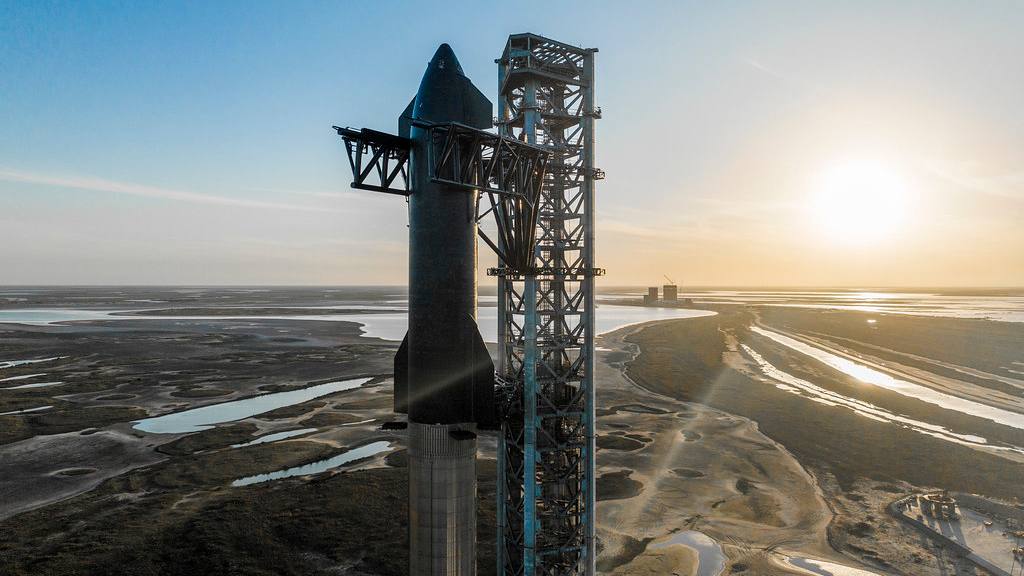
The final week of March 2026 has ignited a dramatic shift in the future of lunar exploration. With rapid technological breakthroughs and bold strategic pivots, both SpaceX and NASA are redefining how humanity will return to—and stay on—the Moon. From the powerful Starship V3 upgrade featuring Raptor 3 engines to NASA’s ambitious $20 billion lunar surface program, we are witnessing the beginning of a new space race—one that is not about flags and footprints, but long-term presence and sustainability.
In this in-depth, we’ll explore the latest developments, compare competing strategies, and analyze what this means for the future of space exploration.
Starship Flight 12: The Dawn of Version 3 (V3)
SpaceX is preparing for a historic milestone with Starship Flight 12, expected to launch in April 2026. This mission marks the debut of Starship Version 3 (V3)—a major leap forward from earlier prototypes.
What Makes Starship V3 Revolutionary?
Starship V3 is not just another iteration—it represents a shift from experimental testing to operational readiness. Key upgrades include:
- Enhanced structural durability
- Improved heat shielding for re-entry
- Full integration of next-generation Raptor 3 engines
- Increased payload capacity for deep-space missions
This version is designed to support frequent launches, lunar missions, and eventually Mars colonization.
Ship 39 (S39): Raptor 3 Integration Complete
One of the most exciting developments is the progress of Ship 39 (S39).
Cryogenic Testing Success
S39 has successfully completed cryogenic proof testing, ensuring that its tanks can handle extremely cold propellants like liquid methane and oxygen. This is a crucial step before engine ignition.
Full Engine Configuration
Unlike earlier prototypes, S39 is expected to fire all six engines simultaneously:
- 3 Sea-Level Raptor Engines
- 3 Vacuum-Optimized Raptor Engines
This full configuration will deliver an estimated 1,700 tons of thrust, making the upper stage alone more powerful than many current orbital rockets.
Why This Matters
This test will validate:
- Engine synchronization
- Structural integrity under maximum thrust
- Readiness for orbital missions
If successful, it could pave the way for routine Starship launches.
Booster 19 (B19): Powering the Future
While S39 handles the upper stage, Booster 19 (B19) is equally critical.
Record-Breaking Performance
B19 has already demonstrated:
- Massive fuel loading capacity
- Coordinated firing of multiple Raptor 3 engines
Upcoming Milestone: 33-Engine Static Fire
Engineers are preparing B19 for a full 33-engine static fire test, expected in early April.
This test will:
- Validate ignition sequencing
- Ensure stability under extreme thrust
- Confirm readiness for integrated flight with S39
Beyond Rockets: SpaceX’s Lunar Infrastructure Vision
SpaceX is thinking far beyond launches. The company is actively designing infrastructure for a lunar civilization.
The Lunar Mass Driver
A groundbreaking concept, the Lunar Mass Driver is an electromagnetic launch system built on the Moon.
How It Works
- Uses superconducting coils
- Accelerates payloads to 2.38 km/s (lunar orbital velocity)
- Eliminates the need for chemical propellants
Key Benefits
- Enables millions of launches from the Moon
- Reduces cost of transporting materials
- Supports large-scale lunar industry
This could fundamentally change how we move resources in space.
TerraFab: The Future of AI and Manufacturing
Another bold initiative is TerraFab, a massive manufacturing facility.
Key Features
- Covers 100 million square feet
- Produces 1 terawatt of AI compute annually
- Supports robotics, automation, and space systems
Why It Matters
TerraFab could:
- Power advanced AI systems
- Enable autonomous lunar construction
- Support Earth-based technologies like humanoid robots
NASA’s $20 Billion Pivot: A Surface-First Strategy
In a surprising move, NASA has shifted its focus away from the Lunar Gateway concept.
Why the Change?
The agency is now prioritizing:
- Permanent lunar presence
- Faster deployment timelines
- Reduced reliance on orbital infrastructure
This pivot reflects a broader realization: living on the Moon requires building directly on its surface.
The Three-Phase Lunar Roadmap
NASA’s new plan is structured into three phases:
Phase 1 (2026–2028): Build, Test, Learn
This phase focuses on early deployment and experimentation.
Key Elements
- 24 launches planned
- Robotic instruments and rovers
- Introduction of Moonfall drones
Moonfall System
These are hopping spacecraft designed to:
- Explore difficult terrain
- Operate in shadowed craters
- Map resources at the lunar South Pole
Phase 2 (2029–2032): Infrastructure Development
This stage introduces semi-permanent systems.
Goals
- Build habitable modules
- Establish regular supply missions
- Collaborate with international partners
Global Collaboration
Agencies like Japan’s space program will contribute advanced technologies such as pressurized rovers, enabling astronauts to travel longer distances safely.
Phase 3 (2033+): Permanent Lunar Base
The final phase aims to establish a human-tended lunar base.
Key Requirements
- Reliable heavy-lift systems
- Sustainable life-support infrastructure
- Continuous cargo delivery
This phase depends heavily on Starship’s Human Landing System (HLS).
SLS Overhaul: Simplifying NASA’s Launch System
NASA is also restructuring its Space Launch System (SLS) to improve efficiency.
Major Changes
Cancellation of Exploration Upper Stage (EUS)
- Originally developed by Boeing
- Cancelled due to cost overruns and delays
Introduction of Centaur 5
NASA has selected a new upper stage based on an existing design.
Why This Matters
- Reduces development time
- Increases launch frequency
- Improves reliability
The goal is to achieve one launch every 10 months, significantly faster than before.
The Competitive Landscape: SpaceX vs Blue Origin
The lunar race is no longer just national—it’s commercial.
SpaceX Advantages
- Fully reusable rocket system
- High payload capacity
- Rapid iteration and testing
Blue Origin’s Progress
Blue Origin continues developing its Blue Moon lander, focusing on:
- Precision landing
- Modular design
- Gradual improvements
Critical Challenges Ahead
For SpaceX to meet NASA’s timeline, it must prove three key capabilities:
1. Reliable Orbital Insertion
Starship must consistently reach orbit without failure.
2. Atmospheric Re-Entry and Recovery
Safe return is essential for reusability and cost reduction.
3. In-Orbit Refueling
Perhaps the most complex challenge:
- Requires precise docking
- Involves transferring cryogenic fuel in space
- Essential for deep-space missions
Success in these areas will determine whether Artemis III (mid-2027) stays on schedule.
The Bigger Picture: From Exploration to Colonization
The shift in strategy—from orbiting platforms to surface infrastructure—marks a profound change in human ambition.
Old Approach
- Short missions
- Orbital stations
- Limited surface interaction
New Approach
- Permanent habitats
- Resource utilization
- Industrial-scale operations
We are moving from visiting the Moon to living on it.
Conclusion: A New Era of Lunar Civilization
The developments of March 2026 signal more than technological progress—they represent a philosophical shift in how humanity approaches space.
- SpaceX is building the tools for scale and efficiency
- NASA is laying the groundwork for sustainability and collaboration
Together, they are shaping a future where the Moon becomes:
- A research hub
- A stepping stone to Mars
The race is no longer about who gets there first—it’s about who can stay, build, and thrive.
As Starship S39 prepares for its Raptor 3-powered firing and NASA accelerates its lunar base plans, one thing is clear:
The age of lunar civilization has officially begun.
FAQs
1. What is Starship S39?
Starship S39 is the latest prototype of SpaceX’s upper-stage spacecraft, designed for orbital missions and deep-space travel. It is part of the new Version 3 (V3) upgrade.
2. What are Raptor 3 engines?
Raptor 3 engines are SpaceX’s next-generation rocket engines, offering improved efficiency, higher thrust, and better reliability compared to earlier versions.
3. How many engines does Starship S39 have?
Starship S39 is expected to have six engines—three sea-level Raptors and three vacuum-optimized Raptors.
4. What is the total thrust of Starship S39?
The upper stage alone can generate approximately 1,700 tons of thrust, making it extremely powerful.
5. What is Starship Flight 12?
Flight 12 is the upcoming test mission that will debut the Starship V3 design and demonstrate its upgraded capabilities.
6. What is Booster 19 (B19)?
Booster 19 is the Super Heavy rocket booster that will launch Starship S39 into space.
7. How many engines does Booster 19 have?
Booster 19 is designed to use 33 Raptor engines, making it one of the most powerful rocket boosters ever built.
8. What is a static fire test?
A static fire test is when rocket engines are ignited while the vehicle is held in place to verify performance and safety before launch.
9. What is the Lunar Mass Driver?
The Lunar Mass Driver is a proposed electromagnetic system that can launch payloads from the Moon without using rocket fuel.
10. How does the Lunar Mass Driver work?
It uses superconducting coils to accelerate objects to lunar orbital velocity, eliminating the need for chemical propulsion.
11. What is TerraFab?
TerraFab is a massive manufacturing facility concept designed to produce advanced AI computing power and support space infrastructure.
12. Why did NASA cancel the Lunar Gateway?
NASA paused the Lunar Gateway to focus on building a permanent lunar base directly on the Moon’s surface.
13. What is NASA’s $20 billion lunar plan?
It is a surface-first strategy aimed at creating a sustainable human presence on the Moon through phased development.
14. What are the three phases of NASA’s lunar roadmap?
- Phase 1: Build, test, and learn (2026–2028)
- Phase 2: Infrastructure development (2029–2032)
- Phase 3: Permanent base (2033+)
15. What is the Moonfall drone system?
The Moonfall system consists of hopping drones designed to explore hard-to-reach areas of the lunar surface.
16. What is the SLS overhaul?
NASA is simplifying its Space Launch System (SLS) to increase launch frequency and reduce costs.
17. What replaced the Exploration Upper Stage (EUS)?
The Centaur 5 upper stage was selected to replace the cancelled EUS due to its reliability and performance.
18. What challenges does Starship still face?
Key challenges include:
- Reliable orbital launches
- Safe re-entry and recovery
- Complex in-orbit refueling
19. When will humans live permanently on the Moon?
If current plans succeed, a permanent human presence on the Moon could begin in the early 2030s.
Read More:
- Tesla hit by Iranian missile debris in Israel and survives
- SpaceX to launch military missile tracking satellites through new Space Force contract
- Elon Musk reveals date of SpaceX Starship v3’s maiden voyage
- Elon Musk calls out $2 trillion SpaceX IPO valuation as ‘BS’
- Tesla Semi $0.15/Mile KILLS Diesel! Elon Musk Confirms 13.5M Miles of Truth