


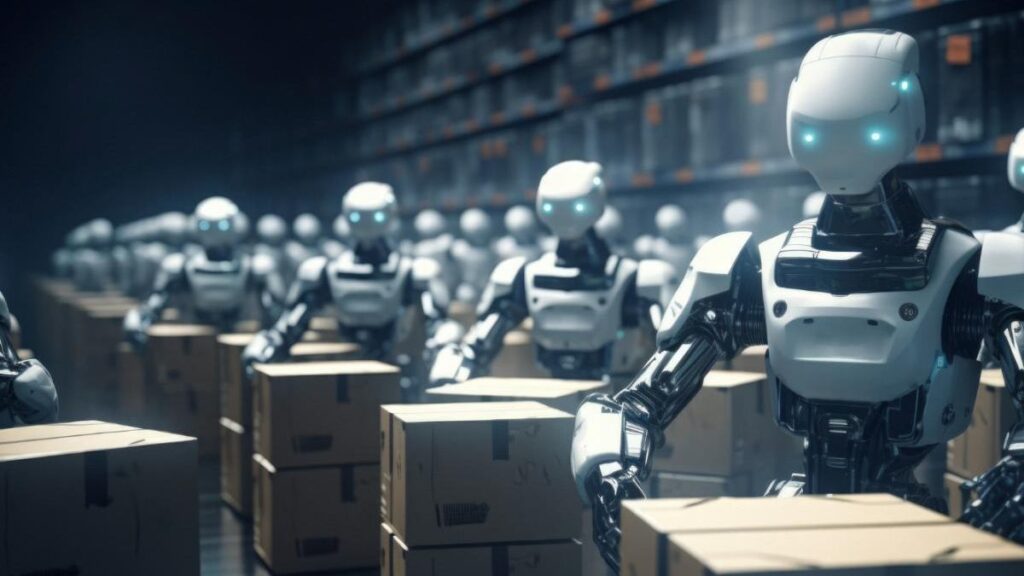
The year 2026 is shaping up to be a defining moment in technological history. Tesla, once widely known as an electric vehicle manufacturer, has now evolved into something far greater—a powerhouse in artificial intelligence, robotics, and semiconductor manufacturing. With groundbreaking developments like the Optimus Gen 3 humanoid robot, the massive TerraFab chip facility, and the refined Tesla Semi, the company is laying the foundation for what could become the next industrial revolution.
This blog explores the latest April 2026 updates, leaked specifications, and what they mean for industries, businesses, and everyday life.
Tesla’s Evolution: Beyond Electric Vehicles
Tesla is no longer just about cars. Over the past decade, the company has strategically expanded into AI-driven automation, robotics, and chip manufacturing. This transformation is not accidental—it’s part of a larger vision to create a vertically integrated ecosystem where software, hardware, and intelligence work seamlessly together.
The April 2026 leaks and announcements confirm that Tesla is positioning itself at the center of a global technological shift. At the heart of this transformation lies the Optimus Gen 3 robot.
Optimus Gen 3: The Most Transformative Product Ever Built
The Optimus Gen 3 humanoid robot is being described as Tesla’s most ambitious and potentially transformative product. Reports suggest that it is in its final stages of development, with a public unveiling expected soon.
The “Holy Grail” of Robotics: A Human-Level Hand
One of the most significant breakthroughs in Optimus Gen 3 is its 22-degree-of-freedom hand. This innovation represents a massive leap forward in robotics.
Why This Matters
- Human-like dexterity: The robot can manipulate objects with precision similar to human hands
- Dual functionality: Strong enough for industrial tasks and delicate enough for household activities
- Versatility: From lifting heavy equipment to handling fragile items like glassware
This advancement solves one of robotics’ biggest challenges—creating a hand that balances strength and precision.
Speed and Biomechanics: Moving Like a Human
Optimus Gen 3 isn’t just about intelligence—it’s also about movement.
Key Mobility Features
- Running speeds observed at nearly 6.8 mph
- Natural walking speed exceeding 4 mph
- Human-like gait with “flight phases” (both feet off the ground)
These features allow the robot to operate efficiently in real-world environments such as factories, warehouses, and even homes.
The Brain: Grok AI Integration
At the core of Optimus Gen 3 lies a powerful AI system powered by Grok.
What Makes It Revolutionary
- Natural language understanding: Users can give complex instructions
- Context awareness: The robot can break tasks into logical steps
- Adaptive learning: Improves performance over time
For example, a command like “clean the table and bring me water” is no longer a rigid instruction—it becomes a dynamic, multi-step process executed intelligently.
The Optimus Academy: Training at Scale
To support millions of robots, Tesla has built a sophisticated training system known as the Optimus Academy.
Three Pillars of Training
1. Human Imitation
Workers wear motion-capture suits to perform tasks, generating massive datasets that robots learn from.
2. Video-Based Learning
Robots can analyze online videos and replicate tasks such as cooking, cleaning, or assembling objects.
3. Simulation Scaling
Millions of virtual robots operate in simulated environments, testing billions of scenarios before real-world deployment.
This “sim-to-real” pipeline ensures that robots are highly trained before they ever interact with humans.
TerraFab: The Future of AI Infrastructure
To power its growing ecosystem, Tesla is building TerraFab—a massive chip manufacturing facility designed to handle unprecedented computing demands.
Unprecedented Scale
TerraFab is projected to be one of the largest industrial facilities ever constructed.
Key Highlights
- Estimated size: 100 million square feet
- Chip production: 100–200 billion units annually
- Scale far exceeding traditional chip factories
This facility is not just about manufacturing—it’s about enabling a global AI network.
The Two Super Chips
TerraFab will produce two advanced chip types, each serving a unique purpose.
AI5/AI6 Inference Chips
- Designed for robots and autonomous vehicles
- Capable of processing vast amounts of visual data
- Enable real-time decision-making
D3 Radiation-Hardened Chips
- Built for space environments
- Resistant to radiation and extreme conditions
- Designed for satellites and orbital computing
These chips could transform not just Earth-based industries but also space-based infrastructure.
Vertical Integration: Tesla’s Secret Weapon
Unlike traditional chip manufacturers, Tesla controls both design and production.
Advantages
- Faster innovation cycles
- Reduced dependency on third-party suppliers
- Seamless integration with AI systems
This approach allows Tesla to adapt rapidly, ensuring its hardware always keeps pace with its software advancements.
The 2026 Tesla Semi: Reinventing Transportation
While robotics and AI dominate headlines, Tesla hasn’t abandoned transportation. The latest Tesla Semi represents a major leap forward in logistics.
Weight Reduction and Aerodynamics
Tesla has significantly improved the Semi’s design.
Key Improvements
- Reduced weight by 1,000 lbs
- Drag coefficient of 0.4 (comparable to passenger cars)
- Enhanced efficiency and range
These changes make the Semi one of the most aerodynamic trucks ever built.
The Million-Mile Battery
The Semi introduces a battery designed to last up to one million miles.
Why This Is Game-Changing
- Lower lifetime costs
- Reduced maintenance
- Increased reliability for long-haul trucking
For fleet operators, this could drastically improve profitability.
Revolutionary Drivetrain System
The Semi uses a dual-axle drivetrain system optimized for both power and efficiency.
How It Works
- Torque Axle: Handles acceleration and heavy loads
- Efficiency Axle: Takes over during cruising
This intelligent switching system reduces energy consumption while maintaining performance.
Charging and Uptime
Charging infrastructure has also seen significant improvements.
Performance Metrics
- 1.2 megawatt fast charging
- 60% charge in just 30 minutes
- 95% uptime compared to 80–85% for diesel trucks
Higher uptime means more productivity and less downtime for operators.
The Bigger Picture: A Shift in Global Industry
Tesla’s innovations are not isolated—they are interconnected pieces of a larger transformation.
Automation and the Future of Work
The rise of humanoid robots raises important questions about employment.
What Changes
- Replacement of repetitive and dangerous jobs
- Increased efficiency in manufacturing and logistics
- Emergence of new roles in AI management and maintenance
Rather than eliminating work entirely, these technologies are expected to shift human focus toward more complex and creative tasks.
Safety and Trust in Robotics
Safety remains a top priority for Tesla’s robotics program.
Key Safety Measures
- Advanced encryption systems
- Physical emergency shutdown mechanisms
- Continuous monitoring and updates
The goal is to ensure that robots operating in human environments are safer than traditional machines.
Why 2026 Is a Turning Point
The convergence of robotics, AI, and manufacturing signals a major shift in how industries operate.
Three Pillars of Tesla’s Vision
- Optimus Gen 3: A robot capable of human-like work
- TerraFab: Infrastructure to power global AI systems
- Tesla Semi: Efficient, sustainable logistics
Together, these innovations form a complete ecosystem that could redefine productivity and efficiency.
Industries That Will Be Transformed
Manufacturing
Factories could operate with minimal human intervention, increasing output and reducing costs.
Logistics
Autonomous trucks and robots could streamline supply chains.
Healthcare
Robots may assist with patient care, freeing up professionals for more critical tasks.
Households
Everyday chores could be automated, changing how people spend their time.
Challenges and Considerations
Despite the excitement, there are challenges to address.
Ethical Concerns
- Job displacement
- AI decision-making transparency
- Data privacy
Technical Hurdles
- Scaling production
- Ensuring reliability
- Managing energy consumption
Regulatory Landscape
Governments will need to establish frameworks for AI and robotics integration.
Conclusion: The Dawn of a New Industrial Era
The April 2026 updates make one thing clear—Tesla is no longer just a car company. It is building the foundation for a future driven by intelligent machines, powerful computing infrastructure, and sustainable transportation.
Optimus Gen 3 represents the merging of human-like capability with machine precision. TerraFab provides the computational backbone needed to scale these systems globally. The Tesla Semi ensures that goods can move efficiently in this new world.
Together, these innovations signal the beginning of a new industrial era—one where AI, robotics, and energy systems work in harmony to reshape society.
As Tesla continues to push boundaries, the question is no longer whether this future will arrive—but how quickly it will transform the world we live in.
FAQs
1. What is Tesla Optimus Gen 3?
Tesla Optimus Gen 3 is the latest humanoid robot developed by Tesla, designed to perform both industrial and household tasks using advanced AI and human-like dexterity.
2. What makes Optimus Gen 3 different from previous versions?
The biggest upgrades include a 22-degree-of-freedom hand, improved walking and running biomechanics, and integration with advanced AI for natural language understanding.
3. What is meant by the “Holy Grail” specs of Optimus Gen 3?
The “Holy Grail” refers to achieving human-level hand dexterity and intelligence, allowing the robot to perform complex, real-world tasks with precision.
4. Can Tesla Optimus Gen 3 understand human commands?
Yes, it uses advanced AI to understand natural language instructions, enabling it to carry out multi-step tasks like cleaning, organizing, and assisting humans.
5. What is Grok AI and how is it used in Optimus Gen 3?
Grok AI is an advanced artificial intelligence system that powers Optimus Gen 3, allowing it to reason, learn, and respond intelligently to user commands.
6. How fast can Tesla Optimus Gen 3 move?
The robot can run at speeds of up to 6.8 mph and walk at over 4 mph, with movement that closely mimics human biomechanics.
7. What is the Optimus Academy?
The Optimus Academy is Tesla’s training system for robots, using motion capture, video learning, and simulations to teach robots real-world tasks.
8. What is Tesla TerraFab?
TerraFab is a massive semiconductor manufacturing facility designed to produce AI chips at an unprecedented scale to support Tesla’s robotics and autonomous systems.
9. How big is the TerraFab facility?
TerraFab is expected to span 100 million square feet, making it one of the largest manufacturing facilities ever built.
10. What types of chips will TerraFab produce?
It will produce AI inference chips (AI5/AI6) for robots and vehicles, and radiation-hardened chips (D3) for space applications.
11. What is special about the 2026 Tesla Semi?
The 2026 Tesla Semi features improved aerodynamics, a million-mile battery, and a dual-axle drivetrain, making it highly efficient and cost-effective.
12. How fast can the Tesla Semi charge?
With 1.2 megawatt fast charging, it can recharge up to 60% in just 30 minutes, significantly reducing downtime.
13. Will robots like Optimus replace human jobs?
While robots may replace repetitive and dangerous jobs, they are expected to create new opportunities in areas requiring creativity, empathy, and advanced thinking.
14. Is Tesla Optimus Gen 3 safe to use around humans?
Yes, Tesla is prioritizing safety with advanced encryption, monitoring systems, and emergency shutdown mechanisms.
15. When will Tesla Optimus Gen 3 be available to the public?
As of April 2026, Optimus Gen 3 is in its final development stages, with a potential unveiling expected soon, though a full commercial release timeline is yet to be confirmed.
Read More:
- New Tesla Model 2 ALUMINUM-ION Battery? 10,000 Cycles, Non-Flammable, -25°C Efficiency (2026)
- Starship S39 with Raptor 3 Installed Ready to Firing! NASA Lunar Moonbase
- Tesla hit by Iranian missile debris in Israel and survives
- SpaceX to launch military missile tracking satellites through new Space Force contract
- Elon Musk reveals date of SpaceX Starship v3’s maiden voyage