


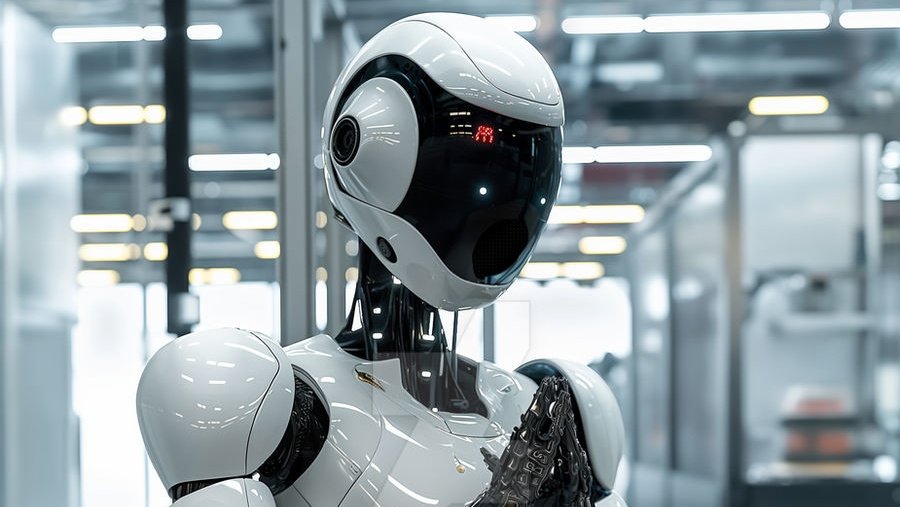
Tesla Bot Gen 3 In 10 Minutes, Best Cooking Robot Ever: The Tesla Bot Gen 3, also known as Optimus Gen 3, could represent a major turning point for humanoid robotics. While many robotics companies focus on impressive demonstrations such as backflips, sprinting, boxing, and other athletic movements, Tesla appears to be taking a different approach. The central goal is real-world economic utility—creating a humanoid robot capable of performing useful work in factories, warehouses, homes, and other complex environments.
The latest generation of Optimus is designed around dexterity, artificial intelligence, manufacturing efficiency, and scalable production. Instead of simply demonstrating what a robot can do physically, Tesla’s broader objective is to build a machine that can reliably perform tasks that currently require human hands and judgment.
What Makes Tesla Optimus Gen 3 Different?
The biggest change with Optimus Gen 3 is its shift from an experimental engineering platform toward a potentially mass-producible commercial robot.
Earlier versions of Optimus helped Tesla develop basic locomotion, balance, motor control, and robotic vision. Gen 2.5 introduced improvements such as enclosed wiring, smoother exterior panels, and a more refined appearance. However, building such a complex machine at extremely high volumes remains a significant engineering challenge.
Gen 3 is intended to address that problem through design for manufacturability (DFM).
Tesla’s philosophy reportedly emphasizes simplifying components, reducing unnecessary parts, and creating assemblies that can eventually be manufactured and assembled automatically. This approach is comparable to the company’s broader engineering philosophy used in other advanced manufacturing projects.
From Prototype to Mass Production
The evolution can be viewed as a simple progression:
- Gen 1 and Gen 2: Engineering prototypes focused on locomotion and basic robotic control.
- Gen 2.5: Improved exterior design, enclosed wiring, and more polished hardware.
- Gen 3: A redesigned architecture focused on commercialization and high-volume manufacturing.
This manufacturing strategy is particularly important because the economics of humanoid robots depend heavily on production volume.
Tesla has also discussed expanding manufacturing capacity for Optimus, with future facilities potentially capable of producing very large numbers of robots.
The Tesla Bot Gen 3 Hand Could Be Its Biggest Advantage
One of the most important parts of a humanoid robot is not its legs or ability to walk. It is the hand.
Walking and performing a backflip are impressive demonstrations, but practical automation requires a robot to manipulate objects accurately. A useful household robot may eventually need to pick up an egg, open a refrigerator, operate a stove, wash dishes, move cookware, and handle objects without breaking them.
That’s where the Optimus Gen 3 hand becomes particularly interesting.
22 Degrees of Freedom
Tesla’s Gen 3 hand is designed with 22 degrees of freedom (DoF) per hand, compared with approximately 11 DoF in an earlier generation.
More degrees of freedom allow the fingers to move in a much more sophisticated and human-like manner. This can potentially improve the robot’s ability to grasp objects of different shapes, adjust its grip, and perform delicate manipulation.
For applications such as cooking, assembly, packaging, and household assistance, this level of dexterity could be far more important than running speed.
Tendon-Driven Robotic Fingers
Another major architectural change is the placement of actuators.
Instead of putting heavy motors directly into the fingers, Gen 3 moves key actuators into the forearm. Tendon-like mechanical cables can then transfer force through the wrist and into the fingers.
This bio-inspired design can reduce the weight and bulk of the hand while providing greater mechanical flexibility.
The result could be a lighter manipulator capable of making faster and more precise movements.
Advanced Tactile Sensors
Vision alone is not enough for delicate manipulation.
Optimus Gen 3 is designed to use a significantly higher-density tactile sensing system. These sensors can provide information about pressure, contact, texture, and slippage.
Imagine the robot holding an egg. Cameras can tell the robot where the egg is, but tactile sensors can help determine whether the egg is slipping or whether the gripping force is becoming excessive.
That combination of computer vision and tactile feedback is essential for making a robot useful in unpredictable physical environments.
AI5: The Computing Power Behind Physical AI
Hardware is only half the equation. A humanoid robot also needs extremely fast software and computing systems.
Tesla’s proposed AI5 computing architecture is intended to process visual information and sensor data with very low latency. Robotics systems must continuously process information from cameras, joint sensors, inertial measurement units, and tactile sensors.
If processing takes too long, a robot can hesitate or make an incorrect movement.
Faster Memory and Lower Latency
AI5 is expected to offer a substantial improvement in memory bandwidth compared with previous Tesla AI hardware. Higher bandwidth can help neural networks process large amounts of sensor information more efficiently.
For a physical AI system, milliseconds matter.
The robot needs to see an object, understand its position, calculate a trajectory, monitor its joints, adjust its grip, and respond to unexpected movement—all while continuing to operate.
This is why edge AI is so important for humanoid robotics.
How Grok and AI5 Could Work Together
A practical Optimus robot may require two different levels of intelligence.
The first is a high-level reasoning system, potentially involving Grok. The second is a fast, local motor-control system running directly on the robot.
For example, a person could tell Optimus:
“Prepare breakfast and clean the kitchen.”
A high-level AI could break that broad instruction into smaller tasks. It might identify the required objects, determine the order of operations, and understand the surrounding context.
The local AI system would then handle the physical execution.
High-Level vs. Low-Level Intelligence
The architecture can be understood like this:
- Grok or high-level AI: Understands language, context, goals, and multi-step instructions.
- AI5/local control: Handles vision, balance, trajectories, sensor feedback, and rapid motor corrections.
- Tactile systems: Monitor contact, pressure, and object movement.
- Actuators: Convert digital decisions into physical movement.
This separation could allow Optimus to respond intelligently while maintaining the extremely fast reaction times required for safe physical operation.
The Biggest Challenge: Physical AI
Developing a robot that works in the real world is much harder than developing software that operates inside a computer.
A smartphone application can crash and restart. A large humanoid robot cannot simply “crash” without potentially creating a physical hazard.
Real-world environments contain unpredictable lighting, clutter, slippery surfaces, moving people, unusual objects, and constantly changing conditions.
Tesla therefore faces the difficult problem of teaching Optimus to handle rare situations and unexpected physical interactions.
Safety and Real-Time Control
Safety systems can include hardware-level power limits, force thresholds, obstacle detection, balance correction, and rapid emergency responses.
If the robot detects unexpected resistance while moving its arm, for example, it needs to respond immediately rather than waiting for a high-level AI system to reconsider the instruction.
This combination of AI reasoning and low-level safety control could become one of the most important aspects of commercial humanoid robotics.
How Much Could Tesla Optimus Gen 3 Cost?
The economics of Optimus will ultimately determine whether it becomes a mainstream product.
Early commercial humanoid robots are expected to be expensive because production volumes are low and advanced components require significant investment.
Potential pricing scenarios discussed around the Optimus concept include:
- Early commercial range: Approximately $50,000–$70,000.
- Long-term mass-market target: Approximately $20,000–$30,000.
At lower prices, humanoid robots could become attractive beyond factories and warehouses.
A robot costing tens of thousands of dollars could potentially be evaluated as a long-term productivity investment rather than simply an expensive research machine.
Why Optimus Gen 3 Could Change Robotics
The most important aspect of Tesla Optimus Gen 3 may not be its ability to walk, run, or perform impressive demonstrations.
Its real significance could come from manipulation and scalability.
A robot that can reliably perform repetitive factory work, logistics tasks, household chores, food preparation, and other forms of physical labor could have enormous economic implications.
Tesla’s approach focuses on combining high-dexterity hands, tactile sensing, computer vision, custom AI silicon, advanced actuators, and high-volume manufacturing into one platform.
If the company can successfully solve reliability, safety, manufacturing cost, and real-world generalization, Optimus could move humanoid robotics from demonstrations into everyday applications.
Final Thoughts
Tesla Bot Gen 3 represents a potentially important step toward practical humanoid robotics. Its focus on 22-DoF hands, tactile sensing, AI5 computing, low-latency control, and manufacturing simplification suggests that Tesla is targeting the difficult problems behind useful physical automation.
The ultimate test will not be whether Optimus can perform a spectacular backflip. It will be whether the robot can safely and repeatedly complete ordinary tasks—pick up fragile objects, cook food, organize a workspace, work alongside humans, and perform useful labor at a competitive cost.
If Tesla can make that vision work at scale, Optimus Gen 3 could become much more than a robotics demonstration. It could become a foundation for a new generation of physical AI and automated labor.
FAQs
1. What is Tesla Bot Gen 3?
Tesla Bot Gen 3, also called Optimus Gen 3, is Tesla’s next-generation humanoid robot platform. It is designed to perform useful physical tasks using advanced AI, robotic hands, sensors, actuators, and onboard computing.
2. What can Tesla Optimus Gen 3 do?
Optimus Gen 3 is being developed for tasks such as factory work, logistics, object handling, household chores, cleaning, and potentially cooking. Its high-dexterity hands are intended to help it manipulate both large and delicate objects.
3. Is Tesla Bot Gen 3 a cooking robot?
Tesla Optimus is not exclusively a cooking robot. However, its high-dexterity hands, tactile sensing, computer vision, and AI systems could eventually allow it to perform cooking-related tasks such as handling ingredients, cookware, and kitchen appliances.
4. How many degrees of freedom does the Optimus Gen 3 hand have?
The Optimus Gen 3 hand is designed with 22 degrees of freedom (DoF) per hand. This is intended to provide more sophisticated finger movement and greater manipulation capabilities than earlier versions.
5. Why are 22-DoF hands important for Optimus?
More degrees of freedom can provide greater finger articulation and control. This is particularly useful when handling fragile or irregular objects, where a simple robotic gripper may not provide enough flexibility.
6. Does Tesla Optimus Gen 3 have tactile sensors?
Yes. The Gen 3 concept includes high-density tactile sensing designed to detect contact, pressure, texture, and potential object slippage. This information can help the robot adjust its grip during delicate tasks.
7. What is AI5 in Tesla Optimus?
AI5 refers to Tesla’s next-generation AI computing hardware intended to support advanced physical AI applications. In Optimus, local computing could process vision, sensor information, movement, and other real-time control requirements.
8. What is the role of Grok in Optimus Gen 3?
A high-level AI such as Grok could potentially help Optimus understand natural-language instructions and break complicated requests into multiple steps. Local robotic computing would then handle the fast physical execution of those instructions.
9. How would Optimus cook an egg?
A future Optimus could theoretically use high-level AI to understand a command such as “cook an egg,” identify the required objects, and organize the task into steps. Its vision, tactile sensors, and motor-control systems would then be responsible for physically manipulating the egg, pan, stove, and other objects.
10. Is Tesla Optimus better than robots that perform backflips?
Backflips and other athletic demonstrations show impressive robotic balance and dynamic control, but Tesla’s Optimus strategy emphasizes practical manipulation and economic usefulness. For commercial applications, the ability to reliably handle objects may be more valuable than performing athletic stunts.
11. What makes Optimus Gen 3 different from earlier generations?
Gen 3 focuses heavily on manufacturing simplification, dexterity, sensing, AI computing, and commercial scalability. Tesla’s objective is to move beyond an experimental prototype toward a robot that can eventually be produced at high volume.
12. How much could Tesla Optimus Gen 3 cost?
Early commercial versions could potentially cost around $50,000 to $70,000, while long-term high-volume production could potentially bring the price toward $20,000 to $30,000. Actual pricing will depend on production scale, hardware costs, and Tesla’s commercial strategy.
13. Will Optimus Gen 3 be used in Tesla factories?
One of the most likely early applications for Optimus is industrial automation. Humanoid robots could potentially perform repetitive, hazardous, or physically demanding tasks in factories and warehouses where automation provides a measurable economic benefit.
14. Can Optimus Gen 3 work safely around humans?
Safety is one of the biggest challenges for any humanoid robot. Optimus would need real-time obstacle detection, force monitoring, balance control, hardware safeguards, and reliable AI decision-making to operate safely around people and unpredictable environments.
15. Why is mass production important for Tesla Optimus?
Humanoid robots can be extremely expensive to manufacture. Mass production, simplified designs, automated assembly, and supply-chain optimization could reduce unit costs and make robots more economically viable for businesses and eventually consumers.
16. Could Tesla Optimus Gen 3 replace human workers?
Optimus could potentially automate some repetitive, dangerous, or physically demanding tasks, but widespread replacement of human workers would depend on reliability, cost, safety, regulations, and the robot’s ability to handle unpredictable real-world situations. The more immediate goal is likely to complement existing automation and human labor.
Read More: