
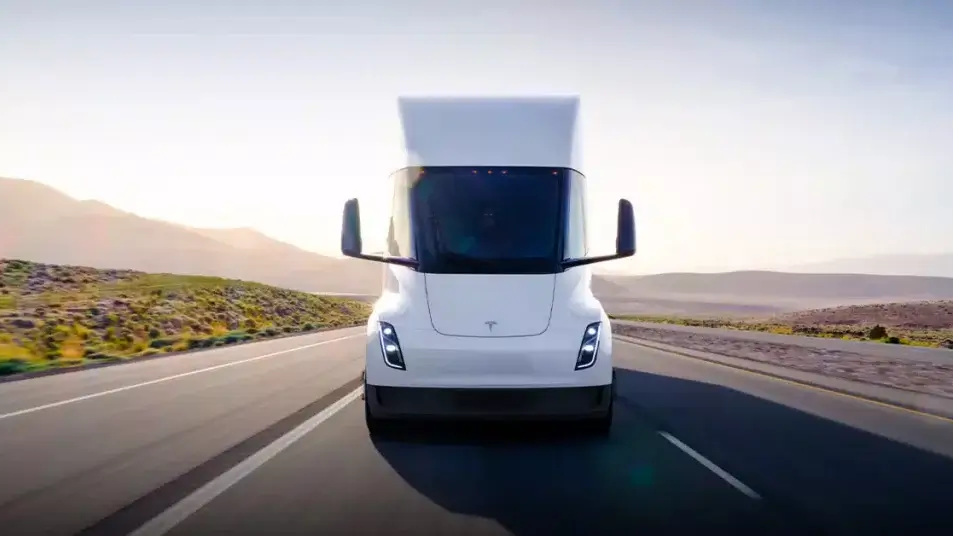
The debate around electric trucks has finally reached its tipping point. For years, critics doubted whether the Tesla Semi could truly replace diesel-powered giants in the demanding world of logistics. Questions about performance, durability, efficiency, and cost dominated discussions across the industry.
Now, in 2026, those doubts are rapidly fading.
With over 13.5 million real-world miles logged, the Tesla Semi is no longer a futuristic concept—it is a proven, high-performance logistics machine. Backed by data and operational success, even Elon Musk has doubled down on his claim: this truck isn’t just competitive—it’s a “money-making machine.”
The Economics of $0.15 Per Mile: A Logistics Revolution
In the trucking industry, cost per mile determines survival. Margins are tight, fuel prices fluctuate, and efficiency can make or break entire fleets. This is where the Tesla Semi delivers its most disruptive advantage.
Real-World Energy Consumption vs Diesel Costs
Pilot programs across the United States—especially large-scale operations in Texas—have revealed astonishing numbers:
- Tesla Semi Efficiency: ~1.64 kWh per mile
- Average Electricity Cost: ~$0.09 per kWh
- Total Energy Cost: ~$0.15 per mile
Compare that with a standard diesel truck:
- Fuel Efficiency: ~6.5 MPG
- Diesel Price: ~$3.11 per gallon
- Operating Cost: ~$0.48 per mile
👉 Result: The Tesla Semi operates at less than one-third the cost of diesel trucks.
The $33,000 Annual Savings Per Truck
Let’s break it down with real numbers:
- Annual Distance: 100,000 miles
- Diesel Fuel Cost: ~$48,000
- Tesla Semi Electricity Cost: ~$15,000
💰 Annual Savings: $33,000 per truck
Now scale that:
- Fleet of 100 trucks: $3.3 million saved annually
- 10-year savings: Tens of millions of dollars
This isn’t just cost reduction—it’s a fundamental economic shift in freight transport.
Engineering Excellence: Why Tesla Semi Is So Efficient
The remarkable $0.15 per mile cost isn’t accidental. It’s the result of deep, system-wide engineering innovation.
Weight Optimization and Aerodynamics
Tesla has reimagined truck design from the ground up:
- 1,000 lbs lighter due to integrated battery-chassis design
- Maintains full 82,000 lb gross vehicle weight limit
- Drag coefficient: 0.36 (vs. 0.6–0.7 in diesel trucks)
Why does this matter?
At highway speeds, 50–60% of energy is spent overcoming air resistance. By reducing drag dramatically, the Tesla Semi uses far less energy per mile—a key factor in its cost advantage.
Dual-Axle Drivetrain: Smart Power Distribution
The Tesla Semi features a sophisticated tri-motor system, divided into two functional axles:
1. Torque Axle
- Handles acceleration and steep inclines
- Provides instant electric torque for heavy loads
2. Efficiency Axle
- Optimized for steady highway cruising
- Takes over once the truck reaches speed
💡 Key Innovation:
At cruising speeds, the torque axle disengages completely, eliminating mechanical drag and maximizing efficiency.
Durability and Reliability: Built for the Long Haul
Efficiency is meaningless without reliability—and this is where the Tesla Semi truly surprises critics.
95% Uptime: A Massive Industry Leap
- Diesel fleet uptime: 80–85%
- Tesla Semi uptime: ~95%
This means:
- Less downtime
- More deliveries
- Higher profits
440,000 Miles Without Major Overhaul
One Tesla Semi unit has already crossed 440,000 miles without requiring a significant rebuild.
In contrast, diesel trucks typically need:
- Engine overhauls
- Transmission servicing
- Exhaust system maintenance
Electric drivetrains eliminate many of these failure points, offering simpler, more durable mechanics.
Extreme Weather Performance: Tested in -40°C
Cold weather has long been a concern for EVs. Tesla tackled this head-on:
- Tested in Alaska at -40°C
- Maintained battery efficiency using advanced thermal systems
- Delivered superior traction thanks to instant torque
The result? The Tesla Semi performs reliably in conditions where diesel trucks struggle.
The Human Advantage: Redefining the Driver Experience
The trucking industry is facing a severe driver shortage, and Tesla understands that technology alone isn’t enough. The Tesla Semi is designed to improve driver comfort, safety, and usability.
Central Seating Position: A Game-Changer
Unlike traditional trucks, the Tesla Semi places the driver in the center of the cabin.
Benefits include:
- Elimination of blind spots
- Improved lane alignment
- Better road visibility
This design creates a more intuitive and safer driving experience.
Digital Cockpit and 360° Awareness
The cabin is fully digitized:
- Dual 16-inch touchscreens
- Real-time navigation and energy monitoring
- Live camera feeds replacing mirrors
A 10-camera system provides:
- 360-degree visibility
- Clear vision in rain, fog, and snow
Safety and Comfort Features
Tesla has integrated advanced features focused on driver well-being:
- Driver monitoring system tracks eye movement for fatigue detection
- Ultra-quiet cabin reduces stress and noise fatigue
- Smart ergonomics:
- Wireless charging
- Optimized storage
- Better cup holder placement
These seemingly small upgrades make a huge difference in daily operations.
Why Diesel Trucks Are Becoming Obsolete
The rise of the Tesla Semi signals more than innovation—it represents a structural transformation in logistics.
Key Advantages Over Diesel Trucks
✔ Lower Operating Costs
✔ Higher Uptime
✔ Reduced Maintenance
✔ Better Driver Experience
✔ Zero Tailpipe Emissions
Diesel trucks, once the backbone of global freight, are now facing technological obsolescence.
The Bigger Picture: A Global Logistics Transformation
The Tesla Semi isn’t just changing trucking—it’s reshaping the entire supply chain ecosystem.
Fleet-Level Impact
Companies adopting electric fleets can expect:
- Massive cost savings
- Improved delivery efficiency
- Lower environmental impact
Environmental Benefits
While economics drive adoption, sustainability is an added advantage:
- Reduced carbon emissions
- Lower air pollution
- Cleaner urban environments
Conclusion: The $0.15 Per Mile Truth
The Tesla Semi has crossed a critical milestone—from promise to proof.
With:
- 13.5 million real-world miles
- $0.15 per mile operating cost
- Up to $33,000 annual savings per truck
- Superior durability and driver experience
…it’s clear that this is not just an alternative to diesel—it’s a complete replacement.
As Elon Musk boldly stated, the Tesla Semi is a “money-making machine.” And based on the data, that claim is no longer speculative—it’s reality.
🚛 The future of trucking is electric—and it’s already here.
FAQs
1. What is the Tesla Semi?
The Tesla Semi is a fully electric Class 8 truck designed by Tesla to replace traditional diesel-powered freight trucks with a more efficient and cost-effective solution.
2. How much does the Tesla Semi cost per mile to operate?
The Tesla Semi operates at approximately $0.15 per mile, making it significantly cheaper than diesel trucks, which average around $0.48 per mile.
3. How many miles has the Tesla Semi driven in real-world tests?
Tesla Semi pilot fleets have collectively driven over 13.5 million miles, proving its real-world reliability and performance.
4. How far can the Tesla Semi travel on a single charge?
The Tesla Semi can travel up to 500 miles on a full charge, even with heavy cargo loads.
5. How does the Tesla Semi compare to diesel trucks in fuel costs?
Diesel trucks typically cost three times more per mile than the Tesla Semi, making electric trucking far more economical.
6. What are the annual savings of using a Tesla Semi?
A Tesla Semi can save around $33,000 per year per truck, depending on usage and electricity rates.
7. Who is behind the Tesla Semi project?
The project is led by Elon Musk, who has described the truck as a “money-making machine.”
8. What is the energy consumption of the Tesla Semi?
The Tesla Semi consumes about 1.64 kWh per mile, making it highly energy-efficient for long-haul transportation.
9. How reliable is the Tesla Semi?
Tesla Semi fleets report around 95% uptime, which is significantly higher than traditional diesel trucks.
10. How long can the Tesla Semi last without major maintenance?
Some Tesla Semi units have exceeded 440,000 miles without major overhauls, showcasing excellent durability.
11. Can the Tesla Semi handle heavy loads?
Yes, the Tesla Semi can haul up to 82,000 lbs gross vehicle weight, matching industry standards for diesel trucks.
12. How does the Tesla Semi perform in extreme weather?
The Tesla Semi has been tested in temperatures as low as -40°C, maintaining performance and efficiency even in harsh conditions.
13. What makes the Tesla Semi more efficient than diesel trucks?
Its efficiency comes from:
- Advanced aerodynamics
- Lightweight design
- Electric drivetrain with fewer moving parts
14. Does the Tesla Semi have good acceleration?
Yes, thanks to its electric motors, the Tesla Semi delivers instant torque, allowing faster acceleration even with heavy loads.
15. What safety features does the Tesla Semi offer?
The Tesla Semi includes:
- 360-degree camera system
- Driver fatigue monitoring
- Central seating for better visibility
16. How is the driver experience different in the Tesla Semi?
The Tesla Semi offers:
- Central driving position
- Dual touchscreen displays
- Quiet, ergonomic cabin
17. Is the Tesla Semi environmentally friendly?
Yes, the Tesla Semi produces zero tailpipe emissions, making it a cleaner alternative to diesel trucks.
18. Will the Tesla Semi replace diesel trucks completely?
While adoption will take time, the Tesla Semi’s lower costs, higher efficiency, and better performance suggest it could eventually replace most diesel trucks in the future.
Read More:
- SpaceX’s Raptor 4 Just Did Something No Rocket Engine Has Ever Done Before
- Tesla Pi Phone 2026: $199 leak + no-monthly-bill Starlink + 7yr battery + XOS limits
- NASA’s Artemis II Moon Rocket is finally on Pad for Launch in 2 Days. Why Risk it?
- NASA sends humans to the Moon for the first time since 1972 – Here’s what’s next
- Tesla reports Q1 deliveries, missing expectations slightly