


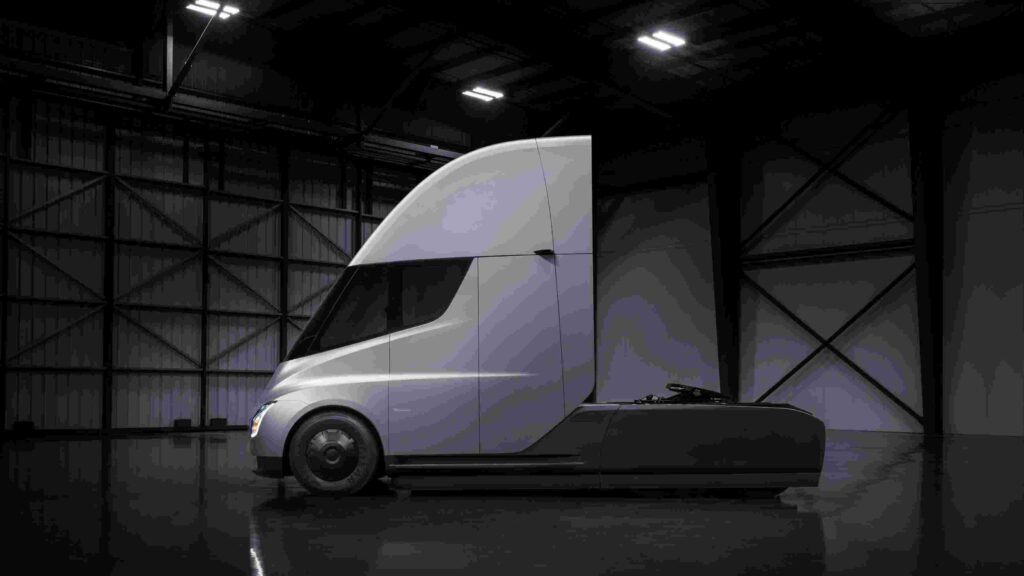
The Tesla Semi 2.0 is no longer a futuristic concept—it is rapidly becoming one of the most disruptive vehicles in modern transportation. After years of skepticism, delays, and limited pilot programs, Tesla has officially confirmed that the Tesla Semi is entering mass production, with a commercial launch targeted for 2026. Backed by extensive real-world testing, redesigned engineering, and a purpose-built factory in Nevada, the Semi is now positioned to challenge diesel dominance in the heavy-duty trucking industry.
With a 497-mile real-world range, 1.2 MW ultra-fast charging, and the ability to haul up to 75,000 lbs, the Tesla Semi 2.0 represents a fundamental shift in how freight can be moved—cleaner, quieter, and more efficiently than ever before.
In this in-depth SEO-friendly guide, we’ll break down everything you need to know about the Tesla Semi 2.0, including its design upgrades, performance specs, pricing, factory progress, battery technology, and autonomous future.
Tesla Semi 2.0: From Prototype to Mass Production Reality
For years, the Tesla Semi existed in what many called “development limbo.” First unveiled in 2017, it generated massive excitement but little tangible output. Fewer than 500 units were built globally, and all were considered experimental prototypes, not final production models.


That has now changed.
According to Dan Priestley, Tesla Semi Program Manager, Tesla has entered the final refinement phase, with the explicit goal of launching the Semi into full commercial production in 2026. More than 300 Tesla Semi trucks are currently operating daily across Tesla’s internal logistics network and with partners such as:
These trucks are no longer just test mules—they are proving the Semi’s viability in real logistics operations.
497-Mile Range With a Full 75,000 lb Load
One of the most impressive achievements of the Tesla Semi 2.0 is its near-500-mile range on a single charge, even while carrying a maximum legal payload of up to 75,000 pounds.
Key Range & Efficiency Highlights
- Real-world range: ~497 miles
- Energy consumption: ~1.5–1.7 kWh per mile
- Daily operational use: Confirmed across multiple fleet operators
This level of efficiency is unprecedented in the Class 8 truck segment, where traditional diesel trucks typically burn massive amounts of fuel over similar distances.
1.2 Megawatt Fast Charging: A Game Changer for Fleets
Charging downtime has always been the biggest obstacle for electric trucks. Tesla addresses this head-on with its Mega Charger system, capable of delivering up to 1.2 megawatts (MW) of DC fast charging power.
What This Means in Practice
- 70% battery recharge in ~30 minutes
- Charging aligns with mandatory driver rest periods
- Minimal disruption to delivery schedules
- Higher fleet utilization and lower operational costs
For logistics companies, this dramatically changes the economics of electric trucking.
Tri-Motor Powertrain With 800 kW of Power
At the heart of the Tesla Semi 2.0 is a tri-motor electric powertrain producing approximately 800 kW of output.
Performance Capabilities
- Top speed: ~170 km/h (105 mph)
- Instant torque for heavy loads
- Exceptional hill-climbing ability, even on steep grades like Donner Pass
- Smooth, quiet acceleration under full payload
Unlike diesel trucks, electric motors maintain consistent power delivery without gear changes, improving both efficiency and driver comfort.

Exterior Redesign: Aerodynamics Meet Functionality
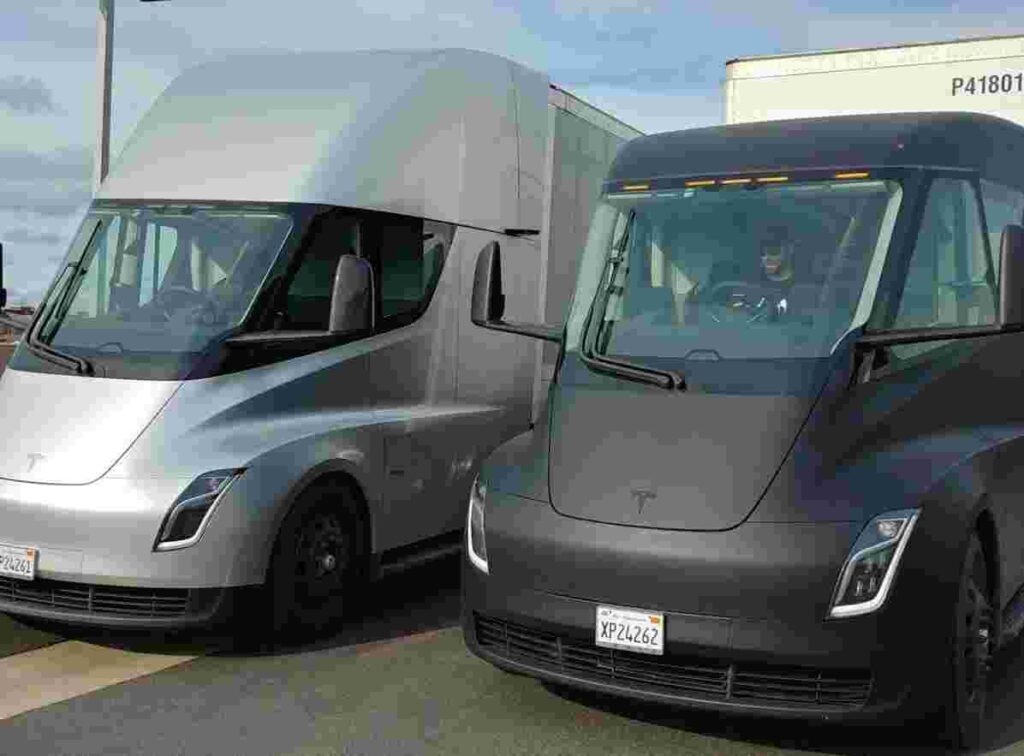
While many of the Tesla Semi’s upgrades are hidden beneath the surface, the exterior has received a near-complete redesign.
Key Design Updates
- New horizontal LED light bar, inspired by Cybertruck and Model Y
- Simplified front bumper for easier repair and lower costs
- Smoothed roofline to reduce turbulence
- Smaller windshield, cutting drag and manufacturing expense
- Improved airflow channels for better efficiency
These changes enhance the Semi’s already impressive drag coefficient of ~0.36, with the Gen 2 version potentially reaching as low as 0.33—nearly half that of conventional diesel trucks.
Electric Doors: Innovation or Overreach?
One of the most debated features of the Tesla Semi 2.0 is the possibility of powered electric doors.
Tesla has already introduced powered doors on the Model Y and Cybertruck, and early Semi prototypes appear to emphasize aerodynamic side access panels rather than traditional hinged doors.
Why Electric Doors Matter
- Improved aerodynamics
- Reduced drag
- Potential obstacle detection and safety features
- Smoother operation in tight loading areas
While still under testing, early data suggests this design could work surprisingly well for heavy-duty trucks—though Tesla is proceeding cautiously.
Real-World Testing: Proven Under Extreme Conditions
Tesla’s claims are backed by extensive real-world data, not just simulations.
ABF Freight Trial Results
- Distance covered: 4,494 miles in 3 weeks
- Average daily mileage: 321 miles
- Energy consumption: 1.55 kWh per mile
- Terrain: Included steep mountain routes like Donner Pass (7,200 ft elevation)
These figures outperform Tesla’s own earlier estimates and confirm the Semi’s ability to handle demanding freight routes.
Other successful trials from PepsiCo, DHL, SIA, and the Run on Less 2023 event further validate its performance, with some Semis exceeding 1,000 miles per day using fast charging.


Driver Experience: A New Standard for Comfort
Tesla hasn’t ignored the human factor. Driver feedback has been overwhelmingly positive.
Driver-Centric Features
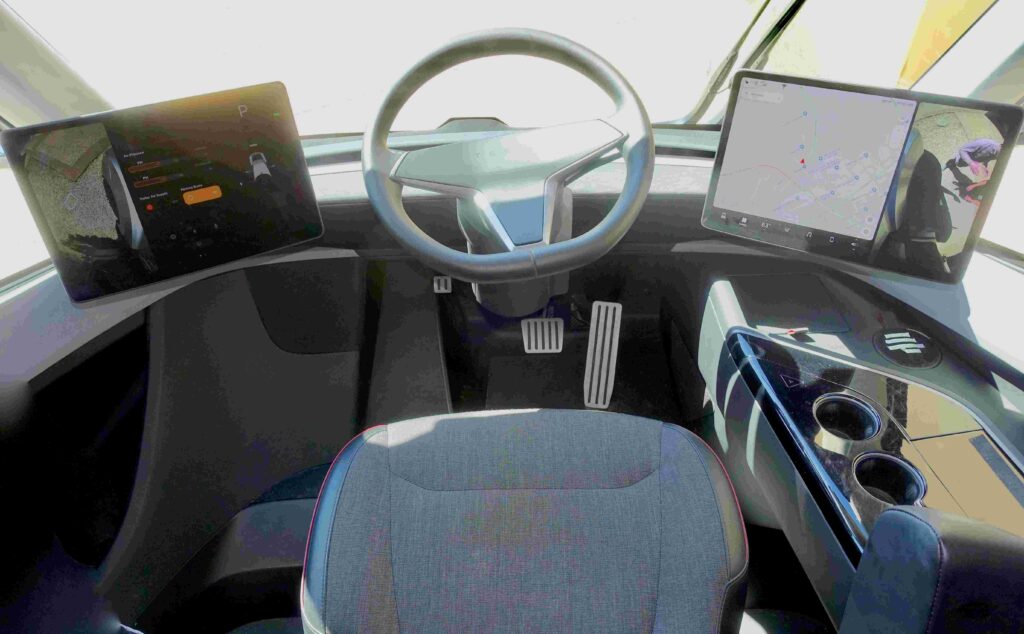
- Centrally positioned seat for superior visibility
- Wide field of view
- Smooth acceleration
- Intuitive digital controls
- Reduced noise and vibration
These improvements reduce fatigue and make long-haul driving safer and more comfortable.
Tesla Semi Factory: Production Is Accelerating
Tesla is building a dedicated Semi factory near Gigafactory Nevada, designed exclusively for high-volume truck production.
Factory Status
- Exterior construction nearly complete
- Production line installation underway
- Initial manufacturing expected before full ramp-up
- Target capacity: Up to 50,000 trucks per year
This facility marks a turning point, transforming the Semi from a limited prototype into a scalable industrial product.
Battery Technology: 4680 Cells Take Center Stage
The Tesla Semi Gen 2 transitions to 4680 battery cells, delivering major advantages:
- Higher energy density
- Improved thermal stability
- Structural integration into the chassis
- Lower center of gravity
- Enhanced durability under heavy loads
The long-range version is expected to carry an ~850 kWh battery pack, while Tesla continues refining advanced liquid cooling systems to manage extreme heat during sustained operation.
Pricing: Two Versions for Different Markets
Tesla is reportedly preparing two Semi variants:
Long-Range Tesla Semi
- Range: ~500 miles
- Estimated price: ~$200,000
- Ideal for long-haul operations
Standard-Range Tesla Semi
- Range: ~300 miles
- Estimated price: ~$150,000
- Designed for regional and short-haul fleets
Battery chemistry choices may evolve as Tesla expands domestic LFP production in the future.

Autonomy & Full Self-Driving: The Long-Term Vision
The Tesla Semi Gen 2 is designed from the ground up for Full Self-Driving (FSD) readiness.
Autonomous Features in Development
- Optimized camera placement
- Dedicated onboard computing cooling
- Standardized hardware across fleets
- Software-first architecture
While full autonomy will remain supervised initially, Tesla’s goal is clear: a fully autonomous, zero-emission Class 8 truck operating nearly nonstop.
Final Thoughts: Is the Tesla Semi the Future of Trucking?
The Tesla Semi 2.0 is no longer a promise—it’s a proven platform backed by data, infrastructure, and manufacturing scale. With unmatched efficiency, industry-leading range, and a clear production roadmap, Tesla is poised to redefine freight transportation.
Whether you’re a fleet operator, investor, or EV enthusiast, one thing is clear: the era of electric long-haul trucking has officially begun.
FAQs
1. What is the Tesla Semi 497-mile version?
The Tesla Semi 497-mile version is the long-range variant of Tesla’s all-electric Class 8 truck, capable of traveling nearly 500 miles on a single charge while fully loaded.
2. When will the Tesla Semi enter mass production?
Tesla has confirmed that the Tesla Semi will enter volume production in 2026, following final refinement and factory ramp-up in Nevada.
3. What is the maximum payload capacity of the Tesla Semi?
The Tesla Semi can carry up to 75,000 lbs (gross combined weight), matching the legal limit for heavy-duty trucks in the U.S.
4. How far can the Tesla Semi really drive on one charge?
In real-world testing, the Tesla Semi has demonstrated a range of approximately 497 miles, even under full load and mixed terrain conditions.
5. How fast can the Tesla Semi charge?
The Tesla Semi supports up to 1.2 megawatts (MW) of DC fast charging using Tesla’s Mega Charger system.
6. How long does it take to charge the Tesla Semi?
With Mega Charging, the Semi can recharge about 70% of its battery in roughly 30 minutes, aligning with mandatory driver rest breaks.
7. What kind of motors does the Tesla Semi use?
The Tesla Semi features a tri-motor electric powertrain delivering around 800 kW of power for strong acceleration and hill-climbing.
8. What is the top speed of the Tesla Semi?
The Tesla Semi can reach a top speed of approximately 170 km/h (105 mph), though operational speeds are typically governed for safety and efficiency.
9. Does the Tesla Semi have electric or powered doors?
Tesla is testing powered electric doors on the Semi, though it has not yet confirmed whether they will be standard on the production model.
10. What is the aerodynamic drag coefficient of the Tesla Semi?
The Tesla Semi has a drag coefficient of around 0.36, with the Gen 2 version potentially improving to as low as 0.33, far better than diesel trucks.
11. What battery technology does the Tesla Semi use?
The Tesla Semi Gen 2 is expected to use 4680 battery cells, offering higher energy density, better thermal management, and structural integration.
12. How efficient is the Tesla Semi compared to diesel trucks?
The Tesla Semi averages about 1.5–1.7 kWh per mile, making it significantly more energy-efficient and cheaper to operate than diesel alternatives.
13. What companies are testing the Tesla Semi?
Major companies testing the Tesla Semi include PepsiCo, DHL, Walmart, Costco, US Foods, Cisco, and ABF Freight.
14. How much will the Tesla Semi cost?
The long-range 500-mile Tesla Semi is expected to cost around $200,000, while a shorter-range 300-mile version may start near $150,000.
15. Will the Tesla Semi support Full Self-Driving (FSD)?
Yes, the Tesla Semi Gen 2 is designed to be FSD-ready, with hardware and camera placement optimized for future autonomous operation.
16. Why is the Tesla Semi important for the trucking industry?
The Tesla Semi offers zero emissions, lower operating costs, reduced noise, improved driver comfort, and long-haul capability, making it a potential replacement for diesel trucks.
Read More:
- SpaceX’s RADICAL Upgrades on Starship’s Pad-2 Catching System! New Era Comes Alive
- Tesla’s Elon Musk accepts invitation to Israel’s Smart Transportation Conference
- Tesla officially publishes Q4 2025 vehicle delivery consensus
- Tesla celebrates 9 million vehicles produced globally
- Tesla Cybercab is changing the look of Austin’s roads, and it’s not even in production yet
- Tesla China delivery centers look packed as 2025 comes to a close