


The global electric vehicle (EV) industry is entering a transformative era, and Tesla is once again at the center of this shift. As the company accelerates toward its ambitious 2030 goals, its strategy is no longer limited to building cars—it is about redefining manufacturing itself. With the dawn of 2027 approaching, Tesla is pivoting toward a revolutionary production model powered by next-generation factories, advanced robotics, and energy independence.
This blog explores Tesla’s bold manufacturing vision, its innovative “Unboxed” factory system, global expansion plans, and how these changes are set to reshape the automotive and energy industries.
The Shift from Car Company to Manufacturing Powerhouse
Tesla’s evolution is not just about producing more vehicles—it’s about producing them smarter, faster, and cheaper. The company aims to reach an astonishing 20 million vehicles annually by 2030, a target that requires a complete rethinking of factory design and production workflows.
Traditional manufacturing plants are rigid and slow to adapt. Tesla’s approach, however, treats the factory itself as a product—a scalable, programmable machine that can be replicated globally with minimal friction.
This transformation is powered by what Tesla calls the “Unboxed Factory” system, a next-generation production model designed to eliminate inefficiencies and maximize throughput.
Part I: The Architecture of the Next-Gen Factory
A Factory Designed Like a Machine
Tesla’s future factories are not just buildings—they are integrated systems engineered for continuous optimization. Unlike legacy plants that take years to upgrade, these facilities are modular and adaptable.
The goal is simple: reduce cost, increase speed, and maintain flexibility.
1. High-Density Spatial Design
One of the most radical changes Tesla is introducing is its move toward high-density, multi-level factory structures.
Vertical Integration
Instead of sprawling, single-story plants, Tesla is stacking production layers vertically. This approach delivers several benefits:
- 40% reduction in factory footprint
- Lower land acquisition and construction costs
- More efficient use of urban or constrained spaces
By building upward rather than outward, Tesla can deploy factories in more locations worldwide without the need for massive land areas.
Integrated Logistics System
Traditional factories rely heavily on warehouses to store parts before assembly. Tesla is eliminating this inefficiency.
- Components flow directly from delivery zones into production lines
- Automated underground and overhead transport systems move parts seamlessly
- Minimal storage reduces delays and operational complexity
This system ensures that every component is always in motion, dramatically improving efficiency.
2. The Unboxed Assembly System
The Unboxed Assembly System is the cornerstone of Tesla’s manufacturing revolution. Unlike traditional linear assembly lines, this system builds vehicles in parallel modules.
Module-First Construction
Instead of constructing a car as a single unit from start to finish, Tesla builds separate sections simultaneously:
- Front structure
- Rear structure
- Floor module with integrated structural battery
These modules are later combined into a complete vehicle.
Interior-First Approach
One of the most innovative aspects is installing the interior before enclosing the vehicle body.
- Seats, wiring, and electronics are installed on an open platform
- No need to maneuver through narrow door frames
- Reduces labor complexity and speeds up assembly
This method eliminates inefficiencies that have existed in automotive manufacturing for decades.
Part II: Key Global Hubs by 2027
Tesla’s manufacturing strategy is not centralized—it is globally distributed. Each factory is strategically located to minimize logistics costs and maximize regional supply chain efficiency.
1. Gigafactory Mexico (Nuevo León)
The Entry-Level EV Powerhouse
Tesla’s Mexico facility is set to become one of the most important production hubs in the world.
- Dedicated to the next-generation affordable EV platform
- Targeting vehicles priced below $25,000
- Designed for ultra-high-volume production
By 2027, this plant is expected to become the highest-output factory globally, producing millions of vehicles annually.
Why Mexico Matters
- Proximity to North American markets
- Lower manufacturing costs
- Strong supply chain integration
This facility will play a crucial role in making electric vehicles accessible to the mass market.
2. Gigafactory Berlin Expansion
European Market Focus
Tesla’s Berlin facility continues to evolve as a key hub for Europe.
- Focus on producing the Model Y
- Advancing 4680 battery cell technology
- Supporting regional demand with localized production
The expansion ensures Tesla can compete effectively in the European EV market while reducing dependency on imports.
3. Gigafactory Shanghai Evolution
Global Export and Energy Hub
Shanghai remains one of Tesla’s most efficient and productive factories.
- Serves as the primary export hub
- Supplies vehicles to multiple international markets
- Expands into energy storage production
By 2027, the facility will focus heavily on refining Megapack production, supporting global energy infrastructure.
Part III: The Energy and Robotics Ecosystem
Tesla’s factories are no longer just about vehicles—they are multi-product ecosystems producing cars, robots, and energy solutions.
1. Optimus Robot Integration
Tesla’s humanoid robot, Optimus, is set to become a core part of factory operations.
Autonomous Labor Revolution
By 2027, thousands of Optimus robots are expected to work alongside human supervisors.
Their responsibilities include:
- Moving heavy components
- Performing repetitive tasks
- Handling high-precision operations like soldering
This allows human workers to focus on higher-level tasks such as system oversight and maintenance.
Driving Down Costs
Using robots to build products—including other robots—creates a powerful feedback loop:
- Reduced labor costs
- Increased production consistency
- Faster scaling of manufacturing capacity
This innovation is key to Tesla’s goal of drastically lowering the cost per vehicle.
2. Energy Self-Sufficient Factories
Tesla is designing its factories to operate as net-zero energy systems.
Solar-Powered Infrastructure
- Massive solar installations cover factory roofs
- Renewable energy powers daily operations
- Reduced reliance on external energy sources
Megapack Energy Storage
- On-site battery systems store excess energy
- Factories can operate 24/7 without interruption
- Protection against grid instability
This ensures continuous production while aligning with sustainability goals.
How Tesla’s Factory Model Compares to Traditional Manufacturing
Tesla’s 2027 factory model represents a complete departure from legacy systems.
Workflow Transformation
- Traditional: Linear and sequential
- Tesla: Parallel and modular
Labor Evolution
- Traditional: High manual involvement
- Tesla: Robotics-driven with human supervision
Factory Footprint
- Traditional: Over 10 million square feet
- Tesla: Approximately 6 million square feet with multi-level design
Cost Efficiency
- Traditional cost per vehicle: $35,000+
- Tesla’s target: ~$20,000 per vehicle
This dramatic shift highlights Tesla’s ability to optimize every aspect of production.
Why This Matters for the Future of Mobility
Tesla’s manufacturing revolution has implications far beyond its own business.
1. Affordable Electric Vehicles
Lower production costs mean:
- More accessible EVs for consumers
- Faster global adoption
- Reduced reliance on fossil fuels
2. Scalable Global Manufacturing
The “factory as a product” concept allows Tesla to:
- Replicate factories quickly
- Enter new markets efficiently
- Scale production without massive delays
3. Integration of Energy and Transportation
Tesla is uniquely positioned at the intersection of:
- Electric vehicles
- Renewable energy
- Energy storage
Its factories produce all three, creating a fully integrated ecosystem.
4. Automation and the Future of Work
The rise of robotics like Optimus signals a shift in labor dynamics:
- Reduced need for repetitive manual labor
- Increased demand for technical and supervisory roles
- Higher efficiency across industries
Challenges Tesla May Face
While the vision is ambitious, it is not without risks.
1. Technological Complexity
- Integrating robotics at scale is challenging
- Software and hardware coordination must be flawless
2. Supply Chain Dependencies
- Battery materials and components must be consistently available
- Global disruptions could impact production
3. Regulatory and Market Factors
- Different countries have varying regulations
- Market demand must keep pace with production capacity
The Bigger Picture: Factories as Tesla’s Greatest Product
By 2027, Tesla’s most valuable innovation may not be its vehicles—but its factories themselves.
These factories are:
- Scalable
- Repeatable
- Highly efficient
They can be deployed anywhere in the world to produce:
- Electric vehicles
- Energy storage systems
- Autonomous robots
This transforms Tesla from a car manufacturer into a global industrial platform.
Conclusion
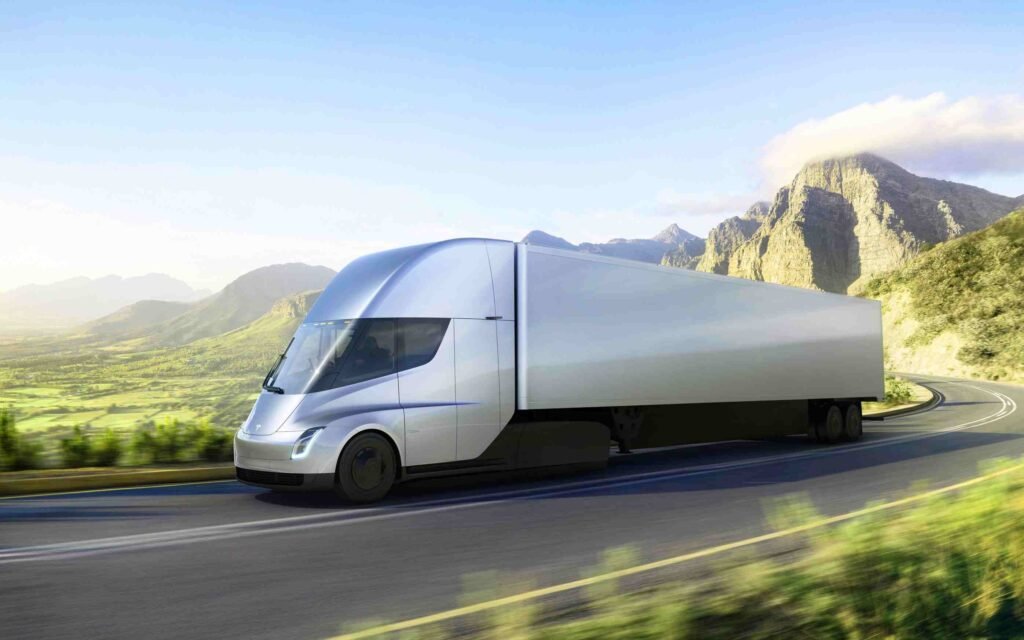
The announcement that Tesla Semi mass production has officially begun is just one piece of a much larger puzzle. Behind the scenes, Tesla is building a future where manufacturing is faster, smarter, and more sustainable than ever before.
With the introduction of the Unboxed factory system, high-density production design, global expansion, and deep integration of robotics and energy solutions, Tesla is redefining what it means to build at scale.
If the company succeeds, it won’t just lead the EV market—it will reshape the entire manufacturing landscape, setting new standards for efficiency, cost, and innovation.
The road to 2030 is ambitious, but Tesla’s blueprint suggests one thing clearly:
the factory is the future, and Tesla is building it today.
FAQs
1. What does “Tesla Semi Mass Production Has Officially Begun” mean?
It indicates that Tesla has transitioned from limited or pilot production to full-scale manufacturing of the Tesla Semi, enabling higher output and broader commercial deployment.
2. What is Tesla’s goal for vehicle production by 2030?
Tesla aims to achieve a massive 20 million vehicles annually, driven by its next-generation factory systems and global expansion.
3. What is the “Unboxed Factory” system?
The Unboxed Factory system is Tesla’s innovative modular manufacturing approach, where vehicles are built in separate sections simultaneously instead of a traditional linear process.
4. How is Tesla reducing factory costs?
Tesla is cutting costs through high-density factory designs, automation, robotics integration, and efficient logistics systems, lowering the cost per vehicle significantly.
5. What is unique about Tesla’s multi-level factory design?
Tesla’s factories use vertical integration, stacking production lines to reduce space requirements by up to 40% and improve operational efficiency.
6. How does the Unboxed Assembly System work?
It builds vehicles using parallel modules like the front, rear, and floor, which are later combined—making production faster and more efficient.
7. Why is Tesla installing interiors before the car body?
This interior-first approach eliminates the need to work through tight spaces, reducing assembly time and improving manufacturing efficiency.
8. What role does Gigafactory Mexico play?
It will serve as a high-volume production hub for Tesla’s affordable EV platform, targeting vehicles priced below $25,000.
9. How important is Gigafactory Berlin?
Gigafactory Berlin supports the European market, focusing on the Model Y and advancing battery technology.
10. What is the role of Gigafactory Shanghai?
Shanghai acts as a global export hub and is expanding into energy storage production, especially Megapacks.
11. What is Tesla Optimus?
Optimus is Tesla’s humanoid robot, designed to perform repetitive, dangerous, and precision-based tasks within factories.
12. How will robots impact Tesla’s production?
Robots will handle labor-intensive tasks, reduce human workload, and improve consistency and efficiency in manufacturing.
13. What does “net-zero factory” mean?
A net-zero factory produces as much energy as it consumes, using solar power and battery storage systems.
14. What are Megapacks used for?
Megapacks are large-scale energy storage systems that store electricity and ensure continuous factory operations.
15. How does Tesla improve supply chain efficiency?
Tesla integrates direct material flow systems, reducing reliance on warehouses and ensuring continuous production movement.
16. What challenges could Tesla face with this strategy?
Key challenges include technological complexity, supply chain disruptions, and regulatory differences across regions.
17. Why are Tesla’s factories considered its most important product?
Because they are scalable, repeatable, and highly efficient systems that can produce vehicles, robots, and energy solutions globally at low cost.
Read More:
- SpaceX’s Bombshell Upgrade on 1st Starship RETURN Home! NEVER Seen Before
- Exclusive First Look In 2 NEW Tesla INSANE FACTORY in 2027
- California hits Tesla Cybercab and Robotaxi driverless cars with new law
- NASA Artemis 3 Journey Begins! SpaceX & BO Speed up to Become First HLS
- SpaceX Found Something Weird in Starship Booster’s 33-Engine Static Fire test…No Launch in May