


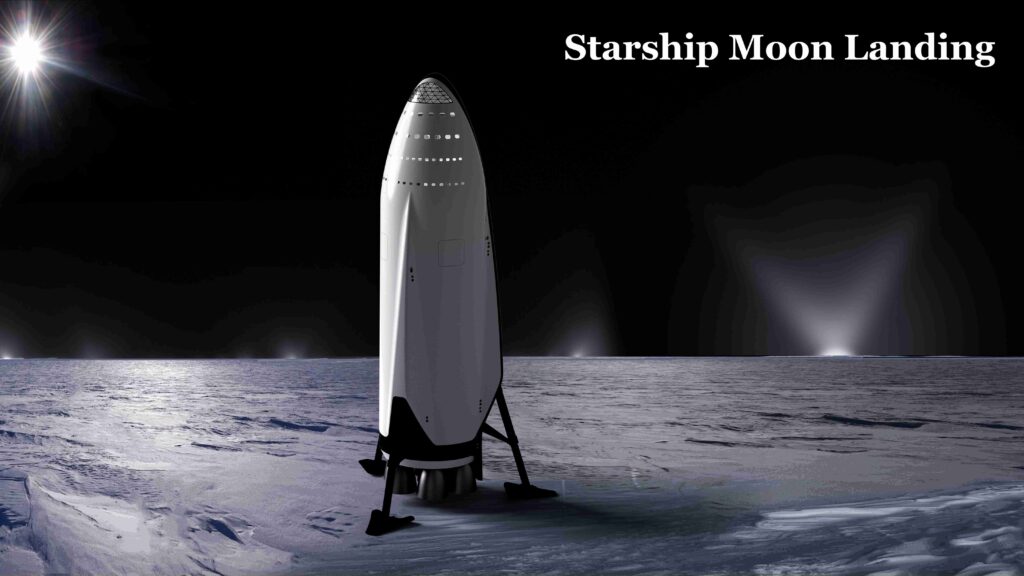
For the first time in years, SpaceX has provided a detailed look into the development of their Starship lunar lander, the ambitious spacecraft designed to return American astronauts to the moon in this decade. But the timeline has been far from smooth, and the journey toward a successful lunar landing has been long and turbulent. As a result, public impatience is rising.
In this article, we explore the current status of SpaceX’s lunar Starship, its relationship with NASA, and what the latest developments mean for the Artemis program.
The Political Pressure Behind the Moon Mission
Before diving into the technology, it’s important to understand the political backdrop that is influencing SpaceX’s moon landing timeline. On October 20th, acting NASA administrator Shawn Duffy publicly criticized SpaceX on CNBC’s Squawkbox, threatening to cancel their lunar landing contract.
He stated:
“I love SpaceX. It’s an amazing company. The problem is they are behind. They’ve pushed their timelines out and we are in a race against China.”
This criticism reflects a real concern about China potentially landing astronauts on the moon first, but it doesn’t fully account for the complexities of the Artemis program. NASA’s entire moon exploration schedule is behind, not just SpaceX.

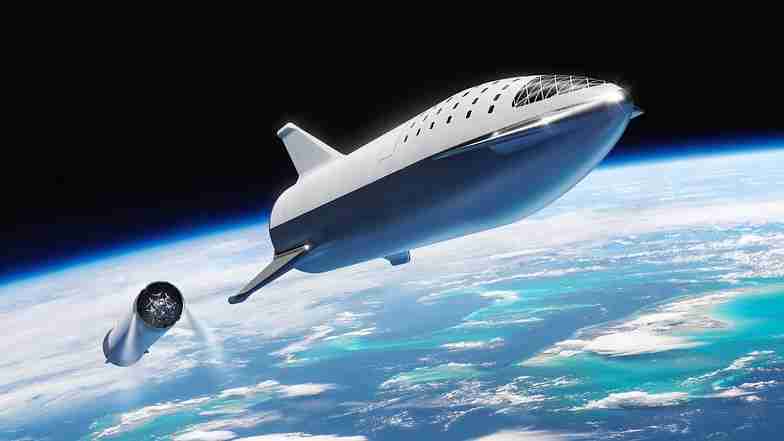
NASA’s Artemis Program Delays
The Artemis program has experienced significant delays. For example:
- NASA’s SLS rocket and Orion capsule were first launched for an uncrewed test in November 2022, after more than 11 years of development with Boeing and Lockheed Martin.
- A second mission, meant to carry astronauts around the moon, was initially set for 2024, then postponed to the first half of 2026.
Meanwhile, SpaceX has been working on Starship for five years, completing 22 test flights with multiple successful launches and landings, making their progress comparatively faster.
SpaceX vs. Competition: The $2.9 Billion Contract
The tension escalated when Duffy announced that NASA might open SpaceX’s contract to competition, potentially allowing companies like Blue Origin to take over. This contract, awarded in 2021, provided $2.9 billion for the development of a Human Landing System (HLS), a variant of Starship designed specifically for moon missions.
SpaceX is expected to use the HLS for Artemis 3, a mission initially scheduled for 2024, then pushed to 2026, and currently aiming for mid-2027.
Elon Musk’s Reaction
Elon Musk responded sharply on X (formerly Twitter), calling Duffy a “dangerously unqualified dummy” and defending SpaceX’s pace. While Musk’s personal attacks grabbed headlines, the real story is SpaceX’s progress on the lunar Starship.
SpaceX’s Lunar Starship: Two Development Paths
SpaceX is pursuing two main development paths for Starship:
- Core Starship System – Designed primarily for Mars missions, these tests include launches, landings, and engine demonstrations. This part of the program is mostly self-funded by SpaceX.
- Lunar Starship / HLS – Fully funded through NASA’s contract, this path focuses on landing astronauts on the moon and achieving milestones required for Artemis 3.
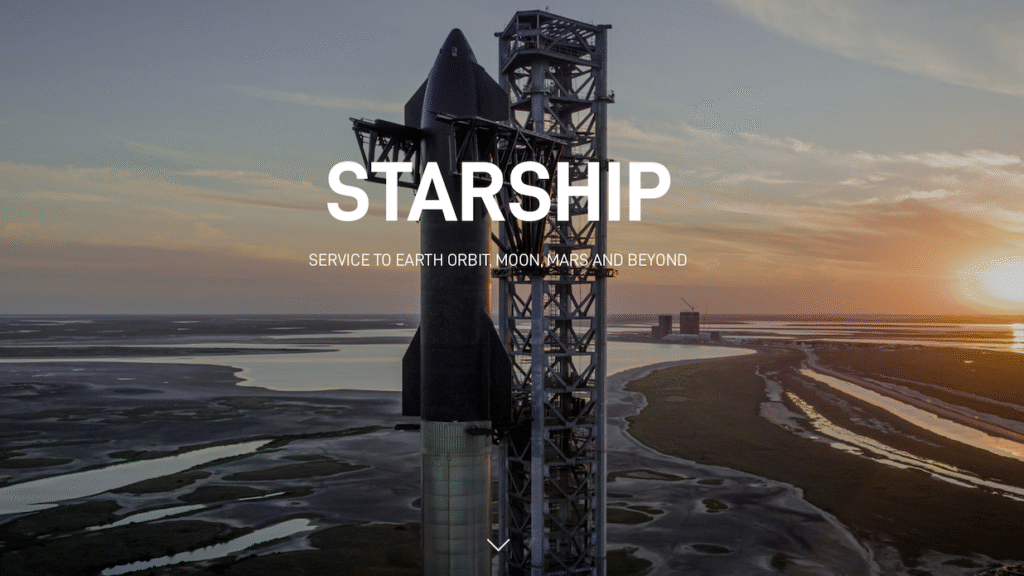
HLS Milestones and Progress
Since 2022, SpaceX has completed 49 project milestones related to the HLS, covering:
- Subsystem development
- Infrastructure preparation
- Operational readiness
Most of these milestones were achieved on time or ahead of schedule, according to SpaceX.
Testing the Lunar Starship
SpaceX has been busy behind the scenes, working on a wide variety of tests critical for a safe moon landing.
Interior Cabin Mockups
- SpaceX built a full-scale model of the lunar Starship cabin.
- Astronauts use it to test life support, temperature, and humidity systems in realistic scenarios.
- This testing ensures that crews can live comfortably on the moon.
Drop Testing and Landing Legs
- A full-scale Starship model is used for drop tests on simulated lunar soil.
- This helps engineers understand how the landing legs interact with the moon’s surface, ensuring stability and safety during touchdown.
Airlock and Elevator Tests
- Developed in partnership with Axiom, these systems allow astronauts to transition from the Starship cabin to the lunar surface in full pressure suits.
- Testing ensures that crew movements are efficient and safe.
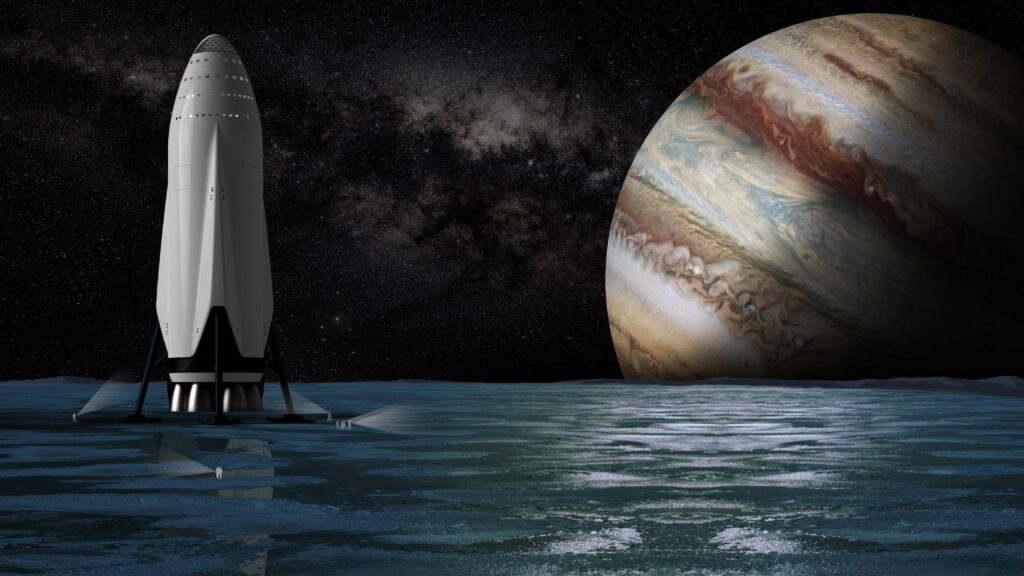
Fuel Depots for Long-Duration Missions
- SpaceX is developing Starship fuel depots, crucial for both lunar and Mars missions.
- Maintaining cryogenic fuels like liquid oxygen and methane requires temperatures below -100°C, which is challenging but essential for mission success.
Propellant Transfer and Docking Systems
- Full-scale cryogenic propellant transfers have never been attempted in space before.
- Docking adapters are tested to connect Starship to Orion capsules in lunar orbit, enabling safe crew transfers.
Engine and Cold-Start Tests
- Raptor engines undergo lunar landing throttle simulations and cold-start tests.
- These tests replicate conditions after long-duration space travel, ensuring engines function reliably.
Micrometeoroid and Orbital Debris Testing
- Materials used in the HLS exterior, including body panels and windows, are tested against space debris and extreme temperature fluctuations.
- These tests ensure the spacecraft remains safe in the harsh lunar environment.
Autonomous Landing and Communication Systems
- Starship’s landing software uses advanced sensors, cameras, and radar to identify safe landing sites.
- Robust communication systems link astronauts with Earth, including medical support, since no doctor will be onboard.
A Simplified Mission Architecture
In a recent update, SpaceX suggested that a “simplified mission architecture” could speed up moon landings while improving crew safety.
- This could potentially bypass the SLS rocket and Orion capsule, launching the crew directly on Starship, landing them on the moon, and returning them to lunar orbit.
- Earth re-entry would still require a Dragon capsule or similar vehicle, as Starship lacks a heat shield for safe Earth landings.
Essentially, this plan could reduce the number of contractors from three to one, streamlining the mission and potentially accelerating Artemis 3.

Jared Isaacman and Political Influence
SpaceX’s ability to pursue a simplified architecture may be influenced by Jared Isaacman, recently reappointed as head of NASA by President Trump.
- Isaacman is a billionaire, jet fighter pilot, astronaut, and SpaceX supporter.
- With him in charge, SpaceX may enjoy more flexibility in executing their moon landing plan.
What to Expect in 2026 and Beyond
The next couple of years are crucial:
- Artemis 2 could finally carry astronauts around the moon, providing important data for lunar operations.
- Artemis 3 may reveal the actual method of landing on the moon, potentially showcasing SpaceX’s HLS lunar Starship in action.
However, politics will likely continue to play a major role, affecting timelines and decisions.
Why This Matters
SpaceX’s moon landing program represents more than just a mission to the lunar surface:
- It’s a test of innovative technology, including autonomous landing, cryogenic fuel management, and integrated crew systems.
- Success could establish a permanent, sustainable human presence on the moon.
- It demonstrates the potential of private-public partnerships in space exploration.
Key Takeaways About SpaceX’s Moon Landing
- Progress is real but slow: SpaceX has achieved multiple milestones on time or ahead of schedule.
- NASA funding is milestone-based: SpaceX receives small portions of $2.9 billion as they meet requirements.
- Core Starship vs. Lunar Starship: Core Starship development focuses on Mars, while the HLS focuses on the moon.
- Simplified mission architecture could bypass traditional NASA spacecraft, streamlining the lunar landing.
- Political factors and leadership changes continue to influence mission timelines.
Conclusion
SpaceX’s lunar Starship is closer to reality than many think, but it’s part of a complex ecosystem of politics, technology, and ambition. While critics worry about delays, the company has demonstrated substantial technical capability and innovation.
If the current pace continues, a successful moon landing with Starship is achievable, potentially transforming the Artemis program and setting the stage for humanity’s next giant leap—sustainable lunar exploration.
While the road to the moon remains challenging, SpaceX is proving that with vision, engineering, and determination, what once seemed impossible is now within reach.
FAQs
1. What is SpaceX’s role in returning humans to the moon?
SpaceX is developing a lunar Starship, a variant of their Starship rocket, to transport astronauts to the moon as part of NASA’s Artemis 3 mission. They are also working on Mars missions, but the lunar Starship is specifically funded by NASA for moon landings.
2. What is the Artemis program?
The Artemis program is NASA’s initiative to return humans to the moon, establish a sustainable presence, and eventually pave the way for missions to Mars. Artemis 1 was uncrewed, Artemis 2 will orbit the moon, and Artemis 3 aims to land astronauts on the lunar surface.
3. Why is NASA concerned about SpaceX’s timeline?
NASA acting administrator Shawn Duffy publicly stated that SpaceX is behind schedule, emphasizing the urgency due to competition with China. However, the entire Artemis program is facing delays, not just SpaceX.
4. How much funding did NASA give SpaceX for the lunar mission?
NASA awarded SpaceX $2.9 billion in 2021 to develop the Human Landing System (HLS) for Artemis 3. The funding is milestone-based and supports the lunar Starship development.
5. What is the difference between SpaceX’s core Starship and lunar Starship?
The core Starship is designed for Mars missions and general space exploration. The lunar Starship (HLS) is tailored for landing astronauts on the moon, including specialized landing legs, life support systems, and cabin infrastructure.
6. How many test flights has SpaceX conducted with Starship?
SpaceX has completed 22 test flights of Starship, with multiple successful launches and landings, making it the most powerful rocket ever built.
7. What new technologies are being tested for the lunar Starship?
SpaceX is testing life support systems, temperature and humidity controls, landing legs, fuel transfer systems, docking adapters, lunar landing throttles, and micrometeoroid impact resistance, among others.
8. Can the lunar Starship land back on Earth?
No, the lunar Starship cannot land on Earth because it lacks a heat shield and wings. Astronauts would return via a Dragon capsule docked in orbit.
9. What is meant by “simplified mission architecture”?
SpaceX aims to simplify the Artemis mission by potentially using Starship to launch, land on the moon, and return astronauts, reducing the need for multiple contractors and vehicles like SLS and Orion.
10. Who is Jared Isaacman and what is his role?
Jared Isaacman is a billionaire, jet fighter pilot, astronaut, and spacewalker. He has been appointed to lead NASA under Trump’s administration and will influence the Artemis mission architecture, giving SpaceX more freedom in planning.
11. What is the NASA vs SpaceX controversy about?
Acting NASA administrator Shawn Duffy criticized SpaceX for delays and hinted at reopening contracts to competitors like Blue Origin. Elon Musk responded publicly on social media, escalating the debate.
12. What is the current timeline for Artemis 3?
Artemis 3 was initially planned for 2024, then pushed to 2026, and now SpaceX is aiming for mid-2027 for the first lunar landing with astronauts.
13. What types of tests are being done on the lunar Starship?
SpaceX conducts propellant transfer tests, docking tests, airlock and elevator simulations, lunar landing throttle tests, cold start engine tests, micrometeoroid impact tests, and software simulations for autonomous lunar landing.
14. How does the lunar Starship handle extreme lunar conditions?
The Starship uses advanced thermal management, radiation-resistant materials, and autonomous navigation systems to survive harsh temperatures, micrometeoroid impacts, and low gravity on the moon.
15. Will SpaceX complete the moon mission independently?
Elon Musk claims that Starship could handle the entire moon mission, simplifying operations and potentially replacing SLS and Orion. NASA’s final approval will depend on safety and mission feasibility.
Read More:
- OFFICIAL! Elon Musk’s $11,795 Tesla Model 2: SHOCKING Interior with Free Starlink
- Where to Buy Tesla Optimus Robot: Everything You Need to Know
- SpaceX Revealed Starship-Dragon Combination Plan to Reach the Moon Faster than China & BO
- Tesla is looking to phase out China-made parts at US factories: report
- Tesla rolls out most aggressive Model Y lease deal in the US yet