


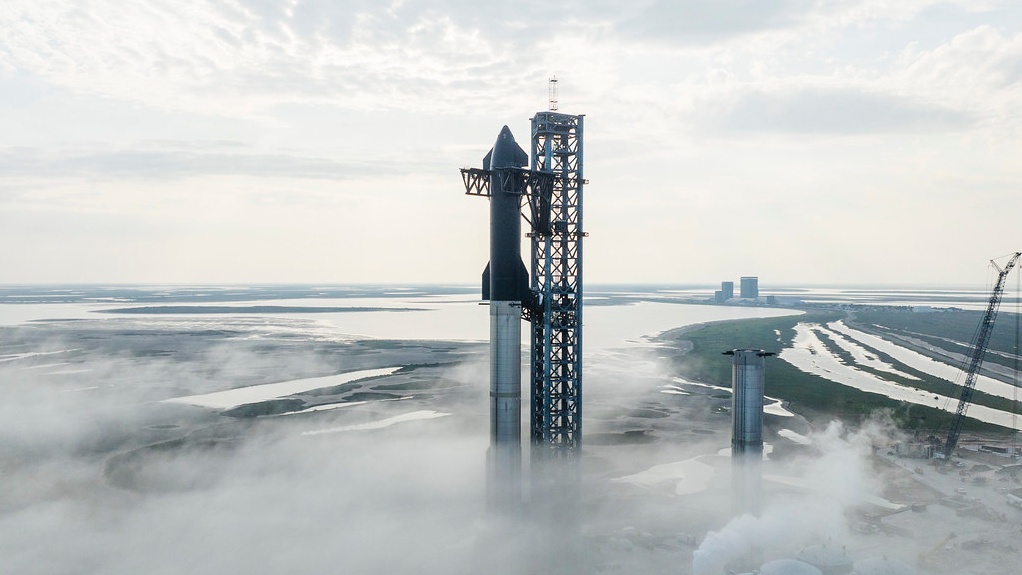
Starship has been heralded as the future of human space exploration — a fully reusable spacecraft capable of taking humans and cargo to the Moon, Mars, and beyond. But while SpaceX has made groundbreaking strides, the journey has been anything but easy.
In this post, we’ll explore why Starship is so hard to perfect, what makes it one of the most complex engineering feats ever attempted, and how each step forward brings humanity closer to a new era of space travel.
The Ambitious Vision Behind Starship
SpaceX’s Starship program was conceived in the early 2010s with a bold goal: to revolutionize spaceflight by building a fully reusable, interplanetary spacecraft.
A Game-Changing Approach to Spaceflight
Unlike traditional rockets that are discarded after a single use, Starship aims to be fully reusable, reducing the cost of space missions by orders of magnitude. Its long-term vision includes:
- Transporting humans to Mars
- Carrying satellites and cargo to orbit
- Making space tourism viable
- Creating a multiplanetary future for humanity
Elon Musk has repeatedly emphasized that the ultimate purpose of Starship is to make life multiplanetary — but achieving that dream requires solving extraordinarily complex challenges.
Engineering Complexity Like No Other
Starship is not just a big rocket — it’s a highly integrated system with extreme engineering demands.
A Fully Integrated Two-Stage Rocket
Starship is composed of two main stages:
- Starship upper stage: Designed to enter orbit, re-enter Earth’s atmosphere, and land vertically.
- Super Heavy booster: Equipped with 33 Raptor engines, designed to lift the entire system into orbit and return safely for reuse.
This system must:
- Launch and survive the vacuum of space
- Withstand high-speed reentry
- Land vertically on Earth or other celestial bodies
Each of these phases presents unique technical hurdles.
Thousands of Heat Shield Tiles
To survive atmospheric re-entry, Starship is coated with over 18,000 heat-resistant ceramic tiles. These hexagonal tiles must remain perfectly aligned and securely fastened throughout launch and reentry — even a single damaged tile could lead to catastrophic failure.
High Complexity Raptor Engines
Each Raptor engine is a methane-fueled full-flow staged combustion cycle engine, making it:
- More powerful and efficient than its predecessors
- Highly complex, with minimal tolerance for error
- Difficult to manufacture at scale
SpaceX has iterated through Raptor 1, Raptor 2, and Raptor 3, improving performance and reliability. Yet, engine failures still plague test flights, highlighting how hard this challenge remains.
Reusability at the Core
Why Full Reusability Is So Hard
Reusability is Starship’s greatest promise — and its biggest challenge. For a vehicle to be reused quickly and reliably, it must:
- Survive multiple reentries
- Avoid structural fatigue
- Allow for rapid refurbishment
This requires flawless engineering, from material choice to thermal protection systems, to fuel efficiency.
Trade-Offs in Design
SpaceX pursues simplification at all costs, in line with Musk’s philosophy that “the best part is no part.” This means:
- Fewer components to fail
- Lower mass
- Faster manufacturing
But this strategy introduces risks:
- Welded joints instead of bolts make repairs harder.
- Simplified cooling systems must survive extreme heat.
- Pressure vessel malfunctions can trigger massive failures, like the explosion of Ship 36.
Material and Propellant Challenges
Stainless Steel — A Bold Material Choice
While most rockets use lightweight aluminum or carbon composites, Starship is built from stainless steel, offering:
- High strength
- Thermal resistance
- Cost savings
However, stainless steel is heavier, putting more strain on propulsion and fuel systems. That weight impacts everything from launch thrust to landing accuracy.
Methane and Liquid Oxygen — New Frontier in Propulsion
Starship’s use of methane and liquid oxygen (methalox) offers key benefits:
- Cleaner combustion
- Longer-term storage
- Easier in-situ production on Mars
But the handling of cryogenic fuels at such scales introduces temperature, pressure, and flow challenges. The Raptor engines must remain operational under these extreme conditions, with no room for error.
Mechazilla and the New Landing Paradigm
Perhaps the boldest change of all is Mechazilla — the tower-based robotic arm system that is designed to catch the booster and Starship on their return.
No Landing Legs — Just Precision Engineering
By eliminating traditional landing legs, SpaceX reduces vehicle mass. But this approach requires extreme precision, as the tower must:
- Predict the descent trajectory
- Account for weather and wind
- Latch onto the rocket mid-air
While Super Heavy booster catch attempts have shown promise, catching the Starship upper stage remains unproven and risky.
Orbital Refueling — The Final Frontier
Why Refueling in Space Is Essential
To reach destinations like Mars or the Moon, Starship must carry more fuel than it can launch with. The solution? Orbital refueling — transferring fuel between ships in orbit.
This process involves:
- Launching tanker Starships
- Docking in microgravity
- Transferring cryogenic fuel without loss
It’s never been done at this scale, and it’s one of the boldest engineering goals of the program.
Challenges Beyond Engineering
Earth’s Atmosphere
Before it even gets to orbit, Starship must fight Earth’s dense atmosphere. Achieving orbit means pushing through multiple atmospheric layers, dealing with:
- Drag
- Turbulence
- Thermal heating
Despite its size and power, Starship is still subject to the physics that limit every rocket — with only ~2–4% of its mass making it to orbit.
Reentry at Orbital Velocity
Reentry from orbit is more violent than launch. The upper stage of Starship must:
- Withstand temperatures exceeding 1,600°C
- Endure immense aerodynamic stress
- Land vertically with precise control
Even with advanced cooling and tile protection, the margin for error is razor thin.
Planetary Landings
Landing on other worlds poses its own unique set of challenges:
- The Moon: No atmosphere means the engines must handle the full descent.
- Mars: The thin atmosphere provides limited braking assistance.
- Unknown terrain: Each celestial body has different gravity and surface conditions.
Designing one system to handle all scenarios is a feat yet to be fully achieved.
Lessons From Setbacks and Failures
Iteration Is Key
SpaceX has long embraced a “test, fail, learn, repeat” approach. Every explosion, anomaly, or damaged tile adds valuable data to future designs.
From engine explosions to fuel system leaks, each test reveals new vulnerabilities. But over time, these problems are diagnosed, corrected, and often eliminated.
The Falcon 9 Blueprint
While Starship still struggles, SpaceX’s Falcon 9 has set the standard for reusable rockets, with:
- Over 300 successful launches
- Dozens of reuses of the same booster
- Industry-leading safety and reliability
These achievements give confidence that Starship will one day follow a similar trajectory.
The Path Forward
Despite the setbacks, the mission remains clear: build a reusable system capable of enabling multiplanetary life.
Upcoming Milestones
SpaceX continues to push forward, with future milestones including:
- Successful orbital refueling tests
- Fully catching Starship and Super Heavy with Mechazilla
- First human-crewed Starship mission
- Moon landings under NASA’s Artemis program
- First interplanetary mission to Mars
Each of these steps will bring us closer to redefining space travel.
Final Thoughts — Is Starship Even Possible?
Yes — but not without overcoming every single one of these challenges.
Starship is more than a rocket. It’s a vision, a paradigm shift, and a bet on the future. While many obstacles remain — from engine complexity and reusability, to planetary landings and orbital refueling — each test flight, failure, and redesign moves us closer to unlocking the potential of interplanetary space travel.
As SpaceX has proven time and again, progress often comes through perseverance. And when Starship finally reaches its full capability, it will be because of every risk taken, every lesson learned, and every challenge overcome.
FAQs
1. What is SpaceX Starship and what is it designed for?
Starship is SpaceX’s next-generation, fully reusable spacecraft designed to transport humans and cargo to destinations like the Moon, Mars, and potentially beyond. Its mission is to make space travel more affordable, sustainable, and routine.
2. Why is Starship considered revolutionary in the aerospace industry?
Starship represents a paradigm shift by being fully reusable, using stainless steel construction, and relying on methane-fueled Raptor engines — all of which break from traditional aerospace norms.
3. What makes developing Starship so difficult?
The challenges lie in its complexity, reusability, cryogenic fuel systems, thermal protection, and the requirement to land on various celestial bodies. It’s a huge leap from anything built before.
4. How does Starship differ from Falcon 9?
Unlike Falcon 9, which is partially reusable, Starship is designed for full reusability. It also uses methane instead of kerosene, has stainless steel bodywork, and aims for interplanetary capability.
5. What is the role of the Raptor engine in Starship?
The Raptor engine powers both the Starship and Super Heavy booster stages. It’s a methane-fueled, full-flow staged combustion engine, designed for maximum efficiency and reusability.
6. Why did SpaceX choose stainless steel for Starship?
Stainless steel is strong, cheap, thermally resistant, and ideal for handling the stresses of reentry and long-duration space missions, despite being heavier than traditional materials.
7. What is Mechazilla and how does it work?
Mechazilla is a robotic arm system on the launch tower designed to catch the Starship and booster mid-air, eliminating the need for heavy landing legs and enabling faster turnaround.
8. What are the main problems SpaceX has faced with Starship tests?
Frequent issues include engine failures, heat shield tile detachment, fuel leaks, and pressure vessel anomalies. These setbacks are part of SpaceX’s iterative testing process.
9. What is orbital refueling and why is it important for Starship?
Orbital refueling involves transferring fuel between Starships in space. This allows the vehicle to carry less fuel at launch and refuel in orbit for long-distance missions like trips to Mars.
10. How many engines does Starship have?
The Super Heavy booster has 33 Raptor engines, while the Starship upper stage typically uses 6 Raptor engines — 3 optimized for sea level and 3 for vacuum.
11. How does SpaceX test and improve Starship?
SpaceX uses a strategy of rapid prototyping, frequent test flights, and iterative design. Failures are analyzed in detail to improve future versions.
12. Has any Starship successfully completed an orbital flight?
As of now, no Starship flight has completed all phases of an orbital mission, but each test brings SpaceX closer. Some boosters have launched successfully and returned, while upper stage recovery and reusability remain in progress.
13. Why is full reusability so important to SpaceX?
Full reusability drastically reduces launch costs and enables rapid flight cadence, making space access more scalable and essential for missions like building Mars colonies.
14. Is Starship really capable of going to Mars?
In theory, yes. Starship’s design, propellant choice, and refueling system are geared toward interplanetary travel. However, many technical challenges still need to be solved before a Mars mission is viable.
15. When will Starship be ready for regular missions?
There is no fixed date. SpaceX continues to refine and test Starship. Elon Musk has suggested late 2020s for initial crewed missions, but regulatory approval, hardware reliability, and orbital refueling success will determine the actual timeline.
Read More:
- Why Tesla’s Q3 could be one of its biggest quarters in history
- Tesla Model 3 ranks as the safest new car in Europe for 2025, per Euro NCAP tests
- Tesla UK sales see 14% year-over-year rebound in June: SMMT data
- Tesla Full Self-Driving testing continues European expansion: here’s where
- What Rocket Lab just did after SpaceX Humiliated Blue Origin