


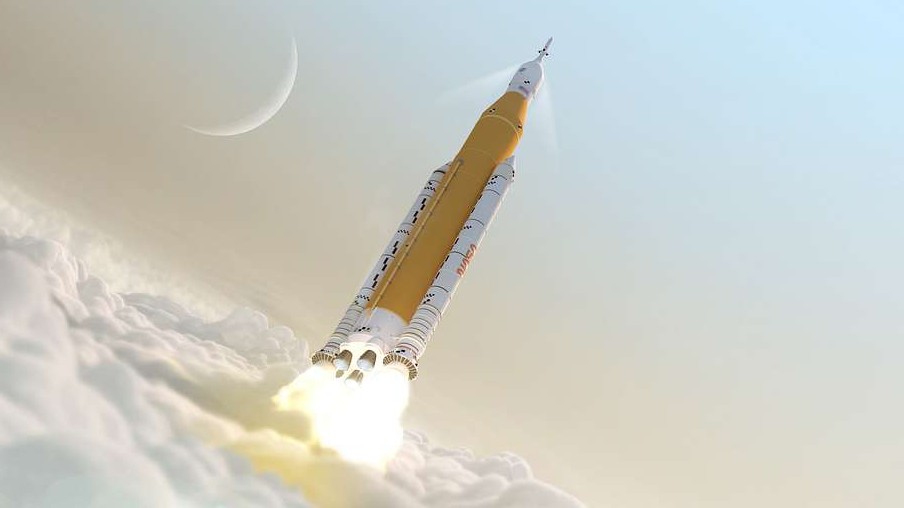
On April 1, 2026, at 6:35:12 PM ET, history was made as NASA’s Artemis II mission successfully cleared the tower, beginning a 10-day journey to the Moon. Astronauts Reid Wiseman, Victor Glover, Christina Koch, and Jeremy Hansen were on board, marking the first crewed flight of the Orion spacecraft beyond low Earth orbit since the Apollo era.
With live telemetry showing the Integrity spacecraft and the Interim Cryogenic Propulsion Stage (ICPS) operating in Earth orbit, space enthusiasts and scientists around the world watched as humanity took another step toward sustainable lunar exploration. Let’s break down the key events, milestones, and technical details of this historic launch.
I. Launch and Ascent Milestones
The Space Launch System (SLS), NASA’s most powerful rocket, performed flawlessly during the dynamic ascent phase, marking critical milestones along the way. Every second was a carefully choreographed step toward lunar orbit.
Supersonic Breakthrough and Max Q
Approximately 90 seconds after liftoff, Artemis II went supersonic, surpassing the speed of sound and entering the thin boundary of high-speed flight. Shortly after, the rocket encountered Max Q, the point of maximum aerodynamic pressure.
Max Q is a critical moment during launch because the vehicle experiences the greatest structural stress from atmospheric forces. Passing this milestone safely is a testament to the engineering excellence behind the SLS design.
Booster Separation
At 2 minutes and 9 seconds into the flight, the solid rocket boosters (SRBs) detached from the core stage. This step is vital because the boosters, which provide the majority of thrust during liftoff, are no longer needed once the rocket reaches higher altitudes.
The separation was clean and precise, ensuring the Orion spacecraft remained on its correct trajectory toward orbit.
Launch Abort System Jettison
Three minutes into the mission, at an altitude of 49 miles, the Launch Abort System (LAS) was successfully jettisoned. This system is a safety mechanism designed to propel the crew capsule away from the rocket in the event of an emergency during launch.
With the LAS gone, the crew finally had an unobstructed view of Earth and the approaching Moon, signaling a transition from immediate survival mode to active mission operations.
Main Engine Cutoff (MECO) and Core Stage Separation
The four RS-25 main engines fired continuously until 8 minutes and 2 seconds, providing the thrust required to reach orbital insertion velocity. Following this, the core stage separated, leaving the Orion spacecraft attached to the ICPS.
This maneuver is essential for orbital insertion and sets the stage for the subsequent Trans-Lunar Injection (TLI) burn that will send Artemis II toward the Moon.
II. Initial Orbital Configuration
Once in Earth orbit, the Artemis II crew and Mission Control Houston began the systematic activation of the spacecraft’s systems. This phase is crucial for ensuring that Orion is fully operational and ready for deep space travel.
Solar Array Deployment
Approximately 13 minutes after launch, the solar arrays began deploying. By the 25-minute mark, all four wings were fully extended and latched, providing reliable electrical power for the spacecraft.
The spacecraft then switched to the “ATTO Preferred” power mode, a configuration optimized for long-duration space operations. Fully deployed solar arrays are not just a milestone—they are the lifeblood of the mission’s energy systems.
Nozzle Extension Deployment System (NEDS)
The Nozzle Extension Deployment System (NEDS) was successfully deployed 11 minutes into the mission. NEDS is critical for the ICPS engine because it optimizes the nozzle for high-efficiency burns during maneuvers such as Perigee Raise and TLI.
This step ensures the spacecraft can perform the precise thrust adjustments needed to leave Earth orbit and head toward the Moon.
Crew Safety Protocols and Transition to Orbital Operations
After enduring the high-G ascent, the crew began raising their helmet visors and egressing from their launch and entry suits. This transition marks the shift from the intense initial phase of flight to sustained orbital operations, allowing the astronauts to work comfortably while conducting mission-critical procedures.
III. Systems Check and Communication
With the spacecraft in orbit, the Artemis II crew performed a thorough systems check. This phase ensures that Orion’s “brain”—its onboard computers, sensors, and communication links—is functioning flawlessly.
Clock Alignment and Telemetry Sync
A brief 7-second discrepancy between the Orion and ICPS clocks was detected during telemetry sync. Commander Reid Wiseman confirmed that the onboard clocks were perfectly aligned and attributed the misalignment to a ground-side monitoring issue.
Accurate timekeeping is critical for coordinating engine burns, navigation, and communication with Earth. Even minor discrepancies must be resolved to ensure mission success.
Environmental Controls and Life Support
Mission Specialists Christina Koch and Jeremy Hansen activated the Environmental Control and Life Support Systems (ECLSS). These systems regulate oxygen levels, temperature, humidity, and cabin pressure, providing a safe and comfortable environment for the astronauts.
Operational O2 sensors confirmed that the spacecraft was ready to sustain the crew for the full 10-day lunar mission.
Communication Handover
Orion uses a combination of the Near-Earth Network (NEN) and Tracking and Data Relay Satellites (TDRS) to maintain continuous communication. As the spacecraft ascends, it will transition to NASA’s Deep Space Network (DSN), ensuring uninterrupted voice, telemetry, and video data flow back to Mission Control.
IV. Looking Ahead: The Perigee Raise Maneuver
The next major milestone is the Perigee Raise Maneuver, scheduled at approximately 49 minutes and 50 seconds into the mission. This burn, performed by the RL10 engine on the ICPS, will significantly increase the spacecraft’s altitude.
Purpose of the Perigee Raise
The Perigee Raise sets the stage for the Trans-Lunar Injection (TLI). By increasing the spacecraft’s orbital apogee, the maneuver aligns Orion for a precise burn that will propel it out of Earth orbit and toward the Moon.
This operation demonstrates the precision navigation capabilities of NASA’s deep space mission architecture and ensures that Artemis II follows the planned trajectory for lunar rendezvous.
Preparing for Trans-Lunar Injection
After the Perigee Raise, Orion will remain in intermediate orbit, allowing Mission Control and the crew to verify all systems. Once verified, the TLI burn will activate, sending the spacecraft on its historic path toward the Moon.
The combination of ICPS propulsion, Orion’s onboard guidance systems, and Mission Control oversight represents decades of technological evolution since the Apollo program.
V. The Historic Crew: Artemis II Astronauts
The four astronauts onboard Artemis II are not only highly trained but represent a new generation of lunar explorers.
- Reid Wiseman – Commander, responsible for overall mission execution and decision-making.
- Victor Glover – Pilot, ensures precise spacecraft control during critical maneuvers.
- Christina Koch – Mission Specialist, leads environmental and life support system operations.
- Jeremy Hansen – Mission Specialist, focuses on communications and scientific instrumentation.
Their expertise and teamwork are critical to safely executing this first human mission beyond low Earth orbit in over 50 years.
VI. Why Artemis II Matters
Advancing Lunar Exploration
Artemis II is a pivotal mission in NASA’s Artemis program, designed to return humans to the Moon and eventually establish a sustainable lunar presence. Success here sets the stage for Artemis III, which aims to land astronauts on the lunar surface.
Testing Human Operations in Deep Space
This mission provides crucial data on human performance, spacecraft systems, and environmental controls in a deep space environment. Every maneuver, check, and procedure helps refine strategies for future Mars missions.
Inspiring the Next Generation
Beyond its scientific and engineering achievements, Artemis II serves as a global inspiration. Millions of people around the world witness astronauts leaving Earth orbit, sparking curiosity, education, and passion for STEM careers.
VII. Key Takeaways from the Artemis II Launch
- Flawless SLS performance during ascent, including supersonic transition, Max Q, and booster separation.
- Successful LAS jettison providing unobstructed views of Earth and Moon.
- Main engine cutoff and ICPS separation setting up orbital insertion.
- Solar arrays and NEDS deployed for energy and propulsion readiness.
- Life support and environmental systems fully operational.
- Perigee Raise Maneuver scheduled as the critical step toward lunar trajectory.
These achievements demonstrate NASA’s precision, expertise, and innovation in human spaceflight.
VIII. The Road Ahead: Artemis II Timeline
- Perigee Raise Burn (49:50 minutes) – Prepares for TLI.
- Trans-Lunar Injection – Sends Orion toward the Moon.
- Deep Space Operations – Crew performs systems checks and scientific observations.
- Return to Earth – After completing a lunar flyby, Orion will return safely to Earth.
Every step in this timeline is meticulously calculated, combining human skill and advanced technology to ensure a safe and historic mission.
IX. Conclusion: A New Era in Lunar Exploration
The Artemis II mission marks a monumental achievement in space exploration. From the precise SLS launch to orbital system activation and upcoming maneuvers, every milestone demonstrates humanity’s renewed capability to explore beyond Earth orbit.
As astronauts Wiseman, Glover, Koch, and Hansen journey toward the Moon, the mission embodies decades of progress in rocketry, spacecraft engineering, and human spaceflight operations. Artemis II isn’t just a mission—it’s the launchpad for humanity’s next great adventure in space.
With the Perigee Raise Maneuver approaching and the TLI burn on the horizon, the world watches as Orion charts a path to the Moon, inspiring future generations of explorers to reach for the stars.
FAQs
1. What is NASA Artemis II?
Artemis II is NASA’s first crewed mission of the Artemis program, designed to take astronauts beyond low Earth orbit and toward the Moon.
2. When did Artemis II launch?
The mission launched on April 1, 2026, at 6:35:12 PM ET, marking a historic 10-day journey around the Moon.
3. Who are the astronauts on Artemis II?
The crew consists of Reid Wiseman, Victor Glover, Christina Koch, and Jeremy Hansen.
4. What rocket launched Artemis II?
The mission used NASA’s Space Launch System (SLS), the most powerful rocket ever built for human spaceflight.
5. What spacecraft is Artemis II using?
The mission uses the Orion spacecraft, designed for deep space travel and equipped with advanced life support systems.
6. What is the purpose of the Launch Abort System (LAS)?
The LAS ensures crew safety during launch. It can quickly propel the Orion capsule away from the rocket in an emergency.
7. What is the ICPS in Artemis II?
The Interim Cryogenic Propulsion Stage (ICPS) provides propulsion for orbital maneuvers like the Perigee Raise Maneuver and Trans-Lunar Injection (TLI).
8. What is the Perigee Raise Maneuver?
The Perigee Raise Maneuver is a burn of the ICPS engine that increases Orion’s altitude to prepare for its journey to the Moon.
9. How long will Artemis II last?
The mission is planned for approximately 10 days, including orbiting the Moon before returning to Earth.
10. What are the solar arrays on Orion for?
The solar arrays provide electrical power to the spacecraft, allowing Orion to operate its systems during deep space travel.
11. What is the Nozzle Extension Deployment System (NEDS)?
NEDS extends the ICPS engine nozzle to improve efficiency during key propulsion burns.
12. How does Artemis II communicate with Earth?
The spacecraft uses Near-Earth Network (NEN), TDRS satellites, and later the Deep Space Network (DSN) for continuous communication.
13. What are the Environmental Control and Life Support Systems (ECLSS)?
The ECLSS maintains cabin pressure, oxygen levels, and temperature, ensuring a safe environment for the crew during the mission.
14. What is Trans-Lunar Injection (TLI)?
TLI is the engine burn that sends Artemis II from Earth orbit onto its trajectory toward the Moon.
15. Did Artemis II go through Max Q?
Yes, the spacecraft passed through Max Q, the point of maximum aerodynamic pressure, about 90 seconds after launch.
16. When did the solid rocket boosters separate?
The SRBs separated at 2 minutes and 9 seconds into the flight, leaving Orion attached to the SLS core stage.
17. Why is Artemis II important?
Artemis II tests human operations in deep space, preparing for lunar landings and future Mars exploration.
18. How is the crew protected after launch?
After the LAS is jettisoned, the crew remains in launch and entry suits, transitioning to orbital operations with environmental systems fully operational.
19. What is the expected trajectory of Artemis II?
Artemis II will orbit the Moon before returning to Earth, testing spacecraft systems and astronaut performance in deep space.
20. What comes after Artemis II?
The next mission, Artemis III, aims to land astronauts on the Moon, using data and experience gathered from Artemis II.
Read More:
- New Tesla Model 2 ALUMINUM-ION Battery? 10,000 Cycles, Non-Flammable, -25°C Efficiency (2026)
- Starship S39 with Raptor 3 Installed Ready to Firing! NASA Lunar Moonbase
- Tesla hit by Iranian missile debris in Israel and survives
- SpaceX to launch military missile tracking satellites through new Space Force contract
- Elon Musk reveals date of SpaceX Starship v3’s maiden voyage