


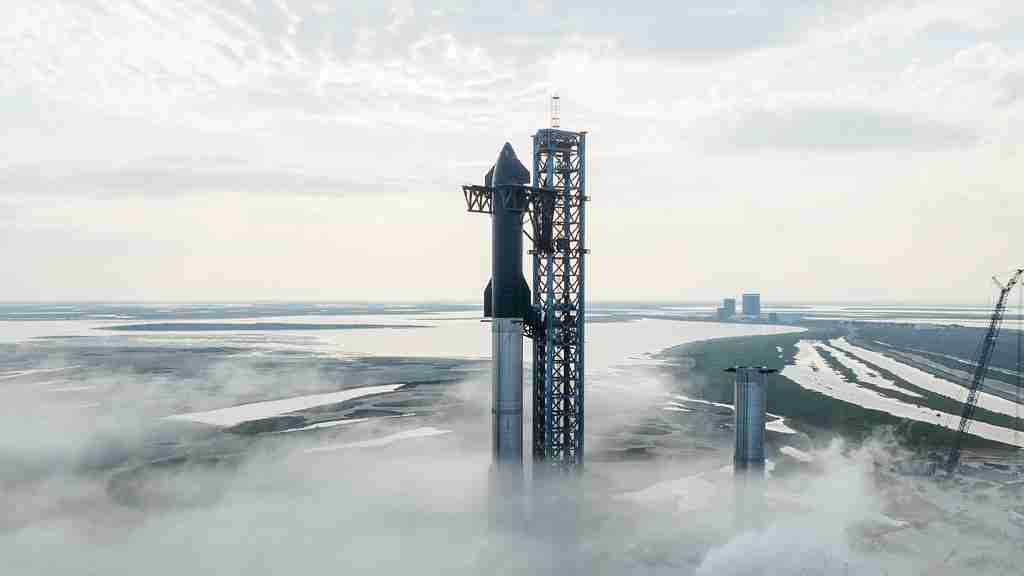
Wow! SpaceX DOUBLE B19 & Ship 39 Rolled in one Night, Ready Firing…Artemis 2 Completed: The world of space exploration is evolving faster than ever before. In just 48 hours, humanity witnessed a combination of groundbreaking engineering, historic achievements, and global competition that is reshaping our future beyond Earth. From the rapid testing operations of SpaceX in Texas to the triumphant return of astronauts via NASA’s Artemis program, and the rising ambitions of China’s lunar missions—this moment marks a turning point in space history.
In this post, we explore how these developments are interconnected and why they matter for the future of humanity.
SpaceX Enters “Overdrive” Mode in Starship Development
SpaceX has once again demonstrated why it leads the commercial space race. At its Starbase facility in South Texas, the company achieved something never seen before: a “double roll” operation, where two massive pieces of Starship hardware were transported simultaneously.
This unprecedented move signals one thing clearly—SpaceX is accelerating its testing cadence to an entirely new level.
What is the “Double Roll” Phenomenon?
The term “double roll” refers to the simultaneous transportation of:
- A Super Heavy booster (Booster 19)
- A Starship upper stage (Ship 39)
Both vehicles were moved to their respective testing locations within the same night (April 10–11). This is a logistical and engineering milestone, showcasing SpaceX’s ability to handle parallel operations at scale.
Such efficiency is critical as the company aims to make Starship a fully reusable launch system capable of frequent launches.
Booster 19 – Preparing for 9,000 Tons of Thrust
The Power Behind Flight 12
Booster 19 (B19) is set to play a crucial role in the upcoming Starship Flight 12 mission. After being rolled out to the Orbital Launch Mount (OLM), it is now entering an intense testing phase.
What makes B19 special?
- It is powered by 33 Raptor engines
- Expected to generate nearly 9,000 tons of thrust
- Designed with improvements based on previous booster issues
Critical Pre-Launch Testing
Before launch, B19 must pass several key tests:
1. Structural Stress Testing
Following issues with earlier boosters like B18, SpaceX is prioritizing durability. The booster will undergo extreme stress simulations to ensure structural integrity.
2. Static Fire Test
A full 33-engine static fire will validate engine performance and synchronization—one of the most complex rocket tests ever conducted.
3. Deluge System Validation
The launch pad’s water suppression system—famously nicknamed the “bidet from hell”—has been tested to handle the intense heat and acoustic energy during liftoff.
All signs indicate that SpaceX is pushing toward faster turnaround times without compromising safety.
Ship 39 – Advancing Upper Stage Capabilities
While Booster 19 prepares for brute force, Ship 39 (S39) is undergoing its own critical tests at the Massey’s facility.
Why Massey’s Facility Matters
Unlike the main launch site, Massey’s allows:
- Flexible testing schedules
- No highway closures
- Rapid iteration cycles
This gives SpaceX a significant advantage in refining Starship’s upper stage performance.
High-Duration Static Fire Testing
Ship 39 is expected to undergo a long-duration static fire, potentially lasting up to a minute.
This test helps engineers evaluate:
- Engine gimbal control (steering capability)
- Thermal endurance under sustained burn
- Overall system stability
Such extended tests are crucial for future missions involving orbital refueling and deep-space travel.
Starship Flight 12 – When Will It Launch?
Elon Musk previously hinted at a 4–6 week launch window starting in early April.
Given the rapid pace of:
- Booster rollout
- Ship testing
- Infrastructure readiness
Flight 12 could launch as early as early May.
If successful, this mission could mark another major leap toward:
- Full reusability
- Mars mission readiness
- Commercial mega-launch capability
Artemis 2 – Humanity Returns from Lunar Orbit
While SpaceX focuses on rapid iteration, NASA has achieved something equally historic—a flawless human spaceflight mission around the Moon.
A Historic Splashdown in the Pacific
On April 10, the Orion spacecraft successfully returned to Earth, marking:
- The first crewed lunar orbit mission since Apollo
- A critical milestone in NASA’s Artemis program
The capsule splashed down safely in the Pacific Ocean and was recovered by the USS John P. Murtha.
The Crew of Artemis 2
The mission carried four astronauts:
- Reed Wiseman
- Victor Glover
- Christina Koch
- Jeremy Hansen
Their safe return marks a major step toward sustainable human exploration beyond low Earth orbit.
Precision Re-entry and Recovery
Heat Shield Success
After concerns raised during Artemis 1, Orion’s heat shield performed flawlessly during re-entry, enduring extreme temperatures while protecting the crew.
Parachute Deployment
At approximately 3 km altitude:
- Three massive parachutes deployed
- The capsule slowed significantly
- Splashdown occurred smoothly at 8:07 p.m. Eastern
Astronaut Health and Recovery
The crew appeared:
- Healthy
- Energetic
- In excellent condition
This validates NASA’s life-support systems and mission planning for longer-duration spaceflights.
Global Recognition and Industry Reactions
The success of Artemis 2 drew praise from across the space industry.
Notable figures included:
- Jeff Bezos
- Tory Bruno
- Elon Musk
NASA leadership also emphasized the mission’s importance.
Jared Isaacman described Artemis 2 as:
“Humanity’s ambassador to the stars.”
Artemis Program – What Comes Next?
Artemis 2 is not the final destination—it’s a stepping stone.
Artemis 3 أهداف
The next mission aims to:
- Land humans on the Moon
- Explore the lunar south pole
- Establish a long-term presence
This will likely involve collaboration with SpaceX’s Starship as a lunar lander.
China’s Lunar Ambitions – A Rising Competitor
While the U.S. celebrates Artemis 2, China is making bold moves of its own.
The China National Space Administration (CNSA) is steadily advancing its lunar exploration roadmap.
Chang’e 7 Mission Overview
China’s upcoming Chang’e 7 mission, scheduled for August 2026, will target the Moon’s south pole.
Mission components include:
- Orbiter
- Lander
- Rover
- Flying probe for water detection
The Importance of Shackleton Crater
The mission will focus on:
- Permanently shadowed regions
- Water ice deposits
Water is essential for:
- Fuel production
- Life support
- Long-term lunar habitation
The Road to Chang’e 8 and Beyond
Chang’e 7 is only the beginning.
Future Goals
By 2029, China plans to launch Chang’e 8, which aims to:
- Test 3D printing with lunar soil (regolith)
- Build structural components on the Moon
- Lay groundwork for a permanent base
This is part of China’s vision for an International Lunar Research Station.
A New Space Race – Collaboration or Competition?
We are witnessing a new kind of space race—different from the Cold War era.
Three Distinct Approaches
1. SpaceX (Commercial Innovation)
- Rapid iteration
- Cost reduction
- High launch frequency
2. NASA (Reliability & Exploration)
- Human safety
- Deep-space missions
- International collaboration
3. China (Strategic Expansion)
- Long-term planning
- Infrastructure building
- Resource utilization
Why This Moment Matters
These recent developments highlight a powerful truth:
👉 Space exploration is no longer a distant dream—it is happening right now.
In just days, we saw:
- Massive rocket hardware rolled out in record time
- A flawless human return from lunar orbit
- Another nation advancing toward lunar colonization
The Future of Space Exploration
What to Expect Next
In the coming years, we may witness:
- Regular Starship launches
- Permanent lunar bases
- Human missions to Mars
- International cooperation (and competition)
Conclusion – A Converging Future
The events of this week represent more than just milestones—they represent a convergence of ambition, technology, and destiny.
As Booster 19 prepares to unleash unprecedented power in Texas, and the Artemis 2 crew readjusts to life on Earth, one message becomes clear:
Humanity has entered a new era of space exploration.
With SpaceX pushing innovation, NASA ensuring reliability, and China National Space Administration expanding its reach, the Moon is no longer the final frontier—it’s just the beginning.
FAQs
1. What is SpaceX’s “double roll” event?
The “double roll” refers to SpaceX simultaneously transporting Booster 19 and Ship 39 to their respective test sites in a single night—an unprecedented logistical achievement.
2. Why is Booster 19 important for Starship Flight 12?
Booster 19 is designed to power Starship Flight 12 with 33 Raptor engines, producing nearly 9,000 tons of thrust, making it one of the most powerful rocket boosters ever built.
3. What is a static fire test in rocket launches?
A static fire test involves igniting rocket engines while the vehicle remains anchored to the ground, allowing engineers to verify performance, thrust, and system stability before launch.
4. What makes Ship 39 different from previous Starship versions?
Ship 39 includes improved systems for thermal performance, engine control, and long-duration burns, making it more suitable for future deep-space missions.
5. When is Starship Flight 12 expected to launch?
According to Elon Musk, the launch could happen within 4–6 weeks from early April, possibly as early as May.
6. What is NASA’s Artemis 2 mission?
NASA’s Artemis 2 is a crewed mission that orbited the Moon, marking humanity’s return to lunar space after more than 50 years.
7. Who were the astronauts on Artemis 2?
The Artemis 2 crew included:
- Reed Wiseman
- Victor Glover
- Christina Koch
- Jeremy Hansen
8. Why is Artemis 2 considered historic?
It is the first crewed lunar orbit mission since the Apollo era, proving that humans can safely travel beyond low Earth orbit again.
9. How did the Orion capsule safely return to Earth?
The Orion spacecraft used a heat shield for re-entry protection and deployed three parachutes to slow its descent before splashing down in the Pacific Ocean.
10. What is the goal of Artemis 3?
Artemis 3 aims to land humans on the Moon, especially near the lunar south pole, and begin building a sustainable human presence.
11. What is China’s Chang’e 7 mission?
The China National Space Administration’s Chang’e 7 mission is an upcoming lunar exploration project targeting the Moon’s south pole to search for water ice.
12. Why is water on the Moon important?
Water can be used for drinking, oxygen production, and rocket fuel, making it essential for long-term lunar exploration and colonization.
13. What is the significance of Shackleton Crater?
Shackleton Crater is believed to contain permanently shadowed regions with water ice, making it a key target for future missions.
14. How is SpaceX different from NASA in space exploration?
SpaceX focuses on rapid innovation and cost reduction, while NASA prioritizes safety, reliability, and deep-space exploration.
15. Is there a new space race happening?
Yes, a modern space race is emerging between the U.S., private companies like SpaceX, and nations like China, all aiming for dominance in lunar and deep-space missions.
16. What does the future of space exploration look like?
The future includes reusable rockets, Moon bases, Mars missions, and international collaboration, signaling a new era of human expansion beyond Earth.
Read More:
- Tesla Full Self-Driving gets first-ever European approval
- Tesla’s Semi truck factory is open with a detail that changes everything
- Tesla Cabin Camera gets an incredible new feature for added driver safety
- Tesla Roadster unveiling set for this month: what to expect
- NASA Artemis II Just Did Something so MASSIVE to U.S…It Will Go Down in History