
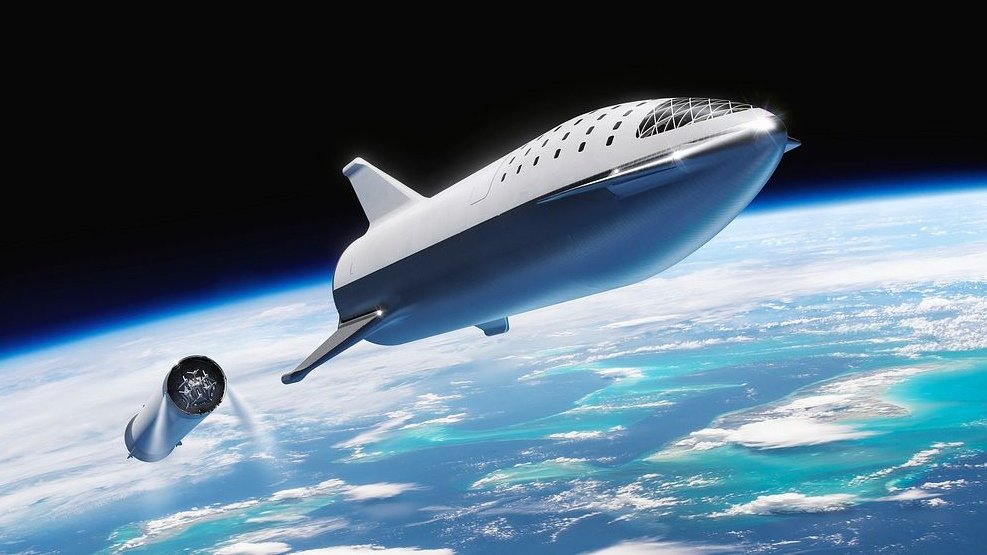
Starship Flight 14 Ready for Full-stack and Final Test before Biggest Mission Yet: SpaceX’s Starship Flight 14 represents a major step in the development of the company’s next-generation heavy-lift launch system. Built around Super Heavy Booster 21 and Starship Ship 41, the mission is designed to move beyond earlier short-duration test flights and demonstrate a much more demanding orbital mission profile.
Unlike previous flights that primarily focused on vehicle performance, structural validation, and controlled atmospheric re-entry, Flight 14 introduces several capabilities associated with an operational orbital spacecraft. These include a true orbital insertion burn, deployment of 26 next-generation Starlink V3 satellites, an extended orbital coast lasting nearly 10 hours, and an active de-orbit maneuver before atmospheric re-entry.
The mission therefore represents an important transition in the evolution of the Starship launch architecture, testing not only whether the vehicle can reach orbit but also whether it can perform useful work while operating there.
Starship Flight 14 Moves Beyond Suborbital Testing
Earlier integrated Starship flights followed primarily suborbital trajectories. After stage separation, the upper stage could coast toward its planned apogee before naturally falling back toward Earth.
Flight 14 changes that approach.
Instead of relying on a passive trajectory, Ship 41 is designed to perform an orbital insertion burn, establishing a low Earth orbit at approximately 275 kilometers. The vehicle then remains in orbit for multiple revolutions before conducting a controlled de-orbit burn.
Flight 13 vs. Flight 14 Mission Profile
Flight 13 represented a roughly hour-long suborbital test sequence:
Liftoff → Stage Separation → Suborbital Coast → Atmospheric Re-entry → Splashdown
Flight 14 introduces a significantly longer mission:
Liftoff → Stage Separation → Orbital Insertion → Payload Deployment → Six Orbits → De-orbit Burn → Re-entry
The difference is substantial. The mission timeline expands from approximately 60–70 minutes to roughly 9 hours and 50 minutes.
That extended duration introduces a completely new set of engineering challenges involving propellant management, thermal control, orbital navigation, payload operations, and spacecraft endurance.
Booster 21 and Ship 41 Form the Full-stack Architecture
At the heart of Flight 14 is the integrated combination of Booster 21 and Ship 41.
Super Heavy provides the enormous thrust required to lift the Starship stack from Earth, while the upper stage is responsible for reaching orbit, deploying its payload, remaining in space, and eventually performing its controlled re-entry.
Booster 21 Includes Lessons From Earlier Testing
One of the major areas of attention is Raptor engine relight reliability.
Earlier testing highlighted the challenges associated with cryogenic propellant systems, including the possibility of ice formation affecting engine relight pathways. Booster 21 incorporates updated filtration hardware and modified chill and purge procedures intended to improve reliability during engine operations.
These changes demonstrate one of SpaceX’s defining development strategies: using every flight to identify weaknesses and then incorporating those lessons into subsequent hardware.
Ship 41 Tests New Thermal Protection Concepts
Ship 41 also carries important thermal protection system (TPS) developments.
Its heat shield incorporates geometry derived from previous Starship hardware, along with mechanical reinforcement and experimental curved tile configurations. The objective is to gather additional data about how heat-shield components behave during the extreme vibration, heating, and thermal expansion associated with orbital flight.
Particularly significant is the use of previously flown thermal protection tiles.
Two recovered tiles from earlier Starship hardware are incorporated into Ship 41, creating an opportunity to examine whether individual TPS components can survive multiple thermal cycles.
26 Starlink V3 Satellites Make Flight 14 Operationally Significant
Perhaps the most important difference between Flight 14 and earlier demonstrations is the presence of an actual payload.
Ship 41 is designed to deploy 26 next-generation Starlink V3 satellites using a specialized internal payload deployment system often described as a “pez dispenser.”
How the Payload Deployment Works
After reaching approximately 275 km orbit, the spacecraft begins its payload deployment sequence.
The satellites are expected to be released during a window beginning around T+34 minutes and extending toward approximately T+1 hour 04 minutes.
Once separated, individual spacecraft can begin activating their systems, including:
- Solar arrays
- Electric propulsion systems
- Communications equipment
- Orbital-control systems
The satellites can then begin the longer process of raising their orbits toward their eventual operational locations.
This makes Flight 14 fundamentally different from a mission carrying inert demonstration masses. The spacecraft is expected to perform a genuine orbital payload-delivery function.
Starlink Satellites Could Also Inspect the Starship Heat Shield
An especially interesting feature of the payload involves the use of cameras.
Three of the Starlink V3 satellites are described as carrying externally oriented cameras capable of observing the Starship spacecraft during deployment.
Turning Payload Deployment Into Engineering Data
These cameras could provide valuable imagery of Ship 41’s thermal protection system.
The resulting observations could help engineers examine the condition of heat-shield tiles following launch and payload-door operations. Such information can be particularly valuable because the heat shield experiences significant mechanical stress during ascent.
This creates an unusual combination of mission objectives: the payload is not simply being delivered to orbit; aspects of the payload can potentially help gather engineering information about the launch vehicle itself.
The Biggest Challenge: Nearly 10 Hours in Orbit
Reaching orbit is only one part of the Flight 14 challenge.
Ship 41 must remain operational in space for approximately 10 hours before returning to Earth.
That extended orbital coast creates significant requirements for cryogenic propellant management.
Managing Methane and Liquid Oxygen
Starship relies on liquid methane (CH₄) and liquid oxygen (LOX). Maintaining these cryogenic propellants during an extended period in space presents challenges involving temperature, pressure, tank ullage, and propellant conditioning.
The spacecraft must retain sufficient usable propellant for its eventual de-orbit maneuver.
Without an active de-orbit burn, the spacecraft’s orbital trajectory would not necessarily intersect the intended atmospheric re-entry corridor at the desired location.
The De-orbit Burn Is a Critical New Capability
Flight 14 is designed to conduct a single-Raptor de-orbit burn at approximately T+8 hours 52 minutes.
This maneuver changes the spacecraft’s orbital energy and guides it toward its planned re-entry corridor.
The sequence can be summarized as:
Orbital Coast → Engine Relight → De-orbit Burn → Atmospheric Entry → Controlled Descent → Pacific Splashdown
Successfully completing this sequence would provide important operational data about in-space engine relight and orbital maneuvering.
Re-entry Will Put the Heat Shield to the Test
After spending almost 10 hours in orbit, Ship 41 must survive one of the most severe phases of the mission: atmospheric re-entry.
During re-entry, aerodynamic compression generates extreme temperatures around the spacecraft. Plasma forms around the vehicle, while the heat shield absorbs enormous thermal energy.
Testing Tile Durability and Reusability
Starship’s long-term objective depends heavily on rapid and reliable reusability.
That means heat-shield components cannot simply survive one flight. Engineers ultimately need to understand how tiles behave across repeated launches, orbital missions, re-entries, inspections, and refurbishment cycles.
The experimental tile configurations on Ship 41 therefore have significance beyond a single mission.
Flight data can help SpaceX study:
- Tile attachment reliability
- Thermal expansion
- Mechanical vibration
- High-shear regions
- Tile-edge behavior
- Re-entry heating
- Potential reuse requirements
Why Starship Flight 14 Matters for SpaceX
Flight 14 is important because it combines several capabilities that have previously been tested more independently.
The mission brings together orbital insertion, operational payload deployment, extended spaceflight, active de-orbiting, thermal-protection testing, and booster-engine improvements.
Toward Commercial Orbital Transportation
If the Starship system eventually reaches a mature reusable operating model, its enormous payload capacity could support large-scale satellite deployment and other orbital transportation applications.
The ability to launch large numbers of spacecraft in a single mission could also influence the economics of large satellite constellations.
Toward Future In-space Operations
Extended orbital missions also provide useful experience for future Starship concepts involving in-space propellant transfer.
Long-duration missions require the spacecraft to demonstrate that cryogenic propellants and spacecraft systems can remain manageable over extended periods. These lessons could become important for future lunar and interplanetary missions.
Conclusion: A Major Step Toward Operational Starship
Starship Flight 14 represents a significant evolution from earlier Starship test flights.
With Booster 21 and Ship 41, SpaceX is testing an integrated architecture capable of going beyond a short suborbital demonstration. The planned mission combines true orbital insertion, 26 Starlink V3 satellites, nearly 10 hours of orbital operations, active de-orbiting, and advanced heat-shield testing.
The mission is therefore about more than simply reaching space.
It is about demonstrating whether Starship can perform useful orbital work, survive an extended mission, execute controlled re-entry, and generate the engineering data required for future reuse.
If these capabilities can be progressively validated, Flight 14 could become an important milestone in SpaceX’s broader effort to transform Starship from an experimental vehicle into a fully reusable heavy-lift space transportation system.
FAQs
1. What is Starship Flight 14?
Starship Flight 14 is a planned integrated test mission involving Super Heavy Booster 21 and Starship Ship 41. Its mission profile is designed to go beyond earlier suborbital testing by demonstrating orbital insertion, payload deployment, extended orbital operations, and controlled de-orbiting.
2. What is the main goal of Starship Flight 14?
The main goals include demonstrating a true orbital insertion burn, deploying 26 Starlink V3 satellites, completing an extended orbital coast, performing an active de-orbit maneuver, and collecting additional data on Starship’s thermal protection system.
3. What are Booster 21 and Ship 41?
Booster 21 is the Super Heavy first-stage booster responsible for lifting the Starship stack from Earth. Ship 41 is the Starship upper stage designed to continue toward orbit, deploy the payload, perform orbital operations, and conduct the controlled return to Earth.
4. How is Flight 14 different from Flight 13?
Flight 13 followed a primarily suborbital trajectory, while Flight 14 is designed around a true orbital mission. Flight 14 adds an orbital insertion burn, multiple orbital revolutions, operational satellite deployment, and an active de-orbit burn.
5. How long is Starship Flight 14 expected to last?
The planned mission timeline is approximately 9 hours and 50 minutes, substantially longer than the roughly 60–70-minute duration associated with earlier suborbital mission profiles.
6. How high will Ship 41 orbit?
The planned orbital altitude is approximately 275 kilometers above Earth. Ship 41 is expected to complete approximately six orbital revolutions before beginning its return sequence.
7. What satellites will Starship Flight 14 carry?
Flight 14 is designed to carry 26 next-generation Starlink V3 satellites as its operational payload.
8. How will Starlink V3 satellites be deployed?
The satellites are expected to be released through an internal “pez dispenser” style deployment mechanism. The planned deployment window begins roughly 34 minutes after launch and extends to approximately one hour into the mission.
9. Why are cameras on some Starlink V3 satellites important?
Some of the satellites are described as carrying cameras that can potentially capture imagery of Ship 41’s thermal protection system during deployment. This could provide additional engineering information about the condition of the heat shield after ascent.
10. What is a de-orbit burn?
A de-orbit burn is an engine maneuver that changes a spacecraft’s orbital trajectory so that it intersects Earth’s atmosphere at a planned location. Flight 14 is designed to perform this maneuver using a single Raptor engine before re-entry.
11. Why does Starship need a de-orbit burn?
Because Flight 14 is designed to enter an actual orbit, Ship 41 cannot simply rely on its initial trajectory to return to Earth. The planned active de-orbit maneuver provides greater control over when and where the spacecraft begins atmospheric re-entry.
12. What heat-shield technology is being tested on Ship 41?
Ship 41 incorporates advanced thermal-protection experiments, including modified tile geometry, reinforced mechanical attachments, and experimental curved tile configurations. The mission is intended to provide additional data on tile performance during ascent and re-entry.
13. Will Flight 14 test reusable heat-shield tiles?
The mission is designed to provide further information about heat-shield reusability, including the performance of previously flown thermal-protection components incorporated into Ship 41. Such testing is important for Starship’s long-term goal of rapid reuse.
14. What challenges does a 10-hour orbital mission create?
An extended orbital mission creates challenges involving cryogenic propellant management, thermal control, engine relight reliability, spacecraft navigation, power, and orbital maneuvering. Maintaining usable methane and liquid oxygen for the later de-orbit maneuver is particularly important.
15. Why is Starship Flight 14 important for SpaceX?
Flight 14 combines several capabilities into one mission: orbital insertion, operational satellite deployment, extended orbital operations, de-orbiting, re-entry, and heat-shield testing. These capabilities are important steps toward developing Starship as a fully reusable heavy-lift orbital transportation system.
Read More:
- Tesla Roadster is available for order once again following brief hold
- Why automakers keep turning down Elon Musk’s Tesla Full Self-Driving offer
- Did Tesla make the perfect car for families? Tesla Model Y L Full Review
- X changed how everyone gets paid, and this lawsuit shows why
- Starship Flight 14 Will Change the Space Industry Forever Begin Making Revenue