
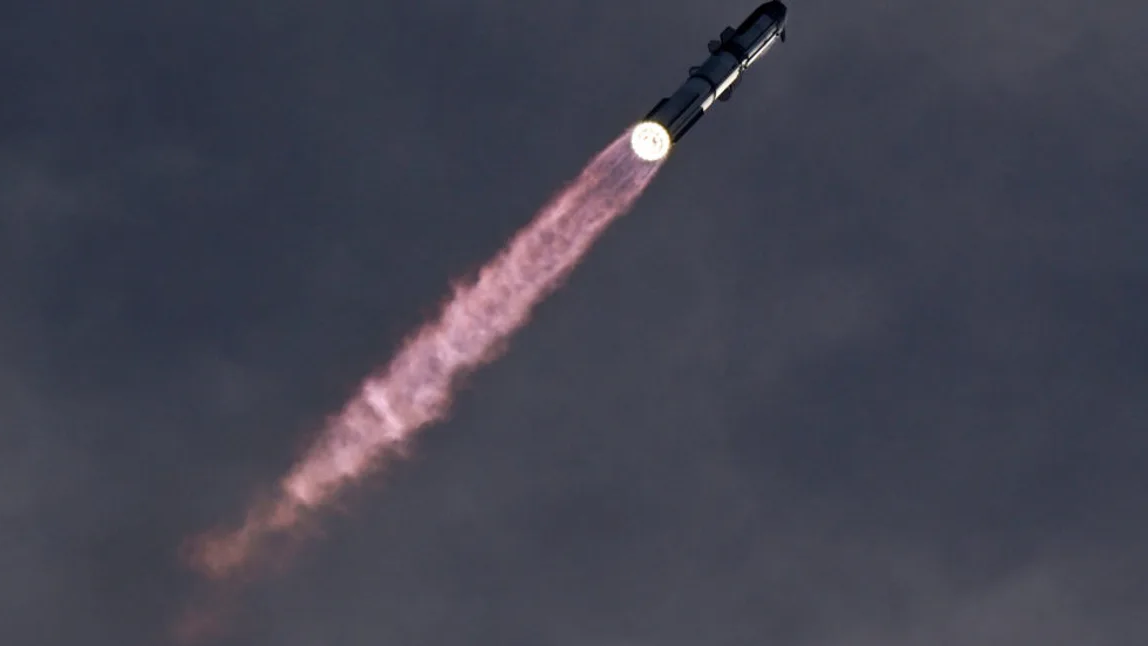
Starship Flight 14 Just Became Biggest Leap ever for SpaceX: SpaceX’s Starship program is often described as the foundation for humanity’s future beyond Earth, but its importance extends far beyond simply reaching Mars. The technologies developed through Starship Flight 14 could eventually support an entirely new era of space infrastructure, including permanent lunar settlements, large-scale resource extraction, and deep-space transportation.
One of the most ambitious concepts connected to this future is Space Station Alpha, a proposed permanent human settlement near the Moon’s South Pole. Unlike the short Apollo missions, which placed astronauts on the lunar surface for only a few days, a permanent lunar outpost would require continuous power, water, oxygen, food production, radiation protection, and transportation.
Starship’s massive payload capacity and reusable architecture could provide the transportation backbone needed to make such infrastructure possible.
Why the Lunar South Pole Could Become Humanity’s Next Home
The location of a permanent lunar settlement is one of its most important design decisions. The lunar South Pole offers several advantages that make it particularly attractive for long-duration human habitation.
Near-Permanent Solar Energy
Some elevated areas around the lunar poles receive sunlight for much longer periods than most other lunar regions. This makes locations near high ridges attractive for large-scale solar power generation.
A reliable solar network could provide electricity for habitats, communication systems, mining equipment, rovers, and industrial machinery. Combining solar arrays with energy storage and nuclear power systems could further reduce interruptions during periods without direct sunlight.
Water Ice in Permanently Shadowed Craters
The biggest resource advantage of the lunar poles is potentially water ice.
Deep craters can remain permanently shadowed, creating extremely cold environments where volatile materials can survive for long periods. Lunar water resources could potentially be processed into drinking water, oxygen, and hydrogen-based rocket propellant.
Through electrolysis, water can be separated into hydrogen and oxygen. These products could support both life-support systems and future in-space refueling operations.
That means lunar water could eventually become more than a survival resource—it could become a strategic resource for an expanding space transportation network.
More Manageable Thermal Conditions
The Moon experiences extreme temperatures, particularly away from the polar regions. Permanent infrastructure therefore needs sophisticated thermal management.
Polar locations can provide more favorable environments for certain types of surface infrastructure, reducing some of the thermal challenges faced by equatorial installations.
How Space Station Alpha Could Be Built
A permanent lunar base would not be constructed in a single launch. Instead, development would likely happen through multiple stages, beginning with robotic construction systems.
Phase 1: Robotic Site Preparation
Before humans establish permanent habitation, autonomous machines could prepare the site.
Rovers, excavators, and robotic construction vehicles could level terrain, move regolith, establish landing zones, and prepare foundations.
This approach would allow dangerous and repetitive construction work to begin before large human crews arrive.
Phase 2: Inflatable Habitat Modules
Early habitats could use expandable structures transported from Earth.
These modules could be launched in compact configurations and expanded after reaching the lunar surface. Once deployed, they would provide pressurized living and working areas for astronauts.
However, inflatable structures alone would not provide sufficient protection from the lunar environment.
Phase 3: Regolith Shielding
The Moon has no thick atmosphere or global magnetic field comparable to Earth’s. Consequently, radiation protection is a major engineering challenge.
One proposed solution is to cover habitats with several meters of lunar regolith.
Robotic construction systems could collect local soil and place it over habitat structures. Advanced manufacturing techniques could also potentially sinter or bind regolith into protective construction materials.
This local-resource approach is known as In-Situ Resource Utilization (ISRU).
Instead of transporting every kilogram of construction material from Earth, future lunar infrastructure could use the Moon itself as a source of building material.
The Role of Starship in Lunar Infrastructure
This is where Starship becomes particularly important.
A permanent lunar settlement would require enormous quantities of equipment. Habitat modules, solar panels, scientific instruments, mining machinery, construction robots, food, spare parts, and propellant-production equipment would all have to reach the Moon.
A fully reusable heavy-lift spacecraft could potentially transport significantly larger payloads than the spacecraft used during the Apollo era.
Instead of treating every lunar mission as an isolated expedition, Starship could support a repeatable transportation system connecting Earth orbit, the Moon, and eventually Mars.
That would represent a fundamental change in how humanity approaches space exploration.
Closed-Loop Life Support Becomes Essential
A permanent settlement cannot depend entirely on shipments from Earth.
Space Station Alpha would therefore require highly efficient Environmental Control and Life Support Systems (ECLSS).
Water Recycling
Astronauts consume water through drinking, food preparation, hygiene, and other activities. A long-duration lunar base would need systems capable of recovering and recycling as much water as possible.
Water recovered from waste streams could be purified and returned to the habitat’s life-support cycle.
Oxygen Production
Water can also become an oxygen source.
Electrolysis systems can split water into oxygen and hydrogen. Oxygen can support crew respiration, while hydrogen could potentially be stored for future propellant production.
Lunar Greenhouses
Food production could eventually move partially away from Earth.
Hydroponic and aeroponic farming systems could operate inside pressurized lunar greenhouses. Artificial lighting could provide controlled growing conditions while plants help absorb carbon dioxide and produce oxygen.
These systems would not immediately eliminate the need for Earth-supplied food, but they could improve nutritional variety and reduce long-term dependence on resupply missions.
Lunar Dust Is a Major Engineering Challenge
Lunar regolith is extremely fine and abrasive. During Apollo missions, astronauts found that dust could adhere to spacesuits and enter spacecraft interiors.
A permanent settlement would need advanced dust mitigation systems.
Future bases could use dedicated suitports, multi-stage airlocks, and specialized cleaning systems to prevent lunar dust from entering living areas.
Keeping the abrasive material outside would be critical for protecting seals, machinery, electronics, and human health.
From Apollo to a Permanent Lunar Economy
The difference between Apollo and a future lunar settlement is not simply the length of the mission.
Apollo demonstrated that humans could reach the Moon, conduct scientific work, and return safely. A permanent base would require humanity to create an industrial ecosystem capable of supporting people continuously.
| Capability | Apollo Era | Future Lunar Outpost |
|---|---|---|
| Crew Duration | Days | Long-term rotations |
| Water | Primarily Earth-supplied | Recycling + lunar ice |
| Oxygen | Earth-supplied | Recycling + water electrolysis |
| Construction | Mostly Earth-built | Increasingly local materials |
| Power | Limited mission systems | Large solar + nuclear infrastructure |
| Transportation | Short-range rover | Advanced long-range surface vehicles |
| Resources | Imported | ISRU-based production |
The ultimate objective would be to transform the Moon from a destination visited occasionally into a permanent platform for exploration and industry.
A Stepping Stone Toward Mars
The Moon could also become a testing ground for technologies required on Mars.
Engineers could experiment with closed-loop life support, autonomous construction, resource extraction, agriculture, radiation protection, and long-duration human habitation in an environment much closer to Earth than Mars.
Starship could connect these systems to a broader transportation architecture.
The technologies needed to establish a lunar settlement—especially large-scale cargo delivery and reusable spacecraft—are closely related to the technologies required for future Mars missions.
Conclusion: The Bigger Meaning of Starship Flight 14
Starship Flight 14 represents more than another milestone in SpaceX’s launch program when viewed within the larger vision of reusable space transportation.
A permanent lunar settlement such as Space Station Alpha would require reliable transportation, local resource utilization, autonomous construction, advanced life support, and massive quantities of cargo.
The Moon’s South Pole could provide access to water ice and valuable solar-energy locations, while robotic construction systems could gradually transform lunar regolith into protective infrastructure.
If these technologies mature, the Moon could become humanity’s first truly permanent off-world industrial and scientific outpost—and a critical stepping stone toward Mars and a broader multiplanetary future.
FAQs
1. What is Space Station Alpha?
Space Station Alpha is a conceptual permanent lunar settlement designed to support continuous human habitation, scientific research, resource extraction, and future deep-space missions.
2. Why is the lunar South Pole important?
The lunar South Pole is attractive because some elevated areas receive extended sunlight while permanently shadowed craters may contain water ice.
3. How could lunar water ice be used?
Extracted lunar ice could potentially provide drinking water, oxygen, and hydrogen. Electrolysis can separate water into hydrogen and oxygen, which could also support future rocket-propellant production.
4. How would astronauts get oxygen on the Moon?
Oxygen could come from recycled life-support systems and potentially from lunar water through electrolysis. Future technologies could also extract oxygen from oxygen-bearing lunar minerals.
5. How would Space Station Alpha be protected from radiation?
Habitats could be covered with several meters of lunar regolith, providing shielding against radiation and micrometeorite impacts.
6. What role could 3D printing play in lunar construction?
Robotic systems could use lunar regolith as construction material, potentially creating protective walls, structures, roads, landing infrastructure, and shielding around habitats.
7. What is ISRU?
ISRU, or In-Situ Resource Utilization, means using resources available at the destination instead of transporting everything from Earth. On the Moon, this could include using water ice and regolith.
8. How could Starship support a lunar base?
Starship’s intended heavy-lift and reusable architecture could transport large amounts of equipment, habitat components, scientific instruments, construction machinery, and other supplies to lunar orbit or the lunar surface.
9. How would astronauts get food on a permanent lunar base?
Initially, much of the food would likely come from Earth. Over time, hydroponic and aeroponic greenhouses could supplement food supplies while also contributing to atmospheric management.
10. How would water be recycled on the Moon?
Advanced closed-loop life-support systems could recover water from wastewater and other sources, purify it, and return it to the habitat’s usable water supply.
11. Why is lunar dust a problem?
Lunar regolith is extremely fine and abrasive. It can cling to spacesuits and potentially damage equipment, seals, and mechanical systems, making dust control an important requirement for permanent habitation.
12. How could lunar dust be kept outside habitats?
Future bases could use multi-stage airlocks, suitports, specialized cleaning systems, and dedicated spacesuit storage areas to reduce the amount of dust entering pressurized living spaces.
13. How would a lunar base generate electricity?
Large solar arrays could provide power where sunlight is available for extended periods. Nuclear power systems could potentially provide additional reliable electricity during periods when solar generation is insufficient.
14. How is a permanent lunar base different from Apollo missions?
Apollo missions were short-duration expeditions focused primarily on exploration and science. A permanent outpost would require continuous life support, resource production, power infrastructure, construction systems, and regular transportation.
15. Could the Moon become a stepping stone to Mars?
Yes. A lunar settlement could provide an environment for testing closed-loop life support, resource extraction, autonomous construction, agriculture, radiation protection, and long-duration habitation before applying similar technologies to Mars.
16. Why is Starship Flight 14 significant to this larger vision?
Starship’s development is relevant because a permanent lunar settlement would require a large-scale, repeatable transportation system capable of moving substantial amounts of cargo and equipment beyond Earth. The broader Starship architecture is intended to support that type of space infrastructure.
Read More:
- SpaceX set to launch astronauts and a classified Falcon Heavy mission on the same day
- The Pentagon taps Elon Musk to design the battlefield of the future
- Tesla launches improved Model 3 in China with V2L, new interior option
- Tesla moves forward on Wireless Charging for vehicles
- SpaceX nails “Lucky 13” astronaut launch, leaning into Tesla tradition and superstition