
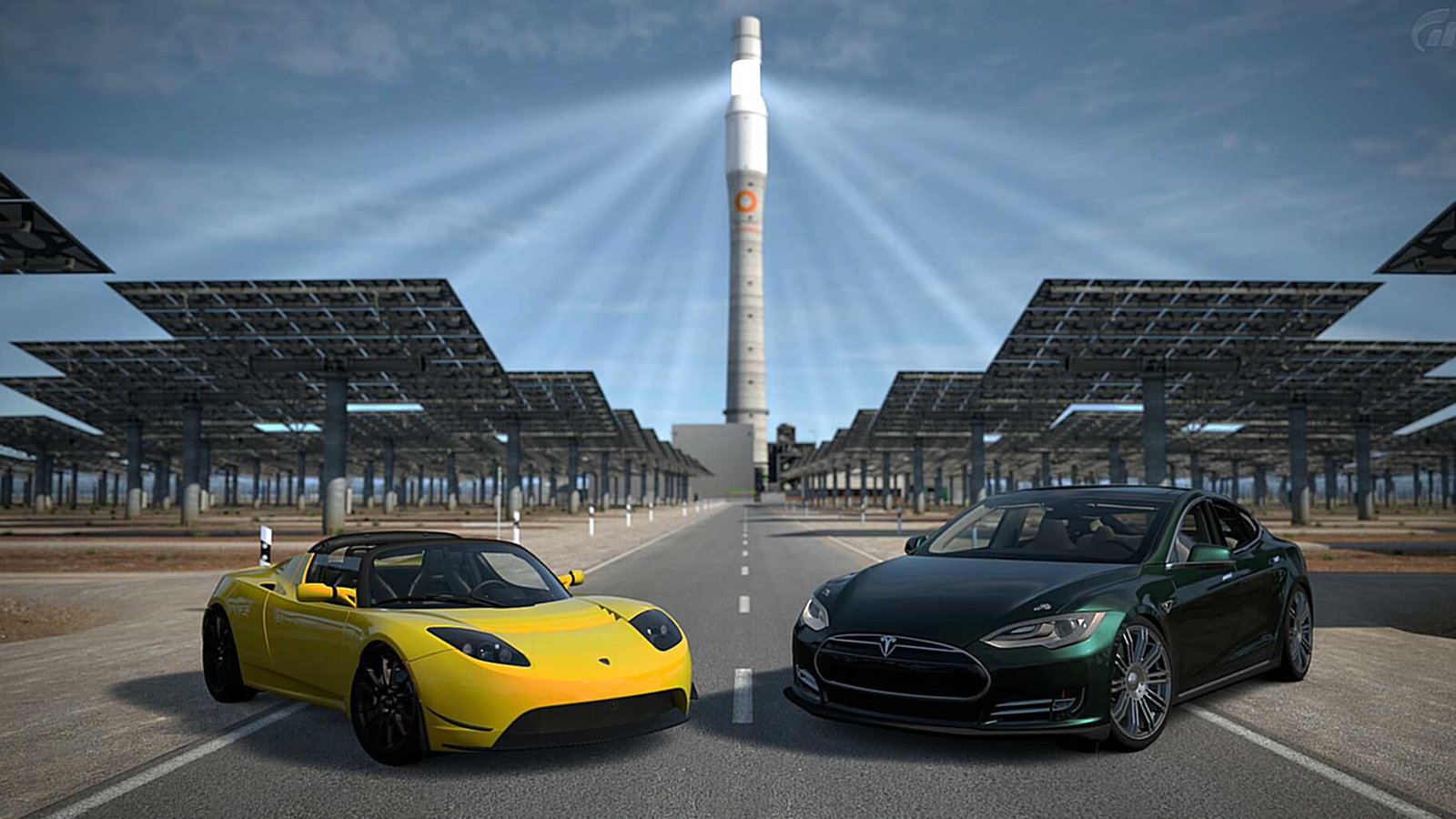
Tesla Reveals Major NEW Roadster Update 2027: The Tesla Roadster 2027 is once again attracting attention as Tesla’s long-awaited electric supercar continues to generate excitement with ambitious performance targets and advanced aerospace-inspired technology.
Originally introduced as a concept in 2017, the second-generation Roadster promised to redefine electric vehicle performance with incredible acceleration, high top speeds, and an impressive driving range. However, years of delays and engineering challenges have kept enthusiasts waiting for more concrete progress.
The latest concept described in the supplied update highlights a potential combination of SpaceX-inspired cold-gas thrusters, active underbody suction, and high-performance electric motors. These technologies could push the Roadster beyond the traditional boundaries of a supercar.
However, the specific demonstration details, performance figures, and production plans described here should be treated as unverified claims until confirmed by official Tesla announcements.
With a proposed production target of 2028, the Roadster could become one of the most ambitious vehicles in Tesla’s lineup.
Tesla Roadster 2027: A New Era of Electric Supercars
Tesla’s second-generation Roadster has long been associated with extreme acceleration and futuristic engineering. Unlike conventional electric sports cars, the proposed Roadster concept combines a lightweight performance-focused design with advanced propulsion technology.
The original concept promised acceleration from 0 to 60 mph in approximately 1.9 seconds, a top speed exceeding 200 mph, and a potential driving range of up to 620 miles under specified conditions. These figures helped establish the Roadster as a highly anticipated electric hypercar.
The newer concept described in the update takes the idea further by exploring technologies inspired by aerospace engineering. If implemented successfully, these systems could provide additional acceleration, improved vehicle control, and increased aerodynamic grip.
Nevertheless, the final production specifications, available configurations, and real-world performance remain important details that buyers will need Tesla to confirm.
SpaceX-Inspired Cold-Gas Thrusters
How Could Rocket Thrusters Work in a Tesla Roadster?
One of the most striking technologies discussed in the update is the use of cold-gas thrusters. Unlike conventional rocket engines, cold-gas systems release compressed gas through carefully directed nozzles without burning fuel.
In a hypothetical Roadster application, pressurized gas could generate short bursts of thrust to influence the vehicle’s movement. Depending on the system’s design, this could help control pitch, roll, or acceleration during specialized demonstrations.
The concept draws inspiration from aerospace attitude-control systems, which use small thrusters to change the orientation of spacecraft.
However, adapting such technology to a road-going car would introduce substantial engineering challenges. Engineers would need to manage pressure, gas consumption, tank weight, thermal conditions, control precision, and occupant safety.
Cold-gas thrusters would not automatically make the Tesla Roadster a flying car. They could provide brief thrust under specific conditions, but sustained flight would require a suitable lift-generating system and additional aircraft-like engineering.
Could the Roadster Accelerate From 0 to 60 mph in 0.81 Seconds?
The supplied update describes a potential 0–60 mph acceleration time of 0.81 seconds for a thruster-assisted configuration. Such a figure would represent an extraordinary performance target, but it should not be treated as a verified production specification.
A vehicle’s acceleration depends on several factors, including tire grip, power delivery, vehicle mass, road conditions, and the measurement method used. Adding thrust could change the acceleration equation, but it would also introduce significant safety and control challenges.
Until Tesla publishes independently verifiable test results, the claimed acceleration figure remains speculative.
Active Underbody Suction: More Grip and Better Handling
How Ground-Effect Technology Could Improve Performance
Another advanced feature described in the update is a fan-driven underbody suction system. This technology aims to draw air from beneath the vehicle, creating a pressure difference that pushes the car toward the road.
The result is additional downforce, which can help tires maintain contact with the surface during high-speed cornering.
Motorsport history provides examples of fan-assisted aerodynamic systems, including the Chaparral 2J and Brabham BT46B. These vehicles demonstrated how active airflow management could increase aerodynamic grip.
For a future Tesla Roadster, a similar system could potentially improve cornering stability and traction during track driving.
However, incorporating powerful fans into a production electric car would require careful attention to energy consumption, cooling, noise, weight, maintenance, and debris protection.
Claims that such a system could allow the Roadster to drive upside down or travel along vertical surfaces would require particularly strong technical evidence. Extraordinary demonstrations should not be confused with proven, everyday vehicle capabilities.
Tesla Roadster Performance Trims and Expected Specifications
The supplied concept describes three possible configurations: Performance, Thrust, and Rocket. These names and specifications should be regarded as proposed or speculative rather than confirmed Tesla production options.
1. Performance Trim
The Performance version would represent the conventional electric-supercar configuration. It is described as using a tri-motor electric drivetrain, with a projected 0–60 mph time of around 1.9 seconds and a top speed above 200 mph.
A traditional electric drivetrain would avoid the additional complexity of specialized thrusters and could offer a more practical balance between acceleration, range, and passenger comfort.
2. Thrust Trim
The proposed Thrust trim would combine electric propulsion with cold-gas thrusters. The concept suggests that this configuration could prioritize extreme acceleration and specialized performance demonstrations.
The main engineering compromise would involve additional tanks, valves, plumbing, and control systems. These components could increase vehicle weight and reduce available cabin space.
3. Rocket Trim
The proposed Rocket trim would represent the most experimental configuration, with the greatest integration of aerospace-inspired hardware.
Such a version could appeal to collectors and performance enthusiasts if Tesla eventually develops a production-ready package. However, its price, availability, specifications, and legality would depend on engineering validation and regulatory approval.
Interior Space, Battery Range, and Practical Limitations
Extreme performance often requires compromises, and the Roadster would be no exception if the proposed technologies were adopted.
Passenger Space
The original Roadster concept featured a 2+2 seating layout. Additional propulsion equipment could require space that would otherwise be used for rear passengers or luggage.
A thruster-equipped model might therefore need a two-seat configuration, depending on the final design.
Driving Range
The original concept targeted a range of approximately 620 miles, although actual range would depend on testing conditions and the final battery configuration.
High-performance motors, active aerodynamic systems, and additional hardware could affect efficiency and vehicle mass. Tesla would need to balance battery capacity, handling, acceleration, and everyday usability.
Safety and Regulatory Approval
A production vehicle equipped with high-pressure gas systems would require extensive safety testing. Engineers would need to evaluate tank integrity, pressure management, crash protection, emergency shutdown procedures, and potential risks to pedestrians and nearby vehicles.
Public-road approval cannot be assumed. Specialized thrust systems, if developed, might face restrictions that would limit their use to controlled demonstrations or closed tracks.
Tesla Roadster vs. Rimac Nevera and BYD Yangwang U9
Tesla would enter a competitive high-performance EV market if the next-generation Roadster reaches production.
The Rimac Nevera demonstrates how advanced electric powertrains, sophisticated torque control, and high-output motors can deliver extraordinary performance. Meanwhile, the BYD Yangwang U9 explores technologies such as advanced active suspension and vehicle-body control.
Tesla’s proposed approach would be different if it successfully integrated aerospace-inspired propulsion with active aerodynamic systems.
Rather than competing exclusively on acceleration and top speed, the Roadster concept could focus on unconventional vehicle-control technologies.
However, meaningful comparisons will require confirmed production specifications, independent performance testing, pricing, and evidence that the proposed features work reliably outside demonstrations.
Tesla Roadster Production Timeline: Is 2028 Possible?
The supplied update identifies 2028 as a potential production target, with Gigafactory Texas mentioned as the proposed manufacturing location. This timeline should be treated as a target described in the source, not a guaranteed delivery date.
Turning an experimental high-performance prototype into a reliable production vehicle involves several stages, including design validation, crash testing, manufacturing development, supplier coordination, software testing, and regulatory certification.
Tesla’s history of ambitious product announcements also makes it important to distinguish between a target date and confirmed customer deliveries.
The most useful indicators of progress will be official production announcements, final specifications, factory preparations, and verified demonstrations using production-intent hardware.
Conclusion: Will the Tesla Roadster Redefine Electric Performance?
The Tesla Roadster 2027 concept illustrates how electric vehicles could evolve beyond conventional motor-and-battery engineering. Cold-gas thrusters, active underbody suction, advanced controls, and high-performance electric propulsion offer an intriguing vision of a future electric hypercar.
Yet the difference between an exciting concept and a production-ready vehicle is substantial. Performance claims such as 0–60 mph in 0.81 seconds, upside-down driving, and thruster-assisted maneuvers require independent verification before they can be accepted as real-world capabilities.
If Tesla can deliver a safe, reliable, and road-legal vehicle incorporating even some of these innovations, the next-generation Roadster could become a significant milestone in electric performance engineering.
For now, enthusiasts should watch for official Tesla announcements, verified test results, confirmed pricing, and a firm production schedule before treating the most dramatic claims as established facts.
FAQs
- What is the Tesla Roadster 2027?
The Tesla Roadster 2027 refers to the anticipated next-generation electric supercar from Tesla. It is expected to focus on extreme acceleration, high top speeds, advanced battery technology, and potentially aerospace-inspired features.
- When will the new Tesla Roadster be released?
The next-generation Tesla Roadster has faced multiple delays. The supplied update mentions a potential 2028 production target, but the final launch date and customer delivery schedule require official confirmation.
- What is the expected 0–60 mph acceleration of the Tesla Roadster?
The original Roadster concept targeted approximately 1.9 seconds from 0 to 60 mph. The supplied update describes a speculative 0.81-second acceleration target for a thruster-assisted version, which has not been established as a verified production specification.
- Will the Tesla Roadster use SpaceX rocket technology?
The Roadster has been associated with proposed SpaceX-inspired technology, including cold-gas thrusters. The exact configuration, availability, and production readiness of any such system require confirmation from Tesla.
- What are cold-gas thrusters in the Tesla Roadster?
Cold-gas thrusters release compressed gas through nozzles to generate short bursts of thrust. In theory, a suitably designed system could help influence a vehicle’s movement, but its practical application in a road car would require extensive engineering and safety testing.
- Can the Tesla Roadster actually fly?
The Tesla Roadster should not be considered a conventional flying car. Cold-gas thrusters could potentially provide brief thrust, but sustained flight requires appropriate lift and aircraft-like systems. Claims of aerial maneuvers need independent verification.
- What is the active underbody suction system?
An active underbody suction system uses fans to remove air from beneath a vehicle, potentially creating additional downforce. If successfully implemented, this technology could improve tire grip and cornering performance, particularly on a racetrack.
- What is the expected top speed of the Tesla Roadster 2027?
The original Roadster concept targeted a top speed exceeding 250 mph, while the supplied update lists more than 200 mph for its proposed Performance trim. Final production specifications and independently verified top speeds remain to be confirmed.
- How many trims could the new Tesla Roadster offer?
The supplied concept describes three possible configurations: Performance, Thrust, and Rocket. These proposed trims would differ in their electric drivetrain, potential thruster integration, and performance priorities. Tesla has not confirmed these exact configurations in the information provided.
- What is the expected driving range of the Tesla Roadster?
The original concept advertised a potential range of approximately 620 miles per charge. Actual range would depend on the production battery, driving conditions, speed, temperature, and vehicle configuration.
- Will the new Tesla Roadster have four seats?
The original concept featured a 2+2 seating configuration. However, a version incorporating additional propulsion hardware could require more space for tanks and related equipment, potentially reducing passenger capacity to two seats.
- How much will the Tesla Roadster 2027 cost?
The final production price has not been established by the supplied information. Although the update lists proposed deposits for different configurations, these figures should not be treated as confirmed prices or official reservation terms.
- Will the Tesla Roadster’s thrusters be legal on public roads?
The legality of any thruster-assisted system would depend on its design and the regulations in each market. Public-road use cannot be assumed, and specialized functions could potentially be restricted to controlled testing environments or closed tracks.
- How will the Tesla Roadster compare with the Rimac Nevera and BYD Yangwang U9?
The Tesla Roadster, Rimac Nevera, and BYD Yangwang U9 represent different approaches to high-performance electric vehicles. Tesla’s proposed aerospace-inspired technology could distinguish its concept, while the competitors demonstrate advanced electric propulsion, torque control, and vehicle-dynamics engineering. Final comparisons require verified production specifications and independent testing.
- Is the new Tesla Roadster 2027 confirmed for production?
The next-generation Tesla Roadster has been announced as a Tesla project, but the specific thruster-assisted features, performance claims, proposed trim levels, and 2028 production target described in the supplied update should be treated cautiously until officially confirmed. Buyers should follow official Tesla announcements for reliable information about specifications, pricing, reservations, and delivery dates.
Read More:
- Tesla Q3 2026 Earnings results: in-line revenues, slight beat on EPS
- Tesla Cybercab gets a for sale date at last
- Tesla buyers are buying for Full Self-Driving and not for the car, data shows
- Elon Musk announces Starship Fight 15 Giant Leaps after new S41 Landing Footage Explained
- NEW Tesla Semi Amazing Ramping & HUGE Upgrade Inside