
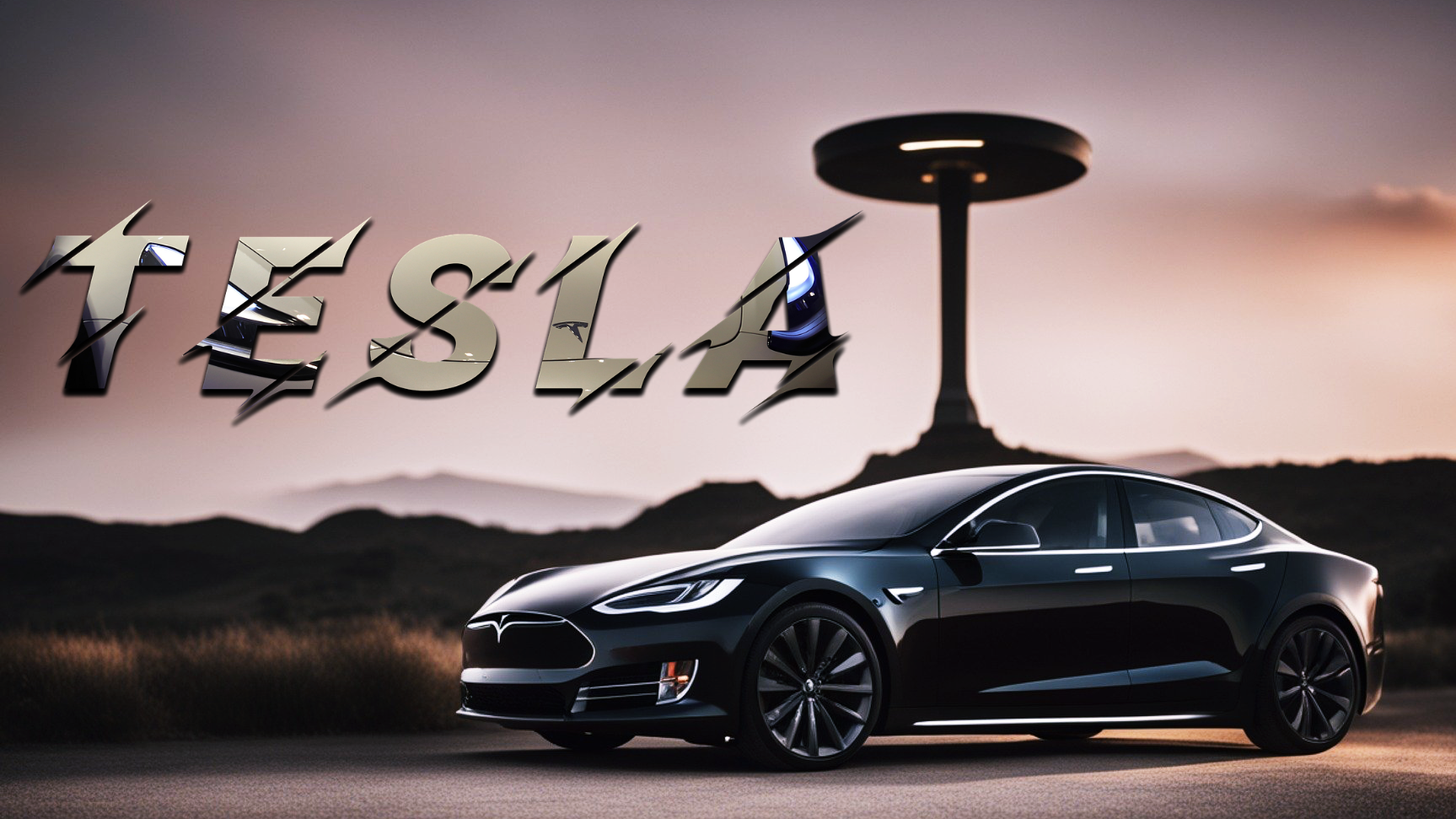
How Tesla Became Such a Big Company: Tesla, Inc. is now one of the most iconic companies in the world, and its influence extends far beyond the automotive industry. With its innovative products, visionary leadership, and groundbreaking technologies, Tesla has rapidly transformed from a niche electric vehicle (EV) startup into a global giant. But how did Tesla become so big, and what factors contributed to its remarkable growth?
In this article, we’ll explore the key milestones, strategic decisions, and disruptive innovations that led Tesla to become one of the most valuable and influential companies on the planet.
1. The Vision of Elon Musk: A Mission to Change the World
Tesla’s story begins with a bold vision – not just to make electric cars but to accelerate the world’s transition to sustainable energy. This was the guiding principle when Elon Musk, the CEO and primary driving force behind Tesla, took charge of the company in 2004.
While Tesla was founded by engineers Martin Eberhard and Marc Tarpenning in 2003, Elon Musk joined as the company’s largest investor and chairman after a funding round in early 2004. Musk’s involvement would mark the beginning of a transformative journey that turned Tesla into one of the most disruptive forces in the business world.
Musk’s vision for Tesla was never just to build electric cars but to create a sustainable future, reducing humanity’s reliance on fossil fuels and mitigating climate change. This sense of purpose resonated deeply with customers, investors, and employees alike, helping the company differentiate itself in a highly competitive and traditional automotive industry.
2. Innovative Products: The Roadster, Model S, and Beyond
Tesla’s first significant product was the Tesla Roadster, introduced in 2008. The Roadster was a game-changer in several ways. Unlike previous electric vehicles that had limited range and poor performance, the Roadster could travel up to 245 miles on a single charge and accelerate from 0 to 60 mph in under 4 seconds. The car’s performance, combined with its sleek design, broke the stereotype that electric vehicles (EVs) were slow, unattractive, and impractical.
However, the Roadster was just the beginning of Tesla’s journey. In 2012, the company unveiled the Model S, a luxury sedan that quickly became the standard for premium electric vehicles. With a longer range, cutting-edge features like autopilot capabilities, and impressive safety ratings, the Model S garnered widespread acclaim, establishing Tesla as a serious player in the automotive industry.
Tesla didn’t stop there. Over the years, the company expanded its product lineup with the Model X (an electric SUV), the Model 3 (a more affordable electric sedan), and the Model Y (a compact SUV). The Model 3, in particular, became a game-changer for Tesla, as it allowed the company to produce a mass-market vehicle, bringing electric cars to a much broader customer base.
Each of these vehicles pushed the boundaries of what was possible in electric car technology and design. Tesla’s relentless focus on innovation and its ability to deliver high-performance electric vehicles at various price points helped it attract customers across different segments, further fueling its rise.
Key Factors Behind Tesla’s Growth
| Growth Factor | Description | Impact on Tesla |
|---|---|---|
| Elon Musk’s Vision | Focus on accelerating the transition to sustainable energy | Built a strong brand identity and long-term mission |
| Tesla Roadster | Introduced high-performance electric driving in 2008 | Challenged stereotypes about electric vehicles |
| Tesla Model S | Premium electric sedan launched in 2012 | Established Tesla in the luxury EV market |
| Tesla Model 3 | More accessible electric sedan | Expanded Tesla’s customer base |
| Direct-to-Consumer Sales | Vehicles sold through Tesla’s website and company-operated locations | Greater control over the buying experience |
| Battery Technology | Investment in battery development and manufacturing | Improved range, efficiency, and cost management |
| Gigafactories | Large-scale manufacturing facilities | Increased production capacity and efficiency |
| Autopilot and AI | Driver-assistance software and AI development | Strengthened Tesla’s technology-focused identity |
| Global Expansion | Manufacturing in the United States, China, and Germany | Improved access to major EV markets |
| Renewable Energy | Products such as Powerwall and Megapack | Expanded Tesla beyond electric vehicles |
3. Breaking the Mold: Direct-to-Consumer Sales Model
One of the most disruptive aspects of Tesla’s business strategy was its decision to sell cars directly to consumers, bypassing the traditional dealership model. Most automotive manufacturers rely on franchised dealerships to sell their cars, but Tesla took a bold step by opening its own showrooms and selling directly to customers through its website.
This direct-to-consumer model allowed Tesla to control the customer experience, from sales to after-sales service, while also reducing the costs associated with dealership networks. It also allowed Tesla to build a more loyal and engaged customer base, as buyers had direct access to the company’s team for information, service, and updates.
While this decision was controversial and faced significant resistance from traditional dealerships, it ultimately proved to be a key factor in Tesla’s growth. The direct sales model enabled the company to keep prices competitive and create a seamless, personalized experience for its customers.
4. Battery Technology: A Competitive Advantage
One of Tesla’s most significant advantages over traditional automakers is its expertise in battery technology. The company has invested heavily in developing high-performance, cost-effective batteries that are crucial for the success of electric vehicles. Tesla’s approach to battery production has been a key driver of its success and its ability to scale.
In 2014, Tesla made a bold move by announcing the Gigafactory, a massive battery manufacturing plant in Nevada. The goal of the Gigafactory was to produce batteries at an unprecedented scale, driving down the cost of electric vehicles and making them more accessible to the average consumer.
By vertically integrating its supply chain and producing its own batteries, Tesla gained a significant edge in the EV market. The Gigafactory allowed the company to reduce the cost of battery packs, which is one of the most expensive components of electric vehicles. This, in turn, enabled Tesla to produce vehicles with longer ranges at lower prices, making EVs more competitive with traditional internal combustion engine vehicles.
Tesla’s focus on battery technology didn’t stop with electric cars. The company has also developed energy storage solutions, such as the Powerwall and Powerpack, which store energy for residential, commercial, and industrial use. These products further cemented Tesla’s position as a leader in the renewable energy sector, contributing to its long-term vision of sustainable energy.
5. Autonomous Driving and AI: The Future of Transportation
Another key element of Tesla’s success has been its focus on autonomous driving technology. Tesla’s Autopilot system, which provides semi-autonomous driving capabilities, has been one of the most talked-about features in the automotive industry. The company has invested heavily in artificial intelligence (AI) and machine learning to improve the system over time, with the long-term goal of achieving full autonomy.
Tesla’s approach to autonomous driving is unique in that it relies on data gathered from its vast fleet of vehicles. Every Tesla on the road provides real-world data that is used to improve the software and algorithms behind Autopilot, making it one of the most data-driven approaches to self-driving technology.
While full autonomy is still years away, Tesla’s advancements in autonomous driving have been a key differentiator for the company, setting it apart from other automakers that have struggled to make similar breakthroughs. The company’s ability to iterate quickly and push the boundaries of AI has made Tesla a leader in the race to develop self-driving cars.
Tesla’s Major Products and Technologies
| Product or Technology | Introduction / Development | Main Purpose | Importance |
|---|---|---|---|
| Tesla Roadster | 2008 | High-performance electric sports car | Demonstrated the potential of electric vehicles |
| Tesla Model S | 2012 | Premium electric sedan | Strengthened Tesla’s luxury EV reputation |
| Tesla Model X | 2015 | Electric SUV | Expanded Tesla’s vehicle lineup |
| Tesla Model 3 | 2017 | More accessible electric sedan | Helped bring EVs to a wider market |
| Tesla Model Y | 2020 | Compact electric SUV | Expanded Tesla’s reach in the SUV segment |
| Tesla Autopilot | Introduced in 2014 | Driver-assistance technology | Supports selected driving tasks |
| Gigafactory Nevada | Announced in 2014 | Battery and component manufacturing | Supports battery production at scale |
| Tesla Powerwall | Introduced in 2015 | Residential energy storage | Helps households store electricity |
| Tesla Megapack | Introduced in 2019 | Utility-scale energy storage | Supports large-scale energy storage projects |
| Tesla AI and Robotics | Ongoing development | AI systems and humanoid robots | Creates potential opportunities beyond automotive manufacturing |
6. Global Expansion and Scaling Production
In addition to its product innovation, Tesla’s growth can be attributed to its ability to scale production and expand globally. One of the biggest challenges for any automaker is manufacturing vehicles at scale while maintaining quality and keeping costs down. Tesla’s approach to scaling production has been aggressive, with the company opening multiple Gigafactories around the world, including in Shanghai, Berlin, and Austin.
These factories have allowed Tesla to significantly increase its production capacity, reducing lead times and meeting growing demand for its vehicles. In 2021, Tesla produced nearly a million vehicles, and the company’s long-term goal is to produce 20 million vehicles annually by the end of the decade. Achieving this level of production will be critical to Tesla’s continued growth and its mission to accelerate the transition to sustainable energy.
Tesla’s global expansion has also been supported by strong demand for EVs in key markets such as Europe, China, and North America. As governments around the world push for stricter emissions regulations and incentivize the adoption of electric vehicles, Tesla is well-positioned to capitalize on these trends.
7. Market Position and Financial Performance
Tesla’s rise to prominence is not just about technological innovation; it is also a story of financial success. Over the past decade, the company’s stock price has skyrocketed, making it one of the most valuable companies in the world. Tesla became the most valuable automaker by market capitalization in 2020, surpassing traditional giants like Toyota and Volkswagen.
While Tesla has faced significant challenges and criticism along the way – from production delays to questions about its profitability – the company’s ability to achieve consistent revenue growth, expand its product lineup, and enter new markets has been a testament to its long-term vision and execution.
Tesla’s financial performance has also been bolstered by the growing interest in clean energy and sustainable technologies. As investors increasingly focus on environmental, social, and governance (ESG) factors, Tesla’s position as a leader in both electric vehicles and renewable energy has made it an attractive investment for those looking to capitalize on the green revolution.
Conclusion: The Road Ahead for Tesla
Tesla’s journey from a small startup to a global powerhouse is a testament to the power of innovation, vision, and risk-taking. Through its groundbreaking products, disruptive business model, and relentless pursuit of sustainable energy, Tesla has fundamentally changed the automotive industry and beyond.
While the company faces ongoing challenges, including competition from established automakers and the complexity of scaling production, Tesla’s future looks bright. With continued advancements in battery technology, autonomous driving, and renewable energy, Tesla is well-positioned to maintain its leadership in the transition to a sustainable future.
As Tesla continues to push the boundaries of what’s possible, one thing is clear: the company’s impact on the world will be felt for generations to come. Tesla is not just building cars; it’s building a sustainable future, one innovation at a time.
FAQs:
1. How did Tesla become so big?
Tesla became a global powerhouse through innovative electric vehicles, advanced battery technology, a direct-to-consumer sales model, global manufacturing expansion, and investments in artificial intelligence and renewable energy. Its focus on performance, sustainability, and technological innovation helped it stand out in the automotive industry.
2. Who founded Tesla?
Tesla was founded in 2003 by Martin Eberhard and Marc Tarpenning. Elon Musk joined the company in 2004 as its largest investor at the time and chairman, later becoming its CEO and a major driving force behind its growth.
3. What was Tesla’s first major electric vehicle?
The Tesla Roadster, introduced in 2008, was Tesla’s first major production vehicle. It demonstrated that electric cars could deliver impressive acceleration, attractive styling, and competitive driving range, helping change public perceptions of electric vehicles.
4. Why was the Tesla Model S so important?
The Tesla Model S, launched in 2012, established Tesla as a serious competitor in the luxury automotive market. Its long driving range, strong performance, advanced software, and safety features helped demonstrate the potential of premium electric vehicles.
5. How did the Tesla Model 3 contribute to the company’s growth?
The Tesla Model 3 helped Tesla reach a broader audience by offering a more accessible electric sedan than its earlier premium models. Its popularity supported higher production volumes and helped make electric vehicles more mainstream.
6. Why does Tesla sell cars directly to customers?
Tesla uses a direct-to-consumer sales model, allowing customers to purchase vehicles through its website and company-operated sales locations. This approach gives Tesla greater control over pricing, customer interactions, and the overall buying experience while reducing reliance on traditional franchised dealerships.
7. What role does battery technology play in Tesla’s success?
Battery technology is central to Tesla’s competitive strategy because batteries significantly influence vehicle cost, range, performance, and charging capabilities. Tesla invests in battery design, manufacturing partnerships, and production improvements to make electric vehicles more efficient and affordable.
8. What is the Tesla Gigafactory?
A Tesla Gigafactory is a large-scale manufacturing facility designed to produce electric vehicles, batteries, powertrains, or energy products. These facilities help Tesla increase production capacity, improve manufacturing efficiency, and support its global expansion.
9. How does Tesla contribute to renewable energy?
Tesla supports the transition to renewable energy through products such as the Powerwall for residential energy storage and the Megapack for large-scale energy storage. These systems can store electricity for use when renewable generation is unavailable or when energy demand is high.
10. What is Tesla Autopilot?
Tesla Autopilot is a driver-assistance system designed to support certain driving tasks. Its capabilities depend on the vehicle, software, and operating conditions. Drivers must remain attentive and follow applicable instructions because Autopilot does not make a vehicle fully autonomous.
11. How has artificial intelligence helped Tesla grow?
Artificial intelligence (AI) supports Tesla’s driver-assistance software, computer vision, vehicle data analysis, and humanoid robotics development. Tesla also uses AI-related computing technologies to develop and improve systems intended for real-world applications.
12. Where are Tesla’s major manufacturing facilities located?
Tesla operates major manufacturing facilities in several regions, including the United States, China, and Germany. Important production locations include Austin, Texas; Fremont, California; Shanghai, China; and Grünheide near Berlin, Germany. These facilities help the company serve different markets and increase manufacturing capacity.
13. Why did Tesla become one of the world’s most valuable automakers?
Tesla gained significant market value because investors saw potential in its electric vehicles, battery technology, software capabilities, energy business, and future growth opportunities. Its stock valuation has also reflected expectations about future performance, which can change with market conditions and company results.
14. What challenges does Tesla face today?
Tesla faces challenges including intense competition, changing consumer demand, pricing pressure, manufacturing costs, regulatory requirements, and the complexity of developing autonomous-driving technology. Maintaining product quality and expanding production efficiently are also important to its long-term success.
15. What is the future of Tesla?
Tesla’s future growth may depend on continued advances in electric vehicles, battery technology, energy storage, AI, autonomous-driving systems, and robotics. Its ability to turn ambitious technologies into reliable, commercially successful products will play a major role in determining its long-term position in the global market.
Read More:
- A New Upgraded Tesla Semi 2.0 Just LEAKED From Elon Musk’s Factory
- Elon Musk roasts India’s billionaire Mukesh Ambani as Starlink fight heats up
- Elon Musk’s $179 Tesla Wheelchair: Features, Specs, and Everything You Need to Know
- The $20,000 Tesla Motorhome: 400 Miles, Solar Power, and Self-Driving Innovation
Where to purchase Tesla Wheelchair and pi Phone as seen on YouTube thanks William 4.3.25