
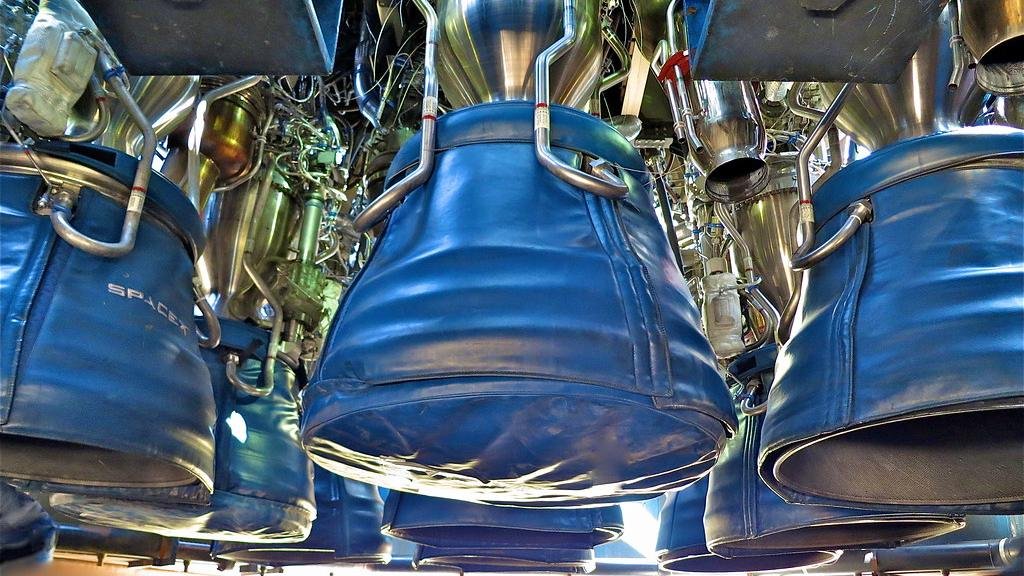
There’s A New SpaceX Engine To Replace Raptor 3: SpaceX is preparing for another major leap in rocket propulsion technology as it continues developing the next generation of its Starship launch system. While the company is still advancing Raptor 3 through flight testing and manufacturing improvements, attention is increasingly shifting toward the future Raptor 4 engine and the next-generation Starship V4 architecture.
Led by Elon Musk, SpaceX aims to improve engine performance, increase payload capacity, and make orbital refueling more efficient. These developments could play a critical role in supporting ambitious missions to the Moon, Mars, and beyond.
The transition from Raptor 3 to Raptor 4 is particularly important because future Starship vehicles will require greater thrust without significantly increasing engine mass. At the same time, specialized Starship V4 tanker vehicles could reduce the number of launches required to refuel spacecraft in Earth orbit.
Let’s explore the expected Raptor 4 improvements, Starship V4 specifications, orbital refueling targets, and engineering challenges behind SpaceX’s next major technological evolution.
1. Raptor 4: The Next Evolution of SpaceX Rocket Engines
SpaceX’s Raptor engine family has undergone continuous development to improve performance, simplify manufacturing, and increase reliability. Each generation introduces engineering improvements designed to support the company’s long-term goal of creating a fully reusable super-heavy launch system.
The Raptor 3 engine introduced major design changes compared with earlier versions. It features a simplified external structure, reduced mass, and fewer external components. By eliminating separate engine heat shields and simplifying plumbing, SpaceX has worked toward making the engine easier to manufacture and integrate.
However, achieving higher thrust consistently under demanding flight conditions remains an important engineering challenge.
Raptor 3 Performance and the Reliability Gap
Raptor 3 was initially associated with a sea-level thrust target of approximately 280 metric tons. However, the supplied performance estimates indicate that reliable operational output is closer to 230 metric tons under demanding conditions.
This difference highlights an important distinction between theoretical engine performance and the thrust an engine can consistently deliver during actual operations.
For Starship, reliability is just as important as maximum thrust. Engines must withstand extreme temperatures, vibration, pressure changes, and repeated ignition cycles.
Raptor 4 Targets 300 Metric Tons of Thrust
The next-generation Raptor 4 engine is expected to target approximately 300 metric tons of sea-level thrust while maintaining roughly the same mass as Raptor 3.
If achieved, this would represent a substantial improvement in the engine’s thrust-to-weight ratio.
The expected benefits include:
- Higher thrust output: Greater lifting capability for future Starship configurations.
- Improved efficiency: More performance without a proportional increase in engine mass.
- Better payload capacity: Additional power to support heavier spacecraft and cargo.
- Advanced durability: Continued improvements in thermal management and structural reliability.
- Manufacturing improvements: Simplified production and easier engine integration.
The biggest challenge will be achieving these improvements without compromising ignition reliability, thermal durability, and long-term engine performance.
2. Starship V4: Bigger Rockets and Greater Propellant Capacity
The Raptor 4 development roadmap is closely connected to SpaceX’s projected Starship V4 architecture.
Future Starship generations are expected to grow in size and carry significantly more propellant. These improvements could help the company increase payload capacity while supporting more demanding missions.
Projected Starship V4 Specifications
The following figures represent projected specifications rather than confirmed final production specifications.
| Vehicle Component | Projected V4 Specifications |
|---|---|
| Super Heavy Booster Length | Approximately 81 meters |
| Starship Ship Length | Approximately 61 meters |
| Booster Engine Count | 33 Raptor engines |
| Ship Engine Count | 9 Raptor engines |
| Sea-Level Engines | 3 |
| Vacuum-Optimized Engines | 6 |
| Total Engine Count | 42 |
| Booster Propellant Capacity | 4,050–4,100 metric tons |
| Ship Propellant Capacity | Approximately 2,300 metric tons |
Compared with the projected V3 dimensions, the V4 booster could increase from approximately 72.3 meters to 81 meters, while the spacecraft could grow from approximately 52.1 meters to 61 meters.
Why a Larger Starship Matters
Increasing the size of Starship offers several potential advantages.
First, a larger propellant capacity could improve the vehicle’s ability to transport cargo and support demanding orbital operations. Second, additional engine performance could help compensate for the increased mass of larger vehicle configurations.
Most importantly, these improvements could make Starship V4 a more capable platform for orbital refueling and deep-space transportation.
SpaceX ultimately wants Starship to become a reusable transportation system capable of supporting frequent launches rather than operating as an expensive, expendable rocket.
3. Orbital Refueling: Why Starship Needs Tanker Flights
One of the biggest challenges facing SpaceX’s lunar and Mars ambitions is orbital propellant refueling.
Although Starship is designed to carry substantial amounts of liquid methane and liquid oxygen, much of its propellant is consumed during the journey into Earth orbit.
Consequently, a spacecraft intended for a lunar or Mars mission may need additional propellant before beginning its deep-space journey.
This is where specialized Starship tanker vehicles become essential.
The 22-Tanker Flight Estimate
Conservative estimates discussed in connection with Aerospace Safety Advisory Panel reviews suggest that a lunar-bound Starship mission could require approximately 22 tanker launches.
Such a requirement would create a significant operational challenge.
SpaceX would need to coordinate multiple launches, maintain reliable spacecraft turnaround operations, and successfully transfer large quantities of cryogenic propellant in orbit.
A high number of tanker flights could also increase mission complexity and place greater pressure on launch infrastructure.
Elon Musk’s Target: Just 6 to 8 Tanker Flights
Elon Musk has outlined a much more aggressive refueling target.
According to the supplied projections, SpaceX aims to reduce the number of tanker launches to approximately 6 to 8 flights. With specialized V4 tankers, the target could potentially fall to around 5 to 6 flights.
The key advantage would come from delivering more usable propellant during each tanker mission.
Specialized Starship V4 tankers are projected to deliver more than 200 metric tons of usable cryogenic propellant per flight.
If these capabilities are achieved, the reduction in tanker launches could significantly improve the economics and operational efficiency of lunar missions.
4. Starship V4 Tankers Could Transform Deep-Space Logistics
The development of high-capacity tanker spacecraft could become one of the most important parts of SpaceX’s long-term strategy.
Rather than designing every Starship mission around the propellant loaded before launch, SpaceX wants to establish an orbital transportation network where spacecraft can receive additional fuel in space.
Reducing the Cost of Lunar Missions
A lower tanker launch requirement could reduce the number of launches, simplify mission planning, and improve the overall efficiency of lunar transportation.
This capability is especially important for NASA’s Artemis program, which depends on developing reliable systems for transporting astronauts to the lunar surface.
However, reducing tanker launches from approximately 22 to 5 or 6 remains a major engineering objective that requires successful testing and operational validation.
Supporting Future Mars Missions
Orbital refueling could also become essential for future Mars missions.
A fully fueled Starship would need sufficient propellant to leave Earth orbit, travel toward Mars, and perform its planned mission operations.
Without an effective refueling architecture, transporting large amounts of cargo and eventually human crews to Mars would be significantly more difficult.
A successful tanker system could therefore establish the foundation for reusable interplanetary transportation.
5. The Biggest Engineering Challenges Behind Orbital Refueling
Despite its potential, orbital refueling is one of the most technically demanding parts of the Starship program.
SpaceX must solve several interconnected engineering problems before tanker operations can become routine.
Cryogenic Propellant Management
Starship uses extremely cold liquid methane and liquid oxygen.
Keeping these propellants at the required temperatures in orbit is challenging because heat from the surrounding environment can cause gradual evaporation, commonly known as boil-off.
SpaceX must develop effective insulation and thermal management systems to minimize propellant losses during extended orbital operations.
Autonomous Docking and Propellant Transfer
Two Starships must successfully rendezvous and connect in orbit before transferring propellant.
The process requires accurate positioning, secure docking mechanisms, reliable seals, and carefully controlled fluid transfer.
Performing these operations in microgravity introduces additional challenges because cryogenic liquids behave differently without normal gravitational settling.
Rapid Launch Cadence and Reusability
A system requiring several tanker flights must operate with exceptional efficiency.
SpaceX needs to improve booster recovery, spacecraft refurbishment, launch preparation, and manufacturing capacity.
The long-term objective is to make Starship operations significantly more frequent while reducing the time and cost associated with each launch.
Ship-to-Ship Refueling Demonstrations
One of the most important milestones will be demonstrating successful propellant transfer between two Starships.
These demonstrations will provide valuable operational data about docking, fluid movement, thermal management, and transfer reliability.
Successful testing would represent a major step toward validating the orbital refueling architecture needed for future Artemis lunar missions and Mars exploration.
Conclusion: Raptor 4 and Starship V4 Could Redefine SpaceX’s Future
SpaceX’s transition from Raptor 3 toward the next-generation Raptor 4 engine represents an important step in its long-term rocket development strategy.
With a projected thrust target of approximately 300 metric tons, Raptor 4 aims to deliver greater performance without a significant increase in engine mass.
Meanwhile, the projected Starship V4 architecture could introduce larger vehicles, greater propellant capacity, and specialized tanker configurations capable of delivering more than 200 metric tons of usable propellant per flight.
The biggest opportunity lies in orbital refueling. If SpaceX can reduce the number of required tanker launches from conservative estimates of approximately 22 to just 5–8 flights, it could dramatically simplify future deep-space missions.
Although these targets still require engineering development, flight testing, and successful demonstrations, the combination of Raptor 4, Starship V4, and high-capacity orbital tankers could become the foundation of SpaceX’s ambitions to make the Moon and Mars more accessible.
FAQs
1. What is the SpaceX Raptor 4 engine?
The Raptor 4 is the projected next-generation rocket engine designed to replace and improve upon Raptor 3. It aims to deliver higher thrust, improved performance, and greater reliability for future Starship vehicles.
2. How much thrust will the Raptor 4 engine produce?
The Raptor 4 engine is targeting approximately 300 metric tons of sea-level thrust, compared with the estimated reliable operational output of around 230 metric tons for Raptor 3.
3. Why is SpaceX developing Raptor 4?
SpaceX is developing Raptor 4 to increase engine performance, improve the thrust-to-weight ratio, support heavier payloads, and make future Starship configurations more capable.
4. What is the difference between Raptor 3 and Raptor 4?
The main expected difference is thrust performance. Raptor 3 targets approximately 280 metric tons of thrust, with reliable operational output estimated at around 230 metric tons, while Raptor 4 targets approximately 300 metric tons without significantly increasing engine mass.
5. What is SpaceX Starship V4?
Starship V4 is a projected next-generation version of SpaceX’s fully reusable launch system. It is expected to feature larger dimensions, increased propellant capacity, and improved propulsion capabilities.
6. How long will the Starship V4 booster be?
The projected Starship V4 Super Heavy booster could measure approximately 81 meters long, compared with around 72.3 meters for the projected V3 configuration.
7. How long will the Starship V4 spacecraft be?
The projected Starship V4 upper stage could reach approximately 61 meters in length, compared with around 52.1 meters for V3.
8. How many engines will Starship V4 have?
The projected Starship V4 configuration could feature 42 Raptor engines in total: 33 engines on the Super Heavy booster and 9 engines on the Starship upper stage.
9. What is the projected propellant capacity of Starship V4?
The projected V4 booster could carry approximately 4,050–4,100 metric tons of propellant, while the Starship upper stage could carry around 2,300 metric tons.
10. Why does SpaceX need orbital refueling for Starship?
Orbital refueling allows Starship to receive additional liquid methane and liquid oxygen after reaching Earth orbit. This is essential for missions to the Moon and Mars because much of the spacecraft’s initial propellant is consumed during launch.
11. How many tanker flights will Starship need for lunar missions?
Conservative estimates suggest that a lunar-bound Starship could require approximately 22 tanker flights. However, SpaceX is targeting a much lower requirement of around 6 to 8 flights, potentially reducing it to 5–6 with specialized V4 tankers.
12. How much propellant can a Starship V4 tanker deliver?
Specialized Starship V4 tankers are projected to deliver more than 200 metric tons of usable cryogenic propellant per flight, potentially reducing the number of launches required for orbital refueling.
13. Why is orbital refueling difficult for SpaceX?
Orbital refueling involves several engineering challenges, including cryogenic propellant boil-off, autonomous docking, microgravity fluid transfer, thermal management, and spacecraft coordination.
14. What is cryogenic propellant boil-off in Starship?
Boil-off occurs when extremely cold liquid propellants absorb heat and gradually evaporate. SpaceX must develop advanced insulation and thermal management systems to preserve liquid methane and oxygen during extended orbital operations.
15. How will Raptor 4 and Starship V4 support NASA’s Artemis program?
The combination of Raptor 4, Starship V4, and orbital refueling technology could help SpaceX transport astronauts and cargo to the Moon. Reliable tanker operations are particularly important for supporting NASA’s Artemis lunar exploration missions.
16. Could Starship V4 make SpaceX’s Mars missions possible?
Starship V4 could play an important role in future Mars exploration by increasing payload capacity and improving orbital refueling capabilities. If SpaceX successfully demonstrates reliable in-orbit propellant transfer and full vehicle reusability, it could establish the foundation for transporting large amounts of cargo and eventually humans to Mars.
Read More: