
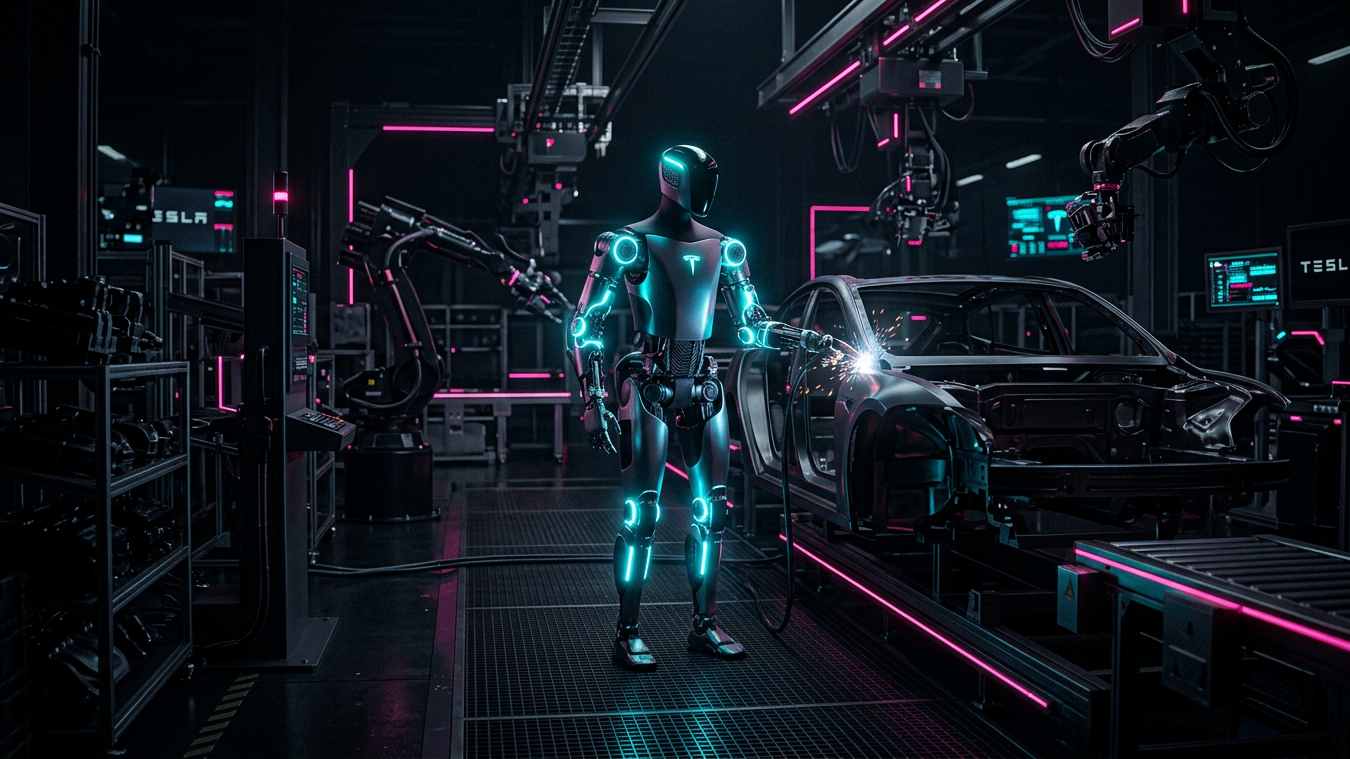
Major New Tesla Optimus Gen 3 Update Revealed: The technology landscape surrounding Elon Musk’s companies is evolving rapidly, with major developments emerging across Tesla, Neuralink, and The Boring Company. From advanced humanoid robot training systems and groundbreaking brain-computer interface technology to ambitious underground transportation projects, these innovations highlight Musk’s broader vision of transforming how people work, communicate, and travel.
Among the latest developments, Tesla’s Optimus Gen 3 humanoid robot program stands out as a particularly significant milestone. The company is reportedly developing an intensive human-motion data collection initiative known as Robot University, designed to teach robots real-world skills through advanced motion capture, artificial intelligence, and autonomous practice.
Meanwhile, Neuralink is reporting promising results from its clinical voice study, while The Boring Company is advancing discussions surrounding its proposed Music City Loop in Nashville.
Here is a closer look at the three major developments.
1. Tesla’s Secret Robot University Prepares Optimus Gen 3
Tesla is reportedly developing an advanced training initiative nicknamed Robot University, focused on preparing its next-generation Optimus humanoid robots for increasingly complex real-world activities.
According to technology insider Robert Scoble, Tesla has been collecting extensive human movement data at facilities in Palo Alto and Giga Texas. The initiative aims to teach robots how humans perform everyday activities and complicated industrial tasks.
Advanced Motion Capture Suits Collect Real-World Data
One of the most interesting aspects of Tesla’s reported training program is its specialized motion capture equipment.
Workers have reportedly been observed wearing approximately 24-pound motion capture suits equipped with as many as 40 cameras and advanced 3D sensor grids.
These systems capture detailed movements, body positioning, hand coordination, and interactions with surrounding objects.
The collected information helps Tesla develop training datasets that can teach Optimus how to perform practical activities.
Examples include:
- Preparing food and making sandwiches.
- Handling household objects.
- Installing HVAC components.
- Moving materials inside factories.
- Performing repetitive manufacturing procedures.
- Interacting with objects in different environments.
By collecting information across multiple environments and work shifts, Tesla aims to expose its humanoid robots to a wider variety of human activities.
This approach could become essential for making Optimus Gen 3 more useful outside controlled demonstration environments.
Why Tesla Needs a Different Robot Training Strategy
Tesla’s experience developing Full Self-Driving technology provides an important foundation for Optimus.
However, training humanoid robots presents a different challenge.
Tesla vehicles can collect driving data from millions of customer-operated cars. These vehicles share relatively standardized hardware and can encounter similar driving situations across different locations.
Humanoid robots face a much broader challenge because they must interact with unpredictable physical environments.
They need to understand object weight, surface friction, hand positioning, balance, and physical contact.
According to Tesla AI executive Ashok Elluswamy, simply observing human demonstrations is not enough. Robots also need opportunities to practice independently through a process known as self-play.
Tesla’s Plan to Train Thousands of Optimus Robots
Tesla reportedly plans to deploy between 10,000 and 20,000 humanoid robots for autonomous practice and skill development.
These robots could learn through repeated attempts, gradually improving their ability to complete tasks.
The concept resembles how children develop motor skills through experimentation and repetition.
Instead of relying entirely on human demonstrations, Optimus robots could practice different movements, identify mistakes, and improve their performance using AI-driven learning systems.
If successful, this approach could significantly accelerate humanoid robot development.
Optimus Gen 3 Demonstration and AI5 Chip Upgrade
Another important development involves Tesla’s upcoming Optimus demonstration.
Elon Musk has indicated that a new demonstration showcasing capabilities beyond pre-programmed movements could arrive within months.
This is particularly important because the long-term objective is to create robots capable of independently completing useful tasks.
Tesla is also preparing to integrate its next-generation AI5 chip into Optimus around April, according to the timeline described in the source material.
The AI5 architecture is expected to provide substantially greater computing capabilities than the current AI4 platform.
More onboard computing power could support improved perception, decision-making, movement coordination, and real-time interaction.
Together, advanced training systems and next-generation computing could represent a major step toward commercially useful Optimus Gen 3 robots.
2. Neuralink Reports Major Progress in Restoring Human Communication
While Tesla is working to develop intelligent machines, Neuralink is pursuing another ambitious goal: helping people regain abilities affected by neurological conditions.
The company has shared encouraging developments from its ongoing clinical voice study, which explores whether brain-computer interface technology can help individuals with conditions such as amyotrophic lateral sclerosis (ALS) communicate using their thoughts.
Neuralink Participant Achieves 75 Words Per Minute
One of the most impressive results highlighted in the update involves a clinical study participant who reportedly achieved approximately 75 words per minute during their first week.
The system reportedly used a vocabulary containing approximately 125,000 words, with a word error rate of just 5.8%.
For comparison, ordinary human conversation averages approximately 150 words per minute.
This means the reported result represents roughly half the speed of typical spoken conversation.
For individuals who have lost the ability to communicate naturally, achieving this level of communication could represent a meaningful improvement in independence and everyday interaction.
However, these are early clinical results and should not be interpreted as proof that the technology is ready for widespread medical use.
Bloom App Introduces New Communication Features
Neuralink engineers have also been developing additional assistive technology.
During an internal 72-hour hackathon, the team reportedly created several features designed to make the system easier to use.
One important feature is Voice Activity Detection, which could allow users to operate communication functions without manually pressing buttons.
Another development is Bloom, a mobile application designed to integrate Neuralink technology directly into phone calls.
These innovations demonstrate how brain-computer interfaces could eventually become part of everyday communication systems.
Neuralink Blindsight Moves Toward Future Development
Another major part of Neuralink’s roadmap is Blindsight, a technology designed to help restore visual perception for people who are blind.
Elon Musk has indicated that the engineering work is ready, although regulatory clearance remains an important requirement before clinical deployment.
The technology represents an ambitious attempt to create a direct connection between digital systems and the human visual processing system.
Neuralink-related patent developments have also highlighted advanced packaging concepts capable of accommodating more than 1,000 extremely thin neural wires in a single implant.
Such engineering could support increasingly sophisticated brain-computer interfaces in the future.
3. The Boring Company’s Music City Loop Gains Political Support
Beyond robotics and medical technology, Elon Musk’s companies are also exploring new approaches to transportation infrastructure.
The Boring Company’s proposed Music City Loop in Nashville, Tennessee, is attracting attention because of its privately funded underground transportation concept.
A 10-Mile Underground Transit Network
The proposed project is designed to connect downtown Nashville with Nashville International Airport through an approximately 10-mile underground transportation network.
Rather than relying on conventional public transportation infrastructure, the concept involves underground tunnels carrying Tesla vehicles between designated stations.
One of the project’s major selling points is its proposed private funding structure.
Tennessee State Senator Mark Pody has reportedly expressed support for the proposal and suggested extending the tunnel eastward into Wilson County.
The proposed expansion could potentially connect the underground transportation system with existing or planned commuter rail connections.
The objective is to explore transportation improvements without placing the entire financial burden on taxpayers.
Airport Station Designed for Convenient Passenger Transfers
Recent design documents reportedly outline an airport terminal station positioned approximately 22 feet from the terminal’s front doors.
This arrangement could make it easier for arriving passengers to move directly from the airport into Tesla vehicles.
The concept focuses on reducing transfer times and creating a convenient connection between air travel and underground transportation.
If successfully developed, the Music City Loop could offer an alternative to traditional road-based airport transportation.
Permits and Contracts Remain Important Milestones
Despite the growing interest, the project still faces important development requirements.
Final contractual execution, regulatory approvals, and permitting will be essential before construction and commercial operations can move forward.
The proposal highlights The Boring Company’s broader ambition to develop underground transportation systems that could reduce surface congestion and improve urban mobility.
However, its actual impact will depend on construction costs, passenger demand, operational capacity, and successful execution.
4. How Tesla, Neuralink, and The Boring Company Fit Into Elon Musk’s Bigger Vision
Although these three developments target different industries, they share a common technological direction.
Tesla Optimus focuses on automating physical work through humanoid robotics and artificial intelligence.
Neuralink aims to connect the human brain with computers, potentially restoring communication and other abilities.
The Boring Company seeks to improve transportation through underground infrastructure and electric vehicle networks.
Together, these projects demonstrate how artificial intelligence, advanced hardware, automation, and engineering could influence multiple aspects of modern life.
The most immediate commercial opportunities may emerge from Tesla’s industrial robotics program, where humanoid robots could eventually assist with repetitive manufacturing operations.
Neuralink’s progress could create new possibilities in assistive communication, while underground transportation projects could offer alternative solutions for heavily congested cities.
However, each initiative still faces technical, regulatory, financial, and operational challenges.
5. What Comes Next for Tesla Optimus Gen 3 and Musk’s Technology Companies?
The coming months could be important for all three companies.
Tesla’s reported Robot University initiative suggests that the company is investing heavily in collecting human movement data and improving autonomous robot learning.
The upcoming Optimus demonstration could provide further evidence of how much progress has been made toward independent task execution.
Meanwhile, the potential integration of the AI5 chip could strengthen the computing foundation for future humanoid robots.
Neuralink will need to continue evaluating its clinical results and obtaining regulatory approvals before expanding its medical applications.
The Boring Company, meanwhile, must turn its Music City Loop proposal into an approved and financially viable transportation project.
Ultimately, these developments show that Elon Musk’s ambitions extend far beyond electric vehicles and rocket launches.
From humanoid robots and brain-computer interfaces to underground transportation, the next phase of innovation could reshape industries that have remained relatively unchanged for decades.
Tesla Optimus Gen 3 remains one of the most closely watched developments, particularly as the company explores new ways to teach robots real-world skills through human demonstrations, autonomous practice, and increasingly powerful AI hardware.
FAQs
1. What is Tesla’s Robot University?
Tesla’s Robot University is a reported humanoid robot training initiative designed to teach Optimus robots real-world skills through human motion capture, artificial intelligence, and autonomous practice.
2. What is Tesla Optimus Gen 3?
Tesla Optimus Gen 3 is the next-generation humanoid robot being developed by Tesla. It is designed to perform household activities, industrial tasks, and other real-world jobs using advanced AI and robotics.
3. How does Tesla train its Optimus humanoid robots?
Tesla reportedly uses specialized motion capture suits, cameras, and 3D sensors to record human movements. The collected data helps train Optimus robots to perform complex physical activities.
4. What are Tesla’s motion capture suits used for?
Tesla’s reported 24-pound motion capture suits feature up to 40 cameras and 3D sensor grids. They capture detailed human movements while workers perform household and industrial activities.
5. How many Optimus robots does Tesla plan to use for self-training?
Tesla reportedly plans to deploy between 10,000 and 20,000 Optimus robots for autonomous practice, allowing them to improve their motor skills through repeated learning and experimentation.
6. What is self-play training in Tesla Optimus robots?
Self-play training allows humanoid robots to practice tasks independently instead of relying entirely on human demonstrations. This approach helps robots learn movements, correct mistakes, and improve their performance.
7. When will Tesla reveal the next Optimus demonstration?
Elon Musk has indicated that a new Optimus demonstration showcasing capabilities beyond pre-programmed movements could arrive within months. An exact public demonstration date has not been confirmed.
8. What is the AI5 chip, and how will it improve Optimus Gen 3?
The AI5 chip is Tesla’s next-generation AI computing platform. Its planned integration into Optimus could provide significantly greater computing power for perception, movement coordination, and real-time decision-making.
9. What household tasks could Tesla Optimus Gen 3 perform?
Tesla Optimus is being trained for everyday activities such as making sandwiches, handling household objects, organizing items, and performing basic domestic tasks.
10. What is Neuralink’s latest achievement in voice communication?
Neuralink reported that one clinical study participant achieved approximately 75 words per minute during their first week of using the brain-computer interface, with a reported word error rate of just 5.8%.
11. How fast can Neuralink users communicate using their thoughts?
One participant reportedly reached 75 words per minute, approximately half the speed of typical human conversation. This demonstrates the potential of brain-computer interfaces for restoring communication.
12. What is Neuralink’s Bloom application?
Bloom is a mobile application reportedly developed during Neuralink’s internal hackathon. It is designed to integrate brain-computer interface technology with phone calls and improve communication accessibility.
13. What is Neuralink Blindsight?
Neuralink Blindsight is an experimental technology designed to restore visual perception for blind individuals through a brain-computer interface. It remains subject to regulatory requirements and further clinical development.
14. What is the Boring Company’s Music City Loop?
The Music City Loop is a proposed underground transportation project in Nashville, Tennessee. It aims to connect downtown Nashville with Nashville International Airport through an approximately 10-mile tunnel network.
15. Is the Music City Loop privately funded?
The proposed Music City Loop is described as a privately funded transportation project. Its funding structure has attracted political interest because it aims to develop underground transit without relying entirely on taxpayer financing.
16. How will the Music City Loop improve Nashville airport transportation?
The proposed airport station is reportedly designed to sit approximately 22 feet from the terminal’s front doors. This could allow passengers to transfer conveniently from the airport terminal into Tesla vehicles.
17. How are Tesla, Neuralink, and The Boring Company connected?
All three companies are pursuing technologies associated with Elon Musk’s broader innovation vision. Tesla focuses on artificial intelligence and humanoid robotics, Neuralink develops brain-computer interfaces, and The Boring Company explores underground transportation solutions. Together, these technologies could transform manufacturing, healthcare, communication, and urban mobility.
Read More:
- Tesla Robotaxi app update now tells riders if Cybercab is the better choice
- Elon Musk just revealed Starship V4 totally Solves V3 Problems, even Refuelling
- Tesla Cybercab BIG Update, Impressive Ramp Up & Production Line
- The Real Reason Why SpaceX’s new Raptor 4 is the Best Engine Ever Made
- How SpaceX Builds a Rocket Every Week: Behind the Scenes of Rapid Innovation