
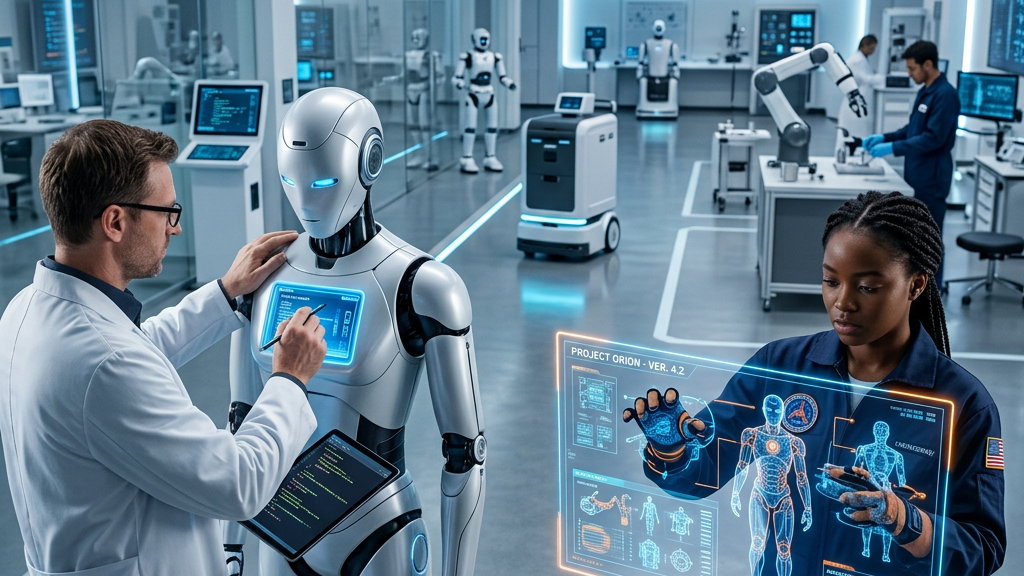
Elon Musk’s Tesla Bot Gen 3 Amazing UPDATE | It’s Eye-Opening: Tesla is preparing to take humanoid robotics to an entirely new level with its next-generation Optimus Gen 3 robot. Following a major transformation at the company’s Fremont factory, where former Model S and Model X production lines were reportedly cleared and reconfigured in just 46 days, Tesla is shifting its attention toward large-scale humanoid robot manufacturing. This ambitious development signals a significant change in Tesla’s long-term vision, moving beyond electric vehicles toward artificial intelligence, automation, and general-purpose robotic labor.
One of the most surprising developments is Elon Musk’s confirmation of a potential rental and leasing business model for Optimus. Instead of requiring customers to purchase an expensive humanoid robot outright, Tesla plans to make robotic assistance accessible through recurring payments. Combined with significant hardware improvements, advanced AI computing, and ambitious manufacturing targets, Optimus Gen 3 could become one of Tesla’s most important technological products.
Tesla Optimus Gen 3: A Major Evolution in Humanoid Robotics
Tesla’s earlier Optimus prototypes focused primarily on fundamental capabilities such as walking, maintaining balance, and performing basic object-handling tasks. However, Optimus Gen 3 is designed to move beyond these foundational abilities.
The new generation focuses on practical applications in factories, warehouses, commercial facilities, and potentially residential environments. Its development involves approximately 10,000 individual components working together to create a sophisticated humanoid machine.
Tesla’s objective is to develop a robot capable of performing repetitive physical tasks while adapting to unpredictable surroundings. Achieving this requires improvements in mechanical engineering, artificial intelligence, battery technology, and humanlike movement.
Five Major Upgrades in Tesla Optimus Gen 3
1. More Refined Humanlike Design
One of the most noticeable improvements in Optimus Gen 3 is its redesigned exterior. Previous prototypes featured exposed mechanical linkages, visible wiring, and noticeable gaps between different body components.
Tesla is moving toward a smoother, more streamlined humanoid design with improved proportions and integrated mechanical components.
The redesigned hips, knees, and ankles are intended to support more natural movement and improved stability. These changes are important because a humanoid robot must navigate spaces originally designed for humans.
A more refined design could also make Optimus better suited for workplaces and eventually residential environments.
2. Advanced Hands With 22 Degrees of Freedom
Hand dexterity remains one of the biggest engineering challenges in humanoid robotics. Human hands contain an extraordinary combination of joints, muscles, and sensory capabilities that allow people to perform both delicate and physically demanding tasks.
Tesla Optimus Gen 3 is targeting 22 degrees of freedom, compared with 11 in Gen 2 and 20 in Gen 2.5, according to the supplied development figures.
The upgraded hands also feature an advanced 3D tactile sensor array, with nearly three times the previous sensor count across the fingers and palms.
These improvements are intended to help Optimus perform different activities, including:
- Picking up fragile objects such as eggs.
- Handling sensitive electronic components.
- Gripping and manipulating industrial tools.
- Lifting objects weighing approximately 40 pounds (18 kg) or more.
- Performing repetitive assembly and material-handling operations.
This combination of strength and precision could make Optimus considerably more useful in real-world manufacturing environments.
3. Tesla AI5 Chip Brings Major Computing Improvements
Artificial intelligence is the foundation of Tesla’s humanoid robotics strategy. Optimus must understand its surroundings, recognize objects, maintain balance, and respond to changing situations without depending on constant human supervision.
The integration of Tesla’s next-generation AI5 chip is expected to provide a major computing upgrade.
Based on the supplied specifications, the AI5 platform targets approximately:
- 8 times more computing power.
- 9 times greater memory capacity.
- 5 times higher memory bandwidth.
These improvements could support faster environmental analysis, real-time spatial mapping, improved movement coordination, and more responsive decision-making.
Integration with advanced AI models and Grok-powered natural language capabilities could also make communication between humans and robots more intuitive.
Rather than relying exclusively on preprogrammed instructions, Optimus is being developed to interpret tasks and respond intelligently to its environment.
4. Improved Battery Technology and Energy Efficiency
Battery performance is another critical factor in making humanoid robots commercially practical.
Optimus Gen 3 is expected to use higher-energy-density 4680 battery cells within a compact battery configuration of approximately 2.3 kWh.
The projected robot weight is around 125 pounds (57 kg), creating an optimized balance between structural strength, mobility, and energy consumption.
Depending on workload intensity, the robot is expected to operate for approximately 4 to 6 hours before requiring another charging session.
Tesla is also targeting automated return-to-dock charging. When battery levels become low, Optimus could independently return to its charging station and replenish its energy in approximately 1 to 2 hours.
This capability could support automated workflows in factories, where robots need to operate with minimal human intervention.
5. Faster Movement and Enhanced Mobility
Early humanoid robots often moved slowly because maintaining balance and coordinating multiple joints requires substantial computing power.
Optimus Gen 3 aims to improve mobility significantly, with a projected running speed of up to 4 mph (6.4 km/h).
Faster movement could allow the robot to navigate larger industrial facilities, transport materials between workstations, and respond more efficiently to changing production requirements.
Combined with improved balance and real-time AI processing, enhanced mobility could make Optimus more practical for dynamic working environments.
Tesla Fremont Factory Prepares for Mass Robot Production
Tesla’s Fremont facility is becoming an important center for its humanoid robotics ambitions.
Following the reported removal and reconfiguration of former Model S and Model X manufacturing infrastructure, Tesla is preparing a dedicated production environment for Optimus Gen 3.
The initial production line is designed around an ambitious target of 1 million robots annually.
However, reaching this capacity will require considerable engineering and manufacturing progress.
Humanoid robots are significantly more complicated than conventional consumer electronics because thousands of mechanical, electrical, and computing components must operate together reliably.
Tesla is therefore expected to follow an S-shaped manufacturing growth curve. Production will initially remain relatively limited before increasing as engineers improve component quality, assembly processes, and overall reliability.
Optimus Academy: Tesla’s Internal Robot Deployment Strategy
Before offering Optimus to external customers at scale, Tesla intends to deploy thousands of robots internally.
The proposed Optimus Academy program is projected to involve approximately 10,000 to 20,000 robots.
These machines could operate inside Tesla manufacturing facilities, performing repetitive tasks and collecting valuable real-world training data.
Potential applications include:
- Moving materials between production stations.
- Sorting automotive components.
- Loading and unloading equipment.
- Organizing factory inventory.
- Supporting assembly-line operations.
This internal deployment strategy is important because it allows Tesla to test its robots under real working conditions.
The experience could help engineers identify mechanical weaknesses, improve AI performance, and develop more reliable autonomous capabilities.
External commercial deliveries are targeted around the end of 2027, with industrial applications expected to receive priority.
Elon Musk’s Biggest Optimus Update: Rental and Leasing Model
Perhaps the most interesting development is Tesla’s planned shift toward a robot rental and leasing model.
Purchasing a humanoid robot could be expensive for households and small businesses. With projected consumer-grade purchase prices ranging between $20,000 and $30,000, many potential customers may hesitate to make such a large upfront investment.
Tesla’s leasing strategy could change the economics of robot ownership.
Lower Upfront Costs for Businesses and Consumers
Instead of purchasing Optimus outright, customers could pay recurring monthly fees to access robotic assistance.
This would allow businesses to introduce automation without committing substantial capital immediately.
Households could potentially use the same approach to access robotic help with everyday activities.
Businesses Can Test Robots Before Expanding
Leasing could also make commercial adoption easier.
For example, a manufacturing company could initially rent a small fleet of Optimus robots to evaluate productivity improvements and operating expenses.
If the robots deliver measurable benefits, the company could expand its fleet through additional leasing agreements.
This creates a more flexible approach to automation.
Estimated Monthly Leasing Costs
Although official rental prices have not been finalized, industry projections suggest monthly leasing costs could potentially range between $200 and $500.
Actual pricing would depend on the final business model, maintenance requirements, operating costs, and service agreements.
If these estimates become commercially achievable, humanoid robotics could become accessible to a much wider customer base.
Why Optimus Gen 3 Could Transform the Future of Work
Tesla’s humanoid robot strategy represents a broader transformation in the relationship between artificial intelligence and physical labor.
Unlike traditional industrial robots, which are generally designed for specific repetitive operations, general-purpose humanoid robots aim to perform multiple tasks using adaptable software and humanlike hardware.
Factories could use Optimus for repetitive or hazardous work, while commercial businesses could eventually use robots for material handling, inventory management, and other physical activities.
Residential applications could develop as the technology becomes safer, more reliable, and more affordable.
However, important challenges remain, including battery endurance, mechanical durability, autonomous decision-making, safety certification, and long-term maintenance costs.
Tesla must demonstrate that Optimus can perform useful tasks consistently before large-scale adoption becomes realistic.
Conclusion: Tesla Optimus Gen 3 Is a Major Step Toward Robotic Automation
Tesla Optimus Gen 3 represents an ambitious step forward in humanoid robotics. Its proposed 22-degree-of-freedom hands, AI5 computing platform, improved battery efficiency, faster mobility, and refined humanlike design could significantly expand its practical capabilities.
The company’s manufacturing ambitions and planned internal deployment program also demonstrate that Tesla wants to move beyond experimental prototypes toward commercially useful robotic systems.
However, the biggest potential breakthrough could be the rental and leasing model. By reducing upfront costs, Tesla could make humanoid robotics accessible to businesses and households that would otherwise struggle to afford the technology.
If Tesla successfully delivers on its engineering, manufacturing, and commercial goals, Optimus could become an important part of the future automation economy.
The journey from prototype to dependable robotic workforce will not be easy, but Tesla’s latest direction makes one thing clear: the future of robotics is moving closer to everyday life.
FAQs
1. What is Tesla Optimus Gen 3?
Tesla Optimus Gen 3 is Tesla’s next-generation humanoid robot designed to perform physical tasks in factories, warehouses, businesses, and potentially residential environments. It features improved hands, advanced AI computing, better mobility, and enhanced battery efficiency.
2. What are the five major upgrades in Tesla Optimus Gen 3?
The five major upgrades include a refined humanlike design, 22-degree-of-freedom hands, AI5 computing integration, improved battery technology, and faster mobility. These improvements are designed to make Optimus more capable of performing real-world tasks.
3. How many degrees of freedom will Tesla Optimus Gen 3 have in its hands?
Tesla Optimus Gen 3 is targeting 22 degrees of freedom in its hands. This improvement is intended to provide greater flexibility, precision, and control when handling delicate objects and industrial equipment.
4. What is the Tesla AI5 chip, and how will it improve Optimus Gen 3?
The Tesla AI5 chip is a next-generation computing platform expected to improve the robot’s processing capabilities. The supplied specifications project eight times more computing power, nine times the memory capacity, and five times the memory bandwidth compared with previous iterations.
5. How much weight can Tesla Optimus Gen 3 lift?
Tesla Optimus Gen 3 is being developed to handle industrial payloads weighing approximately 40 pounds (18 kg) or more while maintaining the precision required for delicate object handling.
6. How long can Tesla Optimus Gen 3 operate on a single charge?
The robot is projected to operate for approximately 4 to 6 hours depending on workload intensity. Its battery system is designed to support automated return-to-dock charging when additional power is required.
7. What battery technology will Tesla Optimus Gen 3 use?
Optimus Gen 3 is expected to use higher-energy-density 4680 battery cells in a compact battery configuration of approximately 2.3 kWh. This technology is intended to balance operating time, weight, and energy efficiency.
8. How fast can Tesla Optimus Gen 3 run?
Tesla Optimus Gen 3 is targeting a running speed of up to 4 mph (6.4 km/h). Improved mobility could help the robot move more efficiently through factories, warehouses, and other dynamic environments.
9. Where will Tesla manufacture Optimus Gen 3 robots?
Tesla is preparing its Fremont factory in California for humanoid robot manufacturing. The facility is being reconfigured to support a dedicated Optimus production line and ambitious manufacturing targets.
10. What is Tesla’s annual production target for Optimus Gen 3?
The initial high-volume production line at Fremont is designed around a capacity target of 1 million robots per year. However, actual production will likely increase gradually as Tesla improves manufacturing efficiency and robot reliability.
11. What is the Optimus Academy program?
The Optimus Academy is a proposed internal deployment program in which Tesla plans to use approximately 10,000 to 20,000 humanoid robots across its manufacturing facilities. These robots could collect real-world training data while performing practical factory tasks.
12. When will Tesla Optimus Gen 3 be available to external customers?
External commercial deliveries are targeted around the end of 2027. Tesla is expected to prioritize industrial customers and practical applications before expanding availability to households and other consumer markets.
13. Will Tesla offer Optimus Gen 3 through a rental or leasing model?
Yes. Elon Musk has indicated that Tesla intends to explore a rental and leasing model for Optimus. This approach would allow businesses and consumers to access humanoid robots through recurring payments instead of purchasing them outright.
14. How much will it cost to rent or lease Tesla Optimus Gen 3?
Although Tesla has not finalized official rental pricing, industry projections suggest monthly leasing costs could potentially range between $200 and $500. Actual prices will depend on Tesla’s final commercial strategy and service agreements.
15. What tasks can Tesla Optimus Gen 3 perform in factories and homes?
Optimus Gen 3 is being developed for tasks such as moving materials, sorting components, organizing inventory, loading equipment, and supporting assembly lines. Future residential applications could include household assistance and other everyday physical tasks.
16. Why is Tesla Optimus Gen 3 important for the future of humanoid robotics?
Tesla Optimus Gen 3 is important because it combines advanced artificial intelligence, humanlike dexterity, improved mobility, and scalable manufacturing ambitions. Its proposed rental model could also reduce adoption costs, potentially making humanoid robots more accessible to businesses and households.
Read More:
- 4.0 Elon Musk’s Assembly Line Destroy The Entire EV Industry
- Elon Musk says Tesla Cybercab future is ‘obvious to anyone with eyes and a brain’
- Tesla upfitter offers to keep Cybertruck alive
- SpaceX just cleared a key FCC hurdle in its fight with Verizon and AT&T
- Tesla overtakes Waymo in Texas as Robotaxi fleet performs shock flip
2 thoughts on “Elon Musk’s Tesla Bot Gen 3 Amazing UPDATE | It’s Eye-Opening”