
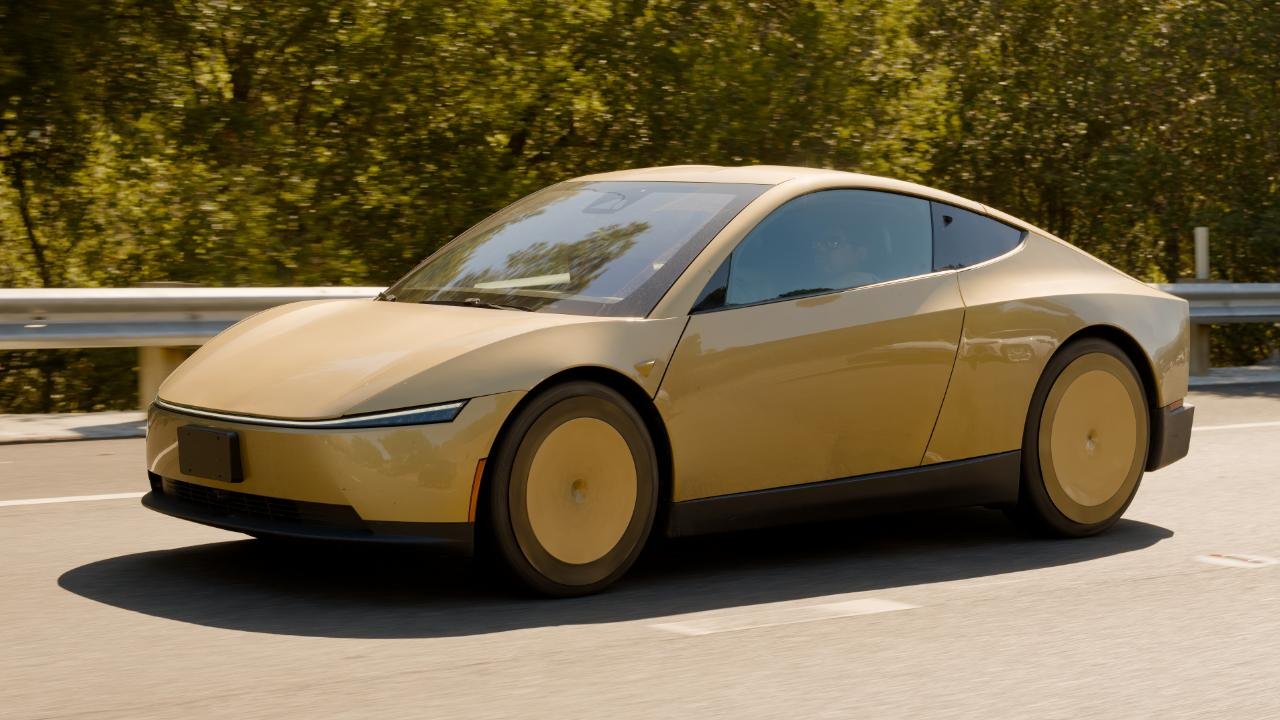
Tesla’s New 2027 Cybercab Gen 2 Is INSANE: Tesla’s next-generation Cybercab Gen 2 is shaping up to become one of the most important developments in the future of autonomous transportation. With Elon Musk pushing the company toward greater efficiency, lower manufacturing costs, and massive robotaxi fleet expansion, Tesla is preparing to take its purpose-built autonomous vehicle to another level. The upcoming 2027 Cybercab Gen 2 could introduce a smaller battery, improved manufacturing efficiency, a striking new exterior finish, and an entirely new approach to scaling self-driving transportation.
However, the Cybercab is only one part of Tesla’s broader transformation. The company is simultaneously reorganizing factory resources, expanding its semiconductor ambitions through Terafab, and supporting SpaceX’s efforts to make Starship fully reusable. These developments reveal a major strategic shift toward artificial intelligence, autonomous mobility, and advanced manufacturing.
Let’s explore what makes the Tesla Cybercab Gen 2 so exciting and why its expected improvements could reshape the robotaxi industry.
Tesla Cybercab Gen 2: A Major Efficiency Breakthrough
Tesla’s Cybercab is not an ordinary electric vehicle. It is a purpose-built two-seat autonomous robotaxi designed without a traditional steering wheel or pedals. Its entire architecture focuses on providing affordable, efficient, and convenient transportation through autonomous driving technology.
Manufactured at Gigafactory Texas, the existing Cybercab fleet has already been operating paid autonomous rides in Austin. Tesla’s longer-term objective is to expand this service into additional metropolitan areas while increasing the number of vehicles available to passengers.
Elon Musk has indicated that Tesla is working toward a second-generation Cybercab featuring a significantly smaller battery pack. This upgrade could make the vehicle even more efficient and easier to manufacture at scale.
The New 40 kWh Battery Pack
One of the biggest expected improvements for Cybercab Gen 2 is its proposed 40 kWh battery pack.
The current version reportedly uses a 47.6 kWh battery. Moving to 40 kWh would represent approximately a 16% reduction in battery capacity.
This change is particularly impressive because the existing Cybercab is already engineered around energy efficiency.
The smaller battery could deliver several advantages:
- Lower manufacturing costs through reduced battery material requirements.
- Reduced vehicle weight, improving overall efficiency.
- More vehicles produced using the same battery cell supply.
- Improved fleet economics for Tesla’s robotaxi business.
- Simplified manufacturing through a more optimized vehicle architecture.
For a robotaxi operating throughout the day, these improvements could make a substantial difference to operating expenses.
4680 Battery Cells and Modular Architecture
Another important feature of the Cybercab’s battery design is its use of Tesla 4680 battery cells.
The existing battery system reportedly incorporates individually sealed modules inside a steel enclosure. This modular configuration provides an important maintenance advantage.
Instead of replacing an entire battery pack when one module develops a problem, technicians can potentially replace the affected module.
This approach is especially valuable for commercial robotaxis because Tesla is designing the vehicle around a demanding service life of approximately 500,000 miles.
Reducing repair costs and minimizing vehicle downtime will be essential if Tesla wants to operate thousands of autonomous taxis across major cities.
Cybercab Gen 2 Could Produce 19% More Vehicles
The most interesting advantage of the smaller battery is not necessarily the additional driving efficiency. It is the potential manufacturing benefit.
According to the figures presented in the source material, reducing battery capacity from 47.6 kWh to 40 kWh could allow Tesla to manufacture approximately 19% more Cybercabs using the same battery cell supply.
This is a significant advantage for a company attempting to build a massive autonomous transportation network.
Battery production is one of the most important constraints in electric vehicle manufacturing. By reducing the amount of battery capacity required for each vehicle, Tesla could stretch its existing cell supply across a larger fleet.
Lightweight Engineering and Urban Efficiency
The current Cybercab reportedly weighs approximately 3,113 pounds, making it several hundred pounds lighter than the Tesla Model 3.
Its drivetrain is also optimized for urban transportation rather than high-speed performance.
The vehicle uses a shorter 11:1 drive-unit gear ratio, which is designed around the lower speeds and frequent acceleration associated with city driving.
According to the supplied figures, the current Cybercab achieves approximately 6.18 miles per kilowatt-hour.
A smaller battery could reduce vehicle weight further, potentially creating a cycle in which lower weight improves efficiency and greater efficiency allows Tesla to reduce battery capacity.
This combination could make the Cybercab one of the most cost-efficient electric vehicles designed specifically for commercial transportation.
Liquid Silver Cybercab Gen 2: A New Exterior Design
Tesla is also preparing a visual change for its next-generation robotaxi.
According to the source material, Musk confirmed that Cybercab Gen 2 will feature a liquid silver exterior finish.
The new appearance would provide a noticeable contrast against the gold-colored Cybercabs currently associated with Tesla’s Austin fleet.
Although the change might appear cosmetic, a distinctive exterior finish could help establish a recognizable identity for Tesla’s expanding autonomous transportation service.
The liquid silver aesthetic also attracted attention because a similar design reportedly appeared in an earlier SpaceX concept rendering connected to its Texas semiconductor facility.
Tesla Expands Its Cybercab Robotaxi Network
Tesla’s robotaxi ambitions are moving beyond vehicle development.
By late October, the source material reported that 573 Cybercabs were registered in Texas, while the Austin service territory had expanded to approximately 440 square miles.
These developments demonstrate the importance of building both the vehicle fleet and the infrastructure required to operate autonomous transportation services.
Tesla is also planning commercial robotaxi rides in Dallas.
The company is targeting initial Cybercab customer deliveries by the end of 2026, according to the supplied information.
The expansion of the fleet will depend on several factors, including autonomous driving performance, regulatory requirements, vehicle production capacity, and the ability to maintain reliable service.
If Tesla successfully scales its operations, the Cybercab could become a central component of its long-term transportation strategy.
Tesla Cybertruck Production Could End in 2027
While Tesla is preparing to increase Cybercab production, another major manufacturing decision involves the Cybertruck.
According to the source material, Elon Musk announced on November 6 that Tesla plans to wind down Cybertruck production around the middle of 2027.
The company reportedly expects to dismantle the Cybertruck assembly line at Gigafactory Texas around June or July.
This is a significant strategic decision because Giga Texas is the vehicle’s only manufacturing location.
Why Tesla Is Prioritizing Cybercab Production
The decision appears closely connected to Tesla’s growing focus on autonomous transportation.
Manufacturing capacity, engineering resources, factory space, and supply chain availability are limited. Tesla must decide where these resources can generate the greatest long-term value.
Repurposing Cybertruck manufacturing space for Cybercab production could support the company’s robotaxi ambitions.
Interestingly, the reported production shutdown is not necessarily the result of a lack of customer interest.
The source material states that the existing Cybertruck order backlog exceeds the number of vehicles Tesla expects to produce before the assembly line closes.
Tesla has reportedly added another production shift but may still need to refund deposits to some reservation holders.
The Cybertruck’s Complicated Legacy
The Cybertruck was originally unveiled in November 2019 with a promised starting price below $40,000.
However, the production vehicle launched in November 2023 at a substantially higher price.
Despite significant attention and strong initial demand, sales reportedly peaked at approximately 39,000 units in 2024, before declining in subsequent periods.
Nevertheless, the Cybertruck remains an important technological development for Tesla.
Its engineering innovations have helped the company develop technologies that could benefit future vehicles, including the Cybercab.
Terafab: Tesla and SpaceX’s Semiconductor Revolution
Tesla’s ambitions extend far beyond electric vehicles.
The company is also moving toward large-scale semiconductor manufacturing through Terafab, an ambitious chip fabrication project in Grimes County, Texas.
According to the supplied information, the proposed facility could eventually span approximately 100 million square feet.
Its reported production target is an extraordinary 1 million silicon wafers per month beginning in 2032.
Approximately 700,000 wafers would be dedicated to memory chips, while more than 300,000 would support advanced logic chip production.
These semiconductors could become important for Tesla’s artificial intelligence systems, autonomous vehicles, robotics, and other advanced computing applications.
Massive Investment and Energy Infrastructure
Terafab’s projected scale will require enormous infrastructure.
The project reportedly includes dedicated natural gas power plants and large battery storage installations to reduce pressure on the local electrical grid.
Before the larger facility becomes operational, Tesla plans to establish a smaller research laboratory in Austin.
The supplied information describes initial test-chip production targeted for mid-2027, followed by volume production targeted for the third quarter of 2028 using Intel’s 14A process.
Long-term capital expenditures could exceed $100 billion, highlighting the extraordinary scale of the semiconductor ambitions.
SpaceX Starship Flight 15 Targets a Historic Double Catch
The final major development involves SpaceX and its next Starship milestone.
Following Starship Flight 14, which reportedly reached orbit and deployed 26 next-generation Starlink satellites on September 28, SpaceX is preparing for Starship Flight 15.
The mission pairs Booster 22 with Ship 42.
Its most ambitious objective is to recover both major sections of the launch vehicle intact.
Catching Both the Booster and Starship
SpaceX has already demonstrated its ability to catch returning Super Heavy boosters using the launch tower’s mechanical chopstick arms.
However, Flight 15 aims to take this technology further by attempting to catch both the returning booster and the Starship upper stage.
Achieving this milestone would represent an important step toward rapid and complete rocket reusability.
Recovering both sections could eventually reduce launch costs, accelerate turnaround times, and make frequent orbital missions more practical.
Conclusion: Tesla’s 2027 Vision Is Bigger Than Just Cybercab
The Tesla Cybercab Gen 2 represents a major step toward a future built around autonomous transportation.
Its proposed 40 kWh battery, modular battery architecture, lightweight engineering, and liquid silver finish highlight Tesla’s focus on efficiency and production scalability.
At the same time, the reported Cybertruck production transition, Terafab semiconductor ambitions, and SpaceX’s Starship recovery plans demonstrate a broader transformation across Elon Musk’s companies.
The ultimate objective is to combine artificial intelligence, robotics, autonomous mobility, advanced semiconductors, and reusable transportation technology into a connected industrial ecosystem.
If Tesla successfully executes its Cybercab expansion strategy, 2027 could become an important year for the company’s transition from traditional electric vehicle manufacturing toward a much larger autonomous transportation business.
FAQs
1. What is the Tesla Cybercab Gen 2?
The Tesla Cybercab Gen 2 is the next-generation version of Tesla’s purpose-built autonomous robotaxi. It is designed as a two-seat electric vehicle without a traditional steering wheel or pedals, focusing on autonomous transportation, energy efficiency, and lower operating costs.
2. What is the expected battery capacity of the Tesla Cybercab Gen 2?
The upcoming Cybercab Gen 2 is expected to feature a 40 kWh battery pack, compared with the reported 47.6 kWh battery in the current version. This represents approximately a 16% reduction in battery capacity.
3. How much more efficient will the Cybercab Gen 2 be?
The smaller battery could reduce vehicle weight and manufacturing costs while improving overall fleet efficiency. The current Cybercab reportedly achieves approximately 6.18 miles per kWh, providing a strong foundation for further optimization.
4. How many more Cybercabs could Tesla produce with a 40 kWh battery?
According to the supplied figures, Tesla could manufacture approximately 19% more Cybercabs using the same battery cell supply by reducing battery capacity from 47.6 kWh to 40 kWh.
5. What battery technology does the Tesla Cybercab use?
The current Cybercab reportedly uses Tesla 4680 battery cells housed inside a steel enclosure with individually sealed modules. This modular design could allow technicians to replace individual faulty modules instead of the entire battery pack.
6. What is the expected exterior color of Cybercab Gen 2?
The Cybercab Gen 2 is expected to introduce a new liquid silver exterior finish. This would provide a different appearance from the gold-colored Cybercabs currently operating in Austin.
7. How much does the current Tesla Cybercab weigh?
The current Cybercab reportedly weighs approximately 3,113 pounds, making it several hundred pounds lighter than a Tesla Model 3. Its lightweight construction contributes to its impressive energy efficiency.
8. What is the expected service life of the Tesla Cybercab?
Tesla’s Cybercab battery and vehicle architecture are reportedly designed around a demanding commercial service life of approximately 500,000 miles. Modular battery maintenance could help reduce downtime and long-term fleet maintenance expenses.
9. Where is Tesla manufacturing the Cybercab?
Tesla is manufacturing the Cybercab at Gigafactory Texas. The facility is expected to play an important role in scaling production as the company expands its autonomous robotaxi network.
10. How many Cybercabs are registered in Texas?
According to the supplied information, approximately 573 Cybercabs were registered in Texas by late October 2026. Tesla’s Austin service territory had also expanded to roughly 440 square miles.
11. When will Tesla Cybercab customer deliveries begin?
Tesla is targeting initial Cybercab customer deliveries by the end of 2026, according to the source material. The company is also working toward expanding its commercial robotaxi operations into additional cities, including Dallas.
12. Why is Tesla planning to discontinue Cybertruck production?
Tesla reportedly plans to wind down Cybertruck production around the middle of 2027 to prioritize manufacturing resources and factory space for the Cybercab robotaxi. The Cybertruck assembly line at Gigafactory Texas is expected to be dismantled around June or July 2027.
13. What is Tesla and SpaceX’s Terafab project?
Terafab is an ambitious semiconductor manufacturing project in Grimes County, Texas. Tesla and SpaceX are pursuing large-scale chip production to support artificial intelligence, autonomous vehicles, robotics, and advanced computing systems.
14. How many semiconductor wafers will Terafab produce monthly?
According to the reported target, Terafab aims to produce 1 million silicon wafers per month by 2032. Approximately 700,000 wafers would be dedicated to memory chips, while more than 300,000 would be allocated to advanced logic chips.
15. What is SpaceX attempting to achieve with Starship Flight 15?
SpaceX is targeting a historic milestone with Starship Flight 15: catching both the returning Super Heavy booster and the Starship upper stage using the launch tower’s mechanical chopstick arms. Successfully recovering both sections would represent a major step toward rapid and complete rocket reusability.
Read More:
- SpaceX’s $24B Starbase supercomputer plan slipped past a key roadblock
- Starlink Mini 2 arrives with one feature for true off-grid connectivity
- Nvidia’s board meets on Jensen Huang, and Elon Musk already has an answer
- SpaceX hid behind another name in the Arizona desert, and now it’s going big
- Elon Musk Shocked the Industry at Tesla’s 2027 New Product Showcase: Flying Cars & AI Robots
2 thoughts on “Tesla’s New 2027 Cybercab Gen 2 Is INSANE”