
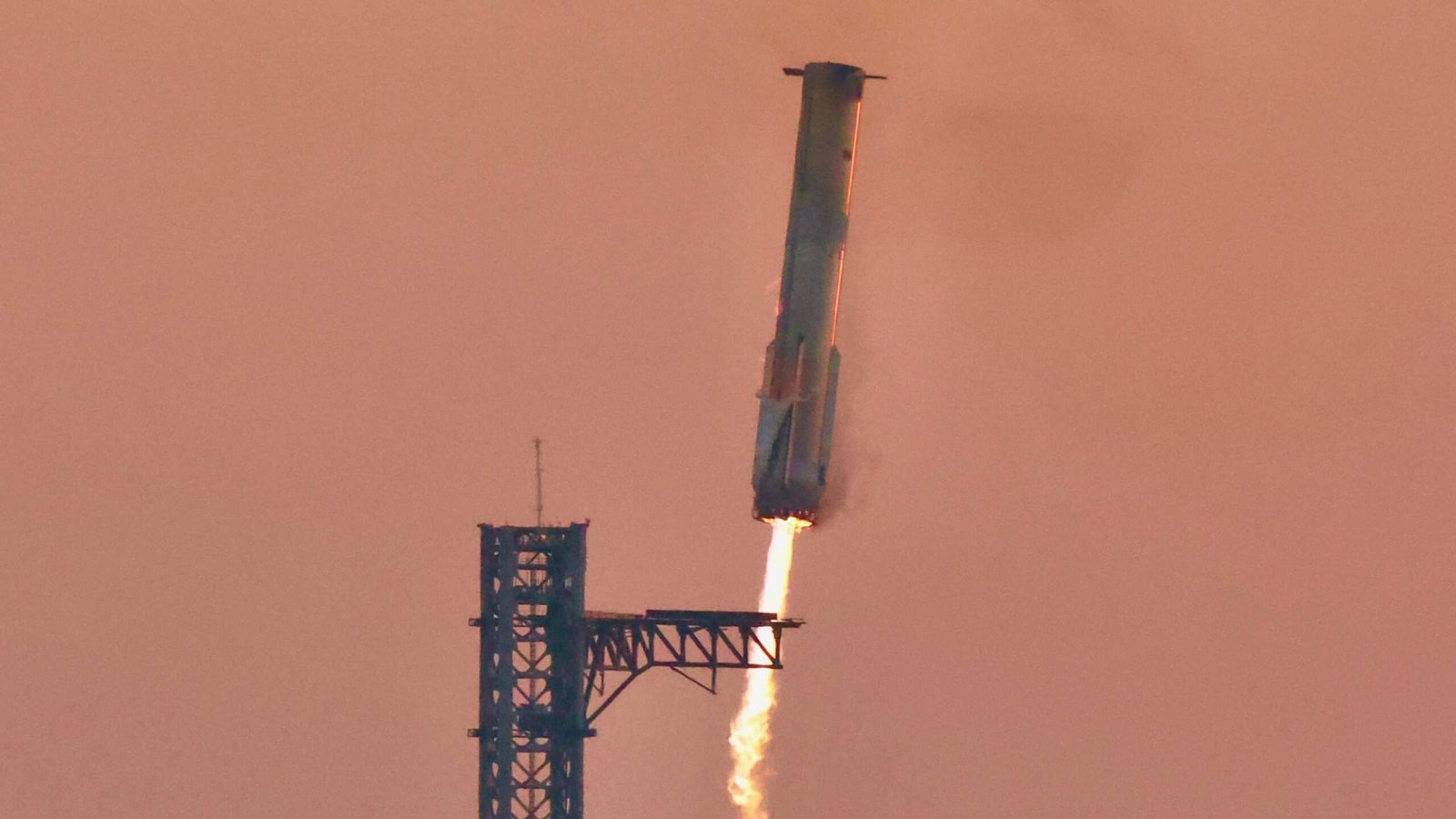
Starship Flight 15 Rocket Fully Stacked for Launch TODAY, but FAA License: The global aerospace industry is approaching a defining moment as commercial space companies compete to reshape the future of space transportation. With ambitious rocket launches, growing satellite constellations, and increasing demand for affordable access to orbit, the competition between major aerospace companies is becoming more intense than ever. Three major developments are attracting attention: SpaceX Starship Flight 15, United Launch Alliance’s (ULA) Vulcan return-to-flight mission, and Rocket Lab’s surprising Neutron rocket price increase.
Among these developments, SpaceX is preparing for one of its most ambitious Starship missions yet. With the massive rocket fully stacked at Starbase, Flight 15 represents another important step toward achieving complete rocket reusability. However, launch readiness involves more than hardware preparation. Regulatory approval, particularly from the Federal Aviation Administration (FAA), remains an essential part of the launch process.
At the same time, ULA is working to restore confidence in its Vulcan rocket, while Rocket Lab is positioning its upcoming Neutron vehicle to capitalize on growing demand for commercial launches.
SpaceX Starship Flight 15: Fully Stacked Rocket Prepares for Launch
SpaceX’s Starship Flight 15 campaign has reached a significant milestone, with the massive launch vehicle fully stacked on the launchpad at Starbase, Texas. This development brings the company closer to another major test of its next-generation transportation system.
The upcoming mission builds on the progress achieved during Flight 13, when Starship’s S40 upper stage successfully remained intact through re-entry and completed its splashdown. That achievement demonstrated meaningful improvements in vehicle performance and thermal protection.
For Flight 15, SpaceX is targeting even more ambitious objectives as it continues developing a fully reusable launch system.
Super Heavy Booster B22 Completes Important Preparations
The Super Heavy booster, designated B22, completed important static fire testing and final preparation activities before being transported to Launch Pad 2.
SpaceX also conducted simulations involving the launch tower’s mechanical chopstick arms. These tests are essential because the company ultimately wants to catch returning Super Heavy boosters directly at the launch tower.
This recovery method could eliminate the need for traditional landing legs and simplify the refurbishment process between launches.
Meanwhile, the Starship upper stage, designated S42, completed payload integration before being transported to the launchpad. The vehicle was prepared to carry 26 satellites using its innovative PEZ-style payload deployment system.
The successful integration of both stages demonstrates the progress SpaceX has made in preparing increasingly complex Starship missions.
Nearly 24 Hours in Orbit: A Major Mission Objective
One of the most important objectives associated with Starship Flight 15 is the plan to keep the spacecraft in orbit for nearly an entire day.
An extended orbital mission would allow SpaceX to gather valuable information about spacecraft operations, thermal performance, propulsion systems, and mission endurance.
The long-term objective is to recover both stages of the Starship launch system. Achieving this would represent a major breakthrough in reusable rocket technology.
Full system reusability is central to Elon Musk’s long-term vision because recovering and reusing both the booster and spacecraft could significantly reduce launch expenses.
Instead of manufacturing a completely new rocket for every mission, SpaceX aims to develop a system capable of repeated launches with minimal refurbishment.
FAA Launch License Remains an Important Factor
Although Starship Flight 15 is fully stacked and undergoing final preparations, hardware readiness does not automatically mean the rocket can launch.
The FAA launch license is a critical regulatory requirement for SpaceX. Before liftoff, the agency must complete the necessary safety and environmental reviews and authorize the specific launch operation.
This means that even when the rocket, launch tower, and ground infrastructure are ready, regulatory approval can influence the actual launch schedule.
The distinction between technical readiness and regulatory authorization is especially important for Starship because of the vehicle’s enormous size, powerful engines, and complex launch and recovery operations.
Spectacular Afternoon Launch Could Create Stunning Visual Effects
The planned afternoon launch window, around 4:45 PM local time, could produce spectacular viewing conditions if the mission proceeds as scheduled.
With the rocket potentially launching shortly before sunset, observers could witness dramatic exhaust plumes and atmospheric effects.
The Starship system uses 33 Raptor engines on its Super Heavy booster. Their combined thrust produces enormous amounts of hot exhaust, creating visually striking formations during flight.
These effects, sometimes described as jellyfish-like plumes and shock diamonds, highlight the extraordinary power of modern rocket propulsion.
ULA Vulcan LEO1: A Critical Return-to-Flight Mission
While SpaceX continues developing Starship, United Launch Alliance (ULA) is preparing for another important milestone with its Vulcan rocket.
The Vulcan LEO1 mission represents the fifth flight of the company’s next-generation launch vehicle. It also carries significant importance because ULA needs to demonstrate that Vulcan remains a dependable option for commercial and national security missions.
Addressing the Previous Solid Rocket Booster Anomaly
The Vulcan program faced additional scrutiny following an anomaly involving a solid rocket booster nozzle during the USSF-87 mission in February.
Although the mission reportedly achieved its primary objectives, the incident raised questions about booster reliability and prompted a temporary suspension of national security launch assignments by the U.S. Space Force.
Consequently, Vulcan LEO1 is an important opportunity for ULA to demonstrate that corrective measures and additional inspections have addressed the relevant concerns.
Successful execution could help restore confidence among government customers and commercial satellite operators.
Six Solid Rocket Boosters Increase Launch Capacity
Vulcan LEO1 features a powerful configuration equipped with six solid rocket boosters, representing a first for the Vulcan vehicle.
The rocket also incorporates an extended payload fairing and an upgraded Centaur 5 upper stage.
This configuration is designed to accommodate substantial payload requirements, with the vehicle capable of carrying up to 40 satellites into Low Earth Orbit under suitable mission conditions.
The specific mission is carrying Amazon LEO broadband satellites, supporting the growing demand for satellite-based internet infrastructure.
For ULA, a successful flight would be more than another launch. It would demonstrate operational reliability and help strengthen the company’s position in an increasingly competitive launch market.
Rocket Lab Raises Neutron Rocket Price to $70 Million
Another major development involves Rocket Lab, which has increased the expected launch price of its upcoming medium-lift Neutron rocket.
The company previously indicated a target price of approximately $55 million per launch. That figure has now increased to $70 million, representing an increase of more than 25%.
Interestingly, this price adjustment comes before Neutron has completed its maiden flight, currently targeted for 2027.
Rocket Lab Takes Advantage of Growing Launch Demand
Rocket Lab founder and CEO Peter Beck has highlighted the significant supply constraints affecting the global launch industry.
Demand for satellite launches continues to increase as companies develop broadband networks, Earth observation systems, and advanced space infrastructure.
However, launch capacity remains limited, particularly for customers seeking dedicated medium-lift missions.
Rather than offering discounted launch services to attract early customers, Rocket Lab appears confident that the market can support higher pricing.
The company is positioning Neutron as a valuable alternative for satellite operators seeking reliable access to orbit.
Sixteen Booked Flights Highlight Strong Customer Interest
Despite delays from its original 2024 target, Neutron has attracted considerable commercial interest.
According to the supplied report, Rocket Lab secured eight new launch contracts in Q3 2026, bringing its total booked Neutron flights to 16.
The growing backlog suggests that customers are willing to reserve launch capacity well before the rocket becomes operational.
With newly available launch opportunities reportedly extending into the 2030s, Rocket Lab is preparing for a market in which launch availability could become just as important as launch pricing.
Can Neutron Fill the Future Falcon 9 Supply Gap?
One of the biggest opportunities for Rocket Lab could emerge as SpaceX gradually expands Starship operations.
The Falcon 9 currently serves a major portion of the commercial launch market, including satellite constellation deployments.
However, SpaceX’s long-term ambitions involve using Starship for increasingly large missions, including future generations of Starlink satellites and proposed massive AI-focused satellite networks.
If SpaceX redirects more launch capacity toward its internal projects, independent satellite operators could face additional scheduling challenges.
Rocket Lab hopes to capitalize on this opportunity through its existing Electron rocket and upcoming Neutron medium-lift vehicle.
Neutron could become particularly important for customers seeking greater payload capacity without depending entirely on SpaceX.
The Future of the Global Space Launch Industry
These three developments demonstrate how quickly the aerospace industry is evolving.
SpaceX is pursuing complete rocket reusability through Starship, ULA is working to establish Vulcan as a reliable national security launch platform, and Rocket Lab is investing in Neutron to capture a larger share of the commercial launch market.
Each company faces different challenges, but all three are responding to the same fundamental trend: global demand for access to space is increasing rapidly.
The success of Starship Flight 15 could move reusable launch technology closer to a new level of operational capability. Meanwhile, Vulcan LEO1 could strengthen ULA’s competitive position, and Neutron’s growing order book could demonstrate the market’s appetite for additional launch providers.
Conclusion: Starship Flight 15 Could Become a Major Aerospace Milestone
The upcoming Starship Flight 15 mission represents another important chapter in SpaceX’s ambitious effort to revolutionize space transportation. With the rocket fully stacked, booster and ship preparations progressing, and ambitious orbital objectives ahead, the mission could provide valuable data for future reusable launch operations.
However, the FAA launch license remains an essential factor in determining when the rocket can actually lift off.
Beyond SpaceX, ULA’s Vulcan return-to-flight campaign and Rocket Lab’s Neutron pricing strategy reveal how competitive the global launch market has become.
As satellite constellations expand and demand for orbital transportation increases, the companies capable of delivering reliable, affordable, and frequent launches will have a significant advantage.
The coming years could fundamentally transform the economics of space exploration and commercial satellite deployment.
FAQs
1. What is SpaceX Starship Flight 15?
Starship Flight 15 is an upcoming test flight of SpaceX’s fully reusable Starship launch system. The mission aims to test improved vehicle performance, extended orbital operations, and progress toward recovering both the Super Heavy booster and Starship upper stage.
2. Is Starship Flight 15 fully stacked for launch?
Yes, according to the supplied report, Starship Flight 15 is fully stacked at SpaceX’s Starbase launch facility in Texas. The Super Heavy booster B22 and Starship upper stage S42 have been integrated for the upcoming mission.
3. Does Starship Flight 15 have FAA launch approval?
The FAA launch license is an important requirement before Starship Flight 15 can launch. Even though the rocket is fully stacked, SpaceX must receive the necessary regulatory authorization before conducting the mission.
4. What is the main objective of Starship Flight 15?
The primary objectives include testing extended orbital operations, improving vehicle reliability, and advancing SpaceX’s goal of full system reusability. The company is working toward recovering both the Super Heavy booster and Starship spacecraft.
5. How long will Starship Flight 15 remain in orbit?
One of the ambitious objectives described for Starship Flight 15 is keeping the spacecraft in orbit for nearly 24 hours. This extended mission would help SpaceX evaluate spacecraft performance and operational capabilities.
6. What is special about Super Heavy booster B22?
Super Heavy B22 is the booster assigned to the Flight 15 campaign. It completed static fire testing and additional preparations before being transported to the launchpad. SpaceX is also testing its launch tower’s chopstick arms for future booster recovery operations.
7. How many satellites will Starship Flight 15 carry?
According to the supplied report, Starship’s upper stage S42 completed integration of 26 satellites using its PEZ-style payload deployment system.
8. What are the Raptor engines used in Starship Flight 15?
SpaceX’s Raptor engines are advanced methane-and-liquid-oxygen-powered rocket engines. The Super Heavy booster uses 33 Raptor engines to generate the enormous thrust required to lift Starship into space.
9. What is the expected launch time for Starship Flight 15?
The supplied report identifies an afternoon launch window around 4:45 PM local time, approximately one hour before sunset. Actual launch timing depends on weather, technical readiness, and regulatory authorization.
10. What is ULA Vulcan LEO1?
Vulcan LEO1 is the fifth flight of United Launch Alliance’s Vulcan rocket. The mission is particularly important because it represents a major return-to-flight milestone following a previous solid rocket booster anomaly.
11. Why is Vulcan LEO1 important for United Launch Alliance?
Vulcan LEO1 is important because ULA needs to demonstrate the rocket’s reliability and operational safety. A successful mission could help restore confidence among government customers and support the return of national security launch assignments.
12. How many solid rocket boosters does Vulcan LEO1 use?
The Vulcan LEO1 configuration uses six solid rocket boosters. This configuration provides additional launch performance and supports the mission’s substantial satellite payload requirements.
13. What satellites will Vulcan LEO1 carry?
The mission is carrying Amazon LEO broadband satellites designed to support Amazon’s growing satellite internet ambitions and expand connectivity through Low Earth Orbit infrastructure.
14. Why did Rocket Lab increase the Neutron rocket launch price?
Rocket Lab increased Neutron’s expected launch price from $55 million to $70 million because of strong market demand and limited global launch capacity. CEO Peter Beck believes the constrained launch market creates an opportunity to capture higher-value contracts.
15. How many Neutron rocket launches has Rocket Lab booked?
According to the supplied report, Rocket Lab secured eight additional launch contracts in Q3 2026, bringing its total Neutron backlog to 16 booked flights. The strong demand highlights customer interest in the upcoming medium-lift rocket.
16. How could Rocket Lab Neutron compete with SpaceX Falcon 9?
Rocket Lab’s Neutron rocket aims to provide another option for commercial satellite operators seeking reliable access to orbit. If demand for Falcon 9 launches exceeds available capacity, Neutron could help fill part of the market gap with its medium-lift capabilities and dedicated launch services.
Read More:
- Tesla and SpaceX merger talks hit a new stage, and one hurdle remains
- SpaceX Starship is going for a catch that could change spaceflight forever
- Tesla trims Model Y offerings as All-Wheel-Drive gets the axe
- SpaceX Starship Flight 15: How to watch the double catch attempt
- NVIDIA Just Killed the iPhone – Meet the First AI NeoPhone
1 thought on “Starship Flight 15 Rocket Fully Stacked for Launch TODAY, but FAA License”