
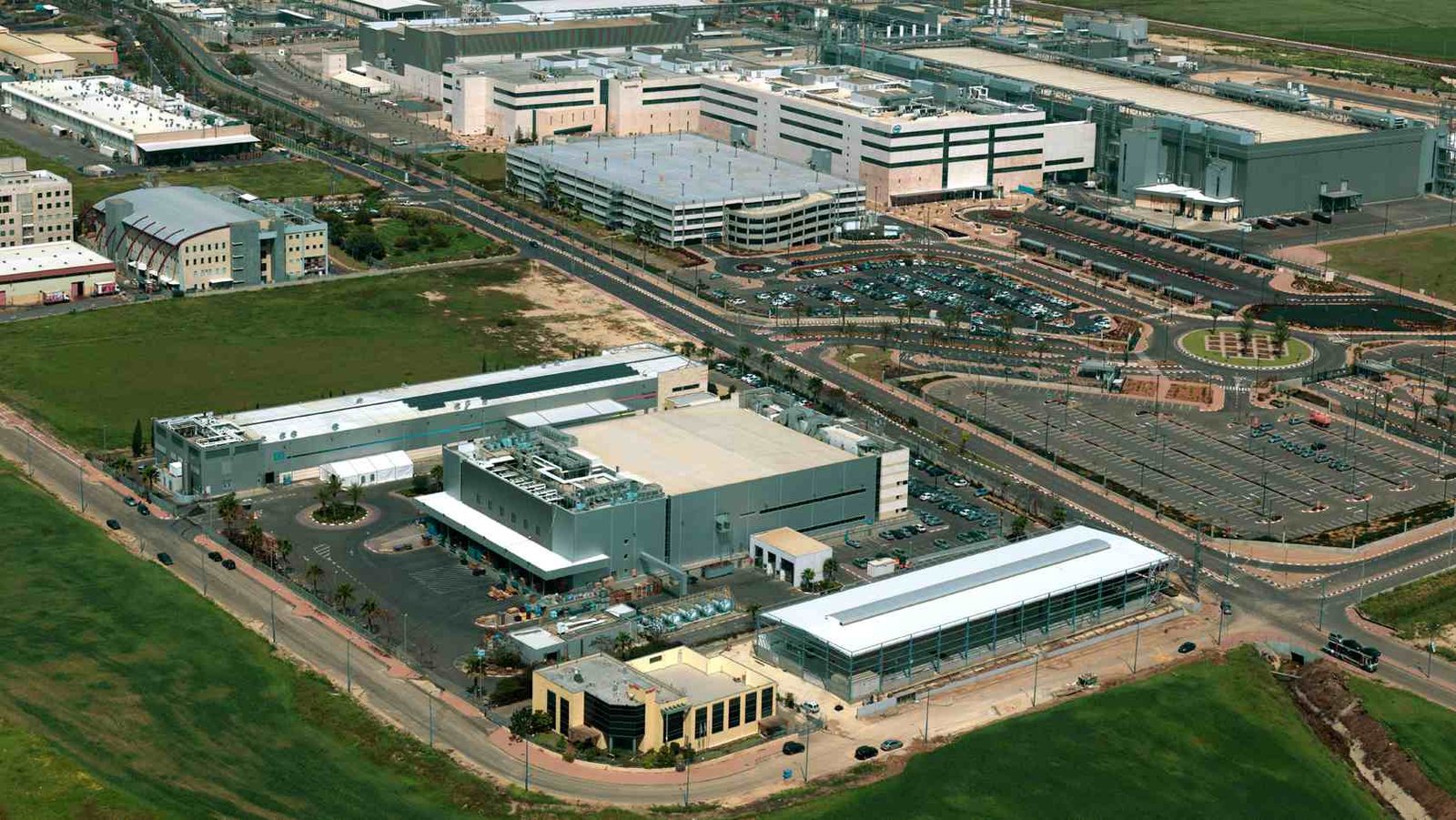
Incredible INSIDE New $119 Billion Elon Musk’s Terafab Chip Factory: The global semiconductor industry is approaching a critical turning point. As artificial intelligence, autonomous vehicles, humanoid robots, and space-based computing continue to advance, the demand for powerful computer chips is growing faster than traditional manufacturers can supply them. At the center of this technological challenge is Terrafab, Elon Musk’s ambitious $119 billion semiconductor manufacturing project designed to secure the future of Tesla, SpaceX, and xAI.
Planned for a massive 100-million-square-foot site in Grimes County, Texas, Terrafab is envisioned as much more than an ordinary chip factory. Its projected economic output could rival the scale of major national economies, highlighting the extraordinary ambition behind the project.
However, the biggest motivation behind Terrafab is not simply entering the semiconductor market. It is about solving a potential supply shortage that could limit the growth of Musk’s entire technology ecosystem.
Why Elon Musk Is Building the $119 Billion Terrafab
For years, Tesla and SpaceX have depended on external semiconductor manufacturers to supply the processors needed for their products. However, future manufacturing ambitions could require substantially more chips than existing supply chains can provide.
According to the supplied presentation, current global semiconductor production could satisfy only around 2% of the projected future chip demand from Tesla and SpaceX combined.
This potential shortage creates a serious challenge for several businesses.
Tesla’s Growing Demand for AI Chips
Tesla is moving beyond conventional electric vehicle manufacturing. Its long-term strategy includes expanding autonomous driving technology, developing robotaxis, and manufacturing millions of Optimus humanoid robots.
Each of these products requires advanced computing hardware.
Optimus robots must process camera feeds, understand their surroundings, recognize objects, maintain balance, and perform complex physical movements. These operations require powerful AI processors capable of handling enormous amounts of information in real time.
Without a reliable semiconductor supply, Tesla could struggle to achieve its ambitious production targets.
SpaceX and xAI Need More Computing Power
SpaceX also requires specialized computing hardware for spacecraft operations, advanced automation, and potential orbital data centers.
Meanwhile, xAI needs enormous computing capacity to train and operate increasingly sophisticated artificial intelligence models.
These businesses share one important requirement: access to advanced semiconductor technology.
Terrafab is intended to give Musk’s companies greater control over this critical resource instead of relying entirely on external manufacturers.
Three Major Chip Families: AI5, AI6, and D3
One of the most important elements of the Terrafab manufacturing strategy is its focus on three specialized chip families: AI5, AI6, and D3.
Each processor family is designed for different computing requirements across Musk’s companies.
1. AI5: Powering Tesla’s Autonomous Future
The AI5 chip is intended to support Tesla’s next-generation artificial intelligence applications.
Its potential applications include:
- Advanced autonomous driving systems.
- Real-time environmental perception.
- Tesla Cybercab computing.
- Optimus humanoid robot intelligence.
- Complex neural network processing.
For autonomous vehicles, processors must continuously analyze camera information, recognize obstacles, identify road conditions, and make driving decisions.
The same principle applies to humanoid robots, which must understand their physical environments before performing tasks.
2. AI6: The Next Generation of Computing
The AI6 processor represents another step in the planned semiconductor roadmap.
Future Tesla vehicles, robotics platforms, and AI-powered systems could require substantially greater processing capabilities.
Developing next-generation chips internally could help Tesla optimize hardware and software together, potentially improving computing efficiency and reducing dependence on external suppliers.
3. D3: Specialized Chips for Space Applications
The D3 chip family is designed around the specialized requirements of aerospace and space-based computing.
Electronic systems operating in orbit face challenging environmental conditions, including cosmic radiation, extreme temperature fluctuations, and limited opportunities for physical maintenance.
Space-based AI infrastructure would therefore require highly reliable computing hardware.
The D3 development direction reflects SpaceX’s ambition to expand computing infrastructure beyond traditional terrestrial data centers.
How Terrafab Could Power Millions of Optimus Robots
One of the biggest reasons behind Musk’s semiconductor ambitions is the future of Optimus humanoid robots.
Tesla has discussed manufacturing millions of humanoid robots, potentially reaching annual production volumes of approximately 10 million units.
At that scale, chip requirements become enormous.
If every robot requires at least one dedicated AI processor, producing 10 million robots annually would require at least 10 million processors every year for robotics alone.
Each Optimus robot must perform several demanding computing operations simultaneously.
These include:
- Processing multiple camera feeds.
- Recognizing objects and people.
- Mapping surrounding environments.
- Coordinating both hands and arms.
- Adjusting gripping pressure.
- Maintaining balance while walking.
- Making decisions during unpredictable situations.
This demonstrates why semiconductor availability is directly connected to Tesla’s robotics ambitions.
A manufacturing line can have advanced robotic equipment, trained workers, and completed components, but a missing processor can still prevent the final product from being assembled.
Terrafab could help eliminate this critical supply-chain bottleneck.
Space-Based AI Data Centers: Taking Computing Beyond Earth
SpaceX’s longer-term ambitions extend beyond rockets and satellite internet.
The company has explored the possibility of deploying AI data centers in Earth’s orbit, potentially creating a new approach to large-scale computing infrastructure.
However, operating computers in space introduces engineering challenges that do not exist in conventional data centers.
Electronic components must withstand radiation exposure, extreme thermal conditions, and demanding reliability requirements.
Traditional commercial processors may not automatically meet these specialized needs.
This is where the proposed D3 chip family becomes important. Specialized aerospace processors could support computing systems designed for operation in demanding orbital environments.
If successful, this technology could become part of a broader infrastructure connecting SpaceX’s launch capabilities with future AI computing systems.
Inside Terrafab: Reinventing Semiconductor Manufacturing
Building a massive semiconductor facility is only the beginning.
Modern chip fabrication requires thousands of specialized machines and hundreds of extremely precise manufacturing operations.
These processes include:
- Silicon wafer preparation.
- Material deposition.
- Photolithography.
- Chemical etching.
- Ion implantation.
- Thermal processing.
- Advanced packaging.
- Semiconductor testing.
Every manufacturing stage must operate with extraordinary precision.
Traditional semiconductor factories can also experience significant delays because wafers move between different processing stations and specialized production environments.
According to the supplied presentation, actual processing may account for only around 20% of total elapsed manufacturing time in certain workflows.
Terrafab aims to address these inefficiencies through a more integrated manufacturing approach.
Integrating the Entire Chip Production Process
The proposed facility is expected to combine several important manufacturing capabilities under one coordinated system.
These include:
Logic chip production: Manufacturing the processors responsible for AI calculations and advanced computing.
Memory manufacturing: Supporting the storage and retrieval of information required by sophisticated computing systems.
Advanced packaging: Integrating semiconductor components into high-performance packages.
Quality testing: Identifying manufacturing defects and ensuring chips meet demanding performance requirements.
Bringing these capabilities together could improve coordination between production stages and accelerate manufacturing improvements.
The Austin Research and Development Facility
Before achieving large-scale production in Grimes County, the proposed strategy includes establishing an advanced research and development facility at Gigafactory Texas in Austin.
This facility would provide an environment for testing semiconductor manufacturing processes before implementing them at industrial scale.
According to the supplied presentation, the objective is to reduce certain experimentation and improvement cycles from approximately one year to just one month.
Faster iteration could help engineers identify manufacturing problems, test solutions, and improve production processes more efficiently.
ASML, Intel, and TSMC: The Industry Partnerships Behind Terrafab
Even with enormous financial resources, Terrafab cannot operate independently of the global semiconductor supply chain.
Some of the world’s most advanced chipmaking equipment is produced by highly specialized manufacturers.
One of the most important companies is ASML, which develops extreme ultraviolet lithography systems.
Why EUV Lithography Is Essential
Extreme Ultraviolet (EUV) lithography uses light with a wavelength of approximately 13.5 nanometers to create extremely small circuit patterns on silicon wafers.
These systems are essential for manufacturing many advanced semiconductor designs.
However, EUV machines are extraordinarily complex, expensive, and difficult to manufacture.
Securing equipment, installation expertise, and ongoing technical support will therefore be important challenges for Terrafab.
Potential Collaborations With Intel and TSMC
Industry discussions involving companies such as Intel and TSMC highlight the importance of established semiconductor manufacturing expertise.
Potential collaboration models could involve technical knowledge, manufacturing support, equipment, or production capacity.
Other suppliers, including Lam Research and Applied Materials, are also important to the wider semiconductor equipment ecosystem.
Terrafab will need access to specialized chemicals, industrial gases, automated wafer-handling systems, and precision manufacturing equipment.
The Massive Energy and Water Requirements
A semiconductor factory operating at Terrafab’s proposed scale would require enormous amounts of electricity and water.
The supplied presentation describes infrastructure concepts involving more than 40 industrial gas turbines, each generating approximately 50 megawatts.
Together, this would provide around 2 gigawatts of electricity generation capacity.
Reliable electricity is essential because semiconductor manufacturing equipment must operate under extremely stable conditions.
Even a brief power interruption or voltage fluctuation could damage sensitive manufacturing processes.
Megapack Energy Storage
Tesla’s Megapack battery systems could help stabilize electricity supply and provide additional energy storage capacity.
These systems could support the facility during fluctuations in power generation and improve overall energy resilience.
Water Supply and Recycling
Semiconductor manufacturing also requires substantial quantities of ultrapure water for wafer cleaning, cooling, and chemical processing.
The proposed infrastructure includes drawing water from the Gibbons Creek Reservoir while developing on-site wastewater treatment and recycling facilities.
Water management will be essential to maintaining continuous operations while reducing pressure on local resources.
Conclusion: Can Elon Musk’s Terrafab Transform the Semiconductor Industry?
Elon Musk’s proposed $119 billion Terrafab project represents an ambitious attempt to address one of the biggest challenges facing future technology development: semiconductor availability.
By connecting chip manufacturing with Tesla’s autonomous vehicles, Optimus humanoid robots, SpaceX’s aerospace systems, and xAI’s computing requirements, Terrafab could become a strategically important part of Musk’s business ecosystem.
However, achieving this vision will require more than investment and massive industrial buildings. Advanced lithography equipment, specialized engineering expertise, reliable energy infrastructure, water management, and consistent manufacturing yields will all determine whether the project can reach its objectives.
The biggest question is whether Terrafab can turn its enormous ambitions into reliable, high-volume semiconductor production.
If successful, it could strengthen the technological foundations of artificial intelligence, autonomous transportation, humanoid robotics, and space-based computing.
Terrafab is therefore not simply about building another chip factory. It represents an attempt to secure the silicon supply needed for an entirely new generation of technology.
FAQs
1. What is Elon Musk’s Terrafab project?
Terrafab is Elon Musk’s ambitious semiconductor manufacturing project designed to produce advanced computer chips for Tesla, SpaceX, and xAI. Its goal is to secure a reliable supply of processors for artificial intelligence, autonomous vehicles, humanoid robots, and aerospace applications.
2. How much will Elon Musk’s Terrafab chip factory cost?
The proposed Terrafab project is associated with an estimated investment of $119 billion. This massive investment reflects the scale of the planned semiconductor manufacturing infrastructure and its importance to Musk’s long-term technology ambitions.
3. Where will the Terrafab semiconductor factory be built?
The proposed Terrafab facility is planned for a massive site in Grimes County, Texas. The project is described as covering approximately 100 million square feet, making it an extraordinarily ambitious industrial development.
4. Why is Elon Musk building his own semiconductor factory?
Elon Musk wants to reduce dependence on external chip manufacturers because future demand from Tesla, SpaceX, and xAI could exceed available semiconductor supply. Terrafab is intended to provide greater control over chip production and protect future manufacturing expansion.
5. Which companies will use chips manufactured at Terrafab?
The primary intended users include Tesla, SpaceX, and xAI. Tesla needs processors for autonomous vehicles and Optimus robots, SpaceX requires specialized aerospace computing hardware, and xAI needs powerful chips for training advanced artificial intelligence models.
6. What are the AI5, AI6, and D3 chips?
AI5, AI6, and D3 are three chip families highlighted in the proposed Terrafab roadmap. AI5 is intended for autonomous driving and robotics, AI6 represents a future generation of computing hardware, and D3 targets specialized aerospace and space-based applications.
7. How will Terrafab support Tesla Optimus humanoid robots?
Terrafab could supply the AI processors required for Tesla’s Optimus humanoid robots. These processors help robots analyze camera feeds, recognize objects, understand their surroundings, coordinate movements, maintain balance, and perform complex physical tasks.
8. How many chips will Tesla need for 10 million Optimus robots?
If Tesla produces 10 million Optimus robots annually and each robot requires at least one dedicated AI processor, the company would need approximately 10 million processors every year for robotics alone. Additional chips would be required for vehicles and other applications.
9. What is the purpose of the D3 chip family?
The D3 chip family is intended for specialized aerospace and space-based computing applications. These processors would need to meet demanding reliability requirements associated with radiation exposure, extreme temperatures, and the challenging operating conditions of space.
10. Will Terrafab manufacture chips for SpaceX’s orbital AI data centers?
Terrafab is intended to support SpaceX’s future computing ambitions, including potential space-based AI data centers. Its proposed D3 chip family could address specialized hardware requirements for orbital computing infrastructure.
11. What role will ASML play in the Terrafab project?
ASML is important because it manufactures advanced Extreme Ultraviolet (EUV) lithography machines used in modern semiconductor production. These machines use light with a wavelength of 13.5 nanometers to create extremely small circuit patterns on silicon wafers.
12. Will Intel and TSMC collaborate with Elon Musk’s Terrafab?
The supplied information describes discussions involving Intel and TSMC regarding potential collaboration models, manufacturing expertise, equipment, or production capacity. However, specific partnership arrangements and commitments should not be treated as confirmed without official announcements.
13. How much electricity will the Terrafab factory require?
The proposed energy infrastructure includes more than 40 industrial gas turbines, each generating approximately 50 megawatts. Together, these could provide around 2 gigawatts of electricity generation capacity to support continuous semiconductor manufacturing operations.
14. Why does Terrafab need so much water?
Semiconductor manufacturing requires enormous quantities of highly purified water for wafer cleaning, equipment cooling, and chemical processing. The proposed Terrafab infrastructure includes water sourcing from Gibbons Creek Reservoir and on-site wastewater treatment and recycling facilities.
15. How could Terrafab change the future of the semiconductor industry?
Terrafab could strengthen semiconductor supply for artificial intelligence, autonomous vehicles, humanoid robotics, and aerospace technology. If successful, it could give Tesla, SpaceX, and xAI greater control over critical computing hardware while introducing a new approach to integrated chip manufacturing.
Read More:
- Tesla and SpaceX merger talks hit a new stage, and one hurdle remains
- SpaceX Starship is going for a catch that could change spaceflight forever
- Tesla trims Model Y offerings as All-Wheel-Drive gets the axe
- SpaceX Starship Flight 15: How to watch the double catch attempt
- NVIDIA Just Killed the iPhone – Meet the First AI NeoPhone