
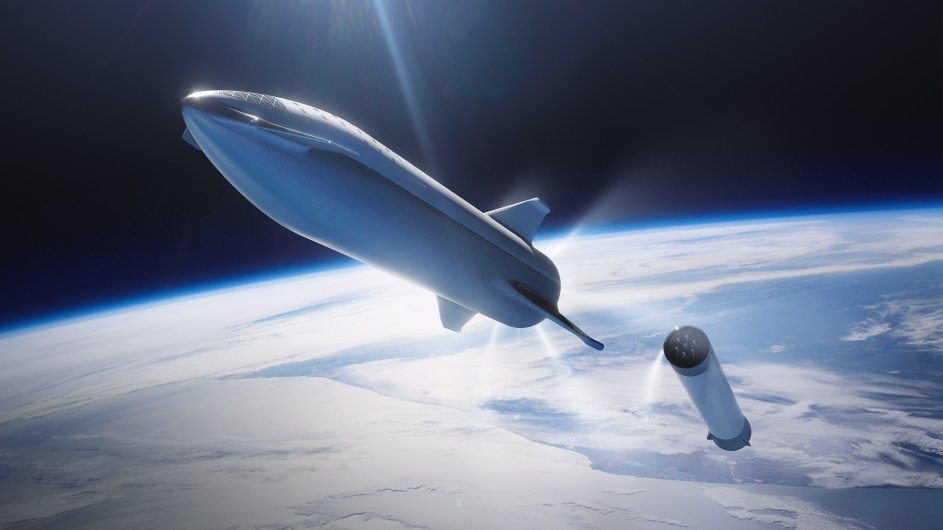
BAD NEWS! Starship Flight 15 Booster Catch Attempt Failed, S42 in Orbit Until: SpaceX’s ambitious Starship Flight 15 delivered another major milestone in the company’s journey toward fully reusable space transportation. Launched from Starbase, Texas, the latest test flight demonstrated impressive rocket performance, successful orbital insertion, and the deployment of next-generation Starlink satellites. However, the mission also brought disappointing news for recovery enthusiasts: the planned Super Heavy booster catch attempt was aborted, forcing the rocket to perform a controlled offshore splashdown instead.
Despite the setback, the mission achieved several important objectives. The upper-stage Starship, identified as Ship S42, successfully reached Earth orbit and deployed 26 next-generation Starlink V3 satellites. It also entered an approximately 21-hour endurance phase involving 14 Earth orbits, making this an important test of long-duration spacecraft operations.
From powerful Raptor engine performance to advanced satellite deployment, Starship Flight 15 offered valuable information about SpaceX’s future ambitions.
Starship Flight 15 Begins With a Powerful Liftoff
The mission began with a smooth countdown at SpaceX’s Starbase launch facility. All 33 Raptor engines on the Super Heavy booster successfully ignited, producing enormous thrust as the world’s most powerful operational rocket system lifted away from the launch pad.
The initial ascent appeared remarkably smooth, with the vehicle maintaining stable flight throughout its early trajectory.
Super Heavy Successfully Passes Max Q
One of the most challenging moments during any rocket launch is Max Q, the point at which the vehicle experiences maximum aerodynamic pressure.
During this phase, the rocket must withstand significant atmospheric forces while maintaining structural integrity and stable flight.
According to the supplied mission information, Super Heavy passed through Max Q with nominal chamber pressures and encouraging telemetry.
These results demonstrated the importance of SpaceX’s ongoing improvements to its propulsion systems, flight control software, and structural engineering.
Mechazilla Receives Initial Catch Approval
Before liftoff, pre-launch checks reportedly gave the Mechazilla launch tower a go for a potential booster recovery attempt.
The enormous mechanical arms, commonly known as chopsticks, are designed to catch returning Super Heavy boosters directly at the launch tower.
A successful catch would eliminate the need for traditional landing legs and simplify the process of preparing boosters for another flight.
Expectations were therefore high that Flight 15 could deliver another impressive recovery milestone.
Super Heavy Booster Catch Attempt Aborted During Flight 15
The most disappointing development occurred after stage separation.
At approximately T+2 minutes and 49 seconds, Starship completed its hot-staging sequence successfully. Six Raptor engines on the upper stage ignited, allowing Ship S42 to separate from the Super Heavy booster.
Meanwhile, the booster began its flip maneuver and initiated a powerful 32-engine boost-back burn to reverse its trajectory toward Starbase.
Everything initially appeared to be progressing according to the planned recovery sequence.
Why Did SpaceX Cancel the Booster Catch?
Just minutes before the anticipated landing burn, mission controllers issued a downrange booster abort.
Instead of continuing toward the Mechazilla launch tower, Super Heavy was redirected away from the launch site for an offshore recovery maneuver.
Although the cancellation disappointed spectators, SpaceX prioritizes safety during experimental rocket operations.
A tower catch requires extremely precise flight control, reliable telemetry, and confidence that the returning booster can safely approach the launch infrastructure.
Any unexpected anomaly or telemetry variation can result in the cancellation of the recovery attempt.
Super Heavy Completes a Controlled Ocean Splashdown
Following the abort command, the booster continued its controlled descent toward the ocean.
Its landing sequence involved progressively shutting down engines, transitioning from 13 active engines to five and eventually three engines.
The maneuver allowed the booster to manage its speed and maintain control during the final moments of descent.
Super Heavy ultimately completed a controlled offshore splashdown, accompanied by a powerful sonic boom.
While the mission did not produce the anticipated tower catch, the controlled descent still provided valuable information about booster flight control and recovery procedures.
Ship S42 Successfully Reaches Earth Orbit
While the Super Heavy booster handled its offshore diversion, the upper-stage Starship continued its journey into space.
Identified as Ship S42, the spacecraft completed its orbital insertion burn using its sea-level and vacuum-optimized Raptor engines.
This achievement represented only the second successful orbital insertion in Starship’s development history, according to the supplied mission details.
Reaching orbit is an essential milestone because SpaceX ultimately wants Starship to operate as a fully reusable transportation system capable of delivering enormous payloads into space.
Advanced Raptor Engines Support Orbital Operations
Starship’s propulsion architecture combines sea-level and vacuum-optimized Raptor engines.
Sea-level Raptors provide thrust during atmospheric flight, while vacuum Raptors are designed to operate efficiently in the near-vacuum environment of space.
This combination allows Starship to perform demanding maneuvers throughout its journey.
Successful orbital insertion demonstrated the importance of reliable propulsion performance during the transition from atmospheric ascent to spaceflight operations.
Starship S42 Deploys 26 Next-Generation Starlink V3 Satellites
One of the most important achievements of Flight 15 was the successful deployment of 26 next-generation Starlink V3 satellites.
After reaching orbit, Ship S42 transitioned into its payload deployment phase and released the satellites from its cargo bay.
This milestone highlights Starship’s potential to transform satellite transportation through significantly larger payload capacity.
Starlink V3 Could Deliver Massive Bandwidth Improvements
The next-generation Starlink V3 satellites are designed to support SpaceX’s ambitions for a much more capable global internet constellation.
According to the supplied mission information, a single Starship deployment could provide bandwidth capacity comparable to approximately ten traditional Falcon 9 missions.
This illustrates why Starship is so important to SpaceX’s long-term satellite expansion strategy.
Instead of relying on numerous smaller launches, the company aims to use Starship to transport large batches of advanced spacecraft in a single mission.
Ground Stations Confirm Communication With All 26 Satellites
Following deployment, ground stations reportedly established two-way communication links with all 26 satellites.
The spacecraft then began raising their operational orbits.
Establishing communication is an important step because satellite deployment alone does not guarantee successful mission operations.
The satellites must also establish reliable connections, activate their systems, and complete the necessary orbital adjustments.
For SpaceX, this successful deployment represents another important step toward expanding the capabilities of its global satellite network.
Starship Begins a Record-Breaking 21-Hour Orbital Mission
After completing its satellite deployment operations, Ship S42 closed its cargo doors and entered an extended orbital endurance phase.
The spacecraft continued operating in space for approximately 21 hours, covering 14 orbits around Earth.
This represented the longest continuous Starship flight test described in the supplied mission information.
Testing Thermal Management and Battery Performance
Long-duration spaceflight introduces several engineering challenges.
Starship must manage extreme temperature variations, maintain sufficient electrical power, and ensure that essential onboard systems remain operational.
During the extended coast phase, mission controllers systematically powered down non-essential avionics and selected antennas.
These procedures helped conserve battery reserves and manage thermal loads.
Understanding how Starship behaves during extended orbital operations is essential before attempting more complex missions.
Future objectives include longer-duration missions, spacecraft refueling demonstrations, and eventual crewed lunar transportation.
Specialized Tile Cameras Provide Important Data
Another important aspect of the mission involved testing specialized cameras designed to observe Starship’s thermal protection system.
The spacecraft’s heat shield consists of thousands of protective tiles designed to withstand the extreme temperatures generated during atmospheric reentry.
Monitoring these tiles during flight can provide engineers with valuable information about their performance.
Daylight camera observations also help SpaceX understand the condition of the thermal protection system before the spacecraft returns to Earth.
These developments could support future improvements to Starship’s reentry reliability and reusability.
What Starship Flight 15 Means for SpaceX’s Future
Although the failed booster catch attempt became one of the mission’s biggest talking points, Flight 15 demonstrated substantial progress across several important engineering areas.
The mission highlighted three major capabilities:
- Heavy-lift rocket performance: Super Heavy successfully completed its initial ascent and hot-staging operations.
- Satellite deployment: Ship S42 successfully deployed 26 next-generation Starlink V3 satellites.
- Long-duration orbital operations: Starship completed an approximately 21-hour endurance phase involving 14 Earth orbits.
These achievements are important because SpaceX is developing Starship for missions far beyond conventional satellite launches.
The company’s long-term ambitions include lunar exploration, Mars transportation, large-scale satellite deployment, and fully reusable orbital transportation.
However, achieving these goals requires reliable booster recovery, repeatable upper-stage operations, and a thermal protection system capable of surviving repeated atmospheric reentries.
Conclusion: A Booster Catch Setback, but a Major Starship Milestone
Starship Flight 15 delivered a mixed but valuable result for SpaceX.
The planned Super Heavy booster catch was aborted, and the booster completed a controlled offshore splashdown instead. Nevertheless, Ship S42 successfully reached orbit, deployed 26 Starlink V3 satellites, and continued through an approximately 21-hour orbital endurance test.
The mission demonstrated how SpaceX continues to develop the technologies required for next-generation heavy-lift space transportation.
The missed catch is a reminder that rocket reusability requires more than impressive launch performance. Every recovery maneuver must meet demanding safety and reliability standards.
With successful orbital operations, advanced satellite deployment, and additional thermal protection testing, Flight 15 provided important engineering data for future missions.
SpaceX’s ultimate objective remains unchanged: build a fully reusable Starship system capable of making space transportation faster, more affordable, and more accessible.
FAQs
1. What happened during SpaceX Starship Flight 15?
SpaceX’s Starship Flight 15 successfully demonstrated rocket ascent, hot-staging, orbital insertion, and satellite deployment. However, the planned Super Heavy booster catch attempt was aborted, resulting in a controlled offshore splashdown.
2. Why did the Starship Flight 15 booster catch attempt fail?
The booster catch attempt was canceled after mission controllers issued a downrange booster abort. SpaceX’s safety procedures require an offshore diversion whenever unexpected anomalies or telemetry variations create uncertainty about a safe tower recovery.
3. Did Super Heavy successfully complete its flight during Starship Flight 15?
Super Heavy successfully completed its initial ascent, separation, flip maneuver, and boost-back burn. Although it did not reach the Mechazilla tower, it performed a controlled offshore splashdown.
4. What is the Mechazilla launch tower used for?
The Mechazilla launch tower features enormous mechanical arms designed to catch returning Super Heavy boosters and Starship upper stages. This innovative recovery system aims to eliminate landing legs and enable faster rocket reuse.
5. How many Raptor engines powered Starship Flight 15 at liftoff?
The Super Heavy booster used 33 Raptor engines during liftoff. These engines generated the enormous thrust required to lift the Starship vehicle away from the Starbase launch facility.
6. When did Starship Flight 15 experience stage separation?
The hot-staging separation occurred approximately 2 minutes and 49 seconds after liftoff. Six Starship Raptor engines ignited to pull the upper stage away from Super Heavy.
7. What happened to Ship S42 after stage separation?
Following separation, Ship S42 continued toward orbit while Super Heavy returned toward the launch area. The upper stage successfully completed its orbital insertion burn and began its payload deployment operations.
8. Did Starship S42 successfully reach Earth orbit?
Yes. Ship S42 successfully reached Earth orbit using its sea-level and vacuum-optimized Raptor engines. This represented an important milestone in SpaceX’s development of a fully reusable orbital transportation system.
9. How many Starlink V3 satellites did Starship Flight 15 deploy?
Starship S42 successfully deployed 26 next-generation Starlink V3 satellites during its orbital mission. These satellites are intended to support SpaceX’s next-generation global broadband network.
10. What makes Starlink V3 satellites different from previous generations?
Starlink V3 satellites are designed to provide significantly greater data capacity and network performance. Their deployment through Starship could allow SpaceX to expand its satellite constellation more efficiently.
11. How much bandwidth can one Starship Starlink V3 deployment provide?
According to the supplied mission information, a single deployment could deliver bandwidth capacity comparable to approximately ten traditional Falcon 9 missions. This highlights Starship’s potential advantage for large-scale satellite transportation.
12. Did all 26 Starlink V3 satellites establish communication?
Yes. Following deployment, ground stations reportedly established two-way communication links with all 26 satellites. The spacecraft then began raising their operational orbits.
13. How long did Starship S42 remain in orbit during Flight 15?
Ship S42 entered an extended orbital endurance phase lasting approximately 21 hours. During this period, it completed 14 orbits around Earth while testing spacecraft systems.
14. Why did SpaceX conduct a 21-hour orbital endurance test?
The extended mission helped SpaceX evaluate thermal management, electrical power consumption, avionics performance, and long-duration spacecraft operations. These capabilities are essential for future orbital and deep-space missions.
15. How did Starship manage its battery power during the orbital coast phase?
Mission controllers powered down selected non-essential avionics and antennas to conserve electrical energy. This approach helped manage battery reserves and thermal loads throughout the extended orbital mission.
16. Why are Starship’s heat shield tiles important?
Starship’s thermal protection system uses thousands of heat-resistant tiles to protect the spacecraft during atmospheric reentry. Testing specialized tile cameras helps engineers monitor tile performance and improve future reentry reliability.
17. What does Starship Flight 15 mean for SpaceX’s future missions?
Flight 15 demonstrated progress in orbital insertion, satellite deployment, propulsion performance, and long-duration spaceflight. These technologies are important for future Starlink expansion, lunar exploration, and eventual Mars transportation.
18. Was Starship Flight 15 a successful mission despite the failed booster catch?
Yes, the mission achieved several important objectives despite missing the planned booster catch. Ship S42 reached orbit, deployed 26 Starlink V3 satellites, and completed an extended endurance test, providing valuable engineering data for SpaceX’s future Starship development.
Read More:
- Booster GNC Failed! SpaceX Revealed WHY Starship B22 Catch was Aborted
- Tesla Cybercab goes on sale for $29,990, slated for December deliveries
- Tesla Cybercab ownership will come with plenty of strings attached
- Elon Musk’s $6,789 Tiny House Hits the Market—Is It Worth the Hype?
- Sodium-Ion Battery 2026 Tesla Rejects Solid-State as $55 Aluminum-Ion Shocks EV World!
2 thoughts on “BAD NEWS! Starship Flight 15 Booster Catch Attempt Failed, S42 in Orbit Until”