
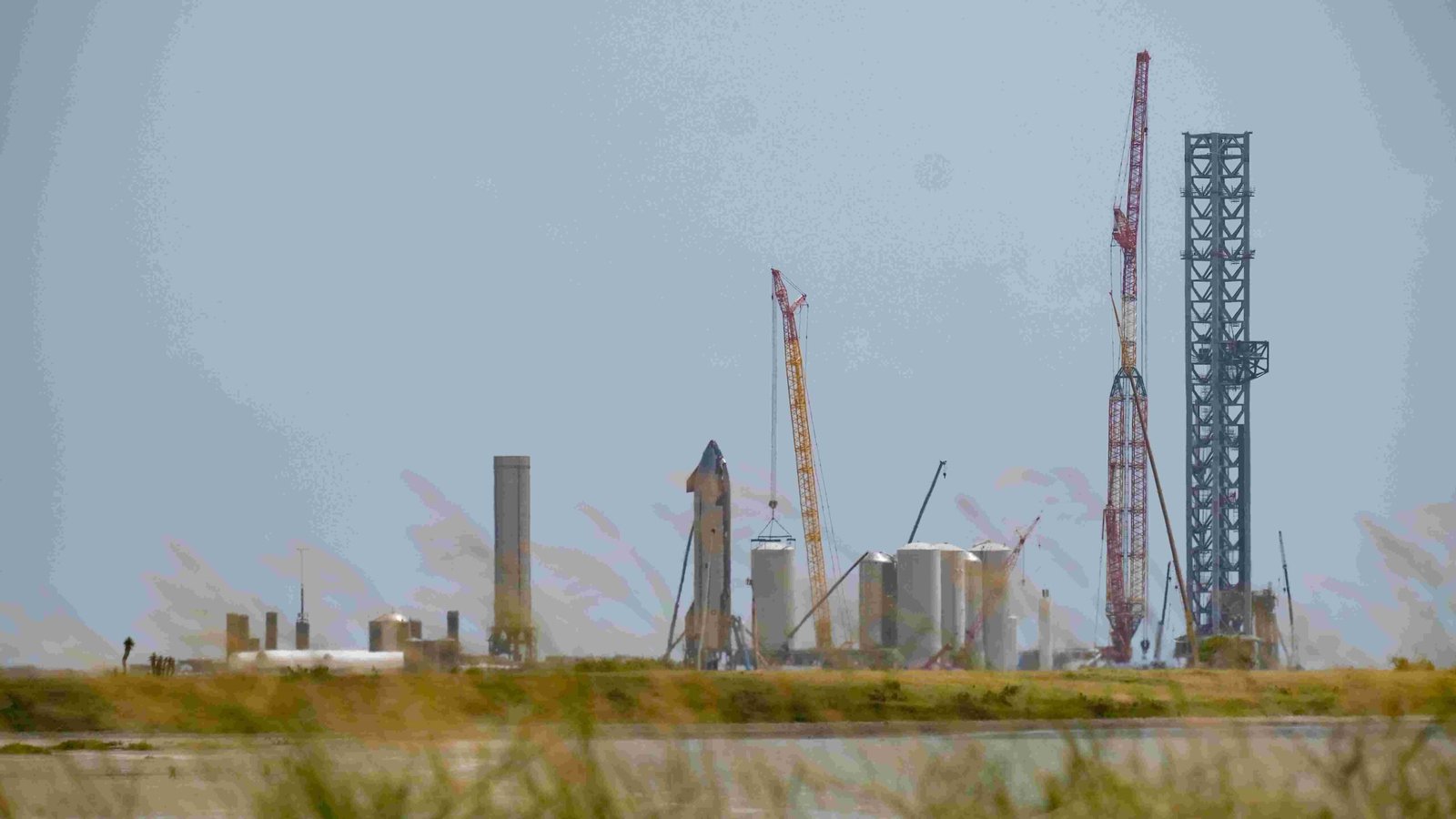
SpaceX’s Secret Plan for First Foreign Starship Launch Pad is Kind of Mind-Blowing: SpaceX is preparing to take Starship beyond the United States, and a surprising country has entered the conversation: the Philippines. After achieving major milestones in orbital flight and recovering both Starship stages in 2026, SpaceX is reportedly exploring opportunities to expand its launch infrastructure around the world.
While Starbase in Texas remains the center of Starship development, potential facilities in Florida and Louisiana could help the company increase its launch capacity. However, reports suggesting that the Philippines could become SpaceX’s first international Starship launch site have attracted considerable attention.
The idea sounds ambitious, but it also raises important questions about geography, engineering, weather, and international cooperation. Could the Philippines become a major player in SpaceX’s next generation of space transportation?
SpaceX Wants to Expand Starship Beyond Texas
SpaceX’s Starship program is entering an important phase. After demonstrating orbital flight capabilities and making progress toward recovering both the Super Heavy booster and Starship upper stage, the company is focusing on increasing launch frequency.
The long-term ambition is to move from occasional launches to monthly flights, weekly launches, daily operations, and potentially multiple launches per day.
Achieving this level of activity requires more than powerful rockets. SpaceX needs a network of launch facilities, landing infrastructure, fuel systems, tracking stations, and maintenance operations capable of supporting rapid turnaround.
Relying entirely on Starbase would make scaling operations increasingly difficult. Expanding into other locations could allow SpaceX to distribute launches, support different mission profiles, and improve operational flexibility.
Florida and Louisiana are already part of the broader expansion discussion. But the possibility of an overseas facility introduces an entirely different opportunity.
Why Is SpaceX Considering the Philippines?
The Philippines has reportedly entered the conversation following statements attributed to Philippine Ambassador to the United States Jose Manuel Romualdez.
According to reports discussed in the November 24, 2026 video, Romualdez suggested that Elon Musk frequently visits the Philippines and has been developing one or two islands. He also referenced preliminary discussions about the possibility of establishing a launch site.
Philippine President Ferdinand R. Marcos Jr. has also reportedly described the country as a geographically attractive location for a potential SpaceX facility.
The Philippine government has expressed interest in discussions with SpaceX, although the exact details remain unclear.
Importantly, SpaceX has not officially announced plans to build a Starship launch facility in the Philippines. No specific island, construction schedule, investment amount, or approved project has been publicly confirmed.
Nevertheless, the country’s geographic position provides several reasons why such an idea could attract attention.
The Philippines Has a Major Geographic Advantage
One of the most important factors in selecting a rocket launch site is geography. The Philippines offers several natural advantages that could make it interesting for future Starship operations.
1. The Equatorial Advantage
The Philippines is located relatively close to the equator, giving it an advantage for certain orbital missions.
Earth rotates eastward, and rotational speed reaches approximately 1,670 kilometers per hour at the equator. Rockets launching eastward can benefit from this additional velocity.
This means a suitable equatorial launch location can potentially reduce the energy required to reach orbit or increase the amount of payload a rocket can carry.
For a vehicle as large as Starship, even small improvements in launch efficiency could become valuable when transporting satellites, cargo, or other equipment.
However, the exact advantage would depend on the launch direction, target orbit, and mission requirements.
2. Access to Vast Ocean Corridors
Another major advantage is the Philippines’ location along the Western Pacific Ocean.
The country’s eastern and southeastern approaches provide access to enormous stretches of open water. This could create useful safety corridors for launches, returning vehicles, and other operations.
Launch facilities require carefully planned exclusion zones to protect nearby communities from potential rocket debris or operational hazards.
The Philippines’ island geography could offer suitable locations where launch operations are separated from densely populated areas.
This is particularly important for Starship because its enormous size and powerful engines require substantial safety planning.
3. Strategic Access to the Asia-Pacific Region
The Philippines occupies an interesting position between Southeast Asia, East Asia, Australia, and the wider Pacific region.
A Starship facility there could eventually support operations connecting different parts of the Asia-Pacific region.
This becomes especially interesting when considering SpaceX’s long-term vision of Earth-to-Earth transportation.
Starship is designed not only for space exploration but also for potentially transporting passengers and cargo between distant locations at extraordinary speeds.
A Philippine launch facility could theoretically become an important endpoint for transportation routes connecting major Asian and Pacific cities.
The Biggest Challenge: Building a Starship Launch Facility From Scratch
Although the geography looks promising, constructing a Starship launch complex would be an enormous engineering challenge.
Unlike using an existing airport or conventional industrial facility, SpaceX would need to develop nearly everything required for large-scale rocket operations.
1. Massive Infrastructure Requirements
A fully operational Starship facility would require several specialized systems, including:
- Heavy-duty launchpads capable of supporting Super Heavy launches.
- Integration towers and launch infrastructure.
- Landing pads or mechanical catching systems.
- Large-scale methane and liquid oxygen storage.
- High-capacity electrical power systems.
- Heavy transportation roads and logistics facilities.
- Tracking stations and communications equipment.
- Maintenance buildings and specialized manufacturing support.
Transporting these systems across the Pacific would be expensive and complicated.
SpaceX would also need to establish local supply chains, train workers, coordinate with government agencies, and develop long-term maintenance capabilities.
Even if construction began in early 2027, the facility could require several years before becoming operational. One speculative estimate discussed in the video places a possible opening around 2029.
This is not an announced SpaceX schedule.
2. Super Typhoons Could Become a Serious Problem
Perhaps the biggest natural challenge is the Philippines’ location within the Western Pacific Typhoon Belt.
The country regularly experiences tropical cyclones, including powerful typhoons and super typhoons.
Some storms can produce winds exceeding 200 kilometers per hour, creating dangerous conditions for large industrial structures.
Starship launch infrastructure includes enormous towers, mechanical systems, fuel storage equipment, and sensitive electronics. These systems would need extensive protection against extreme weather.
Heavy rainfall, flooding, saltwater exposure, and high humidity could also increase corrosion and maintenance requirements.
For SpaceX, which wants to achieve rapid launch turnaround, unpredictable weather could become a major operational disadvantage.
A facility that regularly needs repairs or must suspend operations during storms would struggle to support the company’s ambitious launch schedule.
How Would the Philippines Fit Into SpaceX’s Global Starship Network?
A potential Philippine facility would probably complement existing American infrastructure rather than replace it.
Different locations could serve different missions depending on geography, regulations, and operational requirements.
Starbase, Texas: The Main Development Hub
Starbase would remain central to Starship development, testing, and commercial launch operations.
It provides SpaceX with an established industrial environment and direct access to the Gulf of Mexico.
Florida: NASA and National Security Missions
Florida’s Kennedy Space Center Launch Complex 39A and Space Launch Complex 37 could support important Starship operations.
LC-39A is particularly relevant to NASA’s Artemis lunar exploration program, while SLC-37 has been associated with national security launch infrastructure.
These locations could help SpaceX support missions requiring close coordination with NASA and government agencies.
Louisiana: Starlink and Future Computing Infrastructure
Louisiana could offer opportunities for Starlink deployment operations, cargo handling, and potentially large-scale space-based data infrastructure.
Available land, electricity, and cooling resources could make the region attractive for certain industrial operations.
Philippines: A Potential Asia-Pacific Transportation Hub
If the Philippines ever receives a Starship facility, its most distinctive role could involve international transportation.
Rather than replacing Texas or Florida, it could provide a strategic endpoint for potential Earth-to-Earth routes connecting Asia and the Pacific.
This would give SpaceX additional geographic flexibility while opening new possibilities for future transportation services.
Could Starship Transform International Transportation?
The most exciting possibility behind an overseas Starship launch facility is the potential development of ultra-fast point-to-point transportation.
SpaceX has previously discussed using Starship to transport passengers and cargo between distant locations on Earth in less than an hour.
A Philippine facility could theoretically connect Southeast Asian destinations with Australia, East Asia, and parts of the western United States.
However, making this vision practical would require significant progress in passenger safety, launch operations, noise management, regulatory approvals, and international coordination.
The concept remains highly ambitious, and commercial Earth-to-Earth Starship transportation is not currently an established service.
Conclusion: Is the Philippines SpaceX’s Next Big Move?
The possibility of a Philippine Starship launch facility represents an exciting direction for SpaceX’s long-term expansion strategy.
The country’s proximity to the equator, access to the Pacific Ocean, and strategic position in Asia could provide meaningful advantages for future rocket operations.
However, enormous infrastructure costs, super typhoons, logistical challenges, and international regulatory requirements could make the project difficult.
For now, the Philippines remains a speculative candidate rather than a confirmed SpaceX launch location.
If the idea eventually becomes reality, it could represent a major milestone in the evolution of Starship—from a rocket developed primarily in the United States into a global transportation and space infrastructure platform.
FAQs
1. Is SpaceX planning to build its first foreign Starship launch pad in the Philippines?
The Philippines has reportedly emerged as a potential location for SpaceX’s first international Starship launch facility. However, SpaceX has not officially confirmed any construction plans.
2. Why is SpaceX considering the Philippines for a Starship launch facility?
The Philippines offers several geographic advantages, including its proximity to the equator, access to the Pacific Ocean, and strategic position in the Asia-Pacific region.
3. Has Elon Musk confirmed plans to build a Starship launch site in the Philippines?
No. Although reports have discussed preliminary conversations and Elon Musk’s interest in the country, Elon Musk and SpaceX have not officially announced a Philippine Starship facility.
4. What did Philippine President Ferdinand Marcos Jr. say about SpaceX?
President Ferdinand Marcos Jr. reportedly described the Philippines as a geographically attractive location for a potential Starship launch facility and indicated that discussions with SpaceX were taking place.
5. What is the equatorial advantage for Starship launches?
The equator provides the highest rotational speed on Earth, approximately 1,670 kilometers per hour. Launching eastward can take advantage of Earth’s rotation, potentially reducing fuel requirements and increasing payload capacity.
6. How could the Pacific Ocean benefit a Philippine Starship launch site?
The Philippines has access to large stretches of open ocean, which could provide safety corridors for rocket launches, returning vehicles, and other Starship operations while helping maintain separation from populated areas.
7. What infrastructure would SpaceX need to build in the Philippines?
SpaceX would need launchpads, integration towers, landing infrastructure, methane and liquid oxygen storage systems, tracking stations, power facilities, heavy roads, and maintenance buildings.
8. When could a Philippine Starship launch facility become operational?
There is no confirmed construction schedule. A speculative timeline discussed in the November 2026 video suggests that even if construction began in early 2027, operations might not start until approximately 2029.
9. Why are typhoons a major concern for a Philippine Starship launch site?
The Philippines experiences frequent tropical cyclones and powerful super typhoons. Extreme winds, flooding, heavy rainfall, and storm damage could threaten launch towers, fuel systems, electronics, and other infrastructure.
10. Could super typhoons damage Starship launch infrastructure?
Yes. Powerful storms could damage large structures, mechanical equipment, electrical systems, and sensitive electronics. SpaceX would need extensive weather protection and maintenance systems to keep the facility operational.
11. How would a Philippine Starship facility work with Starbase in Texas?
Starbase would likely remain a central location for Starship testing, development, and commercial launches. A Philippine facility could complement it by supporting specialized Asia-Pacific operations and potential international transportation routes.
12. What role could Florida play in SpaceX’s Starship expansion?
Florida could support important NASA Artemis and national security missions through facilities such as Launch Complex 39A and Space Launch Complex 37.
13. Why could Louisiana become another important SpaceX location?
Louisiana could provide opportunities for Starlink deployments, cargo operations, and potentially large-scale space-based data infrastructure because of its available land, electricity, and cooling resources.
14. Could Starship transport passengers from the Philippines to other countries?
Potentially. SpaceX has discussed using Starship for Earth-to-Earth point-to-point transportation, which could eventually connect distant international destinations in less than an hour. However, this service remains a future concept.
15. Would the Philippines become SpaceX’s main Starship launch location outside the United States?
If the project becomes reality, the Philippines could serve as an important Asia-Pacific hub. However, its exact role would depend on infrastructure development, government approvals, weather conditions, and SpaceX’s operational requirements.
16. What is the biggest challenge facing SpaceX’s potential Philippine Starship launch facility?
The biggest challenges include construction costs, extreme weather, typhoon protection, transportation logistics, infrastructure development, and international regulatory requirements. These factors could make establishing a reliable launch facility extremely difficult.
Read More:
- BE-4 Disaster! ULA just announced why Vulcan Launch Failed & Lost 40 Amazon Satellites
- Tesla eyes AI5 chip as exclusive Optimus trait, not needed for self-driving
- Elon’s $9,500 Smart Cabin Replaces Rent — And It’s 100% Off-Grid
- Elon Musk officially announced NEW Starship prototype ‘Longer & Better’ will Blow your mind
- Elon Musk declared Starship Booster 22 Problem is Worse than We Thought
1 thought on “Wow! SpaceX’s Secret Plan for First Foreign Starship Launch Pad is Kind of Mind-Blowing”