
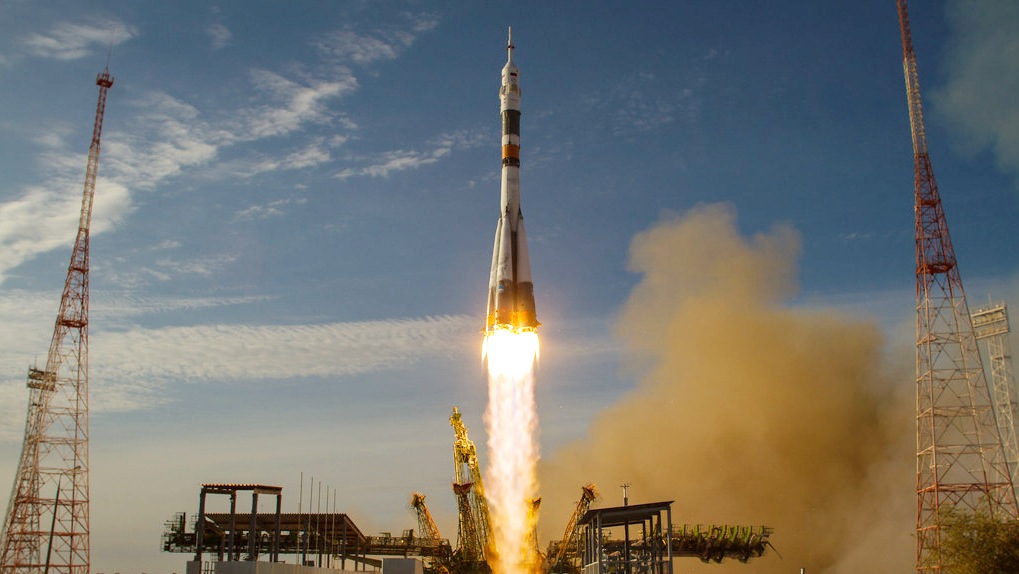
Russia’s space program is facing a dramatic crisis that could reshape the future of human spaceflight. On November 27, 2025, the Soyuz MS28 launch from Site 31 at Baikonur Cosmodrome experienced a near-catastrophic event. Just seconds after the rocket lifted off, the launchpad collapsed, leaving Roscosmos scrambling to assess the damage and ensure the safety of future missions. Fortunately, the crew aboard Soyuz MS28 – Sergey Kudv, Sergey Mikv, and NASA astronaut Chris Williams – were safe, but the incident highlights the growing challenges of Russia’s aging space infrastructure.
Let’s break down what happened, why it happened, and what it means for Russia’s space program, as well as the broader global context of space competition with the U.S. and China.
What Happened During the Soyuz MS28 Launch?
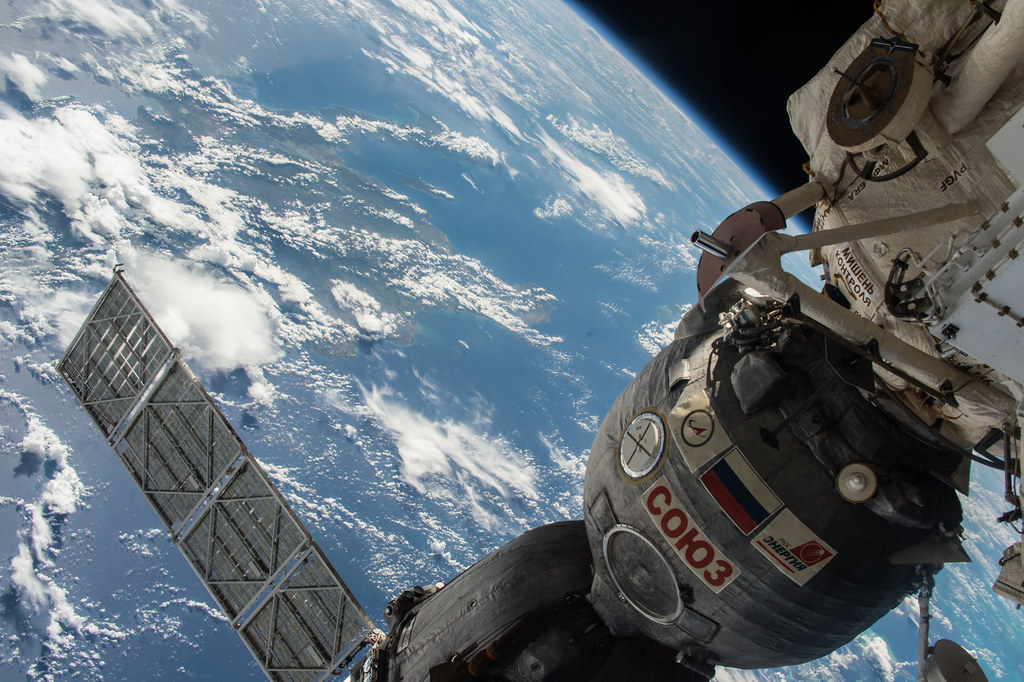
The Soyuz MS28 mission launched smoothly at around 9:30 a.m. from Site 31, carrying three astronauts to the International Space Station (ISS). The spacecraft completed two orbits around Earth before automatically docking with the Rassvet module in just over three hours. The docking itself was an impressive achievement, especially considering the technology is based on designs that are nearly six decades old.
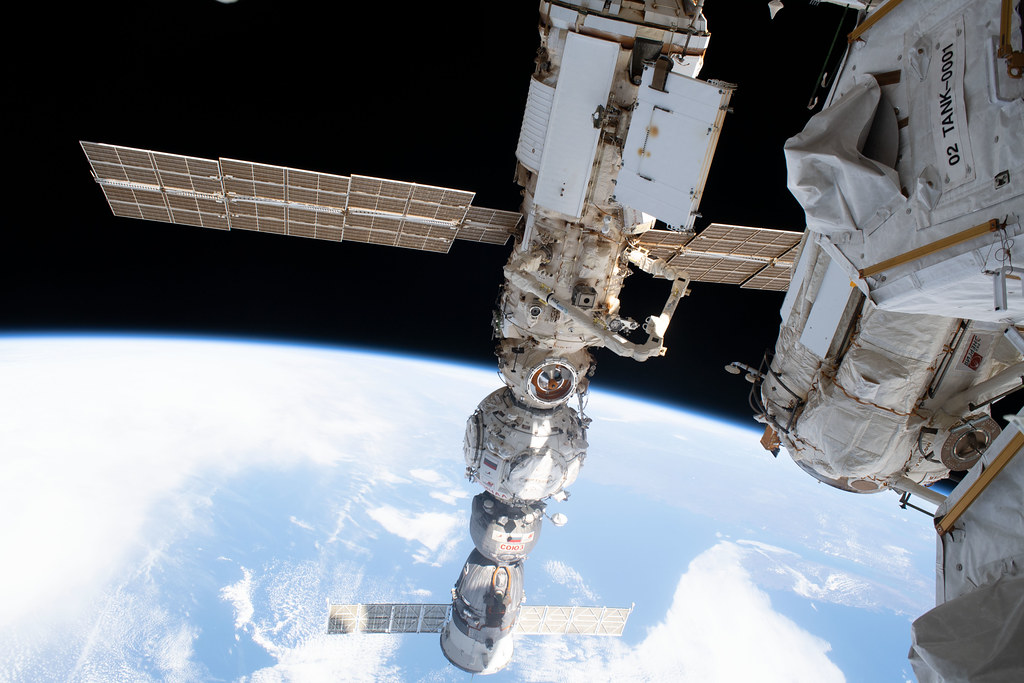
However, the celebration was short-lived. Seconds after the rocket lifted off, the mobile service platform – a massive 20-ton metal structure – collapsed under the rocket’s shockwave, falling straight into the flame trench. Initially, Roscosmos reported it as a structural failure due to the old launchpad technology, but investigations revealed a more surprising cause: human error during pre-launch preparation.
A critical step in the pre-launch checklist – securing the service platform – was overlooked. This oversight nearly turned the launch into one of the darkest days in Roscosmos history.
Cracks in Roscosmos’ Legacy
Once upon a time, Russia (and the Soviet Union before it) led humanity in space exploration. Landmark achievements included:
- 1957: First artificial satellite, Sputnik 1
- 1961: First human in space, Yuri Gagarin
- 1965: First spacewalk, Alexei Leonov
These milestones were unparalleled and placed Roscosmos at the forefront of space innovation.
Fast forward to 2025, and the picture looks very different. While Russia still manages crew and cargo flights to the ISS, the program relies on technology developed in the 1960s. Site 31, the launchpad used for Soyuz MS28, has been operational for 64 years and has hosted over 500 launches, but its age is becoming a liability.
The Old Launchpad Problem
Despite the collapse, the issue wasn’t structural degradation. It was human error, showing a lack of rigorous procedural checks in an organization with aging infrastructure. Roscosmos has been attempting to modernize, with projects like:
- New launchpads at Vostochny Cosmodrome, under construction since 2016
- Angara rocket family, aimed to reduce dependency on Baikonur
Unfortunately, neither solution is fully operational for crewed missions yet. This leaves Russia vulnerable, especially as the sole operational Soyuz launchpad is now temporarily out of commission.
Implications for Russia’s ISS Operations
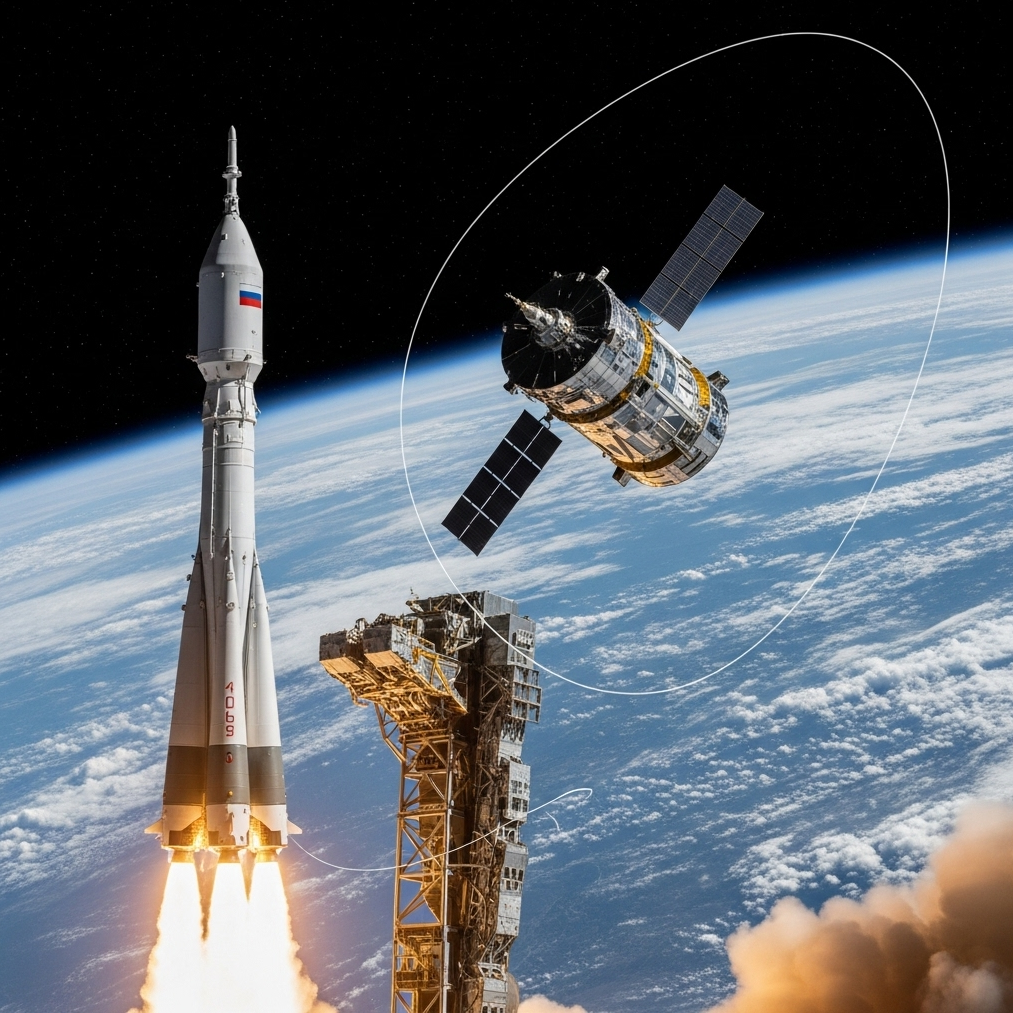
The collapse has immediate consequences for Russia’s ability to support the ISS:
- Progress MS33 resupply mission (scheduled mid-December 2025) is likely delayed
- Potential shortages of oxygen, water, food, and fuel for the station
- Soyuz MS29 crewed mission may face indefinite delays
- Russian astronauts on the ISS could be forced to stay in orbit longer, increasing physical and mental stress
With no backup pads available, Russia must rely on SpaceX for cargo and crew support in the short term.
SpaceX – The Only Lifeline for Russia
By the end of 2025, SpaceX had achieved over 40 consecutive successful flights, making Dragon the most reliable spacecraft currently available. Cargo Dragon can carry up to 3,500 kg per trip, more than enough to replace the Progress resupply missions, while Crew Dragon could transport Russian cosmonauts if needed.
Unlike Roscosmos, SpaceX has designed redundant launchpads and rapid cadence operations, ensuring that even if one pad fails, the program continues uninterrupted. The contrast is stark:
- Roscosmos: Single-pad, aged technology, human error vulnerabilities
- SpaceX: Multi-pad, modern systems, high throughput, resilience
This incident underscores the shift in global human spaceflight dominance, with private U.S. companies now holding a critical operational advantage.
The Financial and Geopolitical Context
The Russia-Ukraine conflict has had significant consequences for Roscosmos:
- Annual military spending exceeds $100 billion, reducing the space program’s budget
- Roscosmos budget decreased from $3.5 billion to $2.5 billion in 2025
- Launch frequency has dropped: only three crewed Soyuz missions every two years instead of four
Reduced funding affects staff accountability, maintenance, and infrastructure upgrades, increasing the likelihood of operational mishaps like the Site 31 collapse.
China’s Rocket Leap
While Russia struggles, China is accelerating its space ambitions. Notably:
- Landspace, a Chinese private company, is preparing the Juk 3 rocket, China’s first fully reusable orbital-class rocket
- Juk 3 stands 66 meters tall, weighs 570 tons, and can lift 18,300–21,000 kg depending on recovery mode
- Reusable technology aims to reduce costs and increase launch frequency, similar to SpaceX’s Starship program
China is closing the gap in orbital launch capabilities, signaling that the space race is entering a new era, driven by innovation, reliability, and private enterprise rather than legacy national programs.
The Collapse Cascade – What Could Happen Next
With Site 31 down, the immediate domino effect on ISS operations could be severe:
- Progress MS33 resupply delays → shortages in critical supplies
- Soyuz MS29 crewed mission delayed → longer stays for current astronauts
- Dependence on SpaceX → U.S. private companies now integral to Russian operations
- Potential setbacks for international cooperation, including joint programs with China
If these disruptions persist, Russia faces its first inability to launch astronauts to the ISS since 1961, highlighting both vulnerability and declining autonomy.
Lessons for Space Infrastructure
The Soyuz MS28 incident provides key takeaways for global space programs:
- Redundancy is crucial: Single points of failure are catastrophic
- Modernization is non-negotiable: Technology from the 1960s can’t sustain current operational demands
- Human error mitigation: Automated checks and stricter pre-launch protocols are vital
- International collaboration matters: Dependence on foreign or private partners is inevitable when infrastructure fails
SpaceX’s approach of multiple launchpads, reusable rockets, and rapid iteration contrasts sharply with Roscosmos’ legacy system and scarcity mindset, showing a clear path forward for future resilience.
The Future of Russian Human Spaceflight
In the wake of the Soyuz MS28 launchpad collapse, Russia’s immediate priority is repairing Site 31 and assessing other launch infrastructure. Long-term strategies may include:
- Accelerating construction of Vostochny Cosmodrome
- Prioritizing development of the Angara rocket family
- Expanding international cooperation, particularly with China and potentially SpaceX
However, budget constraints and geopolitical pressures could delay recovery, leaving Russia increasingly reliant on external partners for low Earth orbit operations.
SpaceX and the New Space Race
While Russia faces infrastructure and budget crises, SpaceX is raising the bar for the space industry:
- Starbase, Texas: Two fully operational Starship pads
- Florida: Three Starship pads at LC 39A and SLC 37B
- Goal: 100–150 Starship flights per year, with 20–30 launches per pad annually
This high-throughput model ensures that failures at a single pad won’t halt operations, reinforcing the gap between legacy systems and modern, resilient architectures.
Conclusion – A Wake-Up Call for Russia
The Soyuz MS28 launchpad collapse may have been avoided by luck, but it serves as a stark warning about the fragility of aging space programs. Russia’s once-unassailable lead is eroding, and future success will depend on modernization, redundancy, and international collaboration.
Meanwhile, SpaceX and China are setting new benchmarks for efficiency, reliability, and reusable launch technology, making the 2020s a transformative era for global human spaceflight.
The incident underscores that space is no longer just a national endeavor – it is an arena where technology, investment, and strategic foresight determine who remains a major player. For Russia, the challenge is clear: adapt quickly or risk falling behind permanently.
FAQs
1. What happened during the Soyuz MS28 launch?
The Soyuz MS28 launched successfully from Site 31 at Baikonur Cosmodrome on November 27, 2025, but seconds after liftoff, the launchpad collapsed due to a mobile service platform that was not properly secured. Fortunately, the crew remained safe.
2. Who were the astronauts aboard Soyuz MS28?
The Soyuz MS28 crew included Sergey Kudv, Sergey Mikv from Roscosmos, and NASA astronaut Chris Williams. They successfully reached the International Space Station (ISS).
3. Why did the Soyuz MS28 launchpad collapse?
The collapse was caused by human error during pre-launch preparation, not aging infrastructure. A 20-ton service platform was left unsecured, which fell into the flame trench when the rocket lifted off.
4. How old is Site 31 at Baikonur Cosmodrome?
Site 31 is approximately 64 years old and has hosted over 500 launches, making it a legacy launchpad from the Soviet era.
5. What are the consequences of the Soyuz MS28 launchpad collapse?
The collapse temporarily puts Russia’s only operational crewed Soyuz launchpad out of service, potentially delaying resupply missions like Progress MS33 and future Soyuz flights, and increasing reliance on SpaceX.
6. How does this incident affect the ISS?
Delays in Russian missions could lead to shortages of oxygen, food, water, and fuel on the ISS, potentially requiring extra reliance on SpaceX for resupply and crew rotation.
7. Can Russia still send astronauts to the ISS?
Currently, Russia cannot launch astronauts until Site 31 is repaired or other pads at Vostochny Cosmodrome are ready for crewed missions. This could take months or longer.
8. How does SpaceX play a role in Russia’s ISS missions?
SpaceX Dragon spacecraft can transport both cargo and crew, serving as a backup for Russia’s ISS operations. Cargo Dragon can carry up to 3,500 kg, while Crew Dragon can accommodate astronauts if necessary.
9. What is the difference between Roscosmos and SpaceX operations?
Roscosmos relies on single legacy launchpads and aging technology, whereas SpaceX operates multiple launchpads, reusable rockets, and high-frequency launches, reducing risks from failures.
10. How has the Russia-Ukraine conflict affected Roscosmos?
Military spending due to the conflict has forced budget cuts for Roscosmos, reducing its 2025 budget from $3.5 billion to $2.5 billion and decreasing the frequency of crewed missions.
11. What is Russia’s plan to modernize its space program?
Russia is building new launchpads at Vostochny Cosmodrome and developing the Angara rocket family. However, these are not yet ready for crewed missions, leaving short-term vulnerabilities.
12. How is China advancing in reusable rocket technology?
China’s private company Landspace is preparing the Juk 3 rocket, China’s first fully reusable orbital-class rocket, capable of lifting 18,300–21,000 kg to orbit and reducing launch costs.
13. How does Soyuz MS28 compare to newer spacecraft?
Despite being based on 1960s technology, Soyuz MS28 docked with the ISS faster than China’s Shenzhou 22 mission, demonstrating reliability but highlighting reliance on aging systems.
14. Could this incident delay Progress MS33 and Soyuz MS29 missions?
Yes. With Site 31 out of commission, Progress MS33 and Soyuz MS29 could face delays, potentially causing supply shortages and extended stays for astronauts on the ISS.
15. What does the Soyuz MS28 incident reveal about the global space race?
The incident underscores a shift in spaceflight dominance. While Roscosmos struggles with legacy systems, SpaceX and China are rapidly advancing with redundant launch infrastructure, reusable rockets, and faster launch cadence, reshaping the future of human spaceflight.
Read More:
- Tesla is making a change to its exterior cameras with a potential upgrade
- Tesla bear gets blunt with beliefs over company valuation
- Tesla sees sharp November rebound in China as Model Y demand surges
- Tesla Europe rolls out FSD ride-alongs in the Netherlands’ holiday campaign
- 2025 Tesla Pi Phone Under $317 is HERE. Elon Musk Unveils 7 Features
1 thought on “Disaster! Russia is in BIG TROUBLE, NO launchpad for Soyuz Launch to ISS”