
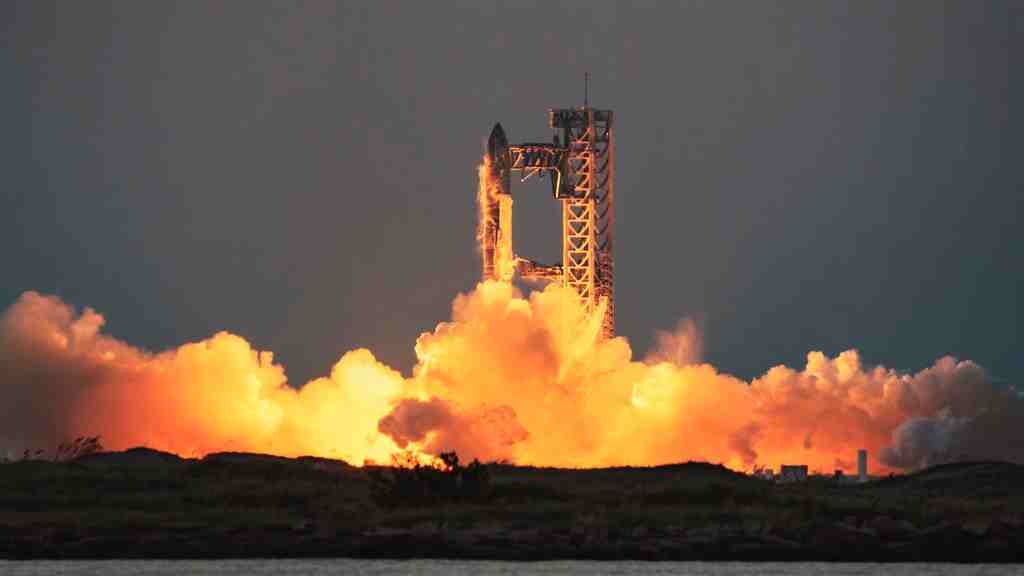
SpaceX is pushing forward with the kind of speed, resilience, and innovation that has become its trademark. After the unexpected B18 booster incident, many assumed delays were inevitable. Yet SpaceX has demonstrated, once again, that rapid recovery and relentless momentum are core to its identity. The swift progress on Booster 19 (B19) proves this more clearly than ever.
In this comprehensive, SEO-friendly deep dive, we’ll explore how fast SpaceX is moving on B19, how this momentum impacts the Starship Flight 12 schedule, and why 2026 is shaping up to be one of the most pivotal years in SpaceX’s history.
The SpaceX Advantage: A Culture Built for Rapid Recovery
What sets SpaceX apart—more than engineering talent, more than cutting-edge manufacturing—is its ability to fail forward, rebound quickly, and push improvements faster than any competitor. When B18 suffered a major issue on November 21st, the expectation across the aerospace community was a months-long setback.
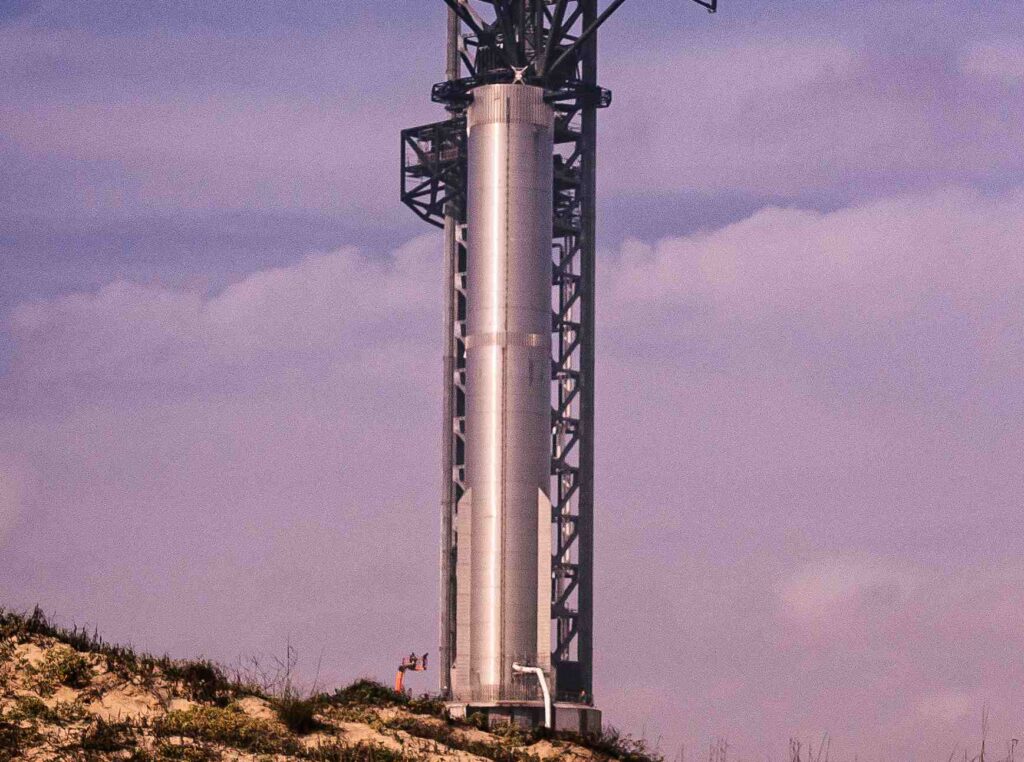
But SpaceX had other plans.
Within days, work on Booster 18 was wrapped up, and the detailed analysis phase was underway. And almost immediately, focus shifted to its successor: the more advanced and more promising Booster 19.
This level of speed simply doesn’t happen elsewhere in the aerospace industry. And B19 shows exactly why.
B19 Takes Center Stage: Progress Even Faster Than Announced
SpaceX referenced B19 by name in its official update following the B18 event. Initially, December was mentioned as the starting month for stacking B19. But in classic SpaceX fashion, the team moved even faster.
Lightning-Fast Progress: A Timeline That Shocked the Industry
Between November 25th and November 30th, the following major B19 sections were transported to the Mega Bay:
- Morning of Nov 25: First tank section
- Evening of Nov 26: Additional section delivered
- Afternoon of Nov 28: Another major structure arrives
- Morning of Nov 30: Fourth major component rolls out
That’s four major components in five days, something unheard of even inside SpaceX until now.
How Many Sections Are Needed?
A typical V3 booster includes:
- 7+ sections for the liquid oxygen tank
- 3–4 sections for the methane tank
- 1–2 for the forward section
- 1–2 for the interstage
- Additional components for domes and the fuel transfer tube
If this pace continues, all major B19 sections may be ready for stacking by mid-December.
That’s a radical acceleration compared to B18’s nearly six-month construction timeframe.
What’s Driving SpaceX’s Unprecedented Speed?
Several factors contribute to this explosive momentum:
1. B18 Introduced Many First-Time Upgrades
With groundbreaking upgrades debuting on B18, engineers were still adjusting workflows. Now those lessons are being applied directly to B19.
2. V2 Boosters Are No Longer a Safety Cushion
Earlier in the year, SpaceX still had active V2 series boosters. Now the shift to V3 is urgent—and the team is acting like it.
3. Pressure Sharpens Innovation
Historically, SpaceX performs better under pressure. The V2 era saw a full Starship ship completed in just 37 days. Achieving something similar with a V3 booster would mark a major milestone in aerospace history.
And with B19, SpaceX is aiming to break internal records once again.
Projected Timeline: B19 Could Be Ready Sooner Than Anyone Expected
Assuming continued progress, the overall timeline looks like this:
Mid-December
Full assembly sections are ready for stacking.
Late December (~Dec 20th)
Main stacking complete, followed by:
- Welding
- Alignment
- Structural checks
Late December / Early January
Cryogenic testing begins.
These tests usually take:
- 2 days for cryo
- 1 day for stress loading
Early January 2026
Installation of Raptor 3 engines and preparation for a historic static fire test.
Late January 2026
Flight 12 possible—much sooner than critics predicted after the B18 event.
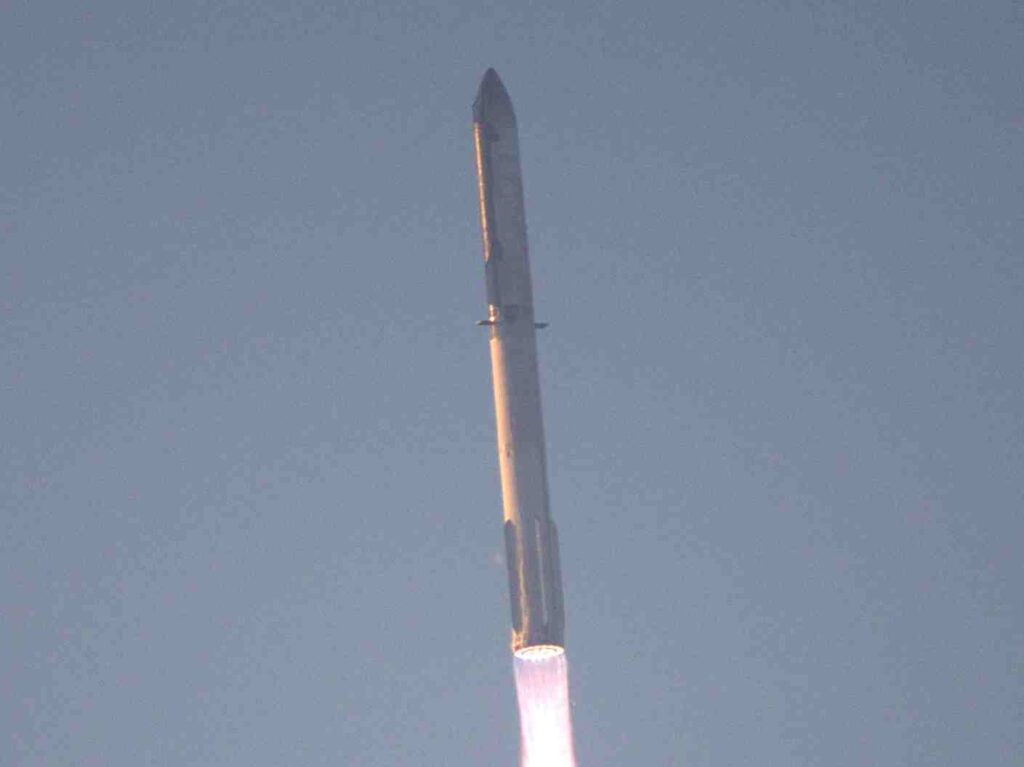
S39 Starship: The Other Half of the Flight 12 Duo
Booster progress is only part of the equation.
The upper stage, Ship 39 (S39), is also moving at high speed. Currently stationed in Mega Bay 2, it is undergoing final inspections before being transported to the Massie test site for:
- Cryogenic testing
- Raptor engine installation
- Static fire
- Final payload integration
- Flight termination system installation
If S39 begins testing this month, it could be fully ready for launch as early as January.
This makes a late January Flight 12 extremely realistic.
Launchpad 2: Quiet but Powerful Progress
The upgrades to Pad 2 are equally important. This pad will support:
- V3 booster static fires
- New orbital flight operations
- Increased launch cadence
Every improvement here accelerates Starship’s overall roadmap.
SpaceX is doing what SpaceX does best: improving systems while building hardware while preparing for future missions.
2026: The Year That Sets the Stage for the SpaceX Moon Era
Flight 12 marks only the beginning of an incredibly demanding phase.
In 2026, SpaceX must:
- Achieve consistent orbital Starship flights
- Deploy real payloads
- Successfully return both booster and ship
- Build a functional orbital refueling system
- Support NASA Artemis III and IV lunar landing missions
Each milestone must be executed with precision. And none of it can slip, because every delay cascades into the moon landing schedule.
The speed behind B19 is what keeps this entire timeline alive.
True Mass Production Is Coming: 1–3 Week Boosters?
The most stunning part: this speed is just the beginning.
As StarFactory and Gigabay reach full capability, SpaceX expects to:
- Mass-produce boosters
- Build several prototypes in parallel
- Reduce assembly time to 1–3 weeks
- Eventually build one Starship per day
This level of production is unprecedented in aerospace. No one else comes close—not even NASA or ULA.
And once Florida’s new Gigabay comes online, the U.S. will have dual-coast Starship factories capable of supporting relentless launch cadence.
This is how Elon Musk plans to build the fleet required for Moon landings, Mars transport, and ultimately human settlement beyond Earth.
Why SpaceX’s Speed Outclasses the Entire Industry
To understand SpaceX’s acceleration, compare their response times to other companies:
Firefly Alpha
- Explosion on Sept 29
- Investigation ended Nov 12
- Next flight delayed to Q1 2025
→ Several months to recover
Blue Origin New Shepard
- Booster landing failure
- 10-month return to flight
ULA Vulcan
- Booster issue
- Another 10-month recovery
SpaceX?
Starship B18 incident:
- Occurred Nov 21
- B19 stacking began four days later
- Full assembly expected within ~30 days
This isn’t normal.
This is SpaceX.
Where others hesitate, SpaceX iterates.
Where others recover slowly, SpaceX accelerates.
The Future: Multiple Boosters, Zero Delays, and a Fleet Ready for Mars
As mass production matures, SpaceX will no longer wait for:
- A single booster
- A single ship
- A single test campaign
If a vehicle has an issue, another will simply take its place. We’ve already seen this with S37 replacing S36.
Imagine this process—but 10 times faster and with dozens of prototypes.
This is how SpaceX will:
- Achieve weekly, then daily launches
- Support massive lunar cargo missions
- Build Mars infrastructure
- Transport thousands of tons of material per year
The B19 story is just the beginning of this exponential growth curve.
The Comeback Story: Two Setbacks, Zero Slowdowns
In the past year, Starship faced:
- The S36 explosion
- The B18 incident
Most expected long delays. Instead, SpaceX delivered:
- Two successful flights after the S36 event
- A record-speed recovery after B18
- A near-certain January target for Flight 12
This is why SpaceX continues to dominate the global space industry.
Conclusion: SpaceX’s B19 Momentum Is More Than a Recovery—It’s a Revolution
Booster 19 is shaping up to be one of the fastest-built Starship boosters ever, and its timeline is proving that SpaceX has entered a new era of production speed and engineering refinement.
With:
- Rapid stacking
- Accelerated testing schedules
- Parallel development of S39
- Major improvements to Pad 2
- Mass production scaling up
- A January window for Flight 12
…the company is preparing for one of the most transformative years in aerospace history.
2026 is the year SpaceX transitions from prototype testing to operational Starship missions.
And everything—from lunar landings to Mars expeditions—depends on sustaining the momentum we’re witnessing right now.
So, if you’re cheering SpaceX on, drop a “Speed Up!” in the comments and keep watching the skies. The future is coming faster than anyone expected.
FAQs
1. What is SpaceX’s Booster 19 (B19)?
Booster 19 (B19) is the second prototype of SpaceX’s V3 Super Heavy booster for the Starship program. It is designed to carry Starship into orbit and is central to SpaceX’s efforts to achieve orbital launches, the Moon landings, and eventually Mars missions.
2. What happened to Booster 18 (B18)?
Booster 18 (B18) encountered a major failure on November 21st, 2025. Following this, SpaceX initiated an in-depth analysis to learn from the incident, making it a pivotal moment in the ongoing development of the Starship program.
3. How quickly did SpaceX recover after the B18 failure?
SpaceX’s recovery after the B18 incident was remarkably fast. Within just four days of the failure, SpaceX began stacking components for Booster 19 (B19), showing how quickly the company is able to adapt and innovate after setbacks.
4. When did SpaceX begin stacking B19?
SpaceX started stacking Booster 19 (B19) components as early as November 25th, 2025—just four days after the B18 incident. This rapid progress is a testament to the company’s efficiency.
5. How many sections are required to complete Booster 19?
Booster 19 consists of several key sections, including:
- 7+ sections for the liquid oxygen tank
- 3–4 sections for the methane tank
- 1–2 sections for the forward section
- 1–2 sections for the interstage
- Additional sections for the dome area and fuel transfer tube
6. When is Booster 19 expected to be fully assembled?
Based on SpaceX’s current pace, Booster 19 could be fully assembled by mid-December 2025, with final checks, including welding and alignment, potentially completing by December 20th.
7. What is cryogenic testing, and when will it happen for B19?
Cryogenic testing involves cooling the booster to extremely low temperatures to test its structural integrity and performance. SpaceX typically performs this test for two days and aims to complete it by late December 2025 for Booster 19.
8. What are the next steps after Booster 19 is fully assembled?
Once Booster 19 is fully assembled, SpaceX will conduct:
- Cryogenic testing
- Stress testing
- Installation of Raptor 3 engines
- A static fire test
These steps will ensure the booster is ready for its maiden flight.
9. When is SpaceX’s Flight 12 expected to take place?
With the rapid progress on Booster 19, Flight 12 is expected to take place as early as late January 2026, assuming everything goes as planned. This is much earlier than initially anticipated after the B18 failure.
10. How does the progress of Booster 19 affect the Starship program?
The rapid progress on Booster 19 accelerates the timeline for key milestones, including:
- Flight 12
- The first orbital Starship mission
- Support for NASA Artemis missions
- Long-term goals like Mars missions
SpaceX is on track to meet these ambitious goals sooner than expected.
11. What is the role of Ship 39 (S39) in the upcoming Starship missions?
Ship 39 (S39) is the upper stage of the Starship program. It is currently undergoing final inspections and will soon be transported for cryogenic testing, engine installation, and static fire tests in preparation for Flight 12.
12. What upgrades are being made to Launch Pad 2?
Pad 2 is undergoing upgrades to accommodate:
- V3 booster static fires
- Orbital launch operations
These improvements will allow for faster launch cadence and more efficient operations for both Starship boosters and ships.
13. How fast is SpaceX’s Starship production progressing?
SpaceX’s Starship production is advancing at an unprecedented rate. The company is aiming to reduce assembly times for boosters to 1–3 weeks as production capacity scales up with the opening of additional facilities, including a second Gigabay in Florida.
14. What is the long-term goal for SpaceX’s Starship production?
SpaceX’s long-term goal is to achieve mass production of Starships, with the ability to produce one rocket per day. This ambitious target will support the company’s future Moon and Mars missions, as well as increase launch cadence across the globe.
15. How does SpaceX compare to other companies in terms of production speed?
Unlike most aerospace companies, SpaceX moves quickly and recovers from setbacks far faster than its competitors. For example, after B18’s failure, SpaceX began stacking a new booster in just days, whereas competitors like Firefly Alpha, Blue Origin, and ULA often take months to recover from similar incidents.
16. Why is Booster 19’s speed so important for the future of SpaceX?
The speed with which Booster 19 is being developed is crucial because it allows SpaceX to:
- Meet key milestones for the Starship program
- Maintain momentum for the Artemis lunar missions
- Accelerate Starship’s development toward its ultimate goal of Mars colonization
By keeping up this rapid pace, SpaceX is positioning itself as a global leader in space exploration and technology.
Read More:
- Tesla’s 2026 Smart TV Revealed by Elon Musk: Features and Details
- This Is Why The Tesla Bot Will Take Over In 2026
- China just Successfully Launched SpaceX Clone Falcon 9 into Orbit, But Booster Recovery FAILED
- Tesla 2025 Holiday Update: Here’s what it includes, and what it’s missing
- 2025 Tesla Super Aluminum-ion Battery Finally Hits The Market
1 thought on “SpaceX Ramped Up Starship B19 Stacking after Incident to Launch Flight 12 Sooner than You Think”