
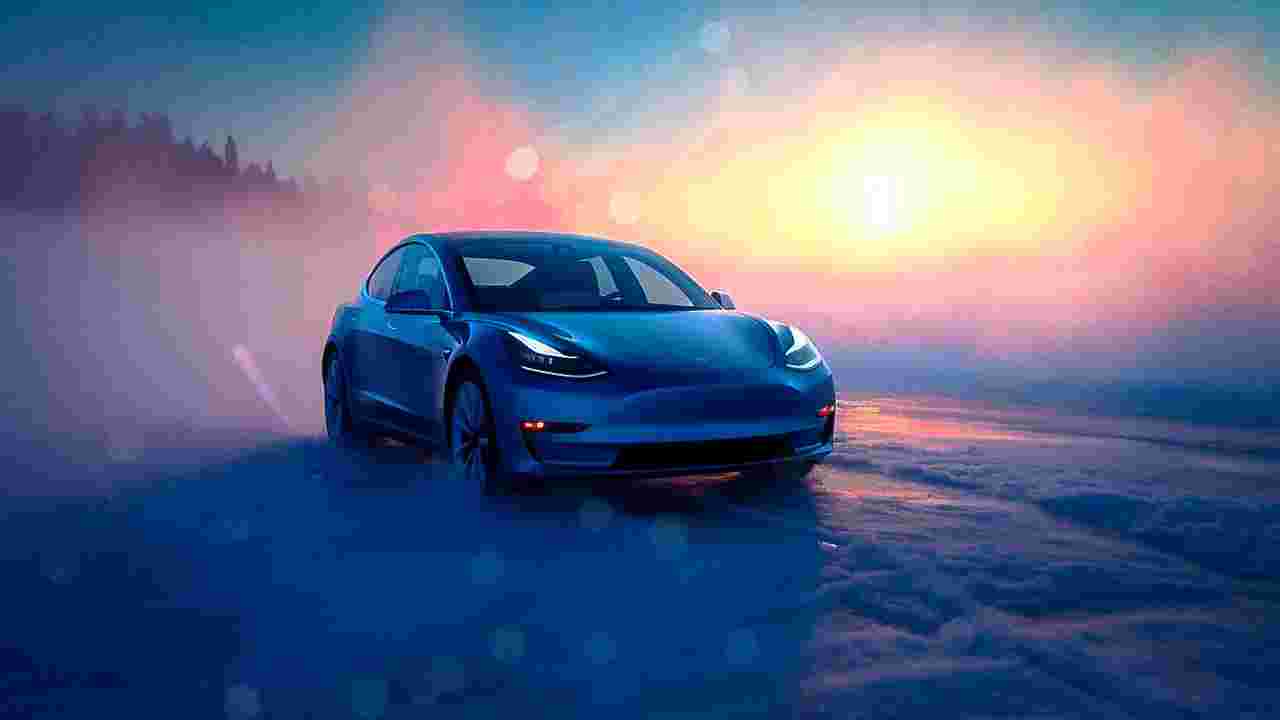
The future of transportation is no longer a distant concept—it’s unfolding right now. From Tesla’s Robovan and Cyber Cab, to Elon Musk’s xAI scaling at unprecedented speed, and The Boring Company’s Vegas Loop redefining urban transit, we are witnessing a convergence of autonomous vehicles, artificial intelligence, and infrastructure innovation that could permanently reshape cities.
This in-depth guide breaks down everything you need to know, why it matters, and how these developments position Tesla and Elon Musk’s ecosystem years ahead of the competition.
The Tesla Robovan: Built for Mass Autonomous Transport
The idea of a Tesla Robovan has been circulating for years, but now it’s officially real—and closer to deployment than most people realize.
What Is the Tesla Robovan?
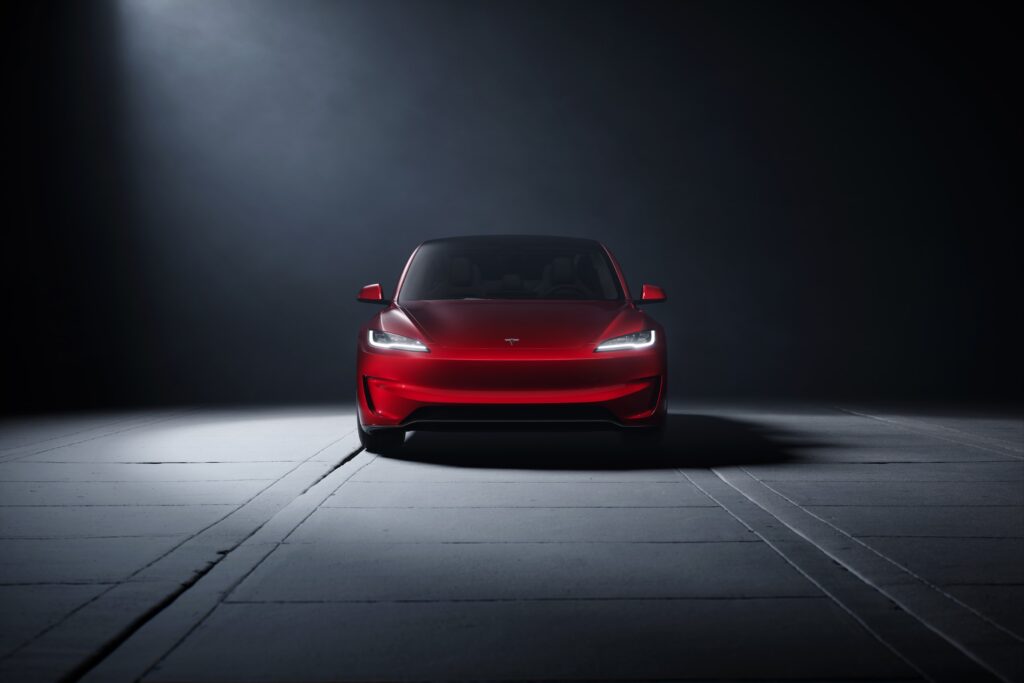
The Tesla Robovan is a high-occupancy autonomous vehicle designed to transport large groups efficiently. Unlike standard robotaxis that move individuals or small groups, the Robovan is built for predictable surges in demand, such as:
- Major sporting events
- Concerts and conventions
- Large tourist flows
- Stadium and entertainment venues
According to Steve Davis, President of The Boring Company and one of Elon Musk’s earliest SpaceX hires, the Robovan is optimized for system-level efficiency, not just individual rides.
Why Las Vegas Will Be the First Real-World Deployment
Vegas Loop: The Perfect Testing Ground
Las Vegas is uniquely suited for autonomous mass transport:
- High tourism density
- Predictable event surges
- Centralized destinations
- Strong private–public partnerships
Davis confirmed that the Tesla Robovan will likely debut once the Vegas Loop expands across the Las Vegas Strip and into downtown.
By that point, the Loop’s fleet will include approximately 1,200 Tesla vehicles, enough for everyday demand—but not enough for event surges.
That’s where the Robovan becomes essential.
Solving the Surge Problem
When tens of thousands of people leave Allegiant Stadium or The Sphere at the same time, sending individual vehicles creates congestion—even underground.
The Robovan solves this by:
- Reducing vehicle count per passenger
- Shortening overall travel times
- Lowering tunnel congestion
- Transforming the Loop into a flexible public transit system
This shift moves the Vegas Loop from a novelty to a scalable urban transportation network.
Vegas Loop Expansion: Timeline and Scale
The Vegas Loop is far more ambitious than most people realize.
Construction Timeline
- Fall 2026 – Construction begins along the Strip and major resorts
- 2027 – Core system completion target
- 2028–2029 – Extensions to downtown, Chinatown, Allegiant Stadium, and south Strip
Full Build-Out Vision
When complete, the Vegas Loop will include:
- 69 miles of tunnels
- 104 stations
- Direct airport integration
- Autonomous Tesla-only fleet
This makes it one of the largest underground transportation systems in the world.

Airport Integration: The Holy Grail of Urban Transit
Airport access is a critical test for any transportation system, and the Vegas Loop is tackling it in four phases.
Phase 1: Live and Testing
- Connected: Resorts World, Encore, Westgate, LV Convention Center
- Linked to: Harry Reid International Airport
- Fleet: 100 Teslas
- Current usage: ~50 rides per day
- Speed limit: 35 mph
Phase 2: Faster and Larger
- Speed increases to 60 mph
- Fleet expands to 160 vehicles
- Improved throughput and reliability
Phase 3: Southern Expansion
- Pushes Loop further south
- Fleet grows to 250–300 Teslas
Phase 4: The Ultimate Goal
- Dedicated airport station
- Fully integrated into the Loop
- Seamless curb-to-terminal experience
Permitting: The Biggest Bottleneck
Despite the technology being ready, bureaucracy remains the largest obstacle.
- Over 600 permits required from Clark County alone
- Each permit can take up to six months
Steve Davis noted that with faster permitting, much of the Vegas Loop could already be complete today.
The SpaceX-Inspired Solution
The Boring Company is pursuing a streamlined operator-style license, modeled after SpaceX’s FAA operator license.
Before SpaceX secured its operator license:
- Each launch required individual approval
After securing it:
- SpaceX launched over 150 times in 2025 alone
- Became the dominant global launch provider
If the Boring Company achieves a similar licensing structure, Vegas Loop expansion could accelerate dramatically.
Proof at Scale: CES 2026
This isn’t theoretical—it’s already happening.
During CES 2026:
- 90,000+ passengers transported
- 22,000+ trips between Resorts World, Encore, and Westgate
- Full Self-Driving Teslas operating autonomously in tunnels
Tesla even released footage showing a Model Y navigating the Loop with zero human input.

Beyond Vegas: The Music City Loop in Nashville
Las Vegas isn’t the only city embracing underground transport.
Music City Loop Overview
- Location: Nashville, Tennessee
- Length: 9.5 miles
- Connects: Airport ↔ Downtown
- Capacity: 20,000–30,000 passengers per hour
- Cost per ride: ~$4
- Funding: Privately funded
Governor Bill Lee supports the project for its economic and tourism benefits.
Concerns and Opposition
Critics have raised issues around:
- Underground limestone safety
- Transparency
- Accessibility
A non-binding Metro Council resolution opposing the project is scheduled for January 20th.
Despite this, Davis maintains that the tunnels are “by far the safest public transportation system out there.”
The project still requires 45+ permits but is targeting Phase 1 completion in Q1 2027.
xAI: Elon Musk’s AI Company Scaling at Warp Speed
Transportation isn’t the only area where scale defines success. Elon Musk’s xAI is following the same playbook.
Historic Funding Round
- $20 billion Series E
- Valuation: ~$230 billion
- Founded: March 2023
- Less than 3 years old
For comparison:
- Tesla took ~10 years to reach similar valuation
- SpaceX took over 20 years
Major Investors
- Fidelity
- Nvidia
- Cisco Investments
- Qatar Investment Authority
- Baron Capital Group
xAI Infrastructure: Built to Win
Graipedia: Wikipedia’s First Real Challenger
xAI’s open-source alternative to Wikipedia has already:
- Surpassed 6 million articles
- Reached 82% of English Wikipedia’s size
- On track to surpass Wikipedia in months
The Macroharder Data Center
- Location: South Haven, Mississippi
- Size: 2 gigawatts
- Investment: $20 billion
- Operational: February 2026
Mississippi Governor Tate Reeves called it the largest economic development project in state history.
Elon Musk described the effort as “insane execution speed.”
Tesla Full Self-Driving: Why There’s No Real Competition Yet
At CES 2026, Nvidia unveiled Alpameo, sparking headlines about an “FSD killer.”
But Nvidia CEO Jensen Huang clarified:
“We don’t build self-driving cars. We build the platform.”
Elon Musk’s Perspective
Musk emphasized that:
- Getting to 99% autonomy is easy
- The last 1% is brutally hard
- True competitors are 5–6 years away
Tesla’s Data Advantage
Tesla’s secret weapon is real-world data:
- 7+ billion miles driven
- Urban, complex environments
- Real human behavior
- Real edge cases
Every mile feeds Tesla’s neural networks, improving:
- Lane decision-making
- Pedestrian prediction
- Construction zone handling
- Human-like driving behavior
Musk estimates 10 billion miles are needed before fully unsupervised autonomy becomes truly safe—and Tesla is closest by far.
Cyber Cab: Tesla’s Most Important Vehicle Yet
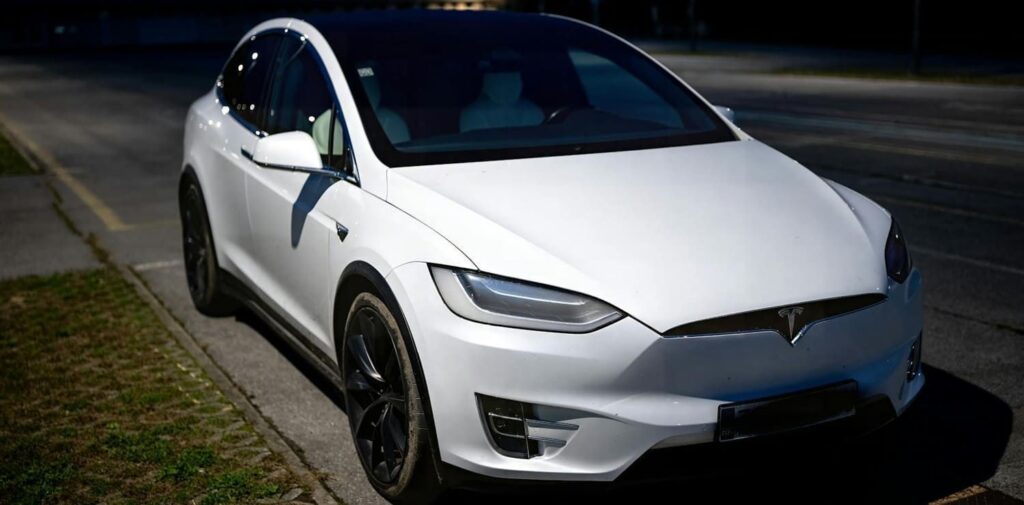
Perhaps the most transformative piece of the puzzle is the Tesla Cyber Cab.
What We Know So Far
- Pre-production units spotted nationwide
- Testing in:
- Austin
- San Francisco Bay Area
- Chicago
- Buffalo (cold-weather validation)
At least eight prototypes have been confirmed, including one with a 21-inch center display.
Tesla even shared official footage of Cyber Cab testing near Wrigley Field in Chicago.
Production Timeline
Elon Musk has targeted April 2026 for production.
Given the scale of testing already underway, Tesla appears to be in the refinement phase, not early validation.
If this pace continues, thousands of Cyber Cabs could be deployed by the end of 2026.
Why This All Matters
When you connect the dots, a clear pattern emerges:
- Tesla Robovan enables mass autonomous transport
- Vegas Loop proves scalability
- Cyber Cab unlocks robotaxi networks
- xAI accelerates intelligence and automation
- Data advantage keeps Tesla years ahead
This isn’t just about cars, tunnels, or AI—it’s about building entire systems that reinforce each other.
Final Thoughts: The Future Is Already Here
The Tesla Robovan isn’t a rumor.
The Cyber Cab isn’t a concept.
The Vegas Loop isn’t a prototype.
xAI isn’t slowing down.
Together, they form a vertically integrated vision of the future, where autonomous transportation, AI intelligence, and infrastructure scale simultaneously.
If 2025 was about proving the tech works, 2026 may be the year it takes over the real world.
And this time, it’s not hype—it’s execution.
FAQs
1. What is the Tesla Robovan?
The Tesla Robovan is a high-occupancy autonomous vehicle designed to transport large groups efficiently. It is optimized for event surges, public transit-style use cases, and underground tunnel systems like the Vegas Loop.
2. Is the Tesla Robovan actually real or just a concept?
Yes, it is real. The Robovan has been officially discussed by The Boring Company president Steve Davis, with plans for real-world deployment tied directly to the expansion of the Vegas Loop.
3. Where will the Tesla Robovan be deployed first?
The first real-world deployment is expected in Las Vegas, specifically within the Vegas Loop, once the system expands across the Strip and into downtown.
4. Why does Las Vegas need the Tesla Robovan?
Las Vegas experiences predictable transportation surges from events like NFL games, concerts, and conventions. The Robovan reduces congestion by moving many passengers at once instead of sending hundreds of individual vehicles.
5. How many vehicles will the Vegas Loop eventually have?
The Vegas Loop fleet is expected to grow to around 1,200 Tesla vehicles, with Robovans supplementing the system during peak demand.
6. How big will the fully built Vegas Loop be?
When complete, the Vegas Loop is planned to include:
- 69 miles of tunnels
- 104 stations
- Direct airport integration
7. How fast do Teslas travel inside the Vegas Loop?
- Phase 1: Up to 35 mph
- Phase 2 and beyond: Up to 60 mph, significantly reducing travel times.
8. Is the Vegas Loop already operational?
Yes. The system is already transporting passengers and handled over 90,000 riders during CES 2026, including fully autonomous Full Self-Driving rides.
9. What is the biggest obstacle slowing down the Vegas Loop expansion?
The biggest challenge is permitting. More than 600 permits are required, and each can take up to six months to approve.
10. What is the Music City Loop in Nashville?
The Music City Loop is a privately funded 9.5-mile underground tunnel system planned to connect Nashville’s airport to downtown, with a capacity of 20,000–30,000 passengers per hour.
11. Is the Music City Loop safe?
According to The Boring Company, the tunnels are extremely safe and may be among the safest forms of public transportation, despite concerns raised by critics about geology and transparency.
12. What is xAI and why is it important?
xAI is Elon Musk’s artificial intelligence company, founded in 2023. It recently reached a valuation of ~$230 billion and is rapidly scaling AI products, infrastructure, and open-source knowledge platforms.
13. What is Graipedia?
Graipedia is xAI’s open-source alternative to Wikipedia. It already hosts over 6 million articles, putting it close to surpassing English Wikipedia in size.
14. Does Nvidia’s autonomous platform compete with Tesla Full Self-Driving?
No. Nvidia’s platform enables autonomous development for other companies, but it does not compete directly with Tesla. Tesla’s 7+ billion miles of real-world driving data give it a major advantage.
15. What is the Tesla Cyber Cab and when is it launching?
The Tesla Cyber Cab is Tesla’s dedicated robotaxi vehicle. Pre-production units are already being tested across the U.S., with production targeted for April 2026 and large-scale deployment expected soon after.
Read More:
- Rocket Lab Announced Big Progress on Boldest Rocket to Outpace Blue Origin even SpaceX
- Where to Buy Tesla Tiny House 2026: Your Complete Guide
- Tesla arsonist who burned Cybertruck sees end of FAFO journey
- Elon Musk’s lawsuit against OpenAI and Microsoft is heading to jury trial
- Tesla wins top loyalty and conquest honors in S&P Global Mobility 2025 awards
- Elon Musk’s X goes down as users report major outage Friday morning