
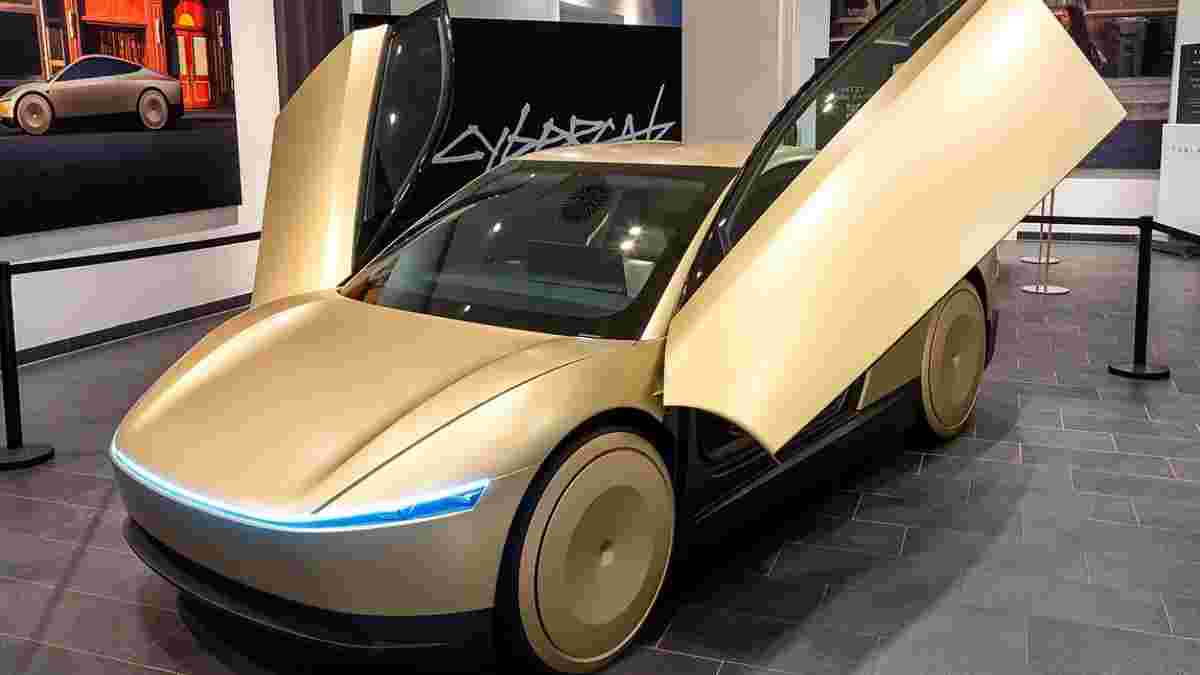
Elon Musk has once again sent shockwaves through the tech and automotive world. Tesla’s long-anticipated Robotaxi Cybercab, a vehicle designed from the ground up for fully autonomous transportation, is real, functional, and already operating on select routes without supervision. Yet despite this progress, Musk has confirmed something many fans didn’t want to hear: mass production will be agonizingly slow at first.
At first glance, this sounds like another delay in Tesla’s long history of ambitious timelines. But when you look deeper, this decision reveals a strategic master plan that could redefine transportation, ownership, and even how vehicles create value.
So what’s really going on with the Tesla Robotaxi Cybercab?
Is this slow rollout a warning sign—or the foundation of something revolutionary?
Let’s break it all down.
Why Tesla’s Robotaxi Cybercab Is Facing a Slow Start
“Agonizingly Slow” Doesn’t Mean Failure
When Elon Musk says early Cybercab production will be agonizingly slow, longtime Tesla followers instantly think of Model 3 production hell or the rocky Cybertruck rollout. However, Musk clarified an important detail: this slowdown only applies to the early stage.
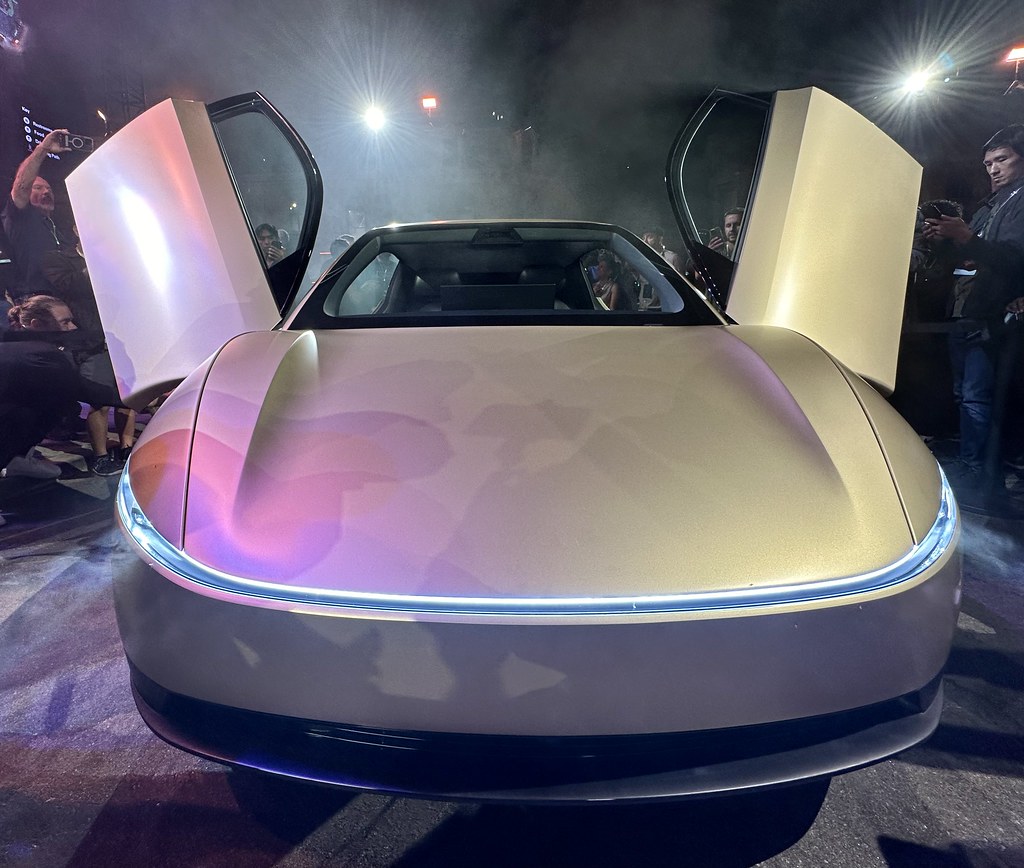
Tesla follows an S-curve production model:
- Early phase: slow, careful, expensive
- Middle phase: rapid acceleration
- Late phase: massive scale and efficiency
Once the Cybercab enters its proper production trajectory, output is expected to ramp up aggressively.
A Ground-Up Redesign Unlike Any Car Before
Why the Cybercab Is So Different
The Tesla Robotaxi Cybercab isn’t a modified Model Y or a stripped-down sedan. It is a completely new class of vehicle, designed for one purpose only: autonomous transport.
Key differences include:
- ❌ No steering wheel
- ❌ No pedals
- ❌ No driver interface
- ✅ Fully autonomous operation
- ✅ Fleet-optimized interior
- ✅ Designed for nonstop usage
This alone places the Cybercab in uncharted territory. No production vehicle in history has been built at scale without human controls.
From a manufacturing, regulatory, and operational standpoint, Tesla is creating a new playbook from scratch.
Why Tesla Didn’t Just Modify an Existing Vehicle
The Answer Is Cost—and Cost Changes Everything
Traditional automakers rely on incremental improvement: reuse platforms, tweak engines, update interiors. Tesla rejected this approach for the Cybercab because it doesn’t work economically for robotaxis.
Tesla’s long-term Robotaxi vision only succeeds if:
- The vehicle is cheap to produce
- It can be built in enormous volumes
- It requires minimal human involvement
- It operates with maximum durability
Every component is optimized for fleet economics, not private ownership.
Designed for a World Without Drivers
Fleet-First Engineering
The Cybercab is engineered for constant use, not weekend errands.
Key design priorities include:
- Easy-to-clean or replace seats
- Interiors that withstand dozens of passengers daily
- Hardware that functions reliably without oversight
- Automated servicing compatibility
This isn’t just a car.
It’s a business on wheels.
Why Software Is More Important Than the Car Itself
A Robotaxi Without a Driver Is a Revenue Engine
A driverless Tesla isn’t just transportation—it’s an autonomous income-producing asset.
Tesla cannot fully unleash this business model until Full Self-Driving (FSD) reaches a level where unsupervised operation is:
- Technically reliable
- Economically viable
- Scalable at a global level
This is why Tesla’s recent decision regarding FSD pricing is so important.
Why Tesla Is Killing the One-Time FSD Purchase
A Quiet but Massive Strategic Shift
Tesla has announced it will discontinue the one-time purchase option for Full Self-Driving after February 14.
On the surface, it looks like a pricing tweak.
In reality, it’s a fundamental shift in how Tesla values autonomy.
Why the Old Model No Longer Works
- FSD once functioned as advanced driver assistance
- A one-time fee of ~$8,000 made sense
- Drivers still needed to supervise the system
But once FSD becomes fully autonomous, that logic collapses.
From Depreciating Asset to Income Machine
The End of Traditional Car Economics
For decades, cars have been depreciating assets.
Tesla is preparing for a world where that assumption no longer applies.
A Cybercab—or even a privately owned Tesla with unsupervised FSD—can:
- Operate while the owner sleeps
- Transport passengers autonomously
- Deliver goods
- Join Tesla’s Robotaxi network
Elon Musk estimates:
- Operating cost: ~20 cents per mile
- Average personal vehicle: ~58 cents per mile
- Ride-hailing services: $2–$3 per mile
A robotaxi driving tens of thousands of miles per year could generate tens of thousands of dollars in annual revenue.
Why a Subscription Model Makes More Sense
Capturing the True Value of Autonomy
Selling autonomy for a fixed $8,000 fee dramatically undervalues its long-term potential.
If Tesla charged $50,000–$100,000 upfront:
- Individual buyers would be locked out
- Only corporations could participate
A subscription model:
- Lowers the barrier to entry
- Scales pricing with performance
- Aligns Tesla’s incentives with real-world results
- Preserves long-term value for Tesla
This model supports Tesla’s vision of a distributed robotaxi network powered by customer-owned vehicles.
Fairness Concerns for Early Adopters
A Trust Test for Tesla
This transition isn’t without controversy.
Key concerns include:
- Early adopters paid higher upfront prices
- Older hardware may face limitations
- Long-term access assurances are needed
Possible solutions could include:
- FSD transferability
- Hardware upgrade paths
- Subscription credits
Maintaining customer trust will be critical.
Tesla Robotaxi Cybercab Roadmap (2026–2030)
2026: National Approval and Scale
- Federal unsupervised FSD approval across all 50 states
- Nationwide Robotaxi operations
- 99.99% uptime target
- FSD v14 trained on 10 billion simulated miles
2027: Automation & Expansion
- Optimus robots automate 80% of fleet maintenance
- 500 new service depots
- Downtime reduced below 5%
- API access for third-party apps like Uber
- 1 million daily trips
Mid-2027: Global Expansion
- Launch in 15 major cities including London, Tokyo, and Shanghai
- 500,000 weekly rides
- Dojo 2 supercomputers delivering 5 exaflops
2028–2030: Global Dominance
- FSD v15 with quantum-inspired coordination
- 30% congestion reduction
- $50B annual revenue by 2028
- 100 countries by 2030
- 10 million vehicles
- $200B yearly profits
Cybercab Production and Pricing Plans
Manufacturing Scale
- Production begins at Giga Texas in Q2 2026
- 100,000 units per quarter initially
- Scaling to 500,000 per quarter by Q4 2026
- One vehicle every 30 seconds
Technology Highlights
- Next-gen 4680 battery cells
- 350-mile range
- Wireless software updates
- 20% efficiency gains
Pricing
- Consumer sales start Q1 2027
- $28,000 per unit
- 300,000 units for private buyers
- 200,000 units for Tesla-owned fleets
When Can You Order a Tesla Robotaxi Cybercab?
Tesla’s Robotaxi service launches in Austin, Texas in June 2025, even though Cybercab production starts later.
Five Reasons the System Could Go Live Soon
1. Remote Control Systems
Tesla is hiring engineers to build VR-based remote operation systems, ensuring human intervention when needed—something competitors like Cruise failed to implement effectively.
2. Cost Dominance
Tesla can produce a Cybercab for as little as $15,000 at scale, compared to competitors’ $120,000 robotaxis.
3. Production Mastery
Tesla’s factories are optimized for high-volume, low-cost output, unmatched by rivals.
4. Strategic City-by-City Rollout
Tesla is already testing in cities like Chicago, establishing density before expanding.
5. Unmatched Speed
Tesla could deploy 10,000 Cybercabs in a city faster than competitors can place an order.
Final Thoughts: Delay or Destiny?
At first glance, Tesla’s slow Cybercab rollout feels frustrating. But in reality, it reflects discipline, foresight, and long-term thinking.
Tesla isn’t just launching another vehicle.
It’s building the foundation for a global autonomous transportation network.
The question isn’t if the Cybercab will change the world.
It’s how fast the world will be ready for it.
🚗⚡ The future of transportation isn’t delayed—it’s being engineered.
FAQs
1. What is the Tesla Robotaxi Cybercab?
The Tesla Robotaxi Cybercab is a fully autonomous electric vehicle designed exclusively for driverless transportation, featuring no steering wheel, no pedals, and no driver controls, built specifically for Tesla’s robotaxi network.
2. Is the Tesla Cybercab already operating autonomously?
Yes. Tesla Cybercab prototypes are already operating autonomously on select routes without human supervision, though they are still in the testing phase and not yet deployed at full scale.
3. Why did Elon Musk say Cybercab production will be slow?
Elon Musk explained that early production will be “agonizingly slow” because the Cybercab is a ground-up redesign with entirely new manufacturing processes, hardware, and regulatory requirements.
4. When will Tesla start mass production of the Cybercab?
Tesla plans to begin initial production in 2026, with production ramping up significantly once early manufacturing challenges are resolved.
5. Will Cybercab production speed up later?
Yes. Elon Musk confirmed that production follows an S-curve, meaning once Tesla reaches stable manufacturing processes, output will increase rapidly.
6. Why didn’t Tesla modify an existing car like the Model Y?
Because modifying existing vehicles would be too expensive and inefficient for robotaxi economics. The Cybercab is optimized for low-cost mass production, durability, and autonomous fleet operation.
7. Does the Tesla Cybercab have a steering wheel?
No. The Cybercab has no steering wheel, pedals, or driver interface, making it the first production-intended vehicle designed entirely for autonomous driving.
8. How much will a Tesla Cybercab cost?
Tesla plans to sell the Cybercab to consumers starting around $28,000, while production costs could drop to $15,000 per unit at scale.
9. When can consumers buy the Tesla Cybercab?
Consumer sales are expected to begin in Q1 2027, with availability in the U.S. and Europe first.
10. When does Tesla’s Robotaxi service launch?
Tesla’s robotaxi service is scheduled to launch in Austin, Texas, in June 2025, ahead of full Cybercab production.
11. What is Tesla Full Self-Driving (FSD)?
Tesla Full Self-Driving (FSD) is Tesla’s autonomous driving software that enables vehicles to navigate roads, handle traffic, and operate without human intervention when fully deployed.
12. Why is Tesla removing the one-time FSD purchase option?
Tesla is shifting to a subscription-based FSD model because autonomy is becoming a revenue-generating service, not just a vehicle feature.
13. How much does Tesla FSD cost now?
Previously, FSD cost about $8,000 as a one-time purchase or $99 per month via subscription, though pricing is expected to evolve as autonomy improves.
14. Can a Tesla with FSD generate income?
Yes. Once unsupervised FSD is approved, Tesla vehicles can operate as robotaxis, generating income through passenger transport, deliveries, and fleet participation.
15. How much revenue can a Tesla Robotaxi generate?
A fully autonomous robotaxi could realistically generate tens of thousands of dollars per year, depending on usage, location, and demand.
16. How does Tesla compare to competitors like Uber or Waymo?
Tesla has a major advantage due to low production costs, vertical integration, and manufacturing scale, allowing it to deploy robotaxis far faster and cheaper than competitors.
17. Will Tesla use remote human operators for robotaxis?
Yes. Tesla is developing VR-based remote operation systems to assist Cybercabs in complex or rare scenarios, improving safety and reliability.
18. Will early FSD buyers be compensated for pricing changes?
Tesla has not officially confirmed compensation, but options like FSD transferability or long-term access guarantees are widely expected to maintain customer trust.
Read More:
- SpaceX’s New Space Station is Finally Launching into Orbit for the First Time humiliated NASA
- LIVE BLOG: Tesla (TSLA) Q4 and FY 2025 earnings call
- Tesla brings closure to flagship ‘sentimental’ models, Musk confirms
- Tesla (TSLA) Q4 and FY 2025 earnings call: The most important points
- Tesla confirms Robotaxi expansion plans with new cities and aggressive timeline
- Tesla hits major milestone with Full Self-Driving subscriptions