
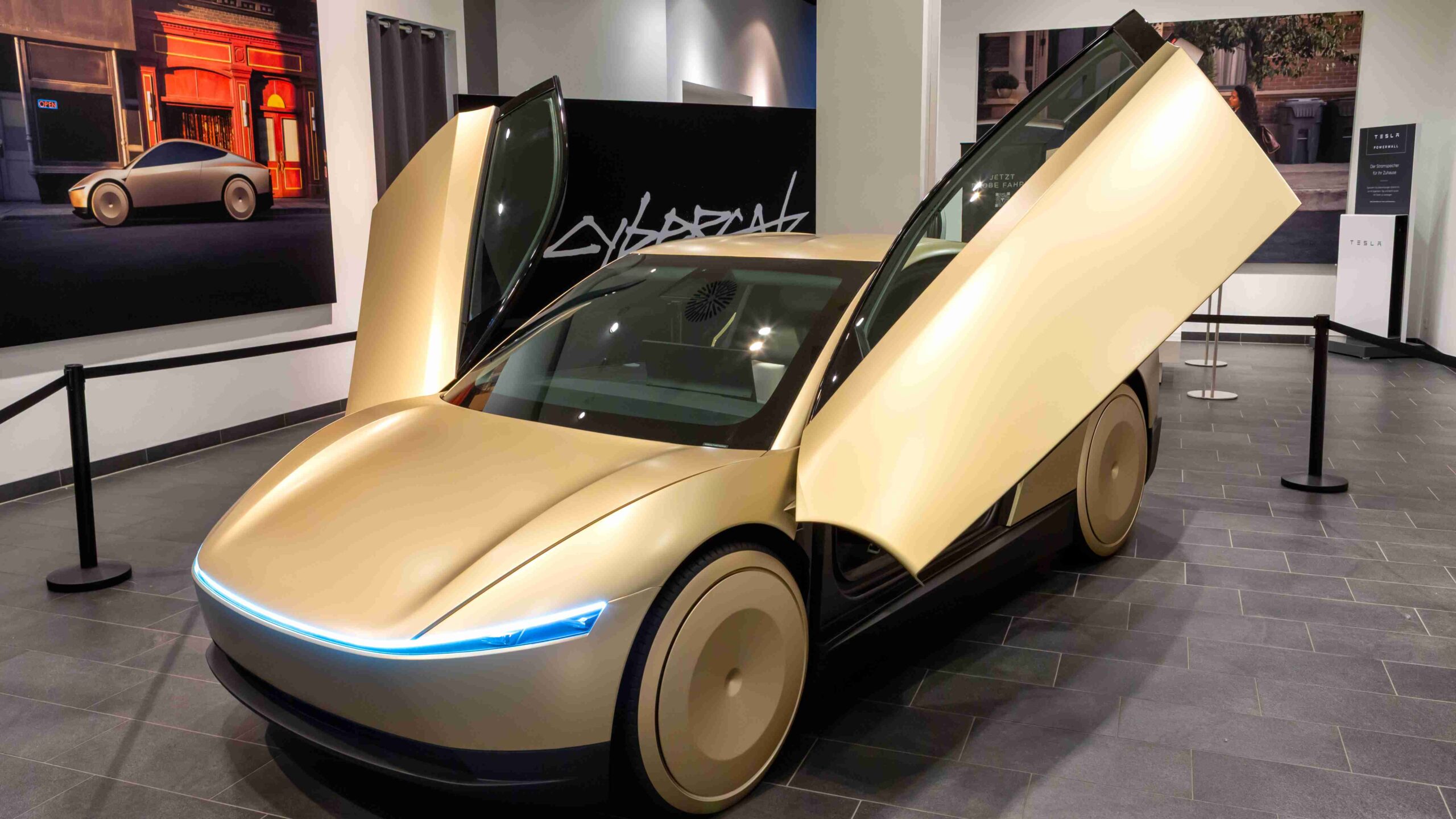
Tesla has officially launched its unsupervised robotaxi service for public customers in Austin, marking a pivotal moment in the evolution of autonomous transportation. Unlike previous pilot programs that relied on safety drivers or escort vehicles, this service operates without a rear car or chase support, signaling Tesla’s growing confidence in its Full Self-Driving (FSD) technology.
At the same time, new leaks and real-world sightings of Tesla’s highly anticipated Cybercab are raising big questions. Is this the beginning of the end for traditional U.S. robotaxi competitors? Or is Tesla still ironing out critical challenges before mass production?
In this in-depth analysis, we break down everything we know about the Tesla Cybercab prototype, production plans, trademark controversies, charging strategy, and autonomous design philosophy.
Tesla’s Unsupervised Robotaxi Service in Austin
Tesla’s robotaxi service in Austin is no longer theoretical. It is operational, public-facing, and running without traditional safeguards like a trailing safety vehicle. This move demonstrates Tesla’s ambition to dominate the U.S. autonomous ride-hailing market.
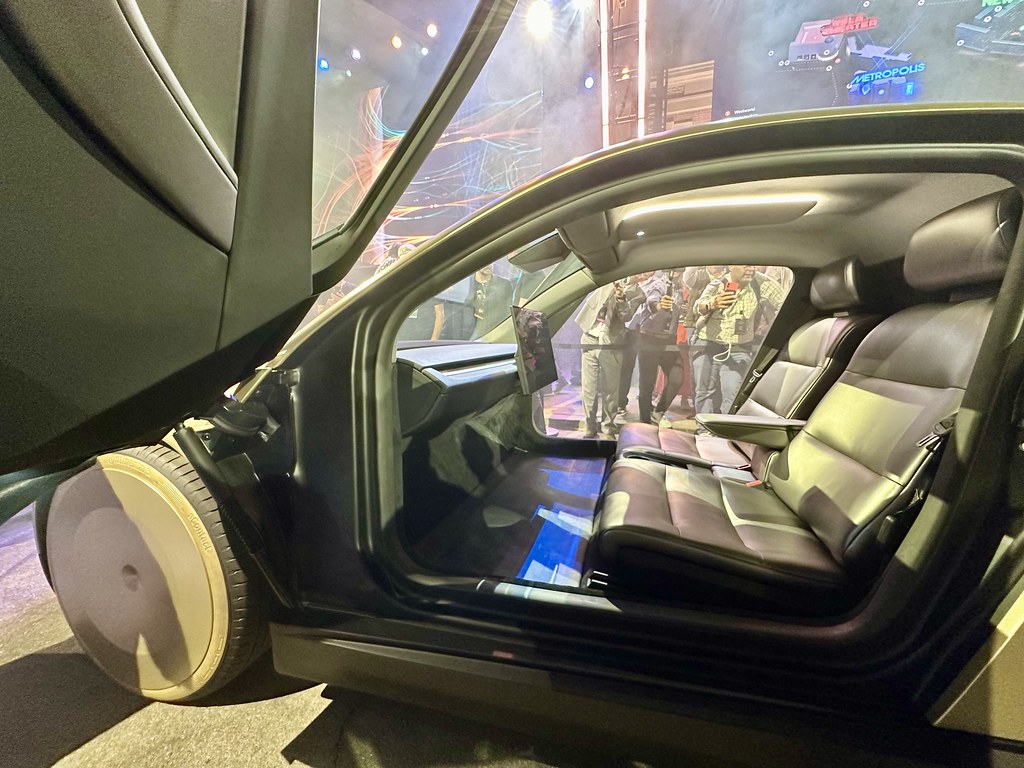
Recent reports indicate that Cybercab prototypes are frequently spotted across Austin, with as many as 10 visible trips per day in downtown areas. However, upon closer inspection, the current version still includes:
- A steering wheel
- Physical pedals
- Hardware components borrowed from the Cybertruck
While these features suggest manual override capability, Tesla has made it clear: the production Cybercab will not include a steering wheel or pedals.
Cybercab Prototype: A Closer Look at the Interior
Leaked images reveal that the current Cybercab prototypes still look very much like pre-production models. Inside, everything appears temporarily mounted, indicating ongoing development.
Why Is There Still a Steering Wheel?
Despite Tesla’s commitment to a fully autonomous vehicle, some test units feature:
- Steer-by-wire systems
- Temporary manual controls
- Human-driven test runs
This has led to speculation that Tesla may consider offering a manual configuration in the future. However, Elon Musk’s stance remains firm: Tesla is betting everything on autonomy.
In fact, it appears Tesla’s philosophy is simple — it’s either self-driving or nothing at all.
Vehicles Without Steering Wheels Spotted
Interestingly, at least two Cybercab versions have been spotted without steering wheels or pedals. These units are believed to operate under strict remote supervision by Tesla engineers, which may explain why testing has been limited primarily to downtown Austin.
This dual testing strategy suggests Tesla is refining both:
- Fully autonomous configurations
- Transitional prototype versions
The company is clearly working through final technical and regulatory challenges ahead of mass deployment.
Trademark Trouble: Why Cybercab Isn’t Always Cybercab
Tesla’s naming strategy has encountered significant legal hurdles.
The “Robotaxi” Rejection
At Tesla’s 2024 launch event, the vehicle was introduced as “Robotaxi.” However, the U.S. Patent and Trademark Office rejected the application, citing the term as too generic.
Cybercab Trademark Delays
Tesla also delayed filing for the “Cybercab” trademark. As a result, the name was claimed by another party — reportedly a French beverage company.
State-Level Naming Restrictions
In several U.S. states, automakers are not permitted to use terms like “cab” or “taxi” due to regulatory classification issues. This forced Tesla to register additional names such as:
- Cybercar
- Cyber Vehicle
- Generic use of “Robotaxi”
As a result, Tesla currently holds four different names for its small self-driving vehicle platform. Depending on the state and regulatory environment, the vehicle may be marketed differently.
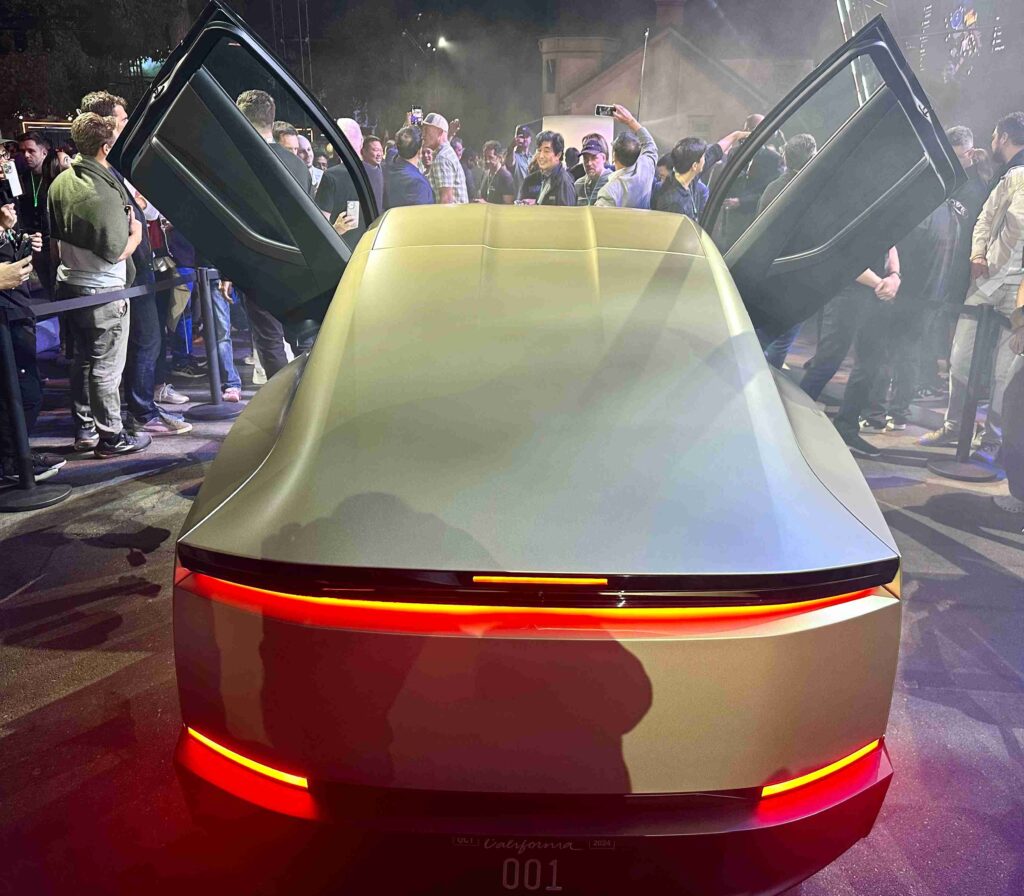
Why the Cybercab Is a Two-Seat Vehicle
During Tesla’s Q4 and full-year 2025 earnings call, executives explained a critical insight:
Over 90% of vehicle miles traveled involve two passengers or fewer.
Tesla Vice President of Vehicle Engineering, Lars Moravy, emphasized that this statistic directly shaped the Cybercab’s design.
The Logic Behind Two Seats
Instead of designing a vehicle to serve every possible scenario, Tesla is optimizing for the most common use case:
- 1–2 passengers
- Short urban trips
- High-frequency rides
This design reduces:
- Vehicle weight
- Battery costs
- Manufacturing complexity
- Energy consumption
And ultimately allows Tesla to deliver rides cheaper than public buses, as Elon Musk has promised.
Tesla’s Broader Robotaxi Fleet Strategy
Rather than forcing one vehicle to serve all transportation needs, Tesla is creating a tiered autonomous fleet:
Cybercab
- Two seats
- Core robotaxi platform
- Majority of fleet operations
Model Y
- 3–4 passengers
- Flexible urban solution
Model YL (Extended Wheelbase)
- 5–6 passengers
- Family-oriented rides
Robovan
- 10+ passengers
- Commercial and group transport
All vehicles share the same self-driving software stack and fleet management platform, creating a unified yet flexible transportation ecosystem.
This approach mirrors how transportation works today — different vehicles for different needs — but fully autonomous.
Mass Production Plans at Gigafactory Texas
Tesla China’s official account recently announced that the Cybercab is ready to enter mass production and begin operations at Gigafactory Texas.
Elon Musk confirmed:
- Production expected to begin in April
- Long-term goal to produce more Cybercabs than all other Tesla vehicles combined
If successful, this would mark the largest pivot in Tesla’s history — shifting from consumer vehicle sales to autonomous fleet dominance.
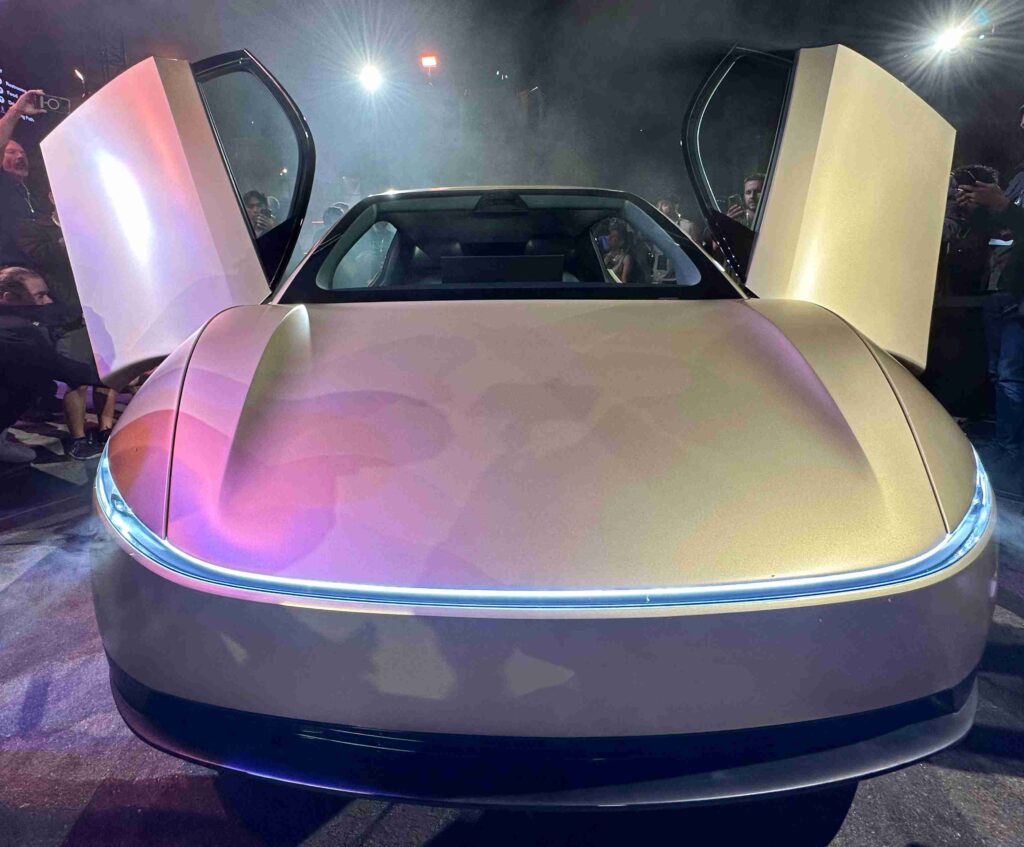
Charging Strategy: Wireless vs. Supercharging
One of the biggest surprises from recent leaks was the discovery of a hidden wired charging port behind an electrically operated rear panel near the taillight strip.
Images even showed the Cybercab plugged into a V4 Supercharger.
This raised immediate questions:
- Why isn’t it charging wirelessly?
- Does full autonomy still require human intervention?
The Hybrid Charging Approach
Tesla appears to be pursuing a dual strategy:
Wireless Charging
- Ideal for short stops
- 5–10 minute top-ups
- Minimal human involvement
- Automated fleet operations
V4 Supercharging
- Rapid charging from 10% to 80%
- Essential for long operating shifts
- Economically efficient
Wireless charging technology still faces challenges:
- Heat management
- Energy loss
- Slower transfer speeds
Given production timelines, it’s likely that early Cybercabs will rely primarily on conventional Supercharger connections, with wireless charging gradually improving over time.
Is This the End of U.S. Robotaxi Competitors?
Tesla’s approach is fundamentally different from many competitors.
Instead of:
- Expensive sensor suites (like LiDAR-heavy systems)
- Limited geofenced zones
- Slow expansion
Tesla is leveraging:
- Vision-based AI
- Massive fleet data
- In-house chip development
- Integrated charging infrastructure
If Cybercab production scales successfully and rides become cheaper than buses, traditional robotaxi operators may struggle to compete on cost.
However, key challenges remain:
- Regulatory approval
- Public trust
- Trademark consistency
- Charging automation maturity
The next 12–24 months will determine whether Tesla dominates or disrupts itself.
Real-World Testing Expands Beyond Closed Tracks
In early 2026, images surfaced showing Cybercab prototypes leaving closed test tracks and entering:
- Austin public roads
- Bay Area testing zones
This marks a critical shift from controlled environments to real-world complexity.
Tesla is clearly accelerating toward full deployment.
Tesla’s All-or-Nothing Bet on Autonomy
Perhaps the most striking takeaway is Elon Musk’s unwavering commitment:
There is no backup plan.
Tesla is not designing Cybercab to be a dual-purpose consumer car. It is purpose-built for autonomy.
If the gamble succeeds, Tesla could transform urban mobility forever.
If it fails, the consequences could be historic.
The Bigger Picture: A Transportation Revolution
Tesla’s Cybercab represents more than just a new vehicle. It represents:
- A shift from ownership to access
- A move toward AI-driven mobility
- A redefinition of public transportation economics
With production targeted for April and mass deployment to follow, the Cybercab could soon become the most important vehicle Tesla has ever built.
Final Thoughts: Convenience or Efficiency?
Tesla’s hybrid charging model raises an interesting debate:
- Wireless charging offers convenience and automation.
- Supercharging offers speed and operational efficiency.
Which matters more in a fully autonomous future?
As Cybercab production ramps up and Austin testing continues, one thing is clear:
Tesla is closer than ever to redefining the robotaxi industry in the United States.
Whether this marks the end of competing U.S. robotaxi services or simply the beginning of a fierce new chapter remains to be seen.
But the Cybercab is no longer a concept.
It’s on the streets. And it’s coming fast.
FAQs
Frequently Asked Questions (FAQs)
1. What is Tesla’s Cybercab?
Tesla’s Cybercab is a fully autonomous, two-seat electric vehicle designed specifically for robotaxi services. It is built without a steering wheel or pedals in its final production form and operates using Tesla’s Full Self-Driving (FSD) technology.
2. Is Tesla’s robotaxi service already operating?
Yes, Tesla has launched an unsupervised robotaxi service for public customers in Austin, Texas, without a rear chase vehicle or safety car.
3. Why were Cybercabs spotted with steering wheels and pedals?
The currently spotted Cybercab units are prototypes. Some include temporary steering wheels and pedals for testing and regulatory purposes, but Tesla plans to remove them in the final production model.
4. When will Tesla start Cybercab production?
Tesla expects Cybercab production to begin in April at Gigafactory Texas, with large-scale manufacturing ramping up over time.
5. Why is the Cybercab a two-seat vehicle?
Tesla designed the Cybercab as a two-seater because over 90% of vehicle trips involve one or two passengers. This reduces costs, improves efficiency, and maximizes profitability for robotaxi operations.
6. What happened to the “Robotaxi” name?
The U.S. Patent and Trademark Office rejected Tesla’s application for the name “Robotaxi,” calling it too generic. Tesla has since registered alternative names.
7. Why does Tesla use multiple names for the Cybercab?
Due to trademark conflicts and state-level regulations restricting the use of terms like “cab” or “taxi,” Tesla registered multiple names such as Cybercar and Cyber Vehicle.
8. Will the Cybercab be available for private purchase?
As of now, Tesla’s strategy focuses on fleet operations rather than private sales. The Cybercab is primarily designed for autonomous ride-hailing services.
9. How does Tesla’s robotaxi differ from competitors?
Tesla uses a vision-based AI system powered by neural networks, unlike many competitors that rely heavily on LiDAR and geofenced operational areas.
10. Does the Cybercab use wireless charging?
Tesla is developing wireless charging technology for convenience during short stops, but current prototypes also feature a hidden wired charging port for fast Supercharging.
11. Why does the Cybercab still have a wired charging port?
Wired V4 Supercharging provides faster charging speeds, especially when recharging from 10% to 80%, which wireless charging currently cannot match.
12. Where is Tesla testing the Cybercab?
Tesla is conducting public road tests in Austin, Texas, and parts of the Bay Area, in addition to closed-track testing facilities.
13. How many passengers can the Cybercab carry?
The Cybercab is designed to carry two passengers. For larger groups, Tesla plans to use Model Y, Model YL, or the Robovan.
14. What is Tesla’s Robovan?
The Robovan is a larger autonomous vehicle capable of carrying more than 10 passengers, aimed at commercial or group transport needs.
15. Is the Cybercab fully autonomous?
Tesla intends the Cybercab to operate fully autonomously without steering wheels or pedals. However, some test versions are still manually supervised.
16. How will Tesla make robotaxi rides cheaper than buses?
By eliminating drivers, optimizing for two passengers, reducing vehicle complexity, and maximizing fleet usage, Tesla aims to significantly cut ride costs.
17. Will Cybercabs operate nationwide?
Tesla plans to expand operations across multiple U.S. states, but deployment depends on regulatory approval and local laws.
18. Is Tesla betting everything on the Cybercab?
Elon Musk has stated that Tesla has no backup plan regarding autonomy. The company is heavily investing in the Cybercab and its robotaxi network.
19. Could the Cybercab end traditional U.S. robotaxi competition?
If Tesla successfully scales production and lowers ride costs dramatically, it could disrupt or even dominate the U.S. robotaxi market. However, regulatory and technological challenges remain.
Read More:
- Astronauts declared SpaceX’s New Dragon Upgrade 100x BETTER than Competitors
- Tesla Full Self-Driving set to get an awesome new feature, Elon Musk says
- $17K Tesla Model 2 With an “Infinite” Battery! Elon Musk Just Broke the Game in 2026
- Starship Version 3 Heat Shield Upgraded to Survive 1,500°C Change Spaceflight Forever
- Elon Musk clarifies Tesla Cybertruck ’10 day’ comment, fans respond
- Tesla Pi Phone $199 Leak + “Lifetime” Starlink Internet + Aluminum-Ion 7-Year Battery + XOS (2026)