
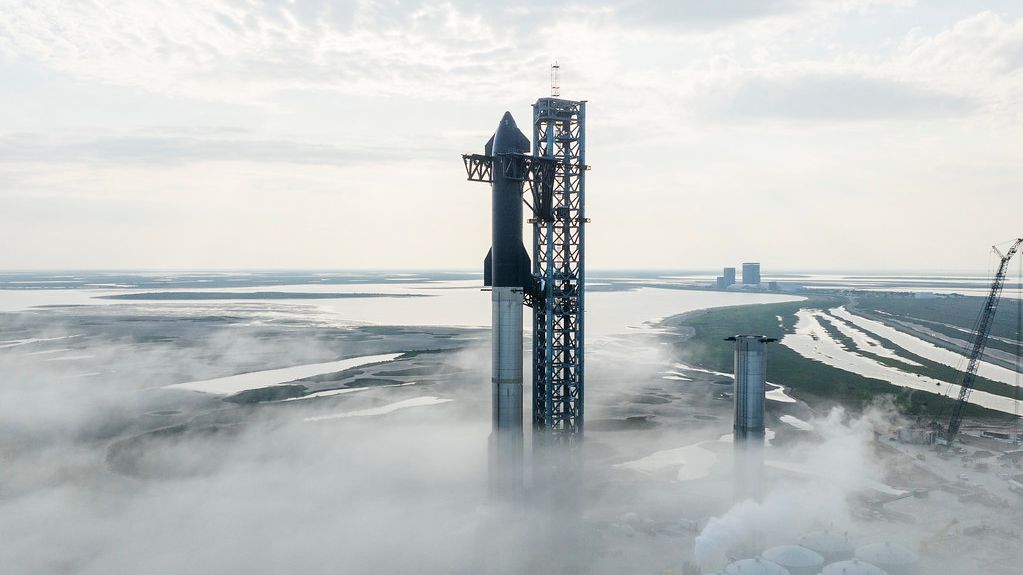
Space exploration has always pushed humanity to its limits, but few companies embody this relentless ambition quite like SpaceX. With its next-generation Starship program, the company is chasing a bold vision: making space travel as routine as air travel. At the heart of this mission lies one of the toughest engineering challenges ever faced—surviving atmospheric re-entry at temperatures exceeding 1500°C.
As the Starship V3 generation begins to emerge, particularly with the latest upgrades seen on Ship 39 (S39), SpaceX is rewriting the rulebook for spacecraft thermal protection systems (TPS). These upgrades are not just incremental—they represent a radical rethink of how spacecraft endure the violent journey back to Earth.
The Core Philosophy: Go Further and Return Regularly
From the beginning, SpaceX has followed a deceptively simple philosophy: “Go further and return regularly.” While launching rockets into space is difficult, bringing them back safely—and doing it repeatedly—is exponentially harder.
Unlike traditional spacecraft, Starship is designed for high-frequency reuse, meaning it must survive re-entry with minimal refurbishment. This ambition pushes engineering to its limits, especially when dealing with plasma heat, aerodynamic stress, and structural integrity.
Ship 39: A New Era of “Extra Armor”
Strategic Expansion Beyond the Windward Side
Historically, spacecraft heat shields focus on the windward side—the belly that directly faces the heat during re-entry. However, Ship 39 introduces a surprising twist: targeted heat protection on the leeward (back) side.
This marks a significant shift in design philosophy. Instead of assuming only one side faces extreme heat, SpaceX is preparing for complex airflow dynamics during orbital returns.
The Rise of “Tile Islands”
One of the most visually striking upgrades on S39 is the addition of Tetris-like blocks of heat shield tiles, often referred to as “tile islands.”
These tiles are:
- Carefully arranged around liquid oxygen (LOX) and methane tanks
- Strategically placed rather than randomly patched
- Potential precursors to a full wraparound thermal barrier
This approach suggests SpaceX is experimenting with modular thermal protection, allowing engineers to reinforce only the most vulnerable areas without adding unnecessary weight.
Breakthrough in Tile Attachment Technology
In earlier Starship prototypes, one major issue plagued development: tiles falling off. Even minor vibrations during transport could dislodge them, raising serious concerns about flight readiness.
With Ship 39, that problem appears to be largely solved.
What’s Changed?
- Tiles remain intact even during rough transportation
- Improved mechanical attachment systems ensure durability
- Transition from experimental designs to flight-ready hardware
This advancement is critical. A single missing tile during re-entry can expose the spacecraft to catastrophic heat damage.
Fortifying the Weakest Points: Flaps and Fuel Tanks
Why Flaps Are Critical
Starship uses a unique “belly flop” maneuver to descend through Earth’s atmosphere. During this phase, aerodynamic flaps control orientation and stability.
However, these flaps are also extremely vulnerable:
- They endure intense heat and pressure
- Their hinges must remain functional under extreme stress
- Any failure could lead to loss of control
Reinforced Aft Flaps
SpaceX has added precision shielding to the top of the aft flaps, perfectly matching their contours. This ensures:
- Protection of critical hinge mechanisms
- Maintenance of steering capability during re-entry
- Prevention of thermal damage to moving parts
Enhanced Fuel Tank Protection
The fuel tanks—holding super-chilled methane and liquid oxygen—face a unique challenge:
- Extreme cold internally
- Extreme heat externally
To address this, SpaceX has added extra heat shield layers in leeward zones, protecting these tanks from thermal stress.
Static Fire Testing: The Ultimate Stress Test
Before any orbital mission, Starship undergoes static fire tests using its powerful Raptor engine.
These tests simulate:
- Intense vibrations
- Rapid temperature changes
- Structural stress under engine thrust
For the heat shield, this creates a thermal roller coaster:
- Freezing temperatures from cryogenic fuel
- Sudden spikes in heat during engine ignition
Passing these tests is essential before attempting orbital re-entry.
The Orbital Leap: A Whole New Challenge
From Suborbital to Orbital Flights
Previous Starship tests have been suborbital hops, which involve lower speeds and shorter re-entry durations.
However, upcoming missions aim for true orbital flight, dramatically increasing the difficulty.
Why Orbital Re-entry Is Harder
- Longer exposure to plasma heating
- Higher velocities
- Greater thermal loads across the entire vehicle
This is where Ship 39’s upgrades will face their ultimate test.
The Mechazilla Catch: Precision or Failure
One of the most futuristic aspects of Starship recovery is the use of launch tower arms—often called “chopsticks”—to catch the returning vehicle.
This system, nicknamed Mechazilla, requires:
- Near-perfect structural integrity after re-entry
- Minimal damage to heat shield tiles
- Precise flight control during descent
If successful, it eliminates the need for landing legs and speeds up turnaround time.
The Weight Dilemma: Protection vs Payload
Every upgrade comes with a trade-off.
The Problem with More Tiles
- Increased weight reduces payload capacity
- Heavier ships require more fuel
- Efficiency drops for deep space missions
This directly conflicts with Elon Musk’s famous engineering philosophy:
“The best part is no part.”
Balancing Act
SpaceX must carefully optimize:
- Maximum thermal protection
- Minimum added weight
- Maximum payload efficiency
This balancing act is especially critical for Mars and Moon missions.
Secret Sauce: Advanced Materials and “Crunch Wraps”
Next-Generation Ceramic Tiles
The tiles on Ship 39 show noticeable differences:
- Darker color
- Unique surface gloss
- Likely new ceramic composition
These changes hint at a “secret recipe” developed by SpaceX to improve heat resistance and durability.
Ablative Underlayer: Double Protection
Beneath the tiles, SpaceX has added an ablative layer, which:
- Absorbs and dissipates heat
- Acts as a secondary shield
- Enhances overall system resilience
The “Crunch Wrap” Innovation
To solve a subtle but critical problem—hot plasma sneaking through tile gaps—SpaceX introduced a clever solution:
- High-temperature paper wrapping around tiles
- Seam-filling technique to block heat
This “crunch wrap” approach prevents hot gases from reaching the underlying stainless steel structure.
Iterative Design vs Traditional Aerospace
The NASA Approach
Organizations like NASA typically:
- Build highly reliable systems
- Conduct extensive testing over years
- Use hardware for limited missions
For example, the Orion spacecraft heat shield is designed for only a few flights.
The SpaceX Approach
SpaceX takes a radically different path:
- Rapid iteration and testing
- Frequent design changes
- Hardware built for thousands of flights
This philosophy allows SpaceX to evolve quickly, learning from each test and failure.
A Future Fleet: Not All Starships Are Equal
Interestingly, SpaceX does not plan to build identical Starships for every mission.
Different Variants for Different Roles
- Human Landing System (HLS): No heat shield needed (no atmosphere on the Moon)
- Tanker Versions: Minimal shielding to maximize fuel capacity
- Earth-Orbital Ships: Fully armored for repeated re-entry
This modular approach ensures mission-specific optimization.
The 30-Minute Turnaround Vision
The ultimate goal is ambitious:
Make Starship as easy to reuse as a commercial airplane.
What Success Looks Like
- Land the spacecraft
- Inspect briefly
- Clean off soot
- Refuel and relaunch within hours
If Ship 39’s upgrades perform as expected, this vision moves significantly closer to reality.
Why These Upgrades Matter for Humanity
The implications go far beyond engineering:
- Lower launch costs
- Frequent space travel
- Mars colonization potential
- Global point-to-point transport
By solving the re-entry problem, SpaceX unlocks the possibility of making humanity a multi-planetary species.
Conclusion: A Turning Point in Spaceflight
Ship 39 represents more than just another prototype—it’s a glimpse into the future of space travel. With innovations like tile islands, reinforced flaps, advanced materials, and the “crunch wrap” technique, SpaceX is tackling the most brutal phase of spaceflight head-on.
As the company prepares for its first true orbital missions, the stakes couldn’t be higher. If these upgrades succeed, they will mark a historic breakthrough—not just for SpaceX, but for the future of humanity in space.
At Starbase, innovation never stands still. Each test, each upgrade, and each iteration brings us closer to a world where rockets launch, land, and relaunch with airline-like efficiency.
And if Ship 39 survives the fiery descent from orbit, it won’t just be a technical success—it will be proof that the dream of routine space travel is finally within reach.
FAQs
1. What is the main goal of SpaceX’s Starship program?
The primary goal is to enable fully reusable space travel, allowing spacecraft to launch, land, and relaunch quickly with minimal refurbishment, ultimately reducing the cost of space missions.
2. Why is atmospheric re-entry so challenging for spacecraft?
Atmospheric re-entry generates extreme heat (up to 1500°C) due to friction with air molecules, creating plasma that can damage or destroy unprotected structures.
3. What is special about Starship V3’s heat shield?
The Starship V3 heat shield introduces advanced ceramic tiles, ablative layers, and new tile placement strategies to improve durability and reusability.
4. What are “tile islands” on Ship 39?
“Tile islands” are strategically placed blocks of heat shield tiles on specific areas of the spacecraft, designed to provide targeted thermal protection.
5. Why is SpaceX adding heat protection to the leeward side?
The leeward side experiences unexpected heat during orbital re-entry, so additional shielding helps protect critical components from thermal stress.
6. What role do the flaps play during re-entry?
Starship’s aerodynamic flaps control its orientation during descent, especially in the belly flop maneuver, ensuring a stable and controlled landing.
7. Why are the aft flaps considered vulnerable?
The aft flaps contain complex hinges and experience high heat and pressure, making them susceptible to mechanical and thermal damage.
8. How does the Raptor engine test the heat shield?
During static fire tests, the Raptor engine subjects the spacecraft to extreme vibrations and temperature changes, helping validate heat shield durability.
9. What is the “crunch wrap” technique?
The “crunch wrap” uses high-temperature materials to seal gaps between tiles, preventing hot plasma from penetrating and damaging the spacecraft.
10. What is an ablative layer in the heat shield?
An ablative layer is a secondary protective material that absorbs and dissipates heat, providing extra defense during re-entry.
11. Why is weight a concern for heat shields?
Adding more tiles increases spacecraft weight, which reduces payload capacity and affects mission efficiency.
12. What does Elon Musk mean by “the best part is no part”?
It means removing unnecessary components to simplify design, reduce weight, and improve efficiency and reliability.
13. How is SpaceX’s approach different from NASA?
SpaceX uses rapid iteration and frequent testing, while NASA focuses on long-term reliability with fewer missions.
14. What is Mechazilla in the Starship program?
Mechazilla is a launch tower system designed to catch Starship using mechanical arms, eliminating the need for traditional landing gear.
15. Will all Starships have the same heat shield design?
No, different versions like tankers, lunar landers, and Earth-return vehicles will have customized heat shield configurations.
16. Why are these upgrades important for the future of space travel?
These advancements enable rapid reusability, lower costs, and support long-term goals like Mars colonization and frequent space missions.
Read More:
- Tesla Cybercab Robotaxi Amazing New Update 2026
- Ford CEO Farley says Tesla is not who to look at for EV expertise
- ARK’s SpaceX IPO Guide makes a compelling case on why $1.75T may not be the ceiling
- Tesla is building private Superchargers just for Robotaxi
- Tesla bolsters App with new safety, insurance, and storage features