
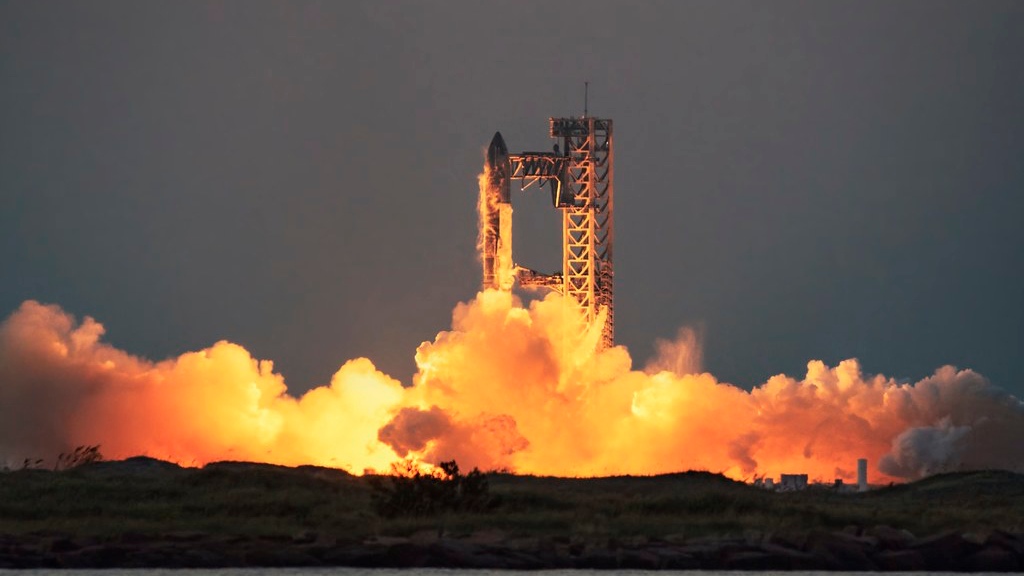
The journey toward Starship Flight 12 has become one of the most talked-about developments in modern aerospace. What began as an expected launch window in March gradually slipped into April—and now stretches into May, with a realistic possibility of reaching June. While delays in spaceflight are nothing new, this particular situation reveals something far more compelling than a simple scheduling setback.
This is not a story of failure. Instead, it is a story of hidden technical challenges, rapid innovation, and a company learning how to safely handle the most powerful rocket system ever built.
At the heart of the delay lies a complex interaction between three entirely new systems: Pad 2 infrastructure, Booster 19 (Version 3), and the advanced Raptor 3 engines. When combined, these systems created what can only be described as a “perfect storm” of engineering hurdles.
The Perfect Storm: Integrating Next-Generation Systems
One of the biggest misconceptions surrounding the delay is that the hardware itself isn’t ready. In reality, both Ship 39 and Booster 19 are largely complete and prepared for flight. The issue arose not from individual components, but from how these new systems behaved when integrated together for the first time.
Version 3 (V3) represents a major leap forward. Booster 19 includes structural reinforcements, internal redesigns, and performance upgrades that significantly differentiate it from earlier prototypes. Meanwhile, Pad 2 is a newly constructed launch site designed specifically to handle the immense power of upgraded Starship systems.
However, when these cutting-edge technologies came together during testing, unexpected anomalies surfaced—issues that simply could not have been predicted through isolated testing.
The March 16 Static Fire Test: A Critical Turning Point
The most significant setback occurred during a full-scale static fire test on March 16, 2026. This marked the first time a V3 booster was fully fueled with liquid oxygen (LOX) and liquid methane (LCH4) and tested at Pad 2.
The sequence included:
- Spin prime tests
- Igniter activation
- A static fire of 10 Raptor 3 engines
Initially, everything appeared flawless. The engines ignited successfully and began ramping up toward operational thrust levels. But within seconds, the situation changed dramatically.
A pad-side anomaly triggered an automatic “hard shutdown.”
Understanding the “Hard Shutdown” Event
A hard shutdown is one of the most extreme safety responses in rocket testing. It is designed to prevent catastrophic failure—but it comes at a cost.
Here’s what happens during such an event:
1. Instant Valve Closure
Fuel and oxidizer valves slam shut immediately to stop propellant flow.
2. Turbo Pump Desynchronization
The turbo pumps—spinning at extremely high speeds—are forced to decelerate rapidly and unevenly.
3. Thermal and Mechanical Stress
This sudden imbalance causes engines to behave unpredictably:
- Some engines go oxygen-rich, producing extreme heat that damages internal components.
- Others go methane-rich, leading to carbon buildup and intense vibrations.
The consequences were severe. Out of the ten engines tested:
- Five were significantly damaged
- Issues included cracked combustion liners, deformed nozzles, and burned turbine blades
This was not a minor setback—it was a serious technical challenge that required immediate attention.
Pad 2: The Unexpected Weak Link
Interestingly, the root cause of the failure was not the engines themselves. Instead, it was traced back to Pad 2’s ground systems.
Despite being designed for high-performance launches, Pad 2 was still relatively new and had not yet reached operational maturity. The sheer power of the Raptor 3 engines exposed weaknesses in the system.
Key Issues Identified:
- Sensors overwhelmed by extreme heat and shockwaves
- Water deluge system experiencing unexpected stress
- Propellant line instrumentation producing false anomaly readings
SpaceX follows a highly conservative safety philosophy. If any sensor—no matter how minor—detects something unusual, the system automatically shuts down.
While this may seem excessive, it serves a critical purpose: preventing catastrophic explosions.
In fact, the hard shutdown likely avoided a worst-case scenario—a “pad-leveling” explosion that could have delayed the program by a year or more.
Recovery and Rapid Progress
Following the March incident, the response was swift and methodical.
Key Actions Taken:
- Damaged engines were repaired or replaced
- Ground systems were reinforced and recalibrated
- Sensor systems were evaluated and upgraded
The next milestone was an ambitious one: a full 33-engine static fire test.
The 33-Engine Test: A Different Outcome
This test represented a major step forward. Unlike the earlier 10-engine test, this involved the entire engine array of the Super Heavy booster.
Once again, the test did not run to completion. It ended in an early abort—but the outcome was dramatically different.
What Happened?
- The abort was triggered by sensor dislodgement
- Extreme vibrations caused sensors to physically shake out of place
Why This Matters:
- This was NOT a hard shutdown
- All 33 engines remained completely undamaged
This result was incredibly encouraging. It proved that:
- The engines are robust and reliable
- The booster design is sound
- The remaining issues are primarily infrastructure-related
Why the Launch is Now Pushed to June
As of now, the delay is tied to ongoing upgrades at the launch site.
One of the most notable developments is the replacement of liquid methane storage tanks near Pad 2. These older tanks are being swapped for newer models capable of handling higher flow rates required by V3 systems.
Updated Timeline:
Mid-May (May 10–15)
Expected full-duration 33-engine static fire test
Late May
Final stacking of Ship 39 and Booster 19 if tests succeed
Late May to Early June
Projected launch window for Flight 12
This timeline reflects a careful balance between urgency and safety—ensuring that all systems are fully validated before launch.
Beyond Flight 12: A Shift Toward Mass Production
While much attention is focused on Flight 12, the bigger story lies in what’s happening behind the scenes.
Starbase is no longer just a testing ground. It is rapidly evolving into a high-efficiency production facility.
Booster 20 and Flight 13
The next-generation booster, Booster 20, is already under construction. This marks the beginning of Block 3 production, which aims to standardize and streamline the build process.
Compared to earlier prototypes, assembly is now:
- Faster
- More organized
- Closer to an actual production line
Ship 41: A New Design Evolution
One of the most visually striking developments is Ship 41, which features a mirror-like polished finish.
This is more than just aesthetics.
Potential Benefits:
- Improved thermal reflection
- Reduced heat absorption
- Lower surface contamination
This suggests that SpaceX is experimenting with new materials and coatings to improve performance and durability.
Mega Bay 2: The Future of Rocket Manufacturing
Inside Mega Bay 2, multiple Starships are being assembled simultaneously using a modular approach.
Ships currently in production include:
- Ship 40
- Ship 41
- Ship 42
- Ship 49
Key Innovation:
Sections are pre-assembled in controlled environments and then stacked—similar to building blocks.
This approach:
- Reduces errors
- Speeds up construction
- Enables higher production rates
A New Era of Spaceflight
The delays surrounding Flight 12 are not signs of failure. They are growing pains of a revolutionary system pushing the boundaries of what is possible.
By identifying and solving these issues now, SpaceX is laying the groundwork for a future where:
- Rockets launch frequently
- Turnaround times are drastically reduced
- Space travel becomes more routine
The ultimate goal is ambitious: making spaceflight as reliable and frequent as commercial aviation.
Final Thoughts
As we approach the revised launch window in late May or early June, the spotlight remains on one critical question:
Can the ground systems finally handle the immense power of the Super Heavy V3?
If the answer is yes, then Flight 12 will represent far more than a successful test. It will mark the beginning of a new chapter in space exploration—one defined by high cadence, reliability, and unprecedented capability.
The delay may be frustrating for enthusiasts, but in the world of aerospace engineering, it is often these very delays that lead to the biggest breakthroughs.
And when Starship Flight 12 finally lifts off, it won’t just be another launch—it will be the result of overcoming one of the most complex engineering challenges ever faced.
FAQs
1. Why has Starship Flight 12 been delayed?
The delay is mainly due to unexpected technical issues during integration of new systems, including Pad 2, Booster 19 (V3), and Raptor 3 engines. These systems worked individually but revealed problems when tested together.
2. Is the delay caused by faulty hardware?
No, the hardware like Ship 39 and Booster 19 is mostly ready. The issue lies in how the systems interact under real test conditions.
3. What happened during the March 16, 2026 test?
During a 10-engine static fire test, a ground-side anomaly triggered a hard shutdown, damaging several engines and halting progress.
4. What is a “hard shutdown” in rocket testing?
A hard shutdown is an emergency stop mechanism where fuel flow is instantly cut off, causing intense mechanical stress that can damage engines.
5. How many engines were damaged in the first test?
Out of 10 engines tested, 5 Raptor 3 engines were damaged due to the abrupt shutdown.
6. Was the failure caused by the engines themselves?
No, the issue was traced back to Pad 2’s ground systems, particularly sensors that couldn’t handle extreme conditions.
7. Why are Raptor 3 engines more challenging to manage?
Raptor 3 engines are more powerful and advanced, generating higher thrust and stress, which puts additional strain on ground infrastructure.
8. What improvements were made after the failure?
SpaceX repaired engines, upgraded sensors, and strengthened Pad 2 systems to better handle vibrations, heat, and pressure.
9. What happened during the 33-engine static fire test?
The test ended early due to sensor dislodgement caused by vibrations, but importantly, all 33 engines remained undamaged.
10. Why is the launch now expected in June?
Additional upgrades, including replacement of methane tanks and system improvements, are needed before a safe launch can occur.
11. What is Booster 19 (Version 3)?
Booster 19 is a next-generation Super Heavy booster with structural and performance upgrades compared to earlier versions.
12. What makes Pad 2 different from earlier launch pads?
Pad 2 is designed for higher power launches, but it is still being refined to handle the extreme forces of newer engines.
13. What is the significance of the 33-engine test?
It proved that the engines and booster are reliable, shifting focus to improving ground infrastructure.
14. What comes after Flight 12?
Future missions include Flight 13 with Booster 20, marking a move toward mass production and faster launch cycles.
15. Are these delays normal in space development?
Yes, delays are common in aerospace. They ensure safety, reliability, and long-term success, especially for groundbreaking systems like Starship.
Read More:
- SpaceX Falcon Heavy is Launching TODAY: Wake Up after 1,5 Years is Beyond You Expected
- How NASA Will Send a Nuclear Powered Rocket to Mars
- Tesla Roadster NEW Bombshell | Elon Musk Finally LAUNCH!
- UPDATE: SpaceX’s Falcon Heavy that launched a Tesla into space is back on a mission
- Tesla expands Robotaxi in a way that was long anticipated
1 thought on “Starship Flight 12 Launch DELAYED Cause of Major PROBLEM…What Exactly Went Wrong?”