
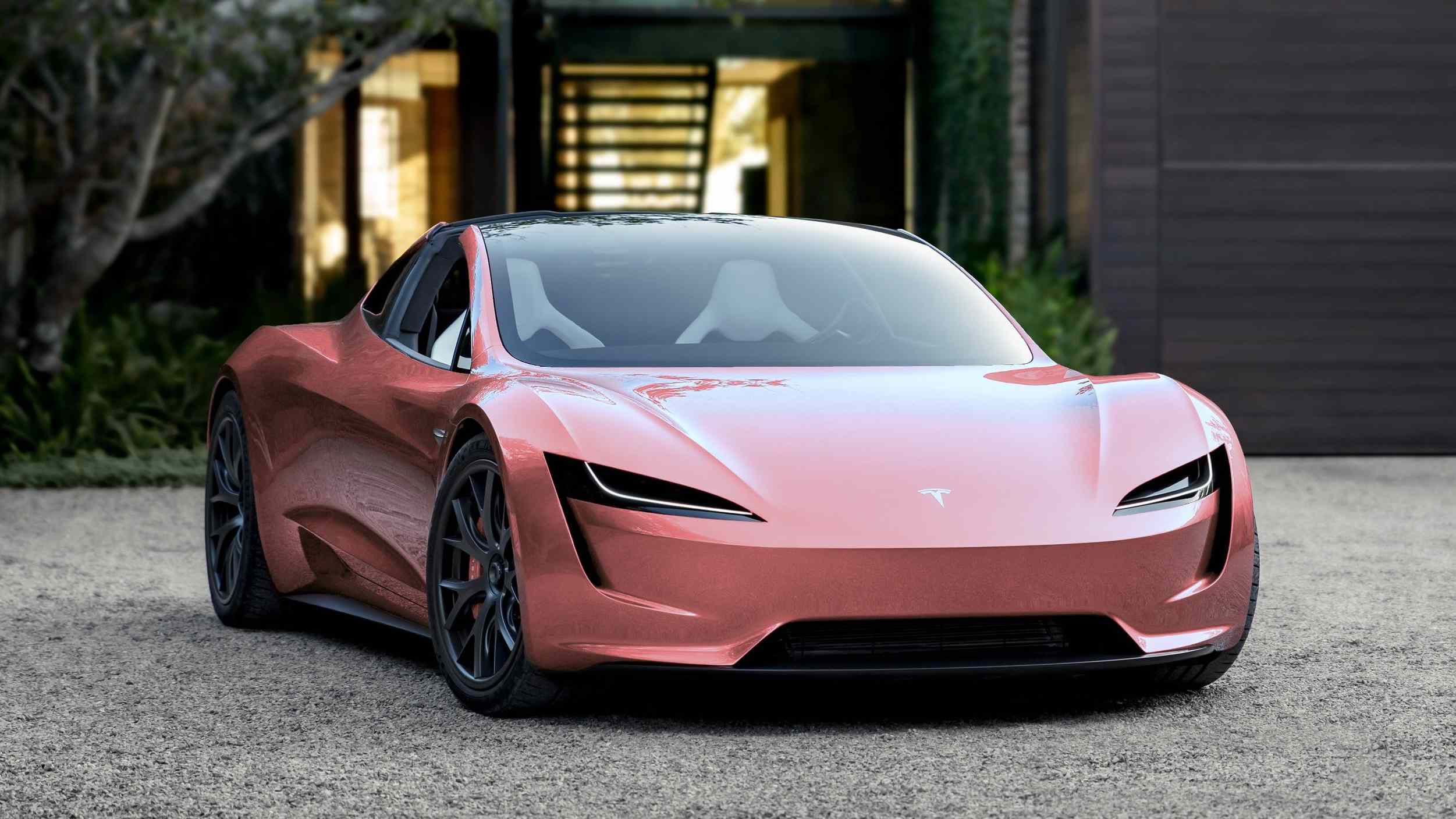
The year 2026 marks a defining chapter for Tesla, a company that has never shied away from rewriting the rules of the automotive world. As the industry rapidly accelerates toward full autonomy, Tesla finds itself navigating a fascinating duality—delivering both heart-pounding performance machines and fully autonomous transportation solutions.
At the center of this transformation is Elon Musk’s bold vision, which now appears clearer than ever. With the long-awaited Tesla Roadster finally approaching launch, alongside the emergence of the CyberCab robo-taxi, Tesla is preparing to reshape not just how we drive—but whether we drive at all.
The Tesla Roadster: A Manual Icon in an Autonomous Era
After nearly a decade of anticipation, delays, and speculation, the second-generation Tesla Roadster is finally scheduled for a May 2026 debut. First revealed back in 2017, the Roadster has become a symbol of ambition—and patience.
A Decade of Delays, But Worth the Wait?
Eight delays later, the Roadster is no longer just another product—it’s a statement. While critics questioned whether Tesla had abandoned the project, recent updates from Tesla’s Q1 2026 earnings call confirm that the Roadster is very much alive—and nearing production.
This isn’t just a comeback; it’s a calculated move to redefine what a supercar can be in the electric age.
Redefining the Supercar Benchmark
Tesla isn’t entering the supercar market quietly. The Roadster is engineered to dominate performance metrics that even the most elite hypercars struggle to match.
Jaw-Dropping Performance Specs
- Acceleration: 0 to 60 mph in an astonishing 1.9 seconds
- Top Speed: Over 250 mph
- Range: Up to 620 miles on a single charge
- Battery: Massive 200 kWh battery pack
These figures place the Roadster in direct competition with electric hypercars like the Rimac Nevera and BYD YangWang U9—but Tesla aims to go even further.
Next-Level Aerodynamics
Recent patent filings reveal that Tesla is incorporating advanced aerodynamic systems, some inspired by technologies once banned in Formula 1. These innovations could dramatically enhance downforce, stability, and speed, giving the Roadster a distinct edge.
The “Manual” Exception: A Driver’s Dream
Here’s where things get truly interesting.
While Tesla is aggressively pushing toward a fully autonomous future, the Roadster stands apart. It is expected to be the only manually driven car in Tesla’s future lineup.
Why Manual Still Matters
The Roadster is being positioned as a “halo product”—a vehicle that showcases the peak of engineering excellence rather than mass-market practicality.
- It celebrates the joy of driving
- It appeals to enthusiasts and collectors
- It represents the emotional side of Tesla
In a world where cars may soon drive themselves, the Roadster becomes a symbol of human connection to machines.
The CyberCab: Tesla’s Autonomous Revolution
On the opposite end of the spectrum lies the Tesla CyberCab—a vehicle designed for a world where drivers are no longer needed.
Recently spotted at Giga Texas, the CyberCab is transitioning from concept to reality, signaling Tesla’s readiness to scale autonomous transportation.
Revolutionizing Manufacturing
Tesla is not just redesigning vehicles—it’s rethinking how they’re built.
Molded-In Color Technology
One of the CyberCab’s most groundbreaking innovations is the elimination of traditional paint shops.
- Color is molded directly into body panels
- Results in a high-gloss finish
- Reduces cost, weight, and production complexity
This approach could redefine automotive manufacturing efficiency worldwide.
A Car Without Controls
The CyberCab represents Tesla’s boldest step yet:
- No steering wheel
- No pedals
- Fully reliant on camera-based autonomous systems
This design isn’t just futuristic—it’s radical. It signals Tesla’s confidence in its Full Self-Driving (FSD) technology.
Regulatory Confidence and Global Ambitions
Tesla is taking an unconventional path to bring the CyberCab to market.
Self-Certification Strategy
Instead of relying on limited exemptions, Tesla plans to:
- Declare compliance with Federal Motor Vehicle Safety Standards (FMVSS)
- Avoid the typical 2,500-vehicle cap for experimental autonomous vehicles
- Scale production to millions of units annually
This move reflects Tesla’s belief that autonomy is not experimental—it’s ready.
FSD Version 15 and AI4 Hardware: The Brain Behind Autonomy
A key concern for Tesla owners has been whether current hardware can keep up with future software advancements.
Compatibility Confirmed
Elon Musk has reassured users that:
- FSD Version 15 will be fully compatible with AI4 hardware
- The 16GB memory limit is sufficient for upcoming updates
A Complete Software Overhaul
FSD V15 isn’t just an upgrade—it’s a ground-up redesign aimed at:
- Surpassing human driving safety
- Improving decision-making in complex environments
- Enhancing real-time responsiveness
Expected Release Timeline
- Late 2026 to early 2027
This timeline aligns with Tesla’s broader push toward unsupervised autonomy.
The Model Y “L”: A New Premium SUV Contender
With the discontinuation of the Model S and Model X, Tesla has left a noticeable gap in its premium lineup. Enter the Model Y L—a stretched, six-seat SUV designed to fill that void.
A Family-Friendly Upgrade
The Model Y L is more than just a bigger version of the standard Model Y.
Interior Enhancements
- Second-row captain’s chairs
- Large 16-inch central touchscreen
- Enhanced comfort-focused suspension system
These upgrades make it ideal for families seeking both luxury and practicality.
Strategic Market Positioning
Tesla is targeting a segment traditionally dominated by brands like Kia and Hyundai.
Why the Model Y L Matters
- Serves as a successor to the Model X
- Offers a premium experience at a more accessible price point
- Appeals to global markets, including North America and Asia
Recent sightings in the San Francisco Bay Area suggest that a North American launch is imminent.
Tesla’s Dual Strategy: Performance vs Autonomy
What makes Tesla’s 2026–2027 roadmap so compelling is its two-pronged approach:
1. Emotional Driving Experience
- Represented by the Tesla Roadster
- Focused on speed, thrill, and human control
2. Practical Autonomous Future
- Led by the CyberCab
- Focused on efficiency, safety, and scalability
This duality allows Tesla to cater to both enthusiasts and everyday users.
Challenges Ahead
Despite its ambitious plans, Tesla faces several hurdles:
Regulatory Barriers
Autonomous vehicles still face strict regulations worldwide.
Public Trust
Convincing people to trust driverless cars remains a challenge.
Production Scaling
Mass-producing millions of CyberCabs will test Tesla’s manufacturing capabilities.
Why 2026–2027 Will Define Tesla’s Future
The next two years are critical.
- May 2026: Tesla Roadster debut
- Late 2026 / Early 2027: FSD Version 15 rollout
- Ongoing: CyberCab production ramp-up
These milestones will determine whether Tesla can successfully balance innovation with execution.
Conclusion: A Company at a Crossroads
Tesla is no longer just an electric car company—it’s a technology powerhouse shaping the future of mobility.
On one hand, the Tesla Roadster represents the raw thrill of driving, a reminder that cars can still evoke emotion and excitement. On the other, the CyberCab embodies a future where transportation is fully autonomous, efficient, and accessible.
The contrast couldn’t be sharper—but that’s exactly what makes Tesla unique.
As Elon Musk pushes forward, one thing is clear: Tesla isn’t choosing between manual driving and autonomy—it’s mastering both.
And if successful, the company won’t just lead the industry—it will redefine it entirely.
FAQs
1. When will the Tesla Roadster launch?
The Tesla Roadster (second generation) is expected to debut in May 2026, after multiple delays since its original 2017 unveiling.
2. Why has the Tesla Roadster been delayed so many times?
The delays are largely due to advanced engineering challenges, battery development, and Tesla prioritizing other projects like autonomous technology and mass-market vehicles.
3. What is the top speed of the Tesla Roadster?
The Roadster is expected to achieve a top speed of over 250 mph, making it one of the fastest electric cars ever built.
4. How fast can the Tesla Roadster accelerate?
It can go from 0 to 60 mph in just 1.9 seconds, placing it firmly in the hypercar category.
5. What is the range of the Tesla Roadster?
The Roadster is expected to deliver an impressive 620 miles of range on a single charge.
6. Will the Tesla Roadster be fully autonomous?
No, the Roadster is expected to be a manually driven vehicle, making it unique in Tesla’s future lineup focused on autonomy.
7. What is the Tesla CyberCab?
The Tesla CyberCab is a fully autonomous robo-taxi designed without a steering wheel or pedals, aimed at revolutionizing urban transportation.
8. Does the CyberCab have a steering wheel?
No, the CyberCab is designed with no steering wheel or pedals, relying entirely on Tesla’s autonomous driving system.
9. How is the CyberCab different from other Tesla vehicles?
Unlike traditional Teslas, the CyberCab focuses purely on autonomous mobility, eliminating manual controls and emphasizing efficiency and scalability.
10. What is molded-in color technology?
It’s a manufacturing process where color is injected directly into vehicle panels, eliminating the need for paint shops and reducing production costs.
11. What is FSD Version 15?
Full Self-Driving (FSD) Version 15 is Tesla’s upcoming software upgrade, featuring a complete redesign to improve safety and autonomy.
12. Will current Tesla cars support FSD Version 15?
Yes, Tesla has confirmed that AI4 hardware will be compatible with FSD Version 15.
13. When will FSD Version 15 be released?
It is expected to roll out between late 2026 and early 2027.
14. What is the Tesla Model Y L?
The Model Y L is a longer, six-seat version of the Model Y, designed to offer more space and premium features.
15. Why is Tesla introducing the Model Y L?
It fills the gap left by the discontinuation of the Model S and Model X, offering a premium SUV option for families.
16. What makes 2026 important for Tesla?
The year 2026 is crucial because it marks the Roadster launch, CyberCab production expansion, and progress toward full autonomy, shaping Tesla’s future direction.
Read More:
- Starship Flight 12 Secret Plan revealed Destroyed the entire rocket industry
- Elon Musk’s Tesla Bot Gen 3 BIG Announcement | New 2026 Update Here!
- Tesla offers awesome Free Supercharging incentive on an unexpected vehicle
- Tesla launches solution to end Supercharger fights once and for all
- The FCC just said ‘No’ to SpaceX for now
1 thought on “Tesla Roadster NEW Bombshell | Elon Musk Finally LAUNCH!”