
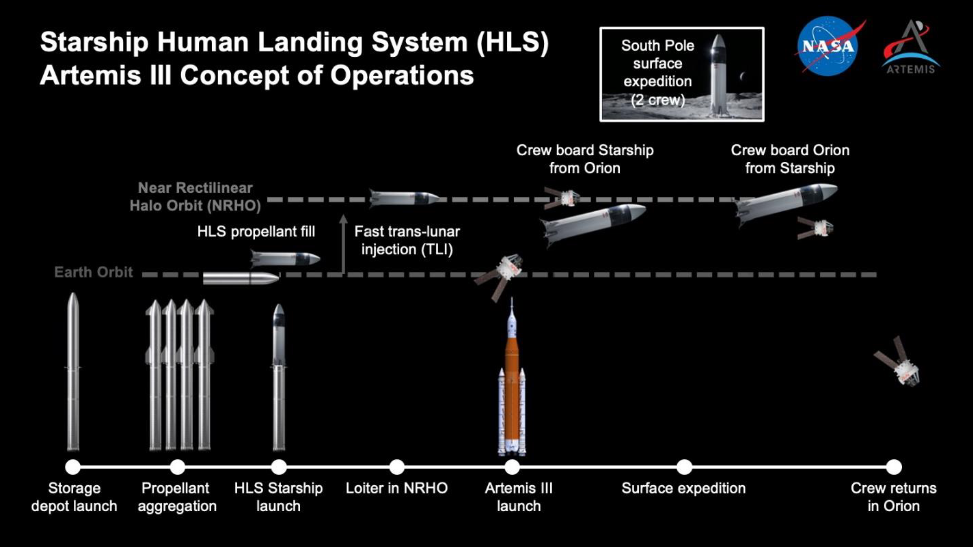
The countdown to humanity’s long-awaited return to the Moon has officially begun. After the success of Artemis 2, the global spotlight is now firmly fixed on Artemis 3—a mission that promises not just a lunar flyby, but boots on the Moon. Led by NASA, this ambitious program is accelerating at an unprecedented pace, fueled by cutting-edge engineering, high-stakes decisions, and a fierce rivalry between SpaceX and Blue Origin.
In this detailed, SEO-friendly deep dive, we’ll explore every critical aspect of Artemis 3—from rocket assembly to technological hurdles and the billionaire-backed race to build the Human Landing System (HLS).
The Vision Behind Artemis 3: A Historic Return to the Moon
Artemis 3 is not just another space mission—it represents humanity’s first return to the lunar surface since the Apollo era. This mission aims to land astronauts on the Moon’s south pole, a region believed to contain water ice and critical resources for future deep space exploration.
Unlike previous missions, Artemis 3 is part of a long-term vision to establish a sustainable human presence on the Moon. This includes building infrastructure, testing technologies, and preparing for future missions to Mars.
NASA’s Stacking Strategy: Building the Mega-Rocket
One of the most complex aspects of Artemis 3 is assembling the massive launch vehicle: the Space Launch System (SLS). Often criticized for its slower pace, NASA is now moving with urgency as timelines tighten.
The Role of the Crawler and Mobile Launcher
At the heart of operations is the crawler-transporter, a massive machine responsible for moving rockets to the launch pad. Recently, it transported critical infrastructure to Launch Complex 39B for inspection.
The mobile launcher, which acts as the structural backbone of the rocket, is now being repositioned back to the Vehicle Assembly Building (VAB). This step is essential for beginning the stacking process of the Artemis 3 rocket.
Stacking the Boosters and Core Stage
The assembly of the SLS rocket is a meticulous, multi-month process requiring extreme precision.
Solid Rocket Boosters
Each booster consists of five motor segments, totaling ten segments for the entire rocket. These are stacked vertically and carefully aligned—a process that typically takes 3 to 4 months.
Core Stage Preparation
The core stage, the massive orange backbone of the rocket, is being prepared at the Michoud Assembly Facility in New Orleans. Once shipped to Florida, it undergoes a delicate rotation from horizontal to vertical.
This stage then goes through 1 to 3 months of outfitting, testing, and verification before integration.
Final Integration
The most critical step is the “mating” process, where the core stage is lowered between the two boosters. This operation alone takes 1 to 2 weeks and requires near-perfect precision.
The Upper Stage Debate: Boeing vs ULA
A major engineering decision still looming over Artemis 3 is the selection of the upper stage.
Currently, Boeing is responsible for the Exploration Upper Stage. However, speculation is growing that United Launch Alliance could enter the picture with its advanced Centaur 5 upper stage.
Why Centaur 5 Matters
The Centaur 5 offers improved payload capacity and mission flexibility. Since Artemis 3 involves docking in Earth orbit rather than direct lunar cargo delivery, it presents a lower-risk opportunity to test new technology.
If adopted, this could significantly enhance future missions and accelerate NASA’s long-term goals.
Orion Spacecraft: The Heat Shield Challenge
The Orion crew capsule, built by Lockheed Martin, is central to astronaut safety. However, it faces a serious engineering challenge.
The “Thermal Riddle”
After Artemis 1, engineers discovered that Orion’s heat shield was shedding material in unexpected ways during re-entry. Instead of controlled ablation, chunks were breaking off—raising concerns about crew safety.
This issue has forced NASA and Lockheed Martin to make a critical decision:
- Refine the existing design
- Or develop a completely new material
Why This Matters
The heat shield protects astronauts from temperatures exceeding 2,700°C during re-entry. Any flaw in this system could jeopardize the entire mission.
Time is of the essence, as the Orion capsule must be ready for integration at the VAB without delaying the Artemis 3 schedule.
The Billionaire Space Race: SpaceX vs Blue Origin
Perhaps the most exciting aspect of Artemis 3 is the competition to build the Human Landing System (HLS). This has turned into a high-stakes race between two of the world’s most influential private space companies.
SpaceX: The Chaotic Sprint
Led by Elon Musk, SpaceX is known for its rapid innovation and risk-taking approach.
Starship HLS Development
The Starship HLS must demonstrate:
- Reliable orbital launches
- Safe lunar landing capabilities
- Successful astronaut transfer operations
Interestingly, orbital refueling—once considered essential—has been deprioritized to meet deadlines.
The Pressure Factor
SpaceX is under intense scrutiny to deliver a working prototype quickly. The development pace has been compared to “cramming for a final exam” at the last minute.
Despite the chaos, SpaceX’s ability to iterate quickly could give it a decisive edge.
Blue Origin: The Methodical Approach
On the other side of the race is Jeff Bezos and his company Blue Origin.
Blue Moon Lander Progress
Blue Origin’s Blue Moon Mark 1 lander has already:
- Passed thermal vacuum testing
- Completed key structural assembly
- Demonstrated stable engineering progress
A Different Philosophy
Unlike SpaceX, Blue Origin follows a slower, highly methodical development process. Every step is carefully planned and executed, minimizing risks.
This “slow and steady” approach could prove advantageous in a mission where reliability is paramount.
Why the Human Landing System (HLS) Is Critical
The HLS is the spacecraft that will carry astronauts from lunar orbit to the Moon’s surface and back.
Without it, Artemis 3 cannot achieve its primary objective.
Both SpaceX and Blue Origin must meet strict NASA requirements, including:
- Crew safety standards
- Precision landing capabilities
- Integration with Orion and Gateway systems
Challenges That Could Impact the Timeline
Despite rapid progress, several challenges could delay Artemis 3:
1. Heat Shield Redesign
Any delay in resolving Orion’s thermal issues could push back the mission.
2. Upper Stage Selection
Switching to a new upper stage like Centaur 5 would require additional testing and integration.
3. HLS Development Risks
Both SpaceX and Blue Origin face technical uncertainties that could impact delivery timelines.
4. Launch Infrastructure Readiness
The mobile launcher and launch pad systems must be fully operational and tested.
The Final Stretch: A High-Stakes Mission
Artemis 3 has been described as a “high-stakes escape room” for NASA leadership. Every component—from rocket assembly to spacecraft design and commercial partnerships—must come together flawlessly.
The next 12 to 18 months will determine whether humanity can return to the Moon on schedule.
What Success Means for Humanity
If Artemis 3 succeeds, it will:
- Mark the first human Moon landing in over 50 years
- Establish a foundation for permanent lunar exploration
- Accelerate plans for Mars missions
- Strengthen international collaboration in space
Conclusion: Speed vs Precision in the Race to the Moon
The Artemis 3 mission is more than a technological challenge—it’s a test of competing philosophies.
- SpaceX brings speed, innovation, and bold experimentation
- Blue Origin offers precision, discipline, and reliability
Whether chaotic brilliance or methodical engineering wins the race, the ultimate goal remains unchanged: returning humans to the lunar surface.
As NASA pushes forward, the world watches in anticipation. The Moon is once again within reach—and this time, we’re planning to stay.
FAQs
1. What is Artemis 3?
Artemis 3 is a NASA-led mission aimed at landing astronauts on the Moon for the first time since the Apollo era, focusing on the lunar south pole.
2. When will Artemis 3 launch?
NASA is targeting a launch window around 2026–2027, depending on technical readiness and testing milestones.
3. What is the main goal of Artemis 3?
The primary goal is to achieve a successful human lunar landing and begin building a sustainable presence on the Moon.
4. What rocket will be used for Artemis 3?
Artemis 3 will use the Space Launch System (SLS), NASA’s most powerful rocket designed for deep space missions.
5. What is the Orion spacecraft?
The Orion crew capsule is designed to carry astronauts safely from Earth to lunar orbit and back.
6. What is the Human Landing System (HLS)?
The HLS is the spacecraft that will transport astronauts from lunar orbit to the Moon’s surface and return them safely.
7. Which companies are building the HLS?
SpaceX and Blue Origin are competing to develop the Human Landing System.
8. Why is the Moon’s south pole important?
The south pole contains water ice, which can be used for drinking water, oxygen, and even rocket fuel.
9. What challenges is Artemis 3 facing?
Major challenges include the Orion heat shield issue, HLS development, and rocket assembly timelines.
10. What is the heat shield problem in Orion?
During Artemis 1, the heat shield showed unexpected material loss during re-entry, raising safety concerns.
11. What is the role of SpaceX in Artemis 3?
SpaceX is developing the Starship HLS, focusing on rapid innovation and fast testing cycles.
12. How is Blue Origin contributing to Artemis 3?
Blue Origin is working on the Blue Moon lander, emphasizing a methodical and reliable approach.
13. What is the Space Launch System (SLS)?
The SLS is a heavy-lift rocket designed to carry astronauts and cargo beyond Earth orbit.
14. Will Artemis 3 lead to Mars missions?
Yes, Artemis 3 is a stepping stone for future Mars exploration, helping test technologies and systems.
15. How long will the Artemis 3 mission last?
The mission duration will vary, but it is expected to last several weeks, including time in lunar orbit and surface operations.
16. Why is Artemis 3 important for humanity?
Artemis 3 will mark a new era of space exploration, enabling long-term lunar missions and advancing human presence beyond Earth.
Read More:
- SpaceX Found Something Weird in Starship Booster’s 33-Engine Static Fire test…No Launch in May
- Tesla Semi sends clear message to Diesel rivals with latest move
- Tesla Cybertruck’s head-scratching trim sold terribly, recall documents reveal
- Tesla Model X shocks everyone by crushing every other used car in America
- Tesla’s biggest rivals fights charging wait times with a modern approach