
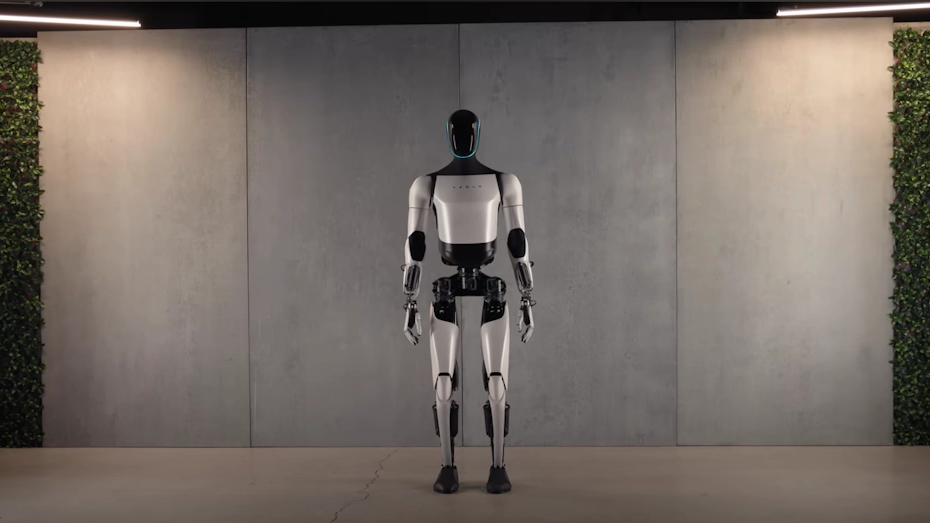
The global humanoid robotics industry is entering a completely new era. For years, robotics companies focused on flashy demonstrations, viral dance videos, and carefully scripted laboratory performances. While these demonstrations looked impressive, they failed to solve the biggest challenge in robotics: creating a scalable humanoid robot capable of operating autonomously in unpredictable real-world environments.
Now, Tesla Optimus Gen 3 is changing everything.
Powered by Tesla’s revolutionary AI5 silicon architecture, the company is attempting to transform humanoid robots from expensive research experiments into a mass-produced automated workforce capable of reshaping industries worldwide. Unlike traditional robotics firms that rely heavily on cloud computing and third-party components, Tesla is using its proven manufacturing expertise, vertical integration strategy, and edge AI processing to build a robot designed for industrial-scale deployment.
In this article, we’ll break down how the Tesla Bot Gen 3 AI5 Upgrade could fundamentally disrupt the robotics industry, redefine automation economics, and potentially dominate the future of human labor.
The Evolution of Humanoid Robotics
For decades, robotics development focused heavily on mechanical demonstrations rather than real-world productivity. Companies showcased robots capable of:
- Dancing
- Running obstacle courses
- Performing athletic flips
- Mimicking conversations
- Executing scripted gestures
While these demonstrations highlighted advancements in engineering and software, they lacked practical industrial utility.
The missing ingredient was always real-time autonomous intelligence.
A humanoid robot operating in the real world must constantly:
- Analyze its surroundings
- Maintain balance
- Handle fragile objects
- Navigate crowded environments
- Adjust movement dynamically
- Make split-second decisions
This requires an extraordinary amount of computational power.
Tesla believes the solution lies in its custom-designed AI5 processor.
What Is Tesla AI5 Chip?
The AI5 chip is the computational brain behind Optimus Gen 3. According to Tesla’s engineering goals, the chip is designed to deliver performance comparable to Nvidia’s most advanced data-center GPUs while operating inside a mobile humanoid robot.
This is one of the biggest breakthroughs in edge computing for robotics.
Key AI5 Specifications
1. Massive Processing Power
Tesla’s AI5 processor reportedly delivers data-center-level AI performance in a compact mobile platform. This enables the robot to process enormous amounts of sensory data locally without relying on remote servers.
2. Low Power Consumption
Despite its extreme performance, the chip only consumes approximately 250 watts of power. This makes it practical for battery-powered mobile robots.
3. Compact Form Factor
The entire AI system fits directly inside the robot’s chest cavity. Unlike older robotics systems that require external servers or backpack-mounted hardware, Optimus Gen 3 operates as a fully integrated autonomous platform.
4. Advanced Manufacturing
Tesla has already completed the AI5 tapeout phase, meaning the physical chip design has been finalized and entered production with fabrication partners like TSMC and Samsung.
Why Humanoid Robots Are Harder Than Self-Driving Cars
Many people assume autonomous vehicles are more difficult than humanoid robots. In reality, humanoid automation is significantly more complex.
Self-Driving Cars Operate in Structured Environments
Autonomous vehicles primarily navigate:
- Roads
- Lanes
- Traffic signals
- Predictable traffic rules
A car can avoid hazards simply by braking or steering away.
Humanoid Robots Operate in Unstructured Environments
A humanoid robot must interact physically with the world. That means understanding:
- Weight distribution
- Surface friction
- Object fragility
- Human motion patterns
- Balance dynamics
- Finger pressure control
For example, Optimus must know how much force to apply when picking up:
- A glass cup
- A cardboard box
- Industrial components
- Electronic devices
Too much pressure breaks the object. Too little pressure drops it.
This combination of visual intelligence and motor intelligence requires enormous computational capability running locally in real time.
Why Local Edge Computing Is Revolutionary
One of Tesla’s biggest strategic decisions is prioritizing local edge AI instead of cloud robotics.
Problems With Cloud-Based Robotics
Traditional cloud-dependent robots suffer from major limitations:
- Internet latency
- Connection interruptions
- Delayed response times
- Security vulnerabilities
- Dependency on external servers
Imagine a service robot carrying food through a crowded restaurant. If its internet connection drops for even a second, it cannot freeze mid-operation.
That creates major safety risks.
Tesla’s Edge AI Advantage
The AI5 chip allows Optimus Gen 3 to process all sensor data locally.
Benefits of Local Edge Computing
| Feature | Tesla AI5 Edge System | Traditional Cloud Robotics |
|---|---|---|
| Network Dependency | Fully autonomous | Requires internet |
| Response Speed | Near-instant | Delayed |
| Reflex Processing | Local | Remote |
| Data Security | On-device | Constant streaming |
| Reliability | Extremely high | Variable |
Because the robot processes information directly onboard, it can make immediate decisions regarding:
- Balance adjustments
- Grip control
- Collision avoidance
- Walking corrections
- Human interaction
This dramatically improves reliability and safety.
Tesla Optimus Gen 3 Hands and Actuators
The AI system alone is not enough. A humanoid robot is only useful if it can physically manipulate objects effectively.
Tesla redesigned the mechanical architecture of Optimus Gen 3 with a heavy focus on custom actuators and dexterous robotic hands.
22 Degrees of Freedom
The updated hand assembly includes 22 degrees of freedom (DoF), allowing highly advanced movement and flexibility.
This enables the robot to:
- Grasp delicate objects
- Handle industrial tools
- Lift cargo
- Operate machinery
- Sort materials
- Perform repetitive factory tasks
Why Custom Actuators Matter
Instead of using generic third-party robotics components, Tesla engineered custom actuators for:
- Hips
- Knees
- Shoulders
- Wrists
- Fingers
This provides several major advantages.
1. Better Torque Optimization
Tesla can fine-tune the balance between:
- Strength
- Speed
- Weight
- Power efficiency
2. Lower Manufacturing Cost
Vertical integration eliminates expensive supplier markups.
3. Easier Mass Production
Custom-designed components are optimized specifically for scalable manufacturing.
Tesla Is Transforming Fremont Factory for Robotics
Tesla’s commitment to humanoid robotics is becoming increasingly visible through its manufacturing strategy.
Reports suggest Tesla is reallocating production space previously used for:
toward the Optimus robotics program.
This is an enormous signal.
Why This Matters
The Model S and Model X were once Tesla’s flagship products that proved electric vehicles could compete globally.
By repurposing factory infrastructure for humanoid robots, Tesla is effectively signaling that:
Humanoid robotics may become more important than automobiles in the long term.
This shift represents a fundamental transformation in Tesla’s corporate identity.
Tesla is no longer just a car company.
It is becoming an AI-driven automation company.
Tesla’s Biggest Advantage: The Data Feedback Loop
One of the most powerful aspects of Tesla’s robotics strategy is its real-world data collection system.
Most robotics companies struggle because they lack access to massive amounts of diverse real-world training data.
Tesla already solved this problem with Full Self-Driving (FSD).
Now it’s applying the same strategy to humanoid robots.
How the Optimus Feedback Loop Works
Step 1: Deploy Robots in Tesla Factories
Thousands of Optimus units will first operate inside Tesla facilities such as:
Step 2: Robots Perform Real Tasks
Robots will handle repetitive industrial activities like:
- Material movement
- Sorting workflows
- Logistics support
- Quality inspections
- Sub-assembly transportation
Step 3: AI5 Captures Failure Data
Every mistake becomes valuable training data.
The robot records:
- Camera footage
- Sensor telemetry
- Joint movement
- Pressure readings
- Motor strain information
Step 4: Tesla Retrains Neural Networks
Tesla’s supercomputers process the collected data to improve the AI system.
Step 5: OTA Updates Improve Entire Fleet
Updated AI models are pushed back to all robots using over-the-air updates.
This means:
Every Optimus robot continuously becomes smarter over time.
Why Tesla Could Crush Traditional Robotics Companies
Tesla is changing the rules of competition.
Instead of competing purely on robotic demonstrations, Tesla is competing on:
- Manufacturing scale
- Cost reduction
- AI infrastructure
- Data collection
- Vertical integration
This is a massive strategic difference.
Mass Production Is Tesla’s Secret Weapon
Many robotics companies build impressive prototypes.
Very few can manufacture millions of units affordably.
Tesla already mastered large-scale production during the painful Model 3 production hell era.
Now the company is applying those lessons to robotics.
Tesla’s Manufacturing Advantages
1. Supply Chain Control
Tesla controls:
- AI chips
- Batteries
- Software
- Vision systems
- Mechanical components
2. Cost Reduction Through Scale
As production increases, Tesla can aggressively reduce:
- Manufacturing costs
- Component complexity
- Assembly time
This is critical because a robot costing $250,000 is commercially impractical for mass deployment.
A cheaper robot creates massive disruption.
3. Continuous Learning at Scale
Every deployed robot acts as a data-gathering node.
Competitors using small research fleets simply cannot match Tesla’s scaling potential.
Tesla Optimus Gen 3 Deployment Roadmap
Tesla’s rollout strategy appears carefully phased.
Phase 1: Factory Deployment
The first Optimus units will operate inside highly controlled industrial environments.
Why Factories Are Ideal
Factories provide:
- Predictable pathways
- Repetitive tasks
- Controlled environments
- Reduced safety risks
This allows Tesla to validate:
- Battery lifespan
- Mechanical durability
- Thermal performance
- AI reliability
- Long-term operation
Phase 2: Semi-Public Environments
After factory validation, Tesla plans to expand into:
- Supercharger stations
- Tesla Diners
- Corporate service environments
This introduces far more complexity.
The robots must navigate around:
- Customers
- Children
- Random movement
- Noise
- Dynamic lighting
- Weather variability
Success here would prove Optimus can function as a true service robot.
Phase 3: Commercial and Residential Markets
The final stage involves widespread deployment across:
- Warehouses
- Retail stores
- Commercial logistics
- Residential homes
By this stage, Optimus would have accumulated millions of operational hours and vast amounts of real-world interaction data.
Could Tesla Automate Human Labor?
This is the biggest question surrounding Optimus Gen 3.
If Tesla succeeds, the implications are enormous.
Humanoid robots could eventually perform:
- Warehouse operations
- Factory labor
- Food service
- Logistics support
- Retail assistance
- Elder care
- Household chores
The potential economic impact could rival or even exceed the automobile revolution.
Risks and Challenges Tesla Still Faces
Despite the excitement, major obstacles remain.
1. Safety Concerns
Humanoid robots operating near humans must achieve extremely high reliability standards.
Even minor failures could create serious risks.
2. Battery Limitations
Continuous operation requires substantial battery efficiency improvements.
3. AI Complexity
General-purpose robotics remains one of the hardest problems in artificial intelligence.
4. Public Acceptance
Many consumers remain uncomfortable with autonomous humanoid robots operating in public spaces.
Why the Robotics Industry Is Nervous
Tesla’s strategy threatens the existing robotics ecosystem because it combines:
- AI expertise
- Manufacturing scale
- Real-world deployment
- Data collection
- Vertical integration
Most robotics firms specialize in only one or two of these areas.
Tesla combines all of them simultaneously.
That creates an extremely difficult competitive environment.
The Future of Tesla Optimus Gen 3
Whether Tesla fully succeeds or not, one thing is already clear:
The robotics industry is shifting from research laboratories to scalable industrial deployment.
Optimus Gen 3 represents one of the first serious attempts to build a humanoid robot not as a science experiment, but as a mass-manufactured economic tool.
If Tesla can solve the remaining challenges surrounding:
- AI reliability
- Battery efficiency
- Safety
- Manufacturing cost
- Real-world adaptability
then the company could fundamentally reshape global labor markets over the coming decades.
Final Thoughts
The Tesla Bot Gen 3 AI5 Upgrade is far more than just another robotics demonstration. It represents a strategic attempt to merge:
- Advanced AI
- Edge computing
- Mass manufacturing
- Real-world automation
into a single scalable platform.
Tesla’s emphasis on local AI processing, custom actuators, mass production, and continuous data learning gives Optimus Gen 3 a fundamentally different architecture from traditional humanoid robots.
The real disruption is not the robot itself.
The real disruption is Tesla’s ability to manufacture and improve these robots at scale.
If successful, Optimus Gen 3 could become one of the most transformative technologies of the 21st century, potentially redefining labor, productivity, and automation forever.
FAQs
1. What is Tesla Optimus Gen 3?
Tesla Optimus Gen 3 is Tesla’s latest humanoid robot platform designed to perform real-world industrial, commercial, and eventually residential tasks using advanced AI5 edge computing technology.
2. What is the AI5 chip in Tesla Bot Gen 3?
The AI5 chip is Tesla’s custom-built AI processor that powers Optimus Gen 3. It delivers extremely high computational performance while consuming relatively low power, enabling real-time decision-making directly inside the robot.
3. Why is Tesla using local edge computing instead of cloud AI?
Tesla uses local edge AI to reduce latency and improve reliability. This allows Optimus Gen 3 to function autonomously without depending on a constant internet connection, making it safer and faster in real-world environments.
4. How powerful is Tesla’s AI5 processor?
According to reports, Tesla’s AI5 processor offers performance comparable to high-end data-center GPUs while operating inside a compact humanoid robot using around 250 watts of power.
5. What makes humanoid robots harder than self-driving cars?
Humanoid robots must combine visual intelligence with motor intelligence. Unlike cars, robots need to physically interact with objects, maintain balance, and manipulate items with precise force control.
6. What tasks can Tesla Optimus Gen 3 perform?
Optimus Gen 3 is expected to handle tasks such as:
- Material transportation
- Factory automation
- Logistics support
- Sorting workflows
- Quality inspections
- Food service assistance
- Household chores
7. How many degrees of freedom does Optimus Gen 3 have?
Tesla’s updated robotic hand reportedly features 22 degrees of freedom (DoF), enabling highly flexible and human-like hand movement.
8. Why are Tesla’s custom actuators important?
Tesla designed custom actuators for the robot’s joints to optimize:
- Torque
- Speed
- Weight distribution
- Power efficiency
- Manufacturing scalability
This improves both performance and production efficiency.
9. Where will Tesla first deploy Optimus robots?
Tesla plans to first deploy Optimus Gen 3 inside its own factories, including:
- Fremont Factory
- Gigafactory Texas
These controlled environments help train and improve the robots safely.
10. How does Tesla train Optimus robots?
Every Optimus robot collects operational data during tasks. Tesla uses this data to retrain AI models in its supercomputing systems and then distributes improvements through over-the-air (OTA) updates.
11. Will Tesla robots replace human workers?
Tesla Optimus robots are primarily intended to automate repetitive and physically demanding tasks. While they may reduce some labor needs, they could also create new jobs in robotics maintenance, AI engineering, and automation management.
12. Why is Tesla considered a major threat to the robotics industry?
Tesla combines:
- AI development
- Mass manufacturing
- Battery technology
- Real-world deployment
- Vertical integration
This gives the company a significant advantage over traditional robotics startups.
13. What industries could Optimus Gen 3 disrupt?
Optimus Gen 3 could impact industries such as:
- Manufacturing
- Warehousing
- Retail
- Hospitality
- Logistics
- Healthcare
- Residential services
14. Is Tesla Optimus Gen 3 already available commercially?
No, Optimus Gen 3 is still in the development and testing phase. Tesla plans to gradually scale deployments before wider commercial availability.
15. What are the biggest challenges facing Tesla Optimus?
Major challenges include:
- AI reliability
- Battery limitations
- Human safety standards
- Real-world adaptability
- Public acceptance of humanoid robots
16. Could Tesla Optimus change the future of automation?
Yes. If Tesla successfully scales Optimus Gen 3, it could revolutionize automation by creating affordable humanoid robots capable of performing a wide variety of physical tasks across multiple industries.
Read More: