
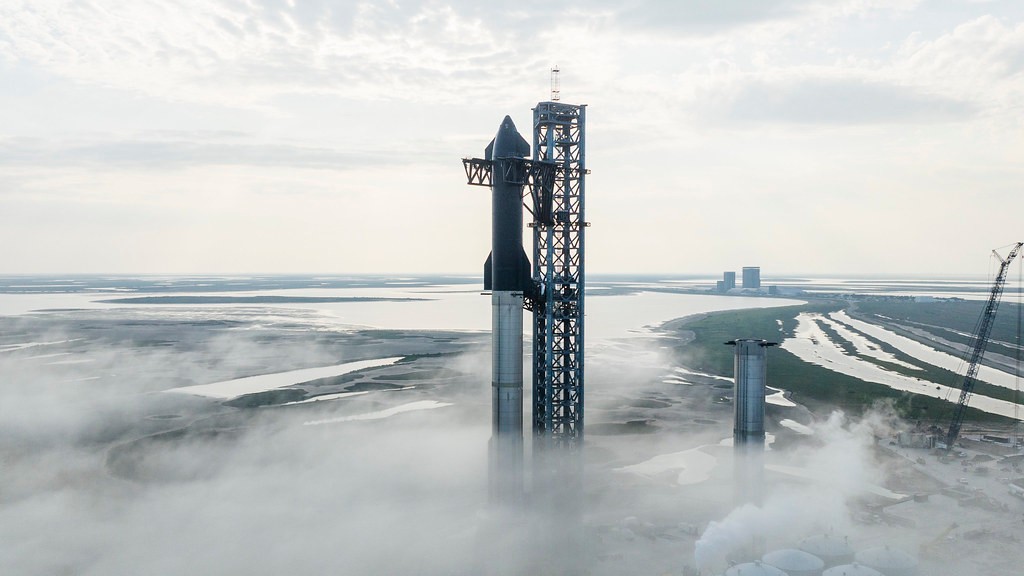
The modern aerospace industry is no longer just about rockets and satellites. It has evolved into a high-stakes geopolitical and commercial chess match where governments, private corporations, and regulatory agencies are battling for dominance in the future of space exploration.
Following the dramatic Starship Flight 12 launch on May 22, 2026, the entire aerospace sector shifted almost overnight. While SpaceX suffered a major setback after catastrophic failures involving Super Heavy Booster 19, rival company Blue Origin gained momentum by clearing its own FAA investigation and preparing the powerful New Glenn rocket for a major commercial mission.
At the same time, China’s space program accelerated its lunar ambitions with a detailed hardware-backed strategy to land astronauts on the Moon by 2030. This growing pressure is forcing NASA, SpaceX, and other Western aerospace leaders into one of the most competitive periods in modern space history.
The result is a rapidly changing environment where engineering reliability, regulatory approval, manufacturing speed, and geopolitical strategy are now equally important.
SpaceX Starship Flight 12 Ended in Disaster
What Happened to Booster 19?
Although the upper-stage spacecraft, Ship 39, successfully completed much of its mission profile, the real story of Flight 12 centered around the catastrophic failure of Super Heavy Booster 19.
During the ascent phase, one or more of the booster’s 33 Raptor engines experienced severe mechanical anomalies. While SpaceX initially attempted recovery procedures, the problems escalated rapidly after stage separation.
The Sequence of Failures
Engine Malfunctions During Ascent
Shortly after liftoff, engineers observed abnormal behavior in at least one Raptor engine. This immediately raised concerns about propulsion stability and booster recovery capability.
Failed Boostback Burn
After stage separation, Booster 19 attempted its planned boostback burn, a maneuver designed to reverse the rocket’s trajectory and guide it toward a controlled splashdown zone in the Gulf of Mexico.
However, multiple engines failed to restart correctly.
Instead of a stable engine ignition sequence, the booster showed highly irregular performance, forcing the system into a partial burn profile.
Premature Shutdown
The recovery burn terminated far earlier than planned because enough engines could not ignite simultaneously.
This caused the booster to lose critical velocity control and descent stability.
Massive Explosion Before Landing
Moments before reaching the ocean surface, Booster 19 exploded violently, ending any possibility of a successful recovery.
The incident was particularly damaging because previous Starship missions had demonstrated cleaner splashdowns and improved booster control. Flight 12 represented a major regression in reliability.
FAA Officially Grounds Starship Program
FAA Initially Appeared Optimistic
Immediately after the launch, the Federal Aviation Administration (FAA) issued statements suggesting the situation might not trigger a full investigation.
The agency confirmed:
- No public injuries occurred
- No private property was damaged
- Debris remained inside approved hazard zones
- Public safety systems worked correctly
This initially led many analysts to believe that Flight 13 could proceed as early as mid-summer 2026.
However, the optimism did not last long.
FAA Reverses Position After Engineering Review
Following a deeper technical assessment, the FAA officially classified Flight 12 as a formal aerospace mishap.
That single decision dramatically changed SpaceX’s immediate future.
Under FAA regulations, SpaceX is now required to:
- Conduct a full technical investigation
- Identify the exact root cause of Booster 19 failures
- Submit a corrective engineering action plan
- Receive FAA approval before returning to flight
This means the Starship program is effectively grounded until regulators are fully satisfied with the investigation results.
The FAA’s decision highlights an important shift in how Starship is being treated.
In earlier years, Starship launches were viewed primarily as experimental tests. But now that the vehicle is approaching true orbital capability and future NASA missions, regulators are demanding significantly higher operational discipline.
Why the Booster 19 Failure Matters So Much
Starship Is Central to NASA’s Future
The grounding of Starship affects much more than SpaceX itself.
The vehicle is a cornerstone of several critical programs:
- NASA Artemis Moon missions
- Future Mars colonization plans
- Commercial satellite deployment
- Military logistics concepts
- Deep-space infrastructure projects
Any long-term delay could ripple across the entire aerospace industry.
NASA’s Artemis timeline already depends heavily on Starship’s lunar landing system variant. If SpaceX cannot stabilize booster reliability, future Moon missions may face additional delays.
Flight 13 Delayed Until At Least Mid-to-Late July 2026
Regulatory Reviews Take Time
Although SpaceX continues internal hardware preparation, FAA oversight is now the primary bottleneck.
Industry experts believe the earliest realistic launch window for Flight 13 is now sometime in mid-to-late July 2026.
Even if engineering fixes are completed rapidly, the FAA must still:
- Review documentation
- Validate corrective measures
- Analyze safety impacts
- Approve updated operational procedures
This process can take weeks or even months depending on the complexity of the identified problems.
Ship 40 and Booster 20 Continue Testing
SpaceX Is Still Preparing New Hardware
Despite the grounding, work at Starbase, Texas has not stopped.
Ship 40 Progress
The next-generation upper stage, Ship 40, has already completed cryogenic proof testing.
Engineers are currently:
- Installing Raptor engines
- Finalizing avionics integration
- Performing system calibrations
- Preparing for static fire tests
If everything proceeds smoothly, Ship 40 could reach the launch pad in early June.
Booster 20 Faces Longer Validation Process
The situation is more complex for Booster 20.
Before flight integration, the booster must pass:
- Structural inspections
- Cryogenic testing
- Full engine integration
- Extensive static fire campaigns
Given the Flight 12 failure, regulators will likely scrutinize every phase much more aggressively than before.
Orbital Launch Pad 2 Survived Surprisingly Well
A Major Victory for SpaceX Infrastructure
One major positive outcome from Flight 12 was the survival of Orbital Launch Pad 2.
This is extremely important because the launch system experiences nearly unimaginable stress during ignition.
The Super Heavy booster produces approximately:
- 18 million pounds of thrust
- Extreme thermal loads
- Massive acoustic vibrations
- Severe pressure waves
Despite these conditions, Pad 2 sustained only minor cosmetic damage.
That resilience may have saved SpaceX months of reconstruction work.
If the launch pad had suffered major destruction, Starship operations could have faced delays extending well into 2027.
SpaceX Can No Longer Move Fast and Break Things
The Starship Program Is Maturing
For years, SpaceX embraced a philosophy of rapid iteration:
Launch quickly, learn from failures, improve aggressively.
That strategy worked extremely well during Starship’s early development phase.
However, the environment has changed.
As Starship transitions into:
- Orbital operations
- NASA partnerships
- Human spaceflight systems
- National security applications
the company is being forced to adopt stricter aerospace standards.
Mechanical reliability now matters more than raw testing speed.
The FAA grounding represents a clear signal that Starship has entered a new operational era.
Blue Origin Gains Massive Advantage During SpaceX Pause
New Glenn Cleared for Flight
While SpaceX struggles with regulators, Blue Origin is moving aggressively forward.
The company recently completed its own FAA investigation after experiencing upper-stage problems during the New Glenn NG3 mission.
On May 22, 2026, Blue Origin officially announced that the FAA had closed the investigation and fully cleared New Glenn for future launches.
This creates a rare opportunity for Jeff Bezos’ aerospace company to capture market momentum.
New Glenn’s Massive Payload Capacity Changes the Market
Why New Glenn Is a Serious Threat
One of New Glenn’s biggest advantages is its enormous 7-meter payload fairing.
For comparison:
- Falcon 9 fairing: 5.2 meters
- New Glenn fairing: 7 meters
That extra internal volume allows New Glenn to carry significantly larger satellite constellations.
Blue Origin claims the rocket can deploy:
- Up to 48 satellites simultaneously
- Large military payloads
- Heavy commercial cargo
- Deep-space exploration systems
This capability directly challenges SpaceX’s dominance in commercial launch services.
Project Kuiper and the NG4 Mission
Amazon Wants Independence from SpaceX
The upcoming NG4 mission represents a critical moment for Blue Origin.
The launch will carry a large batch of Project Kuiper satellites, Amazon’s ambitious low-Earth orbit internet constellation.
Previously, delays involving:
- New Glenn
- Ariane 6
- Vulcan
forced Amazon to purchase launch slots from SpaceX itself.
That created an awkward situation where Amazon depended on a direct competitor for access to orbit.
A successful NG4 mission would dramatically reduce that dependence.
Why the Heavy-Lift Market Is Becoming Extremely Competitive
SpaceX Monopoly Faces Real Challenges
For years, SpaceX dominated reusable heavy-lift launch systems almost uncontested.
Now the landscape is changing rapidly.
Blue Origin Advantages
Blue Origin is developing:
- Reusable first-stage systems
- Large payload capabilities
- Commercial satellite deployment services
- Deep-space mission support
Other Competitors Emerging
Additional competition is arriving from:
- United Launch Alliance
- ArianeGroup
- China’s CNSA
- India’s ISRO
- Private launch startups
The result is a multi-billion-dollar market entering one of its most competitive phases ever.
China’s Moon Program Is Accelerating Faster Than Expected
China Officially Targets 2030 Lunar Landing
While American companies battle commercially, China is pursuing a long-term national strategy focused on permanent lunar infrastructure.
Chinese officials recently confirmed a coordinated plan to land astronauts on the Moon by 2030.
Unlike symbolic exploration missions, China’s strategy focuses on building sustainable operational systems.
China’s Three-Part Lunar Architecture
1. Tiangong Space Station
China is using the Tiangong Space Station as a long-duration research platform for:
- Microgravity experiments
- Life support validation
- Solar technology testing
- Fluid dynamics analysis
These experiments are directly supporting future lunar mission planning.
2. Chang’e Robotic Missions
The upcoming Chang’e 7 mission will target the lunar south pole.
The mission includes:
- Orbital relay systems
- Surface landers
- Autonomous rovers
- Hopper vehicles designed to explore shadowed craters
One major objective is identifying water ice reserves that could support future lunar bases.
3. Long March 10 and Mengzhou Spacecraft
China is also constructing:
- The Long March 10 heavy-lift rocket
- The Mengzhou crew spacecraft
These systems are specifically designed for crewed lunar transport missions.
China Is Closing the Experience Gap with NASA
Continuous Human Spaceflight Matters
One of NASA’s biggest historical advantages has been operational experience.
China is rapidly reducing that gap through continuous astronaut rotations aboard Tiangong.
This provides:
- Long-duration mission experience
- Deep-space operational data
- Human systems testing
- Real-world engineering validation
By 2030, China could possess one of the world’s most advanced lunar infrastructures.
The New Space Race Is No Longer Theoretical
Manufacturing and Hardware Now Define Victory
The current aerospace race is no longer about PowerPoint presentations or conceptual studies.
Success now depends on:
- Manufacturing scale
- Launch reliability
- Regulatory approval
- Infrastructure resilience
- Operational discipline
- Real hardware deployment
This is why the coming months are so critical.
What Happens Next for SpaceX?
Key Challenges Ahead
SpaceX now faces several urgent priorities:
Fix Booster Reliability
The company must identify exactly why Booster 19 failed.
Satisfy FAA Regulators
Without FAA approval, no future Starship launches can occur.
Maintain NASA Confidence
NASA depends heavily on Starship for Artemis lunar missions.
Compete with Blue Origin
Blue Origin is aggressively targeting commercial launch customers during SpaceX’s pause.
Keep Pace with China
Global geopolitical pressure is increasing as China accelerates toward the Moon.
Final Thoughts
The aerospace industry entered a completely new phase after the events of May 2026.
SpaceX remains the most ambitious private aerospace company in the world, but the FAA grounding of Starship Flight 13 proves that engineering speed alone is no longer enough.
At the same time:
- Blue Origin is rapidly becoming a credible heavy-lift competitor.
- China is executing a disciplined lunar infrastructure strategy.
- NASA faces mounting pressure to maintain leadership in deep-space exploration.
The next few months could determine the balance of power in the future space economy.
For SpaceX, the mission is now clear:
Solve the Booster 19 failures, satisfy the FAA, and return Starship to flight before rivals permanently close the gap.
The future of lunar exploration, Mars colonization, and commercial heavy-lift launch capability may depend on what happens next.
FAQs
1. Why did the FAA stop the SpaceX Starship launch?
The FAA officially halted SpaceX Starship launches after the catastrophic failure of Super Heavy Booster 19 during Flight 12. Regulators classified the incident as a formal aerospace mishap, requiring a complete investigation before Flight 13 can proceed.
2. What happened to Booster 19 during Flight 12?
Booster 19 suffered multiple Raptor engine failures, irregular boostback burn behavior, premature shutdowns, and eventually exploded before completing its planned splashdown landing in the Gulf of Mexico.
3. Is SpaceX Starship grounded right now?
Yes. The Starship program is temporarily grounded until SpaceX completes the FAA-required mishap investigation and receives official approval to resume launch operations.
4. When could SpaceX Flight 13 launch?
Industry analysts estimate that Flight 13 may not launch until mid-to-late July 2026, depending on how quickly SpaceX resolves technical issues and satisfies FAA safety requirements.
5. Did anyone get injured during the Starship Flight 12 accident?
No. According to the FAA, the incident caused zero public injuries, no property damage, and all debris remained inside designated safety zones.
6. What caused the Booster 19 explosion?
The exact root cause is still under investigation, but preliminary reports indicate engine restart anomalies, failed recovery burns, and cascading mechanical failures during descent.
7. What is the FAA mishap investigation process?
The FAA investigation requires SpaceX to:
- Identify the root cause
- Implement corrective engineering actions
- Submit technical documentation
- Receive FAA approval before future launches
8. What is Ship 40 in the Starship program?
Ship 40 is the next-generation Starship upper stage currently undergoing final testing, engine installation, and system integration at Starbase, Texas.
9. What is Booster 20?
Booster 20 is the next Super Heavy rocket booster being prepared for Flight 13. It must complete structural tests, cryogenic testing, and static fire campaigns before launch approval.
10. Was SpaceX’s launch pad damaged during Flight 12?
No major damage occurred. Orbital Launch Pad 2 survived surprisingly well, suffering only minor cosmetic damage despite the massive thrust generated by the Super Heavy booster.
11. Why is Blue Origin gaining attention after SpaceX’s delay?
While SpaceX deals with FAA restrictions, Blue Origin received FAA clearance for its New Glenn rocket and is preparing major commercial missions, giving the company significant momentum.
12. What is the New Glenn NG4 mission?
The NG4 mission is Blue Origin’s upcoming heavy-lift launch that will deploy a large batch of Project Kuiper internet satellites into low-Earth orbit.
13. How is New Glenn different from Falcon 9?
New Glenn features a much larger 7-meter payload fairing, allowing it to carry bigger and heavier payloads than Falcon 9. It is also designed with reusable first-stage technology.
14. What is Project Kuiper?
Project Kuiper is Amazon’s satellite internet constellation designed to compete with SpaceX’s Starlink network by providing global broadband internet coverage.
15. Why is China’s Moon program important?
China’s aggressive lunar strategy could challenge Western dominance in space exploration. The country aims to establish a permanent lunar infrastructure and crewed Moon landing by 2030.
16. What is the Chang’e 7 mission?
Chang’e 7 is China’s advanced lunar south pole mission that will deploy rovers, landers, orbital relays, and autonomous hopper vehicles to search for water ice reserves.
17. How does the Starship delay affect NASA Artemis missions?
Since NASA relies heavily on Starship technology for future Artemis lunar landings, prolonged delays could impact Moon mission timelines and broader deep-space exploration goals.
Read More:
- Tesla Giga Press 4.0 Upgrade! Cybercab Casting Progress BIG Changes
- Sodium-Ion Battery 2026 Tesla: Model 2 $25K, 10,000-cycle future vs LFP reality
- Tesla patent reveals strategy for solving major Full Self-Driving, Optimus issue
- NASA’s first human outpost on the Moon starts now – SpaceX on deck
- Tesla teases going Plaid Mode with the Model 3