
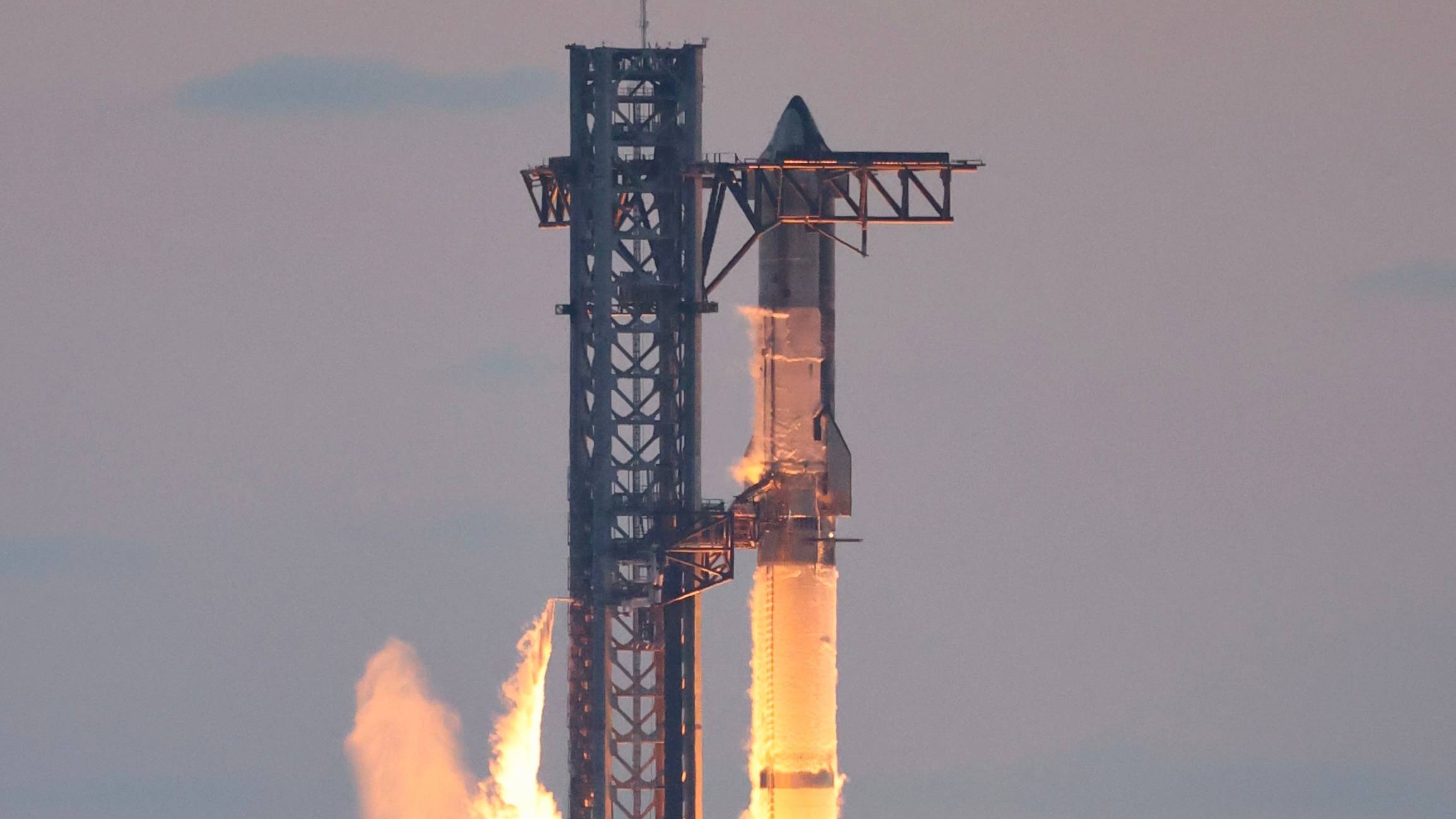
SpaceX Turning Starship Testing Up a Notch, Never Seen Before: The global space industry is entering a new era, and SpaceX is leading the transformation with an unprecedented pace of innovation. What once took years of research, testing, and validation is now happening within days. From rapid Starship testing at Starbase to preparing for the retirement of the legendary Falcon 9, SpaceX is reshaping the future of space transportation.
At the same time, NASA is developing new strategies for lunar exploration under the Artemis program, while China is accelerating development of the Long March 9 rocket to compete in the next generation of heavy-lift spaceflight. This article explores how SpaceX’s latest milestones are redefining the aerospace industry.
SpaceX’s Record-Breaking Starship Testing Pace
SpaceX has dramatically increased the speed of Starship development at its Starbase facility in Boca Chica, Texas. Unlike traditional aerospace programs that require months between major tests, the company now conducts multiple vehicle tests simultaneously.
Within just nine days, SpaceX successfully completed several major milestones involving Ship 40 (S40) and Ship 41 (S41). These included vehicle rollouts, cryogenic proof tests, engine static fires, and rapid returns to production facilities for final upgrades.
This accelerated workflow demonstrates that Starbase has evolved into a high-capacity testing hub capable of processing multiple Starship vehicles in parallel. Such efficiency significantly shortens development timelines and brings operational Starship flights closer than ever.
A New Era of Multi-Vehicle Operations
The testing campaign showcased SpaceX’s ability to alternate between different Starship prototypes without slowing progress. While one vehicle returned for inspections, another immediately occupied the test stand.
This strategy minimizes downtime and allows engineers to collect valuable flight data much faster than conventional aerospace programs. The result is a continuous cycle of testing, learning, and improvement.
Improved Hot-Staging System Boosts Reliability
One of the most important technical upgrades observed during the latest Starship static fire involved the hot-staging ignition sequence.
Previously, Starship relied on three vacuum Raptors and one sea-level Raptor during stage separation. The latest testing introduced a revised configuration using two vacuum Raptors and one sea-level engine.
Why This Upgrade Matters
The updated design offers several significant advantages:
- Higher system redundancy, allowing missions to tolerate certain engine failures.
- Better booster separation dynamics during flight.
- Reduced propellant consumption for the Super Heavy booster.
- Improved reliability for future orbital missions.
These refinements may appear minor, but they significantly improve the overall safety and efficiency of Starship operations.
Starship Flight 13 Is Approaching
Following successful validation tests, SpaceX is preparing Starship Flight 13, which could launch as early as mid-July, pending regulatory approval.
Final Preparations Underway
Ship 40 is currently undergoing:
- Payload integration
- Flight Termination System installation
- Final structural inspections
- Vehicle stacking with Super Heavy Booster 20
Meanwhile, Booster 20 is expected to complete its static fire campaign before receiving final launch approval.
The company’s streamlined launch procedures could eliminate unnecessary vehicle rollbacks, saving valuable preparation time.
Major Infrastructure Upgrades at Launch Pad 2
SpaceX is also investing heavily in ground infrastructure.
Key Improvements Include
Stronger Orbital Launch Mount
The launch mount now features reinforced structural components capable of handling the immense force generated by 33 Raptor engines.
Electric Chopstick System
The famous Mechazilla “chopsticks” now include upgraded electric drive systems that provide:
- Greater positioning accuracy
- Reduced vibration
- Lower maintenance requirements
Enhanced Water Deluge System
SpaceX tested an upgraded dual-phase water deluge system designed to cool both the launch mount and flame trench before and after launch.
This system will be essential once SpaceX resumes booster catch attempts at Starbase.
Falcon 9 Is Slowly Entering Retirement
Although Falcon 9 remains the world’s most successful reusable rocket, SpaceX has begun preparing for its gradual retirement.
The company has reportedly stopped accepting certain future Falcon 9 rideshare bookings beyond 2028, signaling that Starship will eventually replace Falcon across many mission categories.
Why Falcon 9 Still Matters
Despite Starship’s promise, Falcon 9 continues to deliver:
- Commercial satellite launches
- NASA crew missions
- National security payloads
- International Space Station cargo flights
Because of its exceptional reliability, SpaceX plans to maintain Falcon operations until Starship proves itself through sustained orbital success.
Starlink V3 Is Driving the Starship Revolution
One of the biggest reasons behind Starship’s development is the next generation of Starlink satellites.
The upcoming Starlink V3 satellites are considerably larger than previous versions and are specifically designed for Starship’s enormous payload bay.
Using Falcon 9 would dramatically reduce the number of satellites launched per mission, making Starship essential for expanding the constellation toward its long-term goal of tens of thousands of satellites.
Orbital Refueling: Starship’s Biggest Challenge
Launching Starship into orbit is only part of the mission.
To reach the Moon or Mars, Starship must first perform orbital refueling, something never attempted on this scale.
NASA’s Lunar Mission Requirements
According to NASA’s current Human Landing System architecture, a single lunar mission could require approximately 15 Starship tanker launches.
These tanker flights would:
- Launch into Low Earth Orbit.
- Transfer liquid methane and liquid oxygen into an orbital fuel depot.
- Fully refuel the lunar Starship before departure.
Successfully executing this process is one of the most ambitious engineering challenges in modern aerospace.
The Cryogenic Boil-Off Problem
Liquid methane and oxygen must remain at extremely low temperatures.
During long periods in orbit, solar heating gradually causes these propellants to evaporate, reducing available fuel.
This phenomenon, known as cryogenic boil-off, could require additional tanker launches if not effectively controlled.
SpaceX’s Solution: Bigger Rockets and More Launch Pads
To overcome orbital refueling challenges, SpaceX is pursuing two major strategies.
Expanding the Launch Network
The company is building additional Starship launch facilities across Florida alongside Starbase.
Multiple launch pads will allow simultaneous tanker launches, dramatically reducing the time needed to fill orbital fuel depots.
Starship Version 4
SpaceX is already planning Starship V4, a larger version capable of carrying roughly 2,300 metric tons of propellant.
With its increased fuel capacity, future lunar missions may require only five or six tanker launches instead of fifteen.
This would significantly improve mission efficiency while lowering operational costs.
China Responds With Long March 9
SpaceX’s rapid progress has motivated other space powers to accelerate their own heavy-lift programs.
China’s Long March 9 represents its most ambitious reusable rocket project to date.
How Long March 9 Compares
The proposed rocket features:
- Height of up to 140 meters
- 10–11 meter core diameter
- 16-meter payload fairing
- Methane-liquid oxygen propulsion
- Projected payload of approximately 150 metric tons to Low Earth Orbit
China is also constructing highly automated manufacturing facilities inspired by SpaceX’s production model.
However, achieving true rocket reusability requires sophisticated guidance software, durable heat shields, and reliable landing systems—areas where SpaceX currently maintains a significant lead.
The Future of Space Transportation
The aerospace industry is no longer defined by occasional flagship missions. Instead, success depends on rapid manufacturing, high launch frequency, rocket reusability, and cost efficiency.
SpaceX has demonstrated that Starship is steadily moving from an experimental prototype to an operational transportation system capable of supporting lunar exploration, Mars missions, and next-generation satellite deployments.
While NASA focuses on sustainable deep-space exploration and China develops competing heavy-lift rockets, SpaceX continues to push the boundaries of what’s possible.
If current progress continues, the coming decade may witness the birth of a truly industrialized space economy—where reusable rockets launch as routinely as commercial aircraft, permanently changing humanity’s relationship with space.
FAQs
1. Why is SpaceX accelerating Starship testing?
SpaceX is speeding up Starship testing to rapidly improve rocket reliability, validate new technologies, and prepare the vehicle for frequent operational launches. Faster testing also helps the company support future Moon and Mars missions.
2. What is Starship Flight 13?
Starship Flight 13 is the next planned test mission of SpaceX’s fully reusable Starship system. The flight aims to validate vehicle performance, propulsion systems, and overall mission readiness.
3. What is hot staging in Starship?
Hot staging is a separation technique where Starship ignites its upper-stage engines before fully separating from the Super Heavy booster. This improves flight efficiency and reduces gravity losses.
4. Why is SpaceX upgrading Launch Pad 2?
SpaceX is upgrading Orbital Launch Pad 2 with stronger structural components, improved chopstick systems, and an advanced water deluge system to support frequent Starship launches and future booster catch attempts.
5. Is Falcon 9 being retired?
SpaceX plans to gradually phase out Falcon 9 as Starship becomes fully operational. However, Falcon 9 will continue flying important commercial, government, and NASA missions for several more years.
6. Why does Starlink V3 require Starship?
The upcoming Starlink V3 satellites are significantly larger and heavier than previous versions. Starship’s massive payload capacity allows SpaceX to deploy far more satellites per launch than Falcon 9.
7. What is orbital refueling?
Orbital refueling is the process of transferring liquid methane and liquid oxygen between spacecraft in orbit. This enables Starship to travel beyond Earth orbit to destinations like the Moon and Mars.
8. Why does NASA need multiple Starship tanker launches?
NASA’s lunar mission architecture requires multiple Starship tanker flights to fill an orbital fuel depot, ensuring the Human Landing System has enough propellant to reach the Moon safely.
9. What is cryogenic boil-off?
Cryogenic boil-off occurs when super-cooled rocket propellants gradually warm up in space, causing some of the liquid fuel to evaporate. Minimizing boil-off is essential for successful long-duration missions.
10. What improvements are expected in Starship Version 4?
Starship V4 is expected to feature increased propellant capacity, larger dimensions, improved payload capability, and fewer required tanker launches for deep-space missions.
11. How many Raptor engines power Super Heavy?
The Super Heavy booster uses 33 Raptor engines, making it one of the most powerful rocket boosters ever built.
12. What is China’s Long March 9 rocket?
Long March 9 is China’s planned reusable super-heavy launch vehicle designed for lunar missions, large satellite deployments, and deep-space exploration. It is considered a major competitor to Starship.
13. Why is Starship important for Mars missions?
Starship’s fully reusable design, massive payload capacity, and planned orbital refueling capability make it one of the most promising spacecraft for future human missions to Mars.
14. How does SpaceX reduce rocket launch costs?
SpaceX lowers launch costs through rocket reusability, rapid manufacturing, fast refurbishment, and high launch frequency, allowing the same hardware to fly multiple missions.
15. What does the future of SpaceX’s Starship program look like?
The future of the Starship program includes regular satellite launches, NASA Artemis missions, orbital refueling, lunar landings, Mars exploration, and eventually supporting a large-scale space transportation network.
Read More:
- Tesla FSD is about to know your specific house and neighborhood better than any map
- Tesla battery recycling efforts increased 20 percent last year
- Radiologist who drove Tesla off cliff has attempted murder charges dismissed
- Tesla Semi’s Next Upgrade Will Change Truck Safety Forever
- NASA Seriously WARNING Big Problems in Starship Refueling! Here’s How SpaceX Solves
1 thought on “SpaceX Turning Starship Testing Up a Notch, Never Seen Before”