
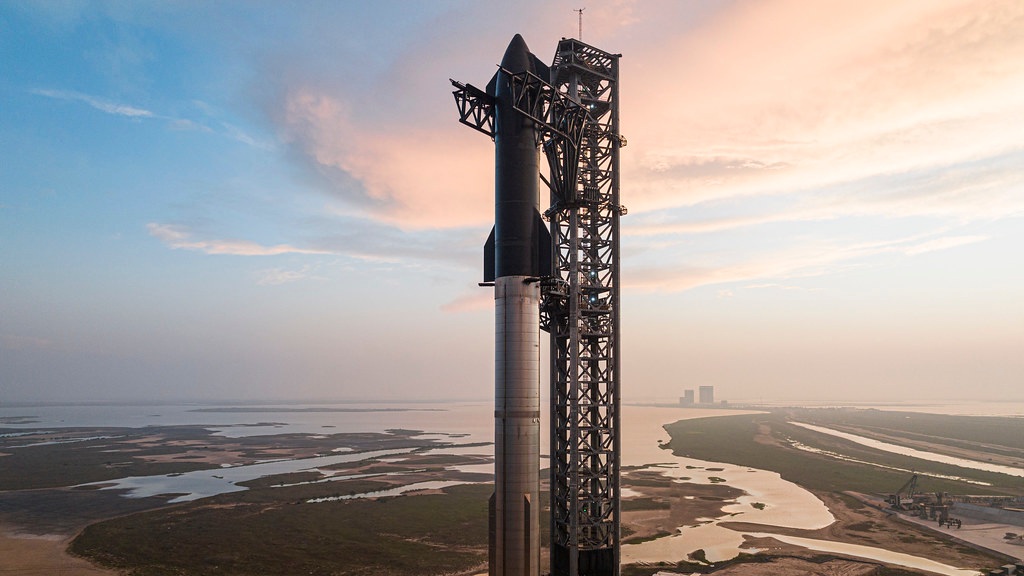
SpaceX Starship Flight 13’s Launch Schedule is Beyond What You Expected! China is even Crazier: The global space race is entering an exciting new chapter. For years, SpaceX Starship dominated headlines as the world’s most ambitious superheavy rocket project. Today, however, the competition is no longer one-sided. China is rapidly developing the Long March 9, a gigantic reusable rocket that could become even larger than Starship.
Recent developments in July 2026 reveal just how quickly the aerospace industry is evolving. SpaceX is preparing Starship Flight 13 with one of the fastest launch turnaround schedules ever attempted, while China is building massive factories and designing rockets capable of carrying unprecedented payloads into space.
This isn’t just a battle of rocket size. It’s a competition between rapid reusability, industrial-scale manufacturing, and the future of human exploration beyond Earth.
SpaceX Starship Flight 13: The Fastest Turnaround Yet
SpaceX has built its reputation on one simple philosophy: test fast, learn fast, improve fast.
Instead of spending years perfecting every detail before launch, the company constantly upgrades its hardware through real-world testing. Starship Flight 13 perfectly demonstrates this approach.
According to updated FAA documentation, SpaceX is targeting July 14, 2026, for the next orbital launch attempt, with backup opportunities extending through July 21.
Many aerospace experts expected a much longer preparation period after previous missions, making this schedule one of the most aggressive in modern rocket history.
The preferred launch window remains around 5:45 PM Central Time, allowing engineers to observe both the Super Heavy booster recovery and the Starship upper-stage re-entry during daylight for maximum visibility.
This aggressive timeline highlights one thing clearly:
SpaceX wants Starship flying as frequently as commercial aircraft one day.
Ship 40 and Booster 20 Are Almost Ready
Every Starship mission depends on two major components:
- Ship 40 (S40) – the upper-stage spacecraft
- Booster 20 (B20) – the Super Heavy first-stage booster
Ship 40 Has Passed Major Tests
Ship 40 has already completed several important milestones.
Its single-engine static fire and six-engine static fire tests were successfully completed during late June and early July.
The remaining work includes:
- Structural inspections
- Payload installation
- Flight Termination System (FTS) integration
- Final software verification
Observers at Starbase also spotted the arrival of specialized equipment used for loading Version 3 Starlink simulator payloads, suggesting payload integration is already underway.
Booster 20 Faces a Tight Schedule
Booster 20 still needs to complete several important procedures before launch.
These include:
- Rollout to the launch pad
- Static fire testing
- Data analysis
- Return to Mega Bay
- Final inspections
- Flight Termination System installation
Because of this packed schedule, many analysts believe the actual launch may occur closer to July 20, near the end of the available launch window.
Starbase Continues Massive Infrastructure Upgrades
A rocket is only as capable as its launch facility.
While preparing Flight 13, SpaceX continues upgrading Starbase to support much higher launch frequencies.
Pad 2 Is Becoming Smarter
Pad 2 currently serves as the primary launch site for Starship Flight 13.
Recent improvements include:
- Water deluge system testing
- Booster Quick Disconnect upgrades
- Improved mechanical systems
- New vibration dampers
- Electric-powered tower mechanisms
One particularly interesting improvement is the gradual replacement of traditional hydraulic systems with high-precision electric actuators.
These new systems move the enormous launch tower chopsticks more smoothly, improving reliability when catching returning boosters.
Reliable booster recovery remains one of SpaceX’s biggest competitive advantages.
Pad 1 Is Being Rebuilt for Starship Version 3
While Pad 2 supports current missions, Pad 1 is undergoing extensive reconstruction.
Major work includes:
- New flame trench infrastructure
- Updated Orbital Launch Mount
- Modern Ground Support Equipment
- Completely redesigned Ship Quick Disconnect arm
The new launch pad is specifically optimized for the upcoming Starship Version 3, which is expected to be larger and more capable than current models.
China Enters the Superheavy Rocket Race
While SpaceX focuses on operational efficiency, China is taking a different approach.
The China Aerospace Science and Technology Corporation (CASC) is simultaneously developing two major rockets:
- Long March 10
- Long March 9
The Long March 10 will primarily support China’s future crewed Moon missions.
The real attention, however, belongs to the enormous Long March 9.
Long March 9 Could Be Bigger Than Starship
Recent concept images suggest that China’s next-generation rocket may physically surpass Starship.
Estimated Specifications
| Rocket | SpaceX Starship | Long March 9 |
|---|---|---|
| Height | ~123 meters | 135–140 meters |
| Booster Diameter | 9 meters | 10–11 meters |
| Payload Fairing | 9 meters | 16 meters |
| Fuel | Methalox | Methalox |
| Target LEO Payload | 100–150 tons | Around 150 tons |
The most impressive feature is the gigantic 16-meter payload fairing.
This enormous cargo section could transport:
- Large space station modules
- Lunar habitats
- Deep-space telescopes
- Massive cargo without folding components
That dramatically simplifies spacecraft design.
Why Both Rockets Use Methalox Fuel
One fascinating similarity between Starship and Long March 9 is their choice of Methalox fuel.
Methalox combines:
This fuel offers several important advantages.
Cleaner Engines
Unlike kerosene-based fuels, methane burns much cleaner, reducing carbon buildup inside rocket engines.
That makes engines easier to inspect and reuse.
Higher Efficiency
Methalox engines operate at extremely high chamber pressures while maintaining excellent fuel efficiency.
This improves overall rocket performance.
Mars Refueling Potential
Perhaps the biggest long-term advantage is that methane can theoretically be produced on Mars using local resources.
This makes future Mars return missions much more practical.
China’s Massive Rocket Factory
Building a 140-meter rocket requires enormous manufacturing facilities.
China is constructing an industrial complex covering roughly 100,000 square meters.
One remarkable feature is an 85-meter-tall assembly bay door, allowing giant booster sections to move directly from production to final assembly.
The factory also includes:
- Automated welding systems
- Vertical assembly buildings
- High-volume manufacturing lines
- Advanced industrial robotics
This mirrors SpaceX’s strategy of treating rockets more like mass-produced industrial products rather than handcrafted aerospace vehicles.
Reusability Remains China’s Biggest Challenge
Concept artwork suggests multiple Long March 9 variants.
These include:
Three-Stage Expendable Version
Designed for maximum payload capacity on deep-space missions.
Fully Reusable Version
Future versions include aerodynamic flaps similar to Starship for atmospheric re-entry.
However, turning these concepts into operational hardware presents significant engineering challenges.
The rocket’s extremely wide payload fairing creates difficult aerodynamic conditions during ascent.
Its massive structure must also remain stable during Max-Q, the period of highest aerodynamic stress.
Most importantly, reusable rockets require extremely reliable recovery systems.
This is an area where SpaceX currently enjoys years of practical experience.
SpaceX Focuses on Speed Instead of Size
Although Long March 9 may eventually become physically larger, SpaceX appears focused on a different objective.
Rather than simply building a bigger rocket, the company wants Starship to become a fully reusable transportation system.
The long-term vision includes multiple specialized Starship variants built from the same production line.
These include:
- Orbital fuel tankers
- Cargo spacecraft
- NASA Human Landing System
- Mars transport vehicles
- Deep-space habitats
Using a shared architecture dramatically lowers manufacturing costs while increasing launch frequency.
That ecosystem may ultimately become more valuable than raw payload capacity.
The Future of the Global Space Race
The competition between SpaceX Starship and China’s Long March 9 represents far more than a battle between two rockets.
It reflects two different philosophies.
SpaceX prioritizes:
- Rapid iteration
- Fast reusability
- Lower launch costs
- Frequent missions
China emphasizes:
- Massive payload capability
- Large-scale infrastructure
- State-backed industrial investment
- Deep-space exploration
Both approaches could reshape humanity’s future in space.
Conclusion
The next few years may become the most transformative period in aerospace history.
SpaceX Starship Flight 13 demonstrates how quickly reusable rockets are advancing, with launch schedules that would have seemed impossible only a few years ago.
Meanwhile, China’s Long March 9 shows that the global race for space leadership is accelerating faster than ever.
Whether the future belongs to SpaceX’s rapid reusability or China’s giant superheavy architecture, one thing is certain: competition is driving innovation at an unprecedented pace.
As launch costs continue to fall and rocket technology improves, permanent Moon bases, Mars missions, giant space stations, and even deep-space transportation networks are moving from science fiction toward reality.
For space enthusiasts, investors, and the global aerospace industry, the countdown to the next era of human exploration has already begun.
FAQs
1. What is SpaceX Starship Flight 13?
SpaceX Starship Flight 13 is the company’s next orbital test mission, targeting a launch window beginning July 14, 2026. The mission aims to validate improvements in Starship’s reusability, payload deployment, and booster recovery.
2. When is SpaceX planning to launch Starship Flight 13?
According to updated FAA documentation, the primary launch target is July 14, 2026, with backup launch opportunities available through July 21, 2026.
3. What makes Starship Flight 13 different from previous launches?
Starship Flight 13 features one of the fastest launch turnaround schedules in SpaceX history, demonstrating the company’s goal of achieving rapid rocket reusability and frequent orbital missions.
4. What are Ship 40 and Booster 20?
Ship 40 (S40) is the Starship upper-stage spacecraft, while Booster 20 (B20) is the Super Heavy first-stage booster that powers the vehicle during launch.
5. Why is SpaceX upgrading Starbase launch pads?
SpaceX is modernizing Starbase to support higher launch frequencies, improve booster recovery, and prepare for the larger Starship Version 3 (V3) rocket.
6. What is China’s Long March 9 rocket?
The Long March 9 is China’s next-generation superheavy launch vehicle designed for deep-space exploration, massive payload delivery, lunar missions, and future Mars exploration.
7. Is the Long March 9 bigger than SpaceX Starship?
Yes. Current concepts suggest the Long March 9 could stand 135–140 meters tall, compared to Starship’s approximately 123 meters, making it one of the largest rockets ever designed.
8. What fuel will the Long March 9 use?
China plans to power the Long March 9 using Methalox, a combination of liquid methane and liquid oxygen, similar to SpaceX’s Raptor-powered Starship.
9. Why is Methalox considered the future of rocket fuel?
Methalox burns cleaner than traditional kerosene, offers higher engine efficiency, and can potentially be produced on Mars, making it ideal for reusable spacecraft and interplanetary missions.
10. What is the payload capacity of Long March 9?
The Long March 9 is expected to carry around 150 metric tons to Low Earth Orbit (LEO), placing it among the most powerful rockets ever proposed.
11. What is SpaceX’s biggest advantage over other space companies?
SpaceX’s greatest strength is its focus on rapid reusability, allowing rockets to fly multiple missions with minimal refurbishment, significantly reducing launch costs.
12. Will Long March 9 be reusable?
China has proposed both expendable and fully reusable versions of the Long March 9, but reusable technology is still under development.
13. How does Starship support future Moon and Mars missions?
Starship is designed as a versatile transportation system capable of serving as a cargo vehicle, orbital tanker, lunar lander, and eventually a spacecraft for human missions to Mars.
14. Why is the global space race becoming more competitive?
Governments and private companies are investing heavily in reusable rockets, satellite deployment, lunar exploration, and deep-space missions, leading to rapid technological advancements and increased competition.
15. Which rocket is better: SpaceX Starship or China’s Long March 9?
Both rockets have different strengths. SpaceX Starship focuses on rapid reusability and high launch frequency, while Long March 9 emphasizes massive payload capacity and large-scale deep-space missions. Their long-term success will depend on real-world performance and operational reliability.
Read More:
- Tesla shows rapid teardown of Model S and X lines, paving the way for Optimus at Fremont
- Elon Musk’s Giant $122B Tesla Terafab Outchip The Entire World
- China Did Something Never Done before Surprised Us All! SpaceX Takes Changes on B20 before Test
- Tesla confirms crucial detail of Miami Robotaxi launch
- NASA taps SpaceX to launch the telescope that could unlock new worlds
2 thoughts on “SpaceX Starship Flight 13’s Launch Schedule is Beyond What You Expected! China is even Crazier”