
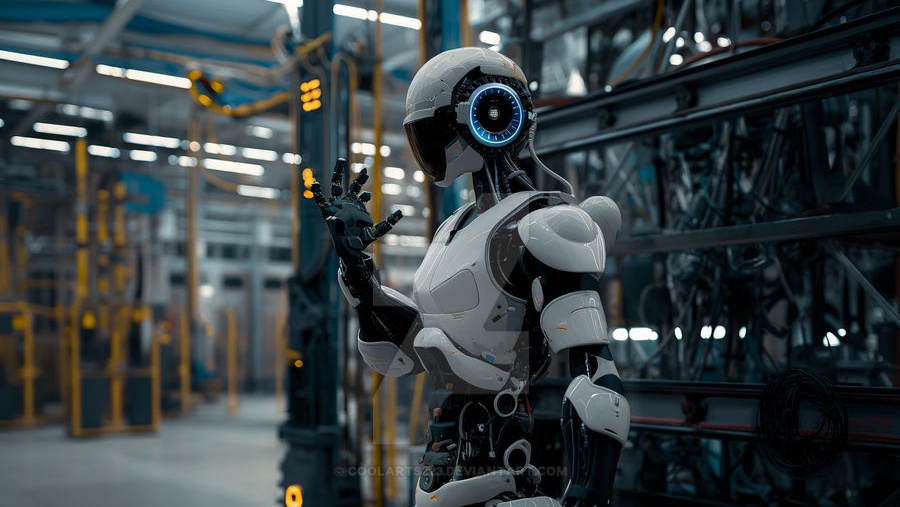
Tesla Bot Gen 3’s New Hand Is FINALLY Here—1,000 Tasks Unlocked: Humanoid robotics is entering a new era, and Tesla Bot Gen 3 is at the center of this transformation. While robots have made incredible progress in walking, running, balancing, and carrying heavy loads, one major challenge has remained unsolved—creating robotic hands with the dexterity, precision, and touch of a human hand.
Tesla believes it has finally cracked the code.
The company’s latest Optimus Gen 3 humanoid robot introduces a completely redesigned hand capable of performing over 1,000 real-world tasks, from plugging in a USB-C cable to assembling complex electrical components and safely handling fragile objects. With revolutionary hardware, AI-powered intelligence, and advanced tactile sensing, Tesla aims to redefine what humanoid robots can accomplish.
In this article, we’ll explore the groundbreaking innovations behind Tesla Bot Gen 3 and why its new robotic hand could become the biggest leap forward in humanoid robotics.
Why Robotic Hands Matter More Than Walking
Walking robots have become increasingly common, but mobility alone doesn’t make a robot useful.
The true value of a humanoid robot lies in its ability to interact with the physical world. Everyday jobs require delicate actions like turning screws, connecting cables, using tools, folding clothes, preparing food, and handling fragile objects. These tasks depend entirely on hand dexterity, not just locomotion.
Tesla’s latest robotic hand has been engineered to bridge this gap by combining human-like movement, precision control, and real-time sensory feedback.
Tesla’s Quasi-Direct Drive Technology: A Major Engineering Breakthrough
The Problem with Traditional Robotic Hands
Most robotic hands use high-ratio gearboxes, often between 100:1 and 300:1, to increase torque.
Although powerful, this design creates several drawbacks:
- High friction, resulting in stiff and unnatural movement.
- Backlash, reducing precision during delicate operations.
- Poor backdrivability, making robots unable to absorb unexpected forces safely.
- Increased risk of damaging both the robot and the object being handled.
These limitations have prevented robots from achieving truly human-like manipulation.
Tesla’s Quasi-Direct Drive Solution
Tesla replaces bulky high-ratio gearboxes with a Quasi-Direct Drive (QDD) architecture featuring:
- Custom high-torque electric motors
- Low gear reduction ratios of approximately 8:1
- Faster response times
- Smooth, natural movements
- Improved force control
Because external forces travel directly back to the motors, the robot instantly detects resistance through electrical current changes. This enables safer gripping, better compliance, and much faster reaction times.
25 Degrees of Freedom Deliver Human-Like Dexterity
One of the biggest highlights of Tesla Bot Gen 3 is its impressive 25 actively controlled joints per arm.
Hand Configuration
Hand
- 22 Active Degrees of Freedom (DoF)
Wrist
- 3 Active Degrees of Freedom
Total
- 25 Actively Controlled Joints
Unlike many competitors that rely heavily on passive spring mechanisms, Tesla actively controls nearly every major joint.
This allows Optimus to:
- Rotate objects within its fingers
- Insert electrical connectors
- Tighten screws
- Handle wiring harnesses
- Reposition tools mid-operation
- Perform precision manufacturing
The result is a robotic hand capable of completing industrial tasks previously limited to skilled human workers.
Tendon-Driven Design Inspired by Human Anatomy
Moving Motors into the Forearm
Human fingers don’t contain muscles. Instead, muscles in the forearm pull tendons that control finger movement.
Tesla has adopted this same biological principle.
Instead of placing motors inside each finger, Optimus relocates them into the forearm and uses approximately 44 high-strength tendons to drive finger movement.
Benefits of the Tendon System
Reduced Hand Weight
Removing motors significantly lightens the robotic hand.
Lower Rotational Inertia
Lighter fingers move faster while stopping more accurately.
Higher Precision
Reduced overshoot improves delicate manipulation.
Improved Energy Efficiency
Motors consume less energy because they move lighter components.
Tesla has also engineered an advanced wrist cable routing system that minimizes tendon wear, friction, and stretching over millions of operating cycles.
Advanced Touch Sensors Give Optimus a Human-Like Sense of Feel
A robotic hand without touch is effectively blind.
Tesla equips each fingertip with soft polymer tactile sensors capable of measuring:
Pressure Force
Determines how tightly the robot grips an object.
Shear Force
Detects microscopic slipping before an object falls.
This allows Optimus to continuously adjust grip force in real time.
For example, when holding a glass of water or inserting a fragile electronic connector, the robot automatically increases or decreases pressure by tiny amounts to prevent breakage or slippage.
This real-time sensory feedback represents one of the most significant advancements in humanoid robotics.
Built for Industrial Reliability
Tesla isn’t building a laboratory prototype.
The company is designing Optimus for continuous commercial operation.
Key Durability Features
Over 2 Million Operating Cycles
Critical wrist joints and tendon systems are engineered to maintain accuracy after millions of repetitions.
IP68 Environmental Protection
The robotic hand is sealed against:
- Dust
- Water
- Industrial oils
- Cleaning chemicals
This makes Optimus suitable for demanding factory environments.
Fleet Learning Gives Tesla a Massive AI Advantage
Tesla’s biggest strength isn’t just hardware—it’s software.
Every Optimus robot deployed inside Tesla factories continuously collects:
- Visual data
- Motion data
- Force measurements
- Tactile feedback
This information is uploaded into Tesla’s centralized AI training system.
As one robot learns a better method for completing a task, the improvement can be distributed across the entire fleet.
This Fleet Learning approach allows every Optimus robot to become smarter over time, creating a powerful competitive advantage that few robotics companies can match.
Tesla Bot Gen 3 Battery and Mechanical Improvements
3 kWh Battery Pack
Tesla equips Gen 3 with a 3 kWh battery built using its advanced 4680 battery cells.
The robot delivers approximately:
- 5–6 hours of light-duty operation
- Autonomous charging support
- Potential battery swapping for industrial environments
Minimalist Engineering
Inspired by SpaceX engineering principles, Optimus features:
- Hidden wiring
- Protected mechanical systems
- Smooth exterior panels
- Simplified maintenance
The streamlined design also protects moving components from dust, debris, and accidental damage.
AI5 Processor Brings Human-Like Reflexes
Tesla’s next-generation AI5 processor represents another enormous leap.
Compared to AI4, AI5 is expected to deliver:
- Approximately 5x greater memory bandwidth
- Faster neural network execution
- Reduced processing delays
- Improved real-time decision making
Instead of pausing to analyze changing situations, Optimus can immediately adjust its:
- Grip strength
- Walking balance
- Arm movement
- Motion trajectory
These faster reactions create smoother and safer interactions with humans and surrounding objects.
Over 1,000 Practical Tasks Across Multiple Industries
Tesla expects Gen 3 to perform more than 1,000 real-world tasks.
Manufacturing
- Electrical connector installation
- Fastener tightening
- Precision assembly
- Wiring management
Warehousing
- Inventory sorting
- Material transportation
- Equipment operation
Home Assistance
- Cleaning
- Food preparation
- Laundry assistance
- Carrying groceries
- Handling delicate household items
This wide range of capabilities positions Optimus as one of the most versatile humanoid robots currently under development.
Scaling Production Is Tesla’s Biggest Challenge
Building humanoid robots is far more complex than manufacturing cars.
Each Tesla Bot Gen 3 reportedly contains around 10,000 individual components, many of which are custom-designed specifically for robotic joints and actuators.
If Tesla eventually reaches its ambitious target of producing 1 million humanoid robots annually, its manufacturing ecosystem would need to assemble nearly 10 billion components every year.
To prepare for this scale, Tesla has already deployed early Optimus units within its own facilities to gather operational data, improve manufacturing efficiency, and refine production processes.
Safety and Cybersecurity Will Define the Future
As humanoid robots move beyond factories and into homes, safety becomes just as important as intelligence.
Potential applications include:
- Elderly care
- Medication reminders
- Household assistance
- Emergency response
However, robots operating closely with humans must also withstand:
- Software failures
- Hardware malfunctions
- Cybersecurity threats
- Network vulnerabilities
Tesla will need strong encryption, local fail-safe systems, secure software updates, and highly reliable hardware to ensure Optimus remains safe in everyday environments.
Final Thoughts
Tesla Bot Gen 3 represents far more than an upgraded humanoid robot. Its Quasi-Direct Drive architecture, 25 degrees of freedom, 44-tendon anatomical design, high-resolution tactile sensors, AI5 processor, and Fleet Learning ecosystem collectively push humanoid robotics closer to human-level manipulation than ever before.
If Tesla successfully scales production while maintaining reliability, safety, and affordability, Optimus could transform industries ranging from manufacturing and logistics to healthcare and home assistance. The promise of 1,000 practical tasks is an ambitious milestone, but the innovations showcased in Gen 3 suggest Tesla is building the foundation for a future where humanoid robots become a practical part of everyday life.
FAQs
1. What is Tesla Bot Gen 3?
Tesla Bot Gen 3, also known as Optimus Gen 3, is Tesla’s latest humanoid robot designed to perform over 1,000 real-world tasks using advanced AI, improved hand dexterity, and human-like movement.
2. What makes Tesla Bot Gen 3’s new hand special?
The new robotic hand features 25 actively controlled joints per arm, a tendon-driven design, advanced tactile sensors, and Quasi-Direct Drive technology, allowing it to perform delicate tasks with greater precision and safety.
3. How many degrees of freedom does Tesla Bot Gen 3 have?
Each arm of Tesla Bot Gen 3 has 25 actively controlled degrees of freedom, including 22 in the hand and 3 in the wrist, enabling highly flexible and natural movements.
4. What is Quasi-Direct Drive technology?
Quasi-Direct Drive (QDD) is Tesla’s motor system that uses low gear reduction ratios and high-torque motors to deliver smoother motion, better force control, faster response times, and improved safety compared to traditional robotic gear systems.
5. How does Tesla Bot Gen 3 sense objects?
The robot uses high-resolution tactile sensors in its fingertips to measure both pressure and shear force, allowing it to detect slipping and automatically adjust its grip in real time.
6. How many tasks can Tesla Optimus Gen 3 perform?
Tesla expects Optimus Gen 3 to perform more than 1,000 practical tasks, including manufacturing, warehouse operations, household chores, and tool handling.
7. What is the purpose of the tendon-driven hand design?
The tendon-driven system moves the motors into the forearm while tendons control finger movements. This reduces hand weight, improves speed and precision, lowers energy consumption, and mimics the anatomy of the human hand.
8. What battery does Tesla Bot Gen 3 use?
Tesla Bot Gen 3 is powered by a 3 kWh battery pack built with Tesla’s 4680 battery cells, providing approximately 5 to 6 hours of operation during light-duty tasks.
9. What is the AI5 processor in Tesla Bot Gen 3?
The AI5 processor is Tesla’s next-generation computing platform designed to provide significantly higher memory bandwidth and faster AI processing, enabling quicker decision-making and more human-like reflexes.
10. Can Tesla Bot Gen 3 work in factories?
Yes. Tesla designed Optimus Gen 3 for industrial environments where it can perform assembly, logistics, inventory management, wiring, quality inspection, and other repetitive manufacturing tasks.
11. Will Tesla Bot Gen 3 be used in homes?
Tesla plans to expand Optimus beyond factories into homes, where it could assist with cleaning, cooking, carrying groceries, elderly care, and other everyday household activities.
12. How durable is Tesla Bot Gen 3?
Tesla has engineered the robot’s wrist and tendon mechanisms to withstand more than 2 million operating cycles, while its IP68-rated hand is protected against dust, water, and industrial contaminants.
13. What is Tesla Fleet Learning for Optimus?
Fleet Learning allows Optimus robots to continuously collect operational data. Improvements learned by one robot can be shared across the entire fleet through AI model updates, making every robot smarter over time.
14. How is Tesla Bot Gen 3 different from other humanoid robots?
Tesla combines advanced hardware, AI-powered software, Quasi-Direct Drive motors, tactile sensing, tendon-driven mechanics, and fleet learning into one integrated system, giving Optimus a significant advantage in real-world applications.
15. When will Tesla Bot Gen 3 be available?
Tesla has not announced an official public release date for Optimus Gen 3. The company is currently testing and deploying early units within its own facilities while continuing to refine the robot before large-scale commercial production.
Read More:
- Tesla gets price target upgrade on heels of crazy successful auto quarter
- SpaceX comes with a slew of changes for Starship Flight 13
- Tesla weirdly confirms Cybercab employee rides, a huge milestone
- Tesla reveals development of wheelchair-accessible autonomous vehicle
- Tesla Semi enters new Pilot Program with interesting challenge
1 thought on “Tesla Bot Gen 3’s New Hand Is FINALLY Here—1,000 Tasks Unlocked”