
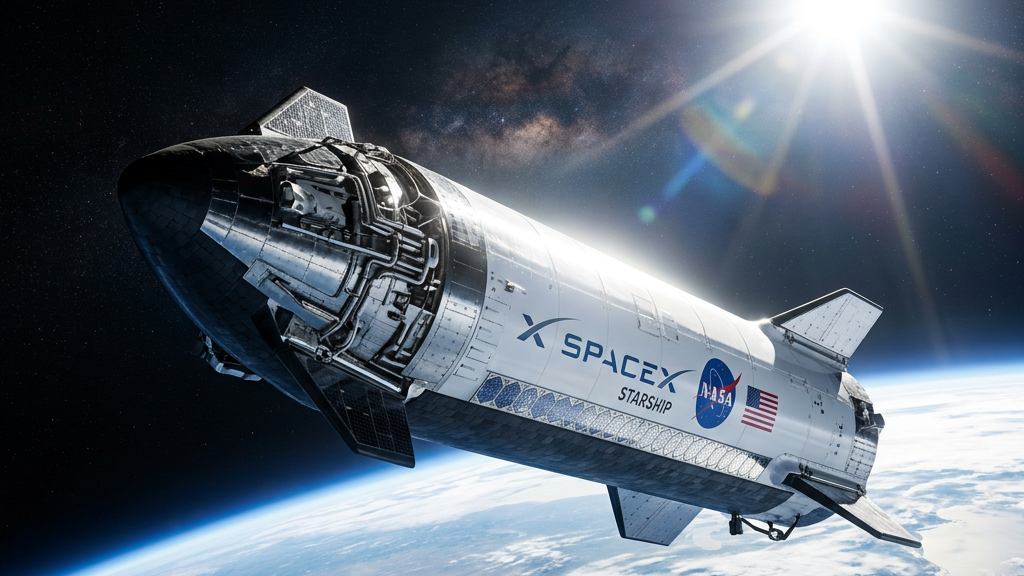
SpaceX Starship Flight 13 Launch Date Confirmed to Make History: The global space industry is entering a new era of rapid innovation, and SpaceX Starship Flight 13 is at the center of this transformation. From the confirmed launch timeline and major Starship V3 upgrades to the deployment of Starlink V3 satellites, Flight 13 represents one of the most ambitious test missions ever attempted. At the same time, countries like Japan are making significant progress in reusable rocket technology, while regulators are facing increasing pressure over the environmental impact of massive satellite constellations.
In this article, we’ll explore the latest updates on SpaceX Starship Flight 13, its engineering improvements, Japan’s reusable rocket advancements, and the growing debate surrounding orbital data centers.
Starship Flight 13 Launch Date Officially Confirmed
SpaceX has officially narrowed its launch schedule for Starship Flight 13, with July 16 emerging as the primary target date after an earlier launch window of July 15–21. As always, the final launch timeline depends on weather conditions, technical inspections, and launch pad readiness.
Like previous Starship missions, Flight 13 remains a high-risk experimental test designed to gather valuable engineering data rather than achieve a fully operational mission. Every launch contributes to improving the world’s most powerful rocket system.
Booster 20 Undergoing Final Preparations
The Super Heavy Booster 20 (B20) recently completed an important static fire test before being transported back to Mega Bay 1 for detailed inspections.
During this phase, engineers are:
- Inspecting weld quality
- Verifying structural integrity
- Installing the Flight Termination System (FTS)
- Performing comprehensive safety checks
Once inspections are complete, Booster 20 will return to the launch pad approximately 48 hours before liftoff.
Ship 40 Ready for Payload Integration
Meanwhile, Ship 40 (S40) has entered its final payload processing phase.
Unlike earlier Starship test flights that carried mass simulators or empty payload bays, Flight 13 will carry a live payload, making this one of the most important missions in the Starship development program.
SpaceX Upgrades Launch Tower for Flight 13
Ground systems are equally important for Starship missions.
Following Booster 20’s static fire, SpaceX engineers performed extensive testing on the famous Mechazilla chopstick arms, cycling them through multiple lift, catch, and positioning operations.
During these inspections, engineers detected an issue with one of the chopstick carriage actuators. A heavy-duty crane was quickly deployed to replace the faulty component, ensuring maximum reliability before launch.
These upgrades are particularly important as SpaceX continues preparing for future booster catch operations, eliminating the need for traditional landing legs.
Major Starship V3 Engineering Upgrades
One of the biggest objectives of Starship Flight 13 is validating numerous improvements made after analyzing data from Flight 12.
Improved Engine Ignition Sequence
Engineers discovered that the upper-stage ignition timing during Flight 12 caused the vehicle to rotate nearly 90 degrees during its flip maneuver.
To solve this issue, SpaceX redesigned the ignition sequence by introducing carefully calibrated timing offsets between engine startups.
This modification should:
- Improve vehicle stability
- Maintain accurate orientation
- Enhance stage separation performance
Stronger Raptor Engines
SpaceX has also upgraded both versions of its Raptor engines.
Vacuum Raptor Improvements
One of the vacuum-optimized Raptors experienced a mechanical failure during Flight 12.
Although the mission continued successfully, engineers implemented structural hardware improvements to eliminate the root cause and improve long-duration engine reliability in space.
Super Heavy Booster Enhancements
The 33-engine Super Heavy Booster also received significant upgrades after several engines experienced thermal and pressure issues during the previous mission.
Flight 13 includes:
- Improved engine restart systems
- Stronger mechanical components
- Advanced predictive engine monitoring software
- Better automatic abort protection
These improvements aim to increase mission reliability throughout ascent and landing operations.
Flight 13 Will Launch 20 Starlink V3 Satellites
Perhaps the most exciting aspect of Flight 13 is its first operational payload.
Instead of carrying test weights, Starship will deploy 20 next-generation Starlink V3 satellites.
These new satellites feature:
- Larger solar arrays
- Higher bandwidth antennas
- Advanced laser communication links
- Faster global internet connectivity
Since Flight 13 follows a suborbital trajectory, the satellites will only remain in space briefly before safely re-entering Earth’s atmosphere.
This allows SpaceX to validate the deployment system without placing the satellites into permanent orbit.
Revolutionary Heat Shield Testing
One of Starship’s biggest engineering challenges has always been protecting the spacecraft during atmospheric re-entry.
Flight 13 introduces a completely new method of monitoring the vehicle’s Thermal Protection System (TPS).
Six Starlink Satellites Will Monitor Re-entry
Six specially modified Starlink satellites are equipped with high-resolution cameras that will photograph Starship during its descent.
This provides engineers with valuable real-time images of the spacecraft’s heat shield while it passes through extreme plasma conditions.
White Heat Shield Tiles
To make the spacecraft easier to track, SpaceX has painted several thermal protection tiles bright white.
These high-contrast reference markers will help onboard cameras accurately monitor:
- Tile movement
- Surface deformation
- Thermal expansion
- Heat shield performance
Additionally, engineers are testing:
- New TPS tile materials
- Alternative attachment systems
- Load-sensing heat shield tiles
These experiments are expected to provide crucial data for future fully reusable Starship missions.
In-Space Raptor Engine Relight
Another important objective for Flight 13 is performing an in-space Raptor engine relight.
Successfully restarting an engine in orbit is essential for future missions involving:
- Lunar landings
- Mars exploration
- Satellite deployment
- Orbital refueling
Reliable engine relights are a critical milestone in SpaceX’s long-term vision of interplanetary travel.
Japan Joins the Reusable Rocket Race
While SpaceX continues dominating reusable launch technology, other nations are rapidly catching up.
The Japan Aerospace Exploration Agency (JAXA) recently completed a successful Vertical Takeoff Vertical Landing (VTVL) hopper test at the Noshiro Test Center.
The prototype rocket:
- Flew for approximately 40 seconds
- Reached 10 meters altitude
- Executed a controlled landing
- Collected valuable engineering data
This successful demonstration marks another important step toward Japan’s reusable launch ambitions.
Private companies are also entering the field, showing that reusable rockets are becoming the global standard for future space transportation.
The Growing Debate Over Orbital Data Centers
Lower launch costs are opening entirely new commercial opportunities in space.
One of the most ambitious ideas involves building massive orbital data centers powered by enormous satellite constellations.
However, these plans have sparked growing opposition from scientists, environmental organizations, and regulators.
Millions of Satellites Could Enter Orbit
Currently, Earth has approximately:
- 15,000 active satellites
- 46,000 tracked debris objects
Earlier forecasts estimated around 58,000 satellites within the next decade.
However, proposed orbital computing networks could increase that number to more than one million satellites, dramatically changing the orbital environment.
Environmental Concerns Continue Growing
Environmental organizations argue that launching millions of satellites without comprehensive environmental reviews could create significant long-term risks.
Atmospheric Pollution
Every satellite eventually burns up during atmospheric re-entry.
Large satellite constellations could release enormous quantities of:
- Aluminum particles
- Heavy metals
- Other chemical compounds
Scientists are still studying their long-term effects on Earth’s upper atmosphere.
Increased Space Debris
Adding hundreds of thousands of satellites also increases the risk of collisions.
A cascading chain reaction of orbital debris—often referred to as Kessler Syndrome—could make certain orbital regions unusable for future missions.
Light Pollution
Organizations like Dark Sky International warn that extremely large satellite constellations could permanently alter the night sky.
Possible impacts include:
- Disrupted wildlife migration
- Changes to nocturnal ecosystems
- Reduced visibility for astronomical research
- Increased artificial light pollution worldwide
What Flight 13 Means for the Future of Space Exploration
SpaceX Starship Flight 13 is far more than another test launch. It combines major Starship V3 upgrades, the first deployment of Starlink V3 satellites, advanced heat shield diagnostics, and critical Raptor engine testing into a single mission. Success will bring SpaceX closer to achieving fully reusable spaceflight and enabling future missions to the Moon and Mars.
At the same time, international competitors like Japan are accelerating reusable rocket development, proving that the race for next-generation launch systems is becoming increasingly global. Meanwhile, the debate over orbital data centers highlights the growing challenge of balancing technological progress with environmental responsibility.
As Flight 13 approaches its historic launch, the mission is expected to shape the future of commercial spaceflight, satellite technology, and deep-space exploration for years to come.
FAQs
1. What is SpaceX Starship Flight 13?
SpaceX Starship Flight 13 is the latest test mission of the Starship launch system, designed to validate new Starship V3 upgrades, deploy 20 Starlink V3 satellites, and test advanced heat shield technologies for future Moon and Mars missions.
2. When is the Starship Flight 13 launch date?
SpaceX has officially targeted July 16 for the Starship Flight 13 launch, although the exact timing may change depending on weather conditions and final technical checks.
3. What are the main objectives of Starship Flight 13?
The mission aims to:
- Test upgraded Starship V3 hardware
- Deploy 20 Starlink V3 satellites
- Validate new thermal protection system (TPS) technologies
- Perform an in-space Raptor engine relight
- Collect valuable engineering data for future missions
4. What is new in the Starship V3 design?
The Starship V3 version includes improved engine ignition timing, stronger Raptor engine components, upgraded booster hardware, predictive engine monitoring software, and enhanced thermal protection systems.
5. Why is SpaceX painting some heat shield tiles white?
The white heat shield tiles serve as high-contrast reference markers, allowing specially equipped Starlink satellites to capture detailed images of Starship’s heat shield during atmospheric re-entry.
6. How many Starlink satellites will Flight 13 carry?
Starship Flight 13 will carry 20 next-generation Starlink V3 satellites, marking the first live payload deployment on a Starship test mission.
7. What makes Starlink V3 satellites different?
Starlink V3 satellites feature larger solar arrays, higher-capacity antennas, advanced laser communication systems, and significantly improved data transmission capabilities.
8. Will the Starlink V3 satellites remain in orbit?
No. Since Flight 13 follows a suborbital trajectory, the satellites will be deployed temporarily to test deployment systems before safely re-entering Earth’s atmosphere.
9. What is the purpose of the in-space Raptor engine relight?
The in-space engine relight test is essential for future orbital operations, including satellite deployment, orbital maneuvering, lunar missions, Mars exploration, and in-space refueling.
10. Why did SpaceX upgrade the Raptor engines?
The upgrades address issues identified during Flight 12, including engine failures and restart anomalies, helping improve overall reliability and mission performance.
11. What are the Mechazilla chopstick arms?
The Mechazilla chopstick arms are giant mechanical arms mounted on SpaceX’s launch tower. They are designed to catch returning Super Heavy boosters, enabling rapid rocket reuse without landing legs.
12. What is Japan’s VTVL reusable rocket test?
Japan’s JAXA recently completed a successful Vertical Takeoff Vertical Landing (VTVL) hopper test, demonstrating its progress toward developing reusable rocket technology similar to SpaceX’s approach.
13. What are orbital data centers?
Orbital data centers are proposed satellite networks that would host computing infrastructure in space, potentially providing large-scale cloud computing services beyond Earth’s surface.
14. Why are orbital data centers controversial?
Critics argue that massive satellite constellations could increase space debris, atmospheric pollution from satellite re-entry, and light pollution while raising concerns about long-term orbital sustainability.
15. What is Kessler Syndrome?
Kessler Syndrome is a scenario where collisions between satellites create cascading debris, triggering additional collisions and potentially making parts of Earth’s orbit unsafe for future spacecraft.
16. Why is Starship Flight 13 considered historic?
Starship Flight 13 combines major Starship V3 upgrades, the first deployment of Starlink V3 satellites, advanced heat shield diagnostics, and in-space engine testing, making it one of the most significant milestones in SpaceX’s journey toward fully reusable spaceflight.
Read More:
- Tesla Bot Gen 3’s New Hand Is FINALLY Here—1,000 Tasks Unlocked
- Tesla gets price target upgrade on heels of crazy successful auto quarter
- SpaceX comes with a slew of changes for Starship Flight 13
- Tesla weirdly confirms Cybercab employee rides, a huge milestone
- Tesla reveals development of wheelchair-accessible autonomous vehicle