
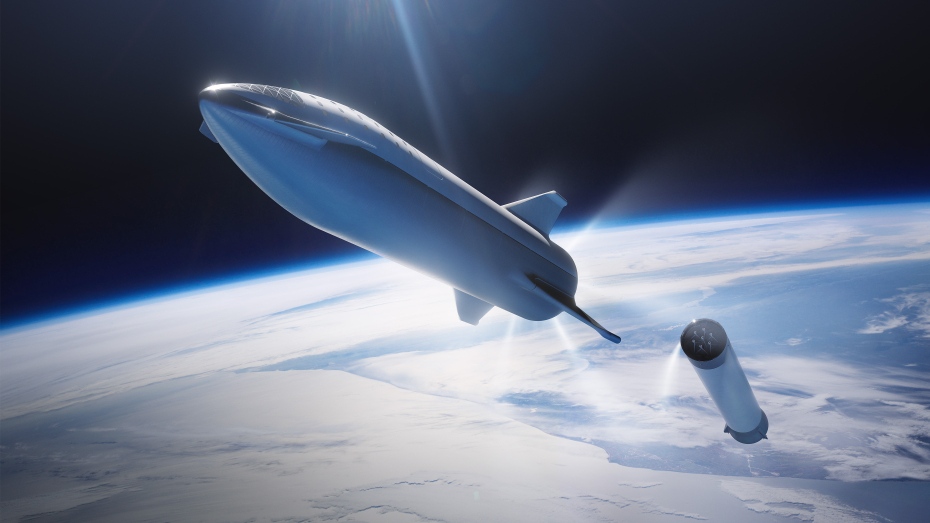
SpaceX Starship FULL STACKED to Launch For Its 13th Time in Hours: The countdown has officially entered its most exciting phase as SpaceX Starship Flight 13 prepares for liftoff from Starbase, Texas. After months of engineering, testing, and rapid vehicle production, the world’s largest rocket now stands fully assembled at more than 120 meters (394 feet) tall on the orbital launch pad.
This mission represents much more than another test flight. Starship Flight 13 is expected to become a major milestone in SpaceX’s long-term vision of building a fully reusable launch system capable of supporting missions to the Moon, Mars, and beyond.
As only the second mission using the upgraded Starship Version 3 architecture, Flight 13 will test improved hardware, streamlined launch operations, and faster turnaround times that are essential for future high-frequency launches.
Why Starship Flight 13 Is So Important
Unlike previous missions, Starship Flight 13 serves as the bridge between experimental testing and routine launch operations.
SpaceX aims to prove that its manufacturing, transportation, stacking, and launch systems can work together efficiently enough to support monthly launches, eventually progressing toward weekly and even daily missions.
This flight is also expected to carry 20 operational Version 3 Starlink satellites, making it one of the most meaningful Starship missions to date.
Key highlights include:
- Second flight of Starship Version 3
- 120-meter fully stacked launch vehicle
- 20 next-generation Starlink satellites onboard
- Rapid two-day booster turnaround
- Foundation for monthly Starship launches
H2: Booster 20 Achieves an Incredible Two-Day Turnaround
One of the biggest achievements leading up to Starship Flight 13 has been the rapid preparation of Super Heavy Booster 20.
Following an extensive testing campaign, Booster 20 returned to the Starbase production facility before being quickly prepared for flight.
Within only two days, engineers successfully completed several critical operations, including:
H3: Rapid Rollout to the Launch Pad
The booster was transported from Mega Bay 1 to the orbital launch site after carefully coordinated road closures.
H3: Successful Booster Integration
Using SpaceX’s enormous chopstick arms, the launch tower lifted Booster 20 directly onto the orbital launch mount before connecting it with the Ground Quick Disconnect (SQD) systems.
H3: Grid Fin Testing
Engineers immediately performed dynamic testing of the massive grid fins, confirming proper aerodynamic movement and flight readiness.
The speed of this turnaround strongly suggests that Booster 20 completed previous testing without major structural concerns, allowing SpaceX to maintain an aggressive launch schedule.
H2: Ship 40 Carries Real Version 3 Starlink Satellites
The upper stage, Ship 40, followed an equally impressive preparation process.
A specialized payload loader remained outside Mega Bay 2 for several days before finally entering the building for payload integration.
SpaceX later confirmed that Starship Flight 13 will deploy 20 next-generation Version 3 Starlink satellites.
Unlike previous missions that used mass simulators, these satellites are fully operational and include:
- Functional solar arrays
- Advanced tracking cameras
- High-throughput communication antennas
- Direct compatibility with the active Starlink constellation
After payload integration, Ship 40 was transported to the launch site and lifted atop Booster 20, completing the enormous 120-meter Starship stack.
H2: Will SpaceX Skip the Wet Dress Rehearsal?
One of the biggest questions before launch is whether SpaceX will conduct a Wet Dress Rehearsal (WDR).
A WDR involves filling the rocket with thousands of tons of super-cooled liquid methane and liquid oxygen while performing a complete launch countdown without igniting the engines.
H3: Why Skip the WDR?
Skipping the rehearsal would allow SpaceX to preserve momentum and maintain its compressed launch schedule.
H3: Why Perform the WDR?
Completing the rehearsal offers one final opportunity to identify any unexpected electrical, thermal, or mechanical issues before launch.
However, conducting a full WDR could delay the mission by approximately one week, making this one of the final strategic decisions before liftoff.
H2: SpaceX Plans Monthly Starship Launches
Perhaps the most exciting aspect of Starship Flight 13 is what comes next.
SpaceX President Gwynne Shotwell has repeatedly outlined the company’s goal of achieving monthly Starship launches beginning later this year.
The production pipeline already demonstrates this ambition.
H3: Flight 14
Ship 41 has already completed structural assembly and cryogenic proof testing.
Meanwhile, Booster 21 is progressing through stacking and will soon undergo its own testing campaign.
H3: Flight 15
Construction is already underway for Ship 42 and Booster 22, showing how SpaceX is building multiple vehicles simultaneously to eliminate production delays.
Even more exciting, Flight 15 could potentially launch from Cape Canaveral, Florida, creating dual launch operations alongside Starbase.
This expansion would dramatically increase Starship’s launch capacity.
H2: Starship Flight 13 Supports NASA’s Artemis Program
The urgency behind Starship Flight 13 extends far beyond SpaceX.
NASA has selected Starship as the Human Landing System (HLS) for the upcoming Artemis III lunar mission, currently targeted for 2027.
Before astronauts can safely land on the Moon using Starship, SpaceX must demonstrate:
- Exceptional launch reliability
- Complete vehicle reusability
- Precision orbital operations
- Safe automated landing capabilities
Every successful Starship launch provides valuable engineering data that moves the spacecraft closer to full operational certification.
Following a lengthy seven-month gap between Flights 11 and 12, Flight 13 represents an important return to regular testing and data collection.
H2: The Future of Fully Reusable Spaceflight
The success of Starship Flight 13 could mark the beginning of an entirely new era in space transportation.
SpaceX continues to improve every aspect of the Starbase ecosystem, including:
- Starfactory production capacity
- High-speed vehicle stacking
- Automated launch tower operations
- Rapid launch pad recycling
- Lower manufacturing costs
These advancements are expected to reduce launch costs dramatically while enabling much higher launch frequencies.
Eventually, SpaceX hopes to transition from monthly launches to weekly and ultimately daily Starship flights, supporting permanent lunar bases and future human missions to Mars.
Conclusion
Starship Flight 13 is far more than another test launch. It represents a major operational milestone for SpaceX as the company transitions toward a future of rapid, fully reusable spaceflight.
From the remarkable two-day turnaround of Booster 20 to the integration of 20 next-generation Starlink satellites, every stage of this mission showcases the increasing maturity of the Starship program.
If successful, Flight 13 will lay the groundwork for monthly launch operations, strengthen NASA’s Artemis ambitions, and move humanity one step closer to becoming a true multi-planetary civilization.
With the full stack standing tall at Starbase and final preparations underway, all eyes are now on what could become one of the most important Starship launches in SpaceX history.
FAQs
1. What is Starship Flight 13?
Starship Flight 13 is the thirteenth integrated test flight of SpaceX’s Starship launch system. It is the second mission to use the upgraded Starship Version 3 architecture and is expected to carry 20 operational Version 3 Starlink satellites.
2. When is Starship Flight 13 scheduled to launch?
Starship Flight 13 is scheduled to launch within hours of the final countdown at SpaceX’s Starbase facility in Texas, pending weather conditions and final technical checks.
3. Where will Starship Flight 13 launch from?
The mission will launch from Starbase, Texas, SpaceX’s dedicated launch and testing facility for the Starship program.
4. How tall is the Starship Flight 13 rocket?
The fully stacked Starship Flight 13 vehicle stands over 120 meters (394 feet) tall, making it the largest and most powerful rocket ever built.
5. What makes Starship Flight 13 different from previous missions?
Flight 13 is only the second mission using the Starship Version 3 design and is one of the first to carry 20 fully operational Version 3 Starlink satellites instead of test payloads.
6. What payload is Starship Flight 13 carrying?
Starship Flight 13 will deploy 20 next-generation Starlink Version 3 satellites, equipped with solar arrays, advanced tracking cameras, and high-speed communication antennas.
7. What is Booster 20?
Booster 20 is the Super Heavy first-stage rocket that will power Starship Flight 13 during liftoff before separating from the upper-stage spacecraft.
8. What is a Wet Dress Rehearsal (WDR)?
A Wet Dress Rehearsal is a complete practice countdown in which the rocket is fully loaded with cryogenic liquid methane and liquid oxygen but stops just before engine ignition.
9. Why might SpaceX skip the Wet Dress Rehearsal?
SpaceX may skip the WDR to maintain its aggressive launch schedule and reduce delays, although performing one provides an additional opportunity to detect potential technical issues.
10. Why is Starship Flight 13 important?
Starship Flight 13 is considered a major step toward fully reusable spaceflight, faster launch operations, and SpaceX’s goal of achieving monthly Starship missions.
11. How does Starship Flight 13 support the Artemis program?
NASA has selected Starship as the Human Landing System (HLS) for the Artemis III Moon mission. Successful Starship test flights help demonstrate the safety and reliability required for future astronaut landings.
12. What are SpaceX’s plans after Starship Flight 13?
Following Flight 13, SpaceX plans to launch Flight 14 and Flight 15, with the long-term goal of establishing a monthly Starship launch cadence.
13. Could Starship Flight 15 launch from Florida?
Yes. SpaceX has indicated that Flight 15 could launch from Cape Canaveral, Florida, creating dual launch operations alongside Starbase, Texas.
14. Why are rapid launch turnarounds important?
Rapid turnaround times reduce launch costs, improve operational efficiency, and enable SpaceX to conduct more frequent missions for satellite deployment, lunar exploration, and Mars missions.
15. What is SpaceX’s long-term goal for Starship?
SpaceX ultimately aims to make Starship a fully reusable spacecraft capable of flying weekly and eventually daily to support missions to the Moon, Mars, and deep space.
16. Why is Starship Flight 13 considered historic?
Starship Flight 13 marks a major transition from experimental testing toward regular operational launches, bringing SpaceX closer to reliable, high-frequency space transportation and future human exploration beyond Earth.
Read More:
- 2027 Next-Gen Giga Press 4.0: The Biggest Upgrade Yet
- NTSB findings on fatal Tesla crash tell a very different story
- Tesla has to fix a big problem with its old headlights, NHTSA says
- Elon Musk secretly acquires $1B energy company to power the AI future
- SpaceX’s new Gravity Space Station Rapidly Progresses toward Launch Sooner Than You Expected
2 thoughts on “SpaceX Starship FULL STACKED to Launch For Its 13th Time in Hours! Critical Moments Coming”