
$122B Terafab Elon Musk Is Ready to Take Over AI Chips: Artificial Intelligence is growing at an unprecedented pace, but there’s one major challenge slowing the revolution—semiconductor shortages. Without advanced AI chips, technologies like autonomous vehicles, humanoid robots, AI supercomputers, and satellite networks simply cannot scale.
This is exactly why Elon Musk has unveiled one of the most ambitious industrial projects in history—the $122 billion Terafab. Planned as a 100 million-square-foot semiconductor manufacturing facility in Texas, Terafab isn’t just another chip factory. It is designed to become the foundation of Tesla’s future AI ecosystem, powering everything from Robotaxis and Optimus robots to Dojo supercomputers and SpaceX’s AI satellite network.
If completed, Terafab could fundamentally reshape the global semiconductor industry and reduce dependence on companies like TSMC, Samsung, and Intel.
Why Elon Musk Wants to Build Terafab
During a presentation in Austin, Texas, Musk made a bold statement:
“We either build the Terafab or we don’t have the chips.”
This reflects a growing reality in the AI industry. Demand for advanced chips has exploded due to the rapid expansion of Generative AI, machine learning, and autonomous systems.
Currently, even companies designing world-class AI processors still depend on third-party manufacturers to fabricate their chips. This creates several major problems:
Limited Manufacturing Capacity
Foundries can only manufacture a fixed number of chips every year. Tech giants compete for the same production slots, causing delays and shortages.
Higher Costs
Buying AI chips from external manufacturers significantly increases infrastructure costs, especially when companies need hundreds of thousands of processors.
Less Customization
General-purpose AI chips are designed for many different applications. Tesla, however, requires chips specifically optimized for:
- Full Self-Driving (FSD)
- Robotaxis
- Humanoid robots
- Satellite AI
- Real-time computer vision
By building its own fabrication plant, Tesla gains complete control over chip production, design, and innovation.
What Makes Terafab Different?
The planned Terafab is unlike any semiconductor facility ever proposed.
Key Project Highlights
- Investment: $122 Billion
- Facility Size: 100 Million Square Feet
- Location: Texas
- Target Output: 1 Terawatt (TW) of AI computing hardware annually
- Phase 1 Investment: $55 Billion
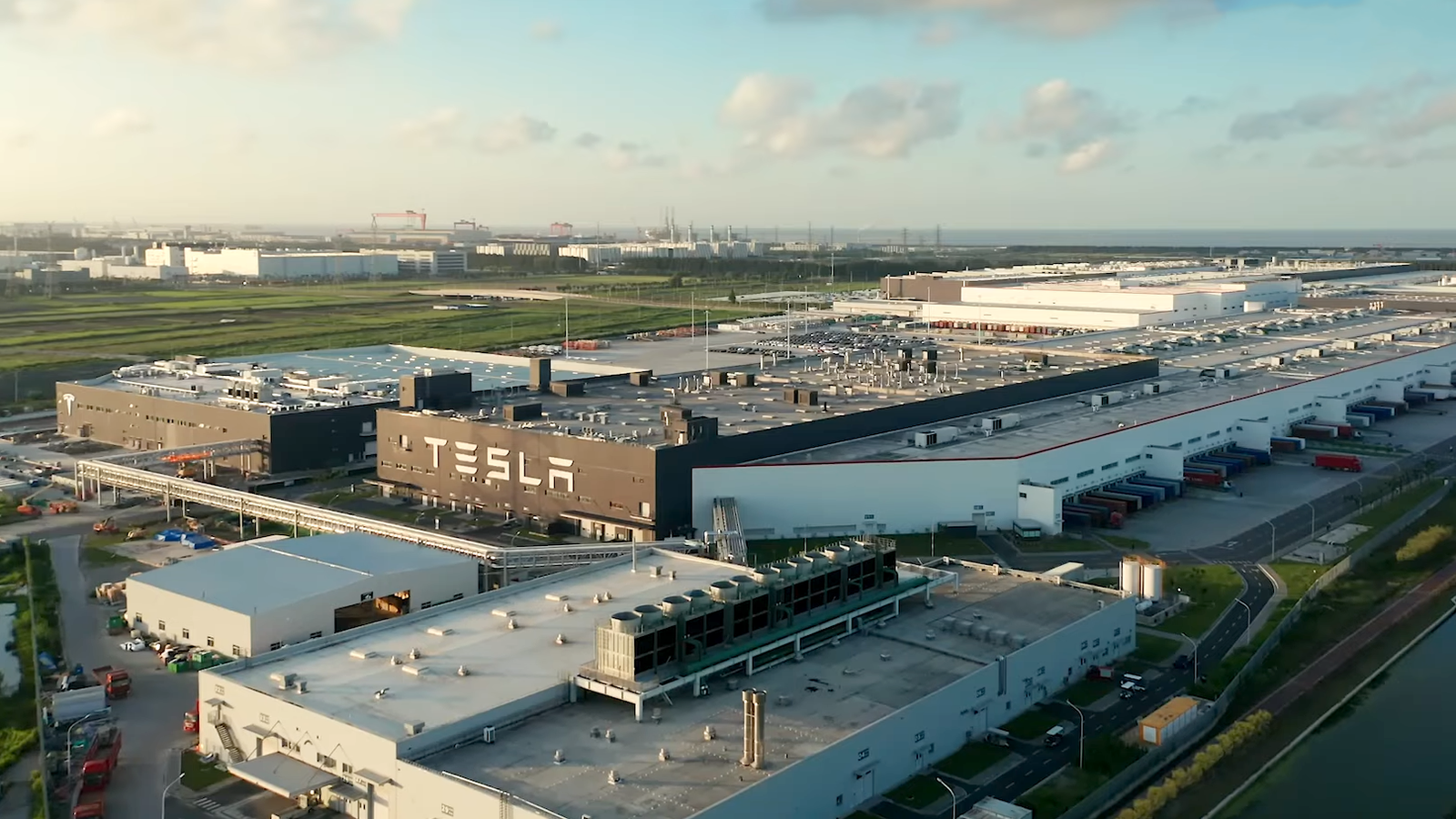
To put its scale into perspective, Terafab would be nearly 10 times larger than Tesla’s Gigafactory Texas, making it the largest semiconductor manufacturing complex ever envisioned.
Even reaching a fraction of its planned production capacity would place Tesla among the world’s largest chip manufacturers.
ASML’s Confirmation Gives Terafab Massive Credibility
Many industry observers initially questioned whether such a massive semiconductor project could become reality.
However, the biggest validation came from ASML, the Dutch company that manufactures the world’s only Extreme Ultraviolet (EUV) lithography machines.
These machines are essential for producing advanced AI chips below 3nm manufacturing nodes.
During its Q2 2026 earnings call, ASML confirmed that Tesla’s Texas semiconductor facility has already been incorporated into its long-term manufacturing roadmap.
ASML’s Key Announcements
- 30% annual increase in EUV and DUV machine production.
- Most 2027 EUV systems already reserved.
- Significant 2028 production capacity booked.
- Tesla’s Terafab officially included in customer allocations.
This is one of the strongest signals yet that Terafab is moving beyond concept and into execution.
Powering One Million AI Satellites
One of the biggest reasons Terafab needs enormous manufacturing capacity is SpaceX’s long-term satellite vision.
Today, Starlink operates thousands of satellites.
Musk’s long-term roadmap reportedly aims for as many as 1 million AI-enabled satellites.
Unlike traditional satellites, future AI satellites will perform onboard computing without relying on Earth-based data centers.
These satellites could perform:
Autonomous Routing
AI processors continuously optimize laser communications and signal routing.
Collision Avoidance
Real-time onboard computing allows satellites to detect potential collisions and react instantly.
Earth Observation
AI analyzes weather, oceans, forests, and infrastructure before sending processed information back to Earth.
Advanced Cybersecurity
Built-in AI chips continuously manage encryption and defend against cyber threats.
Every satellite may require multiple AI processors throughout its lifetime, creating demand for millions of advanced chips.
Terafab Will Power Tesla’s Entire AI Ecosystem
Terafab isn’t being built solely for SpaceX.
It serves as the hardware foundation for Elon Musk’s entire technology empire.
Tesla Robotaxis
Tesla’s Full Self-Driving (FSD) technology depends on powerful inference chips capable of processing video feeds with almost zero latency.
Owning its own semiconductor factory allows Tesla to rapidly improve self-driving hardware without depending on outside suppliers.
Optimus Humanoid Robots
Musk believes Optimus could eventually become Tesla’s largest business.
Millions of robots working in factories, offices, and homes will require advanced processors for:
- Computer vision
- Motor control
- Navigation
- Speech recognition
- Real-world decision making
Terafab provides the silicon backbone needed to manufacture these processors at scale.
Dojo AI Supercomputers
Training AI models requires enormous computing power.
Currently, companies spend billions purchasing GPUs from suppliers like Nvidia.
With Terafab, Tesla could dramatically reduce costs by manufacturing custom AI processors for Dojo, its in-house AI supercomputer.
This vertical integration could accelerate AI development while lowering long-term infrastructure expenses.
The Business Strategy Behind Terafab
Most semiconductor companies follow a simple business model:
Design → Manufacture → Sell
Tesla plans something far more valuable.
Instead of simply selling chips, Terafab supports recurring AI-powered services.
Robotaxi Revenue
Rather than earning money only when a vehicle is sold, autonomous Robotaxis can continuously generate revenue through ride-hailing services.
Each vehicle becomes an AI-powered income-producing asset.
Optimus Software Subscriptions
The robots themselves represent only the first sale.
Long-term revenue could come from:
- Premium AI capabilities
- Industrial automation software
- Enterprise fleet management
- Remote diagnostics
- Over-the-air software updates
This creates recurring revenue well beyond hardware sales.
The AI Feedback Loop
One of Terafab’s biggest strategic advantages is its ability to create a self-improving AI ecosystem.
The process works like this:
- Tesla vehicles and Optimus robots collect real-world data.
- That information trains AI models using Dojo supercomputers.
- Improved models are deployed back to vehicles and robots.
- Better products attract more customers.
- More customers create demand for additional Terafab chips.
This continuous cycle strengthens Tesla’s competitive advantage over time.
Texas Construction Is Already Moving Forward
Although Terafab remains in development, several important milestones have already been achieved.
Progress So Far
- More than 6,000 acres of land secured.
- Engineering offices being established near Austin.
- Texas approved major tax incentive programs.
- Local authorities supporting early development phases.
- Phase 1 construction estimated at $55 billion.
These developments suggest Terafab is progressing from planning toward implementation.
Why Terafab Could Change the Global AI Industry
Today’s AI industry depends heavily on a handful of semiconductor manufacturers.
If Tesla successfully builds Terafab, it could dramatically reduce its reliance on external suppliers while gaining complete control over one of the world’s most valuable technologies—advanced AI chips.
The project also strengthens Tesla’s position across multiple industries simultaneously:
- Artificial Intelligence
- Autonomous Vehicles
- Humanoid Robotics
- Cloud Computing
- Space Technology
- Satellite Communications
Few companies possess such a vertically integrated strategy.
Conclusion
The $122 billion Terafab is far more than another semiconductor factory. It represents Elon Musk’s vision of complete AI infrastructure independence.
By manufacturing its own advanced processors, Tesla aims to eliminate supply-chain bottlenecks, lower AI infrastructure costs, and accelerate innovation across Robotaxis, Optimus robots, Dojo supercomputers, and SpaceX’s future satellite constellation.
With ASML officially including Terafab in its future equipment allocations, thousands of acres secured in Texas, and early engineering work already underway, the project appears to be gaining real momentum.
If Musk succeeds, Terafab could become the world’s largest semiconductor manufacturing facility and transform Tesla from an electric vehicle company into one of the most powerful AI infrastructure companies on the planet.
FAQs
1. What is Elon Musk’s Terafab?
Terafab is Elon Musk’s proposed $122 billion semiconductor manufacturing facility planned in Texas. The project aims to produce advanced AI chips for Tesla, SpaceX, Optimus robots, Dojo supercomputers, and future AI technologies.
2. Why is Elon Musk building Terafab?
Elon Musk wants to reduce Tesla’s dependence on third-party chip manufacturers like TSMC, Samsung, and Intel. Building Terafab would provide greater control over chip production, lower costs, and accelerate AI innovation.
3. How big will the Terafab facility be?
Terafab is expected to cover approximately 100 million square feet, making it around 10 times larger than Tesla Gigafactory Texas and potentially the largest semiconductor manufacturing complex ever built.
4. How much will Terafab cost?
The estimated total investment for Terafab is around $122 billion, with the first construction phase expected to cost approximately $55 billion.
5. Where will Terafab be located?
Terafab is planned for Texas, where land has reportedly been secured and early engineering work is already underway.
6. What is the main purpose of Terafab?
The primary goal of Terafab is to manufacture advanced AI chips that will power Tesla’s Full Self-Driving technology, Optimus humanoid robots, Dojo AI supercomputers, and SpaceX’s future satellite network.
7. How does ASML support the Terafab project?
ASML, the world’s only manufacturer of Extreme Ultraviolet (EUV) lithography machines, has reportedly included Tesla’s Terafab in its future equipment planning, indicating industry preparation for the project.
8. What role will Terafab play in Tesla’s Full Self-Driving technology?
Terafab will produce custom AI processors designed specifically for Tesla’s Full Self-Driving (FSD) platform, helping improve vehicle performance, efficiency, and autonomous driving capabilities.
9. How will Terafab benefit SpaceX?
Terafab is expected to manufacture specialized AI chips for SpaceX’s satellite network, enabling onboard processing, autonomous routing, collision avoidance, and advanced communication systems.
10. What is the connection between Terafab and Optimus robots?
Tesla’s Optimus humanoid robots require powerful AI chips for computer vision, movement, and decision-making. Terafab would manufacture these processors at scale to support future robot production.
11. Will Terafab reduce Tesla’s dependence on Nvidia?
Terafab could reduce Tesla’s reliance on external AI hardware by producing custom chips for Dojo AI supercomputers and other AI applications, although Nvidia products may still be used where appropriate.
12. What is the expected computing capacity of Terafab?
Terafab has a long-term target of producing up to 1 terawatt (TW) of AI computing hardware annually, making it one of the most ambitious semiconductor projects ever proposed.
13. Why are AI chips becoming so important?
AI chips are essential for running advanced technologies such as generative AI, autonomous vehicles, robotics, cloud computing, and machine learning. As AI adoption grows, demand for specialized processors continues to increase.
14. Is Terafab officially under construction?
While the full facility has not yet been completed, reports indicate that land acquisition, engineering activities, and local development approvals are already progressing in Texas.
15. Could Terafab change the global semiconductor industry?
If completed successfully, Terafab could become one of the world’s largest chip manufacturing facilities, giving Tesla greater control over its AI hardware while increasing competition in the global semiconductor market.
Read More:
- Tesla is about to make parking in busy lots less stressful than ever
- Tesla expands ridesharing service in California to new hotspot
- Elon Musk handed Grok something no other AI company can get their hands on
- Tesla Mobile App gets a new feature that wrap fans are going to love
- Tesla Q2 Earnings: Here’s what to expect
1 thought on “$122B Terafab Elon Musk Is Ready to Take Over AI Chips”