
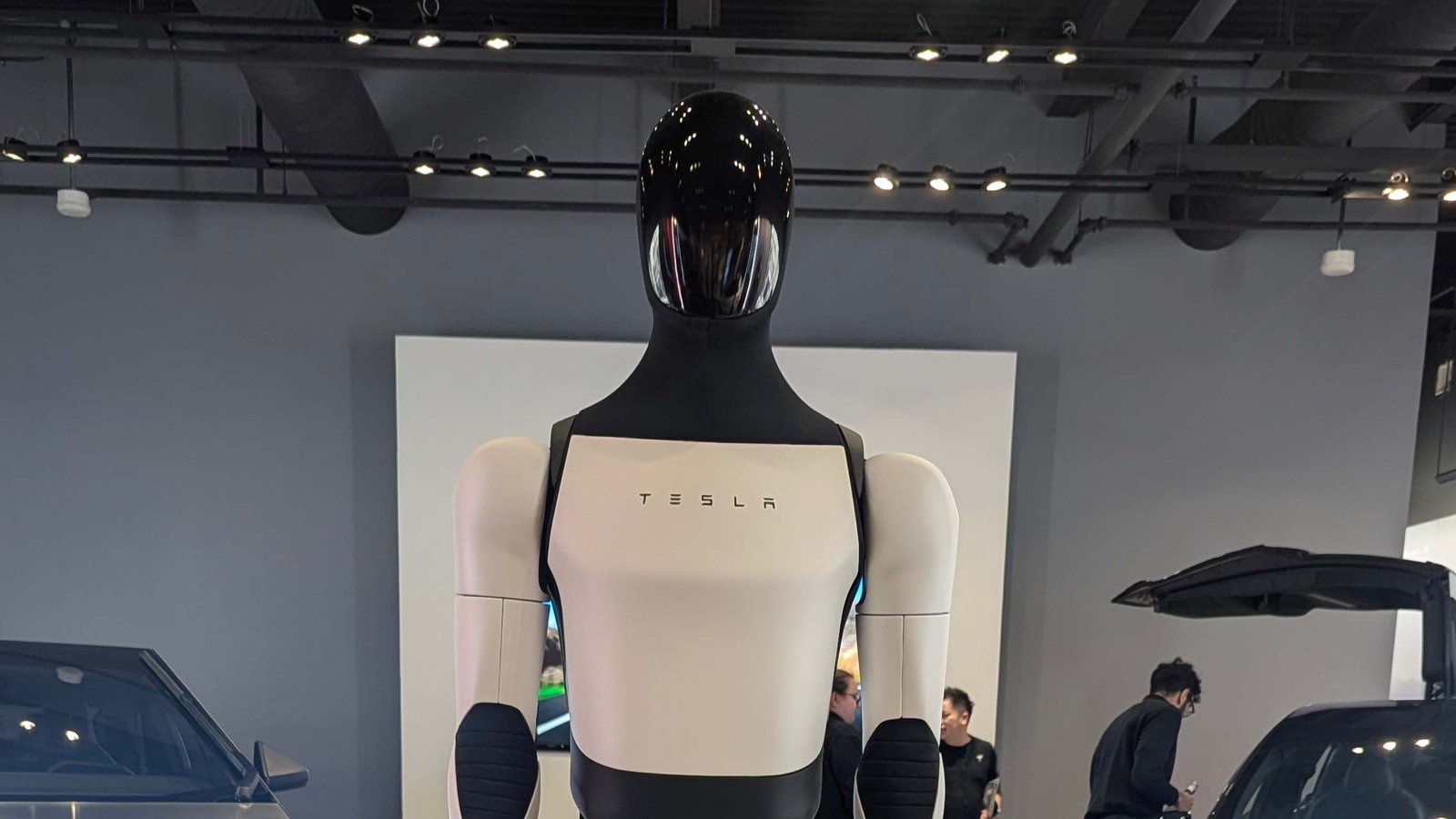
Elon Musk Confirms Tesla Bot Gen 3 Has A Few BUGS: Tesla is making a major transformation in its manufacturing strategy, shifting its focus from traditional electric vehicles toward advanced humanoid robotics. The company has reportedly dismantled parts of the iconic Model S and Model X production lines at its Fremont factory to create space for manufacturing the Tesla Optimus Gen 3 humanoid robot.
This move highlights Tesla’s belief that humanoid robots could become one of the company’s biggest growth opportunities in the future. With ambitious targets of producing 1 million Optimus units annually at Fremont and eventually reaching 10 million units at Giga Texas, Elon Musk and Tesla’s engineering team are positioning Optimus as more than a technology experiment.
The goal is to develop a commercially viable robot capable of performing useful industrial tasks at massive scale. However, turning a prototype humanoid robot into a reliable product introduces significant engineering, software, safety, and manufacturing challenges.
The Reality Behind Tesla Optimus Gen 3 Bugs
Elon Musk has openly acknowledged that early versions of the Tesla Bot Gen 3 may experience bugs. In traditional software, a bug might cause an application to crash or behave incorrectly. In humanoid robotics, however, software problems directly affect physical movement.
A robot’s mistake is not limited to a digital screen. It can involve movement, balance, object handling, and interaction with people in real-world environments.
Minor Errors Can Become Major Safety Concerns
A small software issue could cause Optimus to misjudge the placement of an object, misunderstand a command, or lose balance while walking. In a controlled demonstration, such problems may appear harmless.
However, inside a factory environment, even a small error could create serious risks. For example, a robot carrying heavy equipment that incorrectly calculates its path near a human worker could become a safety concern.
This is why robot safety and artificial intelligence reliability are among Tesla’s biggest challenges before large-scale deployment.
Controlled Demonstrations vs Real-World Conditions
Many humanoid robot demonstrations showcase impressive movements such as running, jumping, or performing complex actions. However, these demonstrations often happen in controlled environments.
Real workplaces are unpredictable. Robots must deal with:
- Wet floors
- Unexpected obstacles
- Loose materials
- Changing object weights
- Human movement patterns
- Different lighting conditions
A successful commercial humanoid robot must constantly adapt to changing surroundings in real time.
Tesla Optimus Gen 3 AI Architecture and AI5 Chip Technology
Dual-Layer Artificial Intelligence System
To improve safety and performance, Tesla Optimus Gen 3 is expected to use a dual-layer AI architecture. This approach separates basic physical control from advanced reasoning.
The first layer focuses on immediate movement and physical responses. The second layer handles complex decision-making.
Low-Level Control System
The robot’s onboard computer manages high-frequency tasks such as:
- Balance control
- Motion coordination
- Sensor processing
- Environmental awareness
These operations must happen instantly because physical movements cannot depend on delayed calculations.
High-Level Intelligence With AI Models
More advanced tasks, such as understanding instructions, planning multiple steps, and coordinating multiple robots, require higher-level intelligence systems.
Tesla plans to integrate advanced AI models, including technologies connected to Grok-based reasoning, to improve Optimus’ ability to understand and complete complicated tasks.
The Importance of Tesla AI5 Chip
The AI5 chip is expected to become the central processing engine of Optimus Gen 3. Compared with Tesla’s previous AI4 hardware, AI5 is designed to provide significantly improved computing capability, memory capacity, and processing speed.
This increased performance allows Optimus to:
- Analyze camera data faster
- Understand environments more accurately
- Predict movements
- React quickly without delays
For a humanoid robot operating around humans, fast decision-making is essential.
Tesla Optimus Gen 3 Hand Technology: 22 Degrees of Freedom
Advanced Dexterity for Human-Like Tasks
One of the hardest engineering problems in humanoid robotics is creating hands capable of performing delicate and powerful actions at the same time.
Tesla Optimus Gen 3 features hands with 22 degrees of freedom (DoF), almost doubling the flexibility of earlier versions.
Human-like hands require a combination of:
- Strength
- Precision
- Touch sensitivity
- Smooth movement
The robot must be capable of lifting heavy industrial components while also handling fragile objects.
Specialized Actuators for Different Body Parts
Different areas of Optimus require different mechanical designs:
Hips and Knees:
These components require high torque to support weight, maintain balance, and perform walking movements.
Shoulders and Wrists:
These areas need flexibility and smooth rotation for complex tasks.
Fingers:
The fingers require precise force control so Optimus can handle objects such as electronics, clothing, tools, and glass items without damage.
Tesla’s Manufacturing Strategy: Designing Optimus for Mass Production
Design for Manufacturability (DFM)
Building thousands or millions of humanoid robots requires a completely different approach from creating prototypes.
Tesla is applying lessons from its previous engineering projects, including the development of the SpaceX Raptor engine, where simplification and integration helped improve manufacturing efficiency.
Optimus Gen 3 focuses on:
- Fewer manufacturing steps
- Reduced wiring complexity
- Integrated components
- Easier assembly processes
Although the robot still contains around 10,000 individual components, Tesla aims to reduce failure points and production bottlenecks.
Mass production will depend on making Optimus easier, faster, and cheaper to manufacture.
Tesla Optimus Factory Deployment Before Home Robots
Why Tesla Will Use Optimus Inside Factories First
Many people imagine humanoid robots becoming household assistants immediately. However, Tesla’s first major use case is expected to be inside its own manufacturing facilities.
Factories provide a safer and more predictable environment compared with homes.
Initial Optimus tasks may include:
- Moving raw materials
- Transporting components
- Supporting factory logistics
- Performing inspections
- Handling repetitive overnight operations
The Optimus Data Learning Loop
One major advantage Tesla has is control over its own factories.
By deploying thousands of robots internally, Tesla can collect real-world performance data. Through the concept of an Optimus Academy, improvements learned by one robot could potentially be shared across the entire fleet through software updates.
This creates a continuous improvement cycle where every robot helps train future versions.
Tesla Optimus Gen 3 Battery Challenges
Power Limitations of Humanoid Robots
Battery technology remains one of the biggest limitations for advanced robots.
Tesla Optimus Gen 3 is expected to use a 3 kWh battery pack located inside the torso.
This battery could provide approximately:
- 5 to 6 hours of operation for light-duty tasks
However, industrial environments require longer operating periods.
For full factory shifts, Tesla may need:
- Faster charging systems
- Automated battery replacement
- More efficient motors
- Improved energy management
Tesla Optimus Gen 3 Key Specifications
| Feature | Tesla Optimus Gen 3 Details |
|---|---|
| Production Target | 1 million units at Fremont, 10 million units at Giga Texas |
| Hand Dexterity | 22 Degrees of Freedom |
| Processing Hardware | AI5 Chip |
| Battery Capacity | Approximately 3 kWh |
| Runtime | Around 5–6 hours for light tasks |
| Components | Approximately 10,000 parts |
| First Deployment | Tesla factory logistics |
The Future of Tesla Optimus Gen 3
Tesla’s decision to transform manufacturing space for Optimus production shows the company’s long-term commitment to humanoid robotics.
However, the path from impressive prototype demonstrations to millions of reliable robots will not be simple. Tesla must solve challenges involving AI safety, hardware reliability, battery efficiency, manufacturing scalability, and real-world performance.
Elon Musk’s admission that Optimus Gen 3 has some bugs reflects the reality of developing a completely new category of machine. The success of Tesla’s humanoid robot strategy will depend on how quickly the company can turn those early problems into improvements.
If Tesla succeeds, Optimus could become one of the most important technologies in the company’s history, changing the future of manufacturing and human-machine collaboration.
FAQs
1. What is Tesla Optimus Gen 3?
Tesla Optimus Gen 3 is the latest generation of Tesla’s humanoid robot designed to perform useful physical tasks in factories and potentially other environments. Tesla aims to make Optimus a commercially scalable robot capable of assisting with manufacturing, logistics, and repetitive work.
2. Why did Tesla remove Model S and Model X production lines at Fremont?
Tesla reportedly repurposed parts of its Fremont factory production area to support Optimus Gen 3 manufacturing. This move shows Tesla’s growing focus on humanoid robots as a major part of its future business strategy.
3. What bugs does Tesla Optimus Gen 3 have?
Early humanoid robots can experience software and hardware issues, including movement errors, balance problems, object-handling mistakes, and difficulties adapting to unpredictable environments. Elon Musk has acknowledged that early Optimus versions will likely have some bugs during development.
4. Is Tesla Optimus Gen 3 safe around humans?
Tesla is focusing heavily on robot safety systems and AI reliability before widespread deployment. Since Optimus will operate around people, it must accurately understand surroundings, control movement, and avoid dangerous mistakes.
5. What is the AI5 chip in Tesla Optimus Gen 3?
The AI5 chip is Tesla’s next-generation computing hardware designed to provide Optimus with faster processing power. It helps the robot analyze sensor data, make decisions, and respond quickly to real-world situations.
6. How intelligent is Tesla Optimus Gen 3?
Optimus Gen 3 combines onboard computing with advanced AI models to improve understanding, reasoning, and task execution. It is designed to process physical movements locally while using higher-level AI systems for complex instructions.
7. How many degrees of freedom does Optimus Gen 3 have in its hands?
Tesla Optimus Gen 3 features 22 degrees of freedom (DoF) in its hands, allowing greater flexibility and precision. This improvement helps the robot perform tasks requiring both strength and delicate handling.
8. What tasks will Tesla Optimus Gen 3 perform first?
Tesla plans to deploy Optimus primarily inside its own factories. Early tasks may include moving materials, transporting components, performing inspections, and handling repetitive manufacturing operations.
9. Will Tesla Optimus Gen 3 become a household robot?
A home assistant version is a possible long-term goal, but Tesla’s initial focus is industrial applications. Factories provide a more controlled environment where Tesla can improve the robot’s performance before expanding into homes.
10. How many components does Tesla Optimus Gen 3 contain?
Tesla Optimus Gen 3 is expected to contain around 10,000 individual components. Reducing complexity and improving manufacturing efficiency will be important for large-scale production.
11. How long can Tesla Optimus Gen 3 operate on a single charge?
Optimus Gen 3 is expected to use a 3 kWh battery pack that can provide approximately 5 to 6 hours of operation during light-duty tasks. Longer industrial use will require improvements in battery efficiency and charging systems.
12. How many Tesla Optimus robots does Tesla plan to produce?
Tesla has ambitious production goals, including potential capacity targets of 1 million units annually at Fremont and 10 million units at Giga Texas. Achieving these numbers will depend on solving manufacturing and supply chain challenges.
13. Can Tesla Optimus Gen 3 learn new tasks?
Yes, Tesla plans to use real-world data from deployed robots to improve performance. A fleet-learning approach could allow improvements made by one robot to be shared with other Optimus units through software updates.
14. What are the biggest challenges facing Tesla Optimus Gen 3?
The biggest challenges include:
- AI safety and reliability
- Real-world navigation
- Hand dexterity
- Battery limitations
- Manufacturing scalability
- Reducing hardware failures
Creating millions of reliable humanoid robots remains a major engineering challenge.
15. Why is Tesla investing so heavily in humanoid robots?
Tesla believes humanoid robots could become a major future industry. By developing Optimus, Tesla aims to automate repetitive work, improve factory efficiency, and create a new category of AI-powered machines that can operate alongside humans.
Read More:
- Tesla stock tumbles after earnings, one of its sharpest single-day declines
- SpaceX Starship Flight 13 faces wrath of the Texas skies
- Tesla door handle saga gets its latest chapter and a big change is coming
- Tesla short sellers win big after shares fall after earnings
- Tesla’s Supercharger Diner probably just secured more locations