
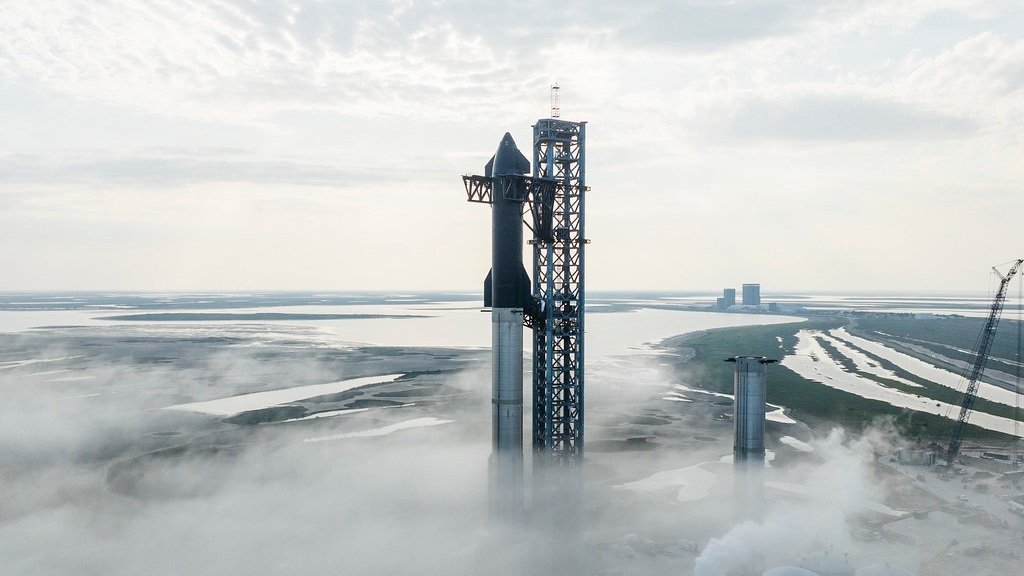
NASA revealed NEW Inside Starship HLS Design Upgrade & Testing: NASA and SpaceX are moving closer to a historic milestone as they continue developing the Starship Human Landing System (HLS) for the upcoming Artemis III lunar mission. The latest updates reveal major changes in vehicle design, advanced testing methods, and new safety strategies aimed at returning humans to the lunar surface for the first time in more than five decades.
The updated Starship HLS architecture highlights several important engineering developments, including the Starship Version 3 (V3) configuration, orbital docking operations, underwater astronaut simulations, and upgraded systems designed to support long-duration lunar exploration.
With Artemis III targeting a landing near the Moon’s South Pole, NASA and SpaceX must overcome extreme challenges involving terrain, vehicle stability, astronaut mobility, and mission reliability.
Artemis III Mission Architecture and Starship V3 Design Changes
The Artemis III mission requires a highly complex orbital sequence involving multiple spacecraft working together. NASA’s updated plans describe a synchronized launch architecture featuring SpaceX Starship, NASA’s Orion spacecraft, and other heavy-lift vehicles operating within a narrow mission window.
Starship V3 Hull Integration for Lunar Operations
One of the biggest changes is the decision not to launch a fully completed lunar lander cabin directly from Earth. Instead, SpaceX plans to use a standard Starship Version 3 hull equipped with important hardware required for orbital testing.
The updated Starship HLS design includes:
- Black heat shield tiles for thermal protection
- Advanced control flaps for vehicle maneuvering
- A nose-mounted docking port for spacecraft connections
This approach allows SpaceX to test critical systems before crewed lunar operations begin.
Orbital Docking and Control Transfer Challenges
After Orion docks with Starship in lunar orbit, the Starship vehicle will take control of the combined spacecraft stack. Due to Starship’s massive size compared with Orion, engineers must carefully manage the forces created during orbital movement.
The difference in:
- Vehicle mass
- Rotational inertia
- Center of gravity
creates unique structural challenges around the docking area.
Advanced flight-control software will be required to prevent harmonic oscillations, excessive movement, or possible stress on the docking mechanism during orbital maneuvers.
NASA Neutral Buoyancy Laboratory Testing of Starship HLS
Full-Scale Underwater Mockup Simulates Lunar Operations
To prepare astronauts for future Moon missions, NASA and SpaceX are using the Neutral Buoyancy Laboratory (NBL) at Johnson Space Center in Houston for realistic Starship HLS testing.
A full-scale 9-meter diameter Starship HLS mockup has been placed inside the massive underwater facility to evaluate astronaut movement, equipment handling, and emergency procedures.
The underwater environment allows engineers to recreate aspects of the Moon’s reduced gravity conditions.
Simulating Lunar Gravity With Astronaut Suit Testing
The Moon has approximately one-sixth of Earth’s gravity, creating a completely different movement environment for astronauts.
To simulate this condition underwater, technicians attach around 90 pounds of ballast to astronaut suits. Instead of using traditional lead weights, NASA uses tungsten ballast because it provides higher density while taking up less space.
During these tests, astronauts evaluate:
- Airlock operations
- Suit mobility
- Tool accessibility
- Workspace limitations
- Emergency procedures
These simulations help identify design problems before astronauts ever reach the lunar surface.
Major Starship HLS Design Upgrades Revealed
Dual Airlock System Improves Astronaut Safety
One of the most important upgrades confirmed during NBL testing is the addition of a dual airlock system.
Each Starship HLS airlock provides approximately 13 cubic meters of interior volume, giving astronauts significantly more working space compared with older lunar spacecraft designs such as the Apollo Lunar Module.
Benefits of Two Independent Airlocks
The dual-airlock design provides several advantages:
1. Increased Mission Reliability
If one airlock experiences a failure, astronauts can use the second system as a backup route.
2. Reduced Oxygen Loss
Instead of venting the entire cabin atmosphere into space during every EVA, the dual system allows astronauts to transfer gases between compartments through cross-venting procedures.
3. Better EVA Operations
The additional space allows astronauts to prepare equipment, move more comfortably, and perform surface activities more efficiently.
Extended Elevator System for Lunar Surface Access
Another major Starship HLS improvement is the redesigned external elevator system.
Because Starship HLS stands approximately 50 meters tall, astronauts require a reliable method to travel between the vehicle and the lunar surface.
Why the Longer Elevator Rail Matters
Earlier designs showed a shorter elevator structure, but updated testing revealed the need for a longer rail extending farther away from the spacecraft.
This modification helps prevent the elevator basket from contacting:
- Landing legs
- Vehicle structures
- Uneven lunar terrain
The Moon’s South Pole region may contain slopes reaching nearly 20 degrees, making clearance a critical engineering issue.
Elevator Reliability Remains a Major Challenge
Although the elevator provides essential surface access, it is also considered a potential single point of failure.
NASA has raised concerns that the system may not receive a complete operational demonstration before astronauts rely on it during the crewed mission.
Possible backup solutions include:
- Secondary winch systems
- Manual cable mechanisms
- Additional contingency procedures
Ensuring elevator reliability is one of the most important remaining challenges for Starship HLS.
Starship HLS Stability and Landing Safety Challenges
Managing a 50-Meter Lunar Lander
The enormous size of Starship HLS creates new challenges compared with previous lunar vehicles.
Standing approximately 171 feet tall, Starship HLS must safely land on uneven terrain near the lunar South Pole.
Potential landing hazards include:
- Crater edges
- Rocky surfaces
- Uneven slopes
- Limited flat landing zones
Center of Mass Design Reduces Tipping Risk
Although Starship HLS appears extremely tall, engineers have designed the spacecraft’s internal structure to maintain stability.
The heaviest components are positioned near the bottom of the vehicle, including:
- High-thrust engines
- Descent and ascent systems
- Major structural supports
Above these components sits the liquid oxygen tank, which contains a large percentage of the vehicle’s ascent propellant.
This arrangement lowers the effective center of mass, helping improve stability during landing.
Combined with advanced landing legs capable of self-leveling, the design reduces the risk of tipping on uneven lunar terrain.
Starship HLS Specifications and Key Mission Risks
| Feature | Specification |
|---|---|
| Hull Diameter | 9 meters |
| Overall Height | Approximately 50 meters (171 feet) |
| Airlock System | Two 13 m³ redundant airlocks |
| Main Testing Facility | NASA Neutral Buoyancy Laboratory |
| Gravity Simulation Method | Tungsten ballast for 1/6th gravity simulation |
| Major Risks | Elevator reliability and orbital control forces |
The Future of Human Lunar Exploration With Starship HLS
The latest Starship HLS updates show that NASA and SpaceX are focusing heavily on crew safety, system redundancy, and real-world testing before Artemis III astronauts return to the Moon.
From underwater astronaut simulations to orbital vehicle testing, every stage of development is designed to solve complex engineering problems before human lives depend on the system.
While challenges remain, including elevator reliability, landing stability, and orbital docking control, the Starship HLS represents one of the most ambitious spacecraft projects ever developed.
Through continued testing and design improvements, NASA and SpaceX are working toward a new era of lunar exploration that could eventually support sustained human activity on the Moon and prepare the way for future missions to Mars.
FAQs
1. What is the Starship Human Landing System (HLS)?
The Starship Human Landing System (HLS) is a modified version of SpaceX’s Starship spacecraft designed to carry astronauts from lunar orbit to the Moon’s surface and back. NASA selected Starship HLS as the lunar lander for the Artemis III mission, which aims to return humans to the Moon.
2. What is the purpose of Starship HLS in the Artemis III mission?
The main purpose of Starship HLS is to transport astronauts from the Orion spacecraft in lunar orbit down to the lunar surface. After completing surface operations, the lander will return astronauts to lunar orbit for transfer back to Orion.
3. What are the major upgrades in the new Starship HLS design?
The latest Starship HLS design includes several important upgrades, including:
- Dual astronaut airlocks
- Extended elevator system
- Improved docking hardware
- Updated Starship V3 hull configuration
- Enhanced safety and backup systems
These improvements are designed to increase astronaut safety and mission reliability.
4. Why is NASA testing a full-scale Starship HLS mockup underwater?
NASA uses the Neutral Buoyancy Laboratory (NBL) to simulate lunar operations in a controlled environment. Underwater testing helps astronauts practice:
- Walking and moving in spacesuits
- Using tools on the lunar surface
- Entering and exiting airlocks
- Handling equipment in reduced gravity conditions
5. How does NASA simulate Moon gravity during Starship HLS testing?
The Moon has about one-sixth of Earth’s gravity. During underwater tests, astronauts wear specially adjusted spacesuits with approximately 90 pounds of tungsten ballast to recreate the movement challenges they will experience on the lunar surface.
6. What is the diameter of the Starship HLS spacecraft?
The Starship HLS has a large 9-meter diameter hull, making it significantly larger than previous lunar landers such as the Apollo Lunar Module.
7. Why does Starship HLS need two airlocks?
The dual airlock system improves astronaut safety and operational efficiency. If one airlock fails, the second provides a backup path for astronauts.
The system also helps conserve oxygen by allowing cross-venting between chambers instead of losing the entire cabin atmosphere during every spacewalk.
8. How much space do the Starship HLS airlocks provide?
Each Starship HLS airlock is designed to provide approximately 13 cubic meters of interior volume. Together, they offer astronauts significantly more working space than earlier lunar spacecraft.
9. What is the purpose of the Starship HLS elevator?
The Starship HLS elevator allows astronauts to travel between the spacecraft’s high landing position and the lunar surface.
Because the vehicle is approximately 50 meters tall, astronauts need a safe transportation system to move equipment and crew between the cabin and the Moon.
10. Why is the Starship HLS elevator considered a major engineering challenge?
The elevator is considered a potential single point of failure because astronauts depend on it for surface access.
NASA and SpaceX are studying backup solutions such as:
- Secondary winches
- Manual cable systems
- Additional emergency procedures
11. How will Starship HLS land safely on the Moon?
Starship HLS is designed with advanced landing systems, powerful engines, and self-leveling landing legs to handle uneven lunar terrain.
The spacecraft’s heavy components are positioned lower in the vehicle, helping maintain a lower center of mass and improving landing stability.
12. Why is landing near the lunar South Pole difficult?
The lunar South Pole presents unique challenges because the area contains:
- Uneven terrain
- Crater edges
- Rocky surfaces
- Sloped landing zones
Some areas may have slopes approaching 20 degrees, requiring precise landing technology.
13. What is the Starship V3 hull configuration?
The Starship V3 hull configuration is an updated spacecraft structure used for testing and future lunar operations. It includes features such as:
- Heat shield tiles
- Control flaps
- Docking hardware
This configuration helps engineers evaluate spacecraft performance before crewed missions.
14. How does Starship HLS connect with NASA’s Orion spacecraft?
During Artemis III operations, Orion will dock with Starship HLS in lunar orbit. After docking, Starship will control the combined spacecraft stack during the transfer phase toward the lunar surface.
15. What are the biggest risks facing the Starship HLS program?
The main engineering challenges include:
- Orbital docking forces
- Flight control during spacecraft transfer
- Elevator reliability
- Landing on uneven lunar terrain
- Long-term spacecraft safety
NASA and SpaceX are conducting extensive testing to reduce these risks.
16. When will Starship HLS be used for the Artemis III Moon landing?
Starship HLS is planned to support NASA’s Artemis III mission, which is intended to return astronauts to the lunar surface. The exact mission schedule depends on successful spacecraft development, testing, and readiness reviews by NASA and SpaceX.
Read More:
- Tesla stock tumbles after earnings, one of its sharpest single-day declines
- SpaceX Starship Flight 13 faces wrath of the Texas skies
- Tesla door handle saga gets its latest chapter and a big change is coming
- Tesla short sellers win big after shares fall after earnings
- Tesla’s Supercharger Diner probably just secured more locations