


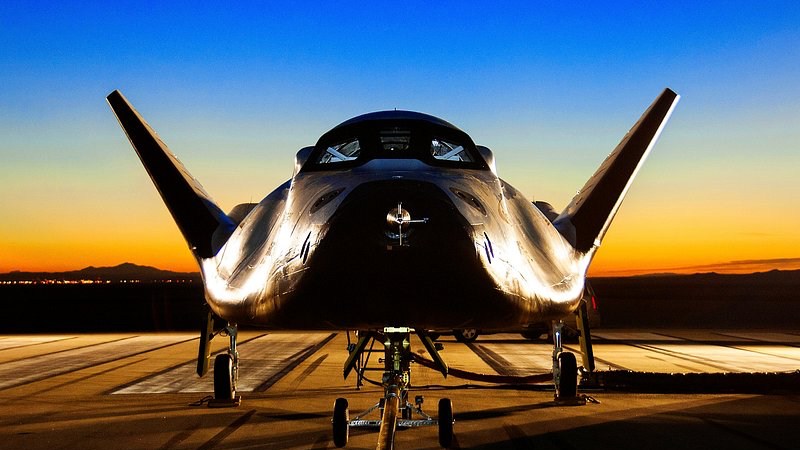
Dream Chaser Heat Shield Upgraded SOLVED What Musk Called ‘Impossible’!: For decades, engineers and space agencies have wrestled with one of the toughest problems in aerospace engineering: building a reusable, durable, and low-maintenance heat shield capable of surviving the extreme conditions of atmospheric re-entry. Temperatures can soar beyond 1,600°C, while the spacecraft is bombarded by superheated plasma traveling at hypersonic speeds.
This challenge was once described as “impossible” by Elon Musk, reflecting just how complex and unforgiving thermal protection systems can be. Yet today, two groundbreaking spacecraft—SpaceX’s Starship and Sierra Space’s Dream Chaser—are redefining what’s achievable.
Both vehicles are attempting to solve the same problem but using dramatically different philosophies. One focuses on mass production and mechanical simplicity, while the other leans heavily on advanced materials and next-generation manufacturing.
So, how close are we to solving the “impossible”? Let’s explore.
The Space Shuttle Legacy: A Brilliant but Flawed System
A Technological Marvel with a Critical Weakness
The Space Shuttle represented a giant leap forward in reusable spaceflight. However, its thermal protection system (TPS) ultimately became its greatest vulnerability.
The Shuttle was covered with over 24,000 individually crafted ceramic tiles, each designed to fit a specific location on the spacecraft. These tiles could withstand extreme heat, but they came with serious drawbacks:
- Extremely brittle structure
- High maintenance requirements
- Complex and costly replacement process
Every mission required extensive inspection and repair, making turnaround times long and expensive. In fact, each Shuttle launch cost roughly $1.5 billion, with a significant portion spent on tile maintenance.
The Columbia Disaster: A Harsh Lesson
The dangers of this system became tragically clear in 2003, when the Space Shuttle Columbia was lost during re-entry. A small breach in the heat shield allowed superheated plasma to penetrate the wing, leading to catastrophic failure.
This incident highlighted a crucial truth:
Even a tiny flaw in a heat shield can lead to total mission failure.
Since then, engineers have been determined to create a system that is not only reusable but also resilient and fault-tolerant.
SpaceX Starship: Reinventing Heat Shields Through Simplicity
Mass Production Over Custom Complexity
SpaceX’s Starship represents a radical departure from the Shuttle’s approach. Instead of thousands of unique components, Starship uses approximately 18,000 standardized hexagonal tiles.
This design offers several advantages:
- Scalability through mass production
- Quick replacement of damaged tiles
- Reduced manufacturing costs
By making most tiles identical, SpaceX eliminates the need for custom fabrication, significantly improving efficiency.
Mechanical Attachment: A Game-Changer
Unlike the Shuttle, which relied on adhesive bonding, Starship uses a mechanical pin system:
- Tiles are mounted on metal pins welded to the hull
- Secured with self-locking nuts
- Designed to allow thermal expansion and contraction
This innovation solves one of the Shuttle’s biggest problems—tiles detaching due to stress or adhesive failure.
The “Crunch Wrap” Innovation
One of Starship’s most interesting features is its flexible gap filler system, often referred to as “Crunch Wrap.”
This material:
- Acts like a heat-resistant felt
- Seals gaps between tiles
- Prevents superheated plasma leakage
Without proper sealing, even tiny gaps could allow plasma to penetrate and damage the spacecraft’s structure. Crunch Wrap significantly reduces this risk.
Ablative Backup Layer: Built-In Safety
Starship goes a step further by adding a secondary ablative layer beneath the tiles. This layer acts as a safety net:
- Made from silicone-based materials or PICA composites
- Absorbs and dissipates heat if tiles are lost
- Provides redundancy the Shuttle never had
This means that even if a tile fails, the spacecraft still has a chance to survive re-entry—a major advancement in safety.
Real-World Testing Advantage
One of Starship’s biggest strengths is its extensive flight testing:
- Over 11 test flights completed
- Continuous iteration based on real data
- Rapid design improvements after each mission
This iterative approach allows SpaceX to refine its heat shield using actual re-entry conditions, not just simulations.
Dream Chaser: A Materials Science Revolution
A Different Philosophy: Strength Through Innovation
While SpaceX focuses on engineering simplicity, Sierra Space’s Dream Chaser emphasizes cutting-edge materials and manufacturing techniques.
Rather than redesigning the system architecture, Dream Chaser aims to build better tiles—stronger, more durable, and easier to produce.
Next-Generation Manufacturing Techniques
One of the biggest improvements comes from automation:
- Tiles are produced using modern manufacturing methods
- Eliminates labor-intensive hand casting
- Ensures consistent quality and durability
This approach reduces production bottlenecks and improves reliability across the entire system.
Silicon Carbide Composites: A Major Breakthrough
The second Dream Chaser vehicle, known as Reverence, will use advanced silicon carbide and carbon fiber composites.
These materials offer:
- Heat resistance up to 1,710°C
- High structural integrity over multiple flights
- Improved durability compared to traditional silica tiles
This marks a significant leap forward in thermal protection technology.
TUROFC: Protecting Critical Areas
For the most extreme heat zones—such as the nose and wing leading edges—Dream Chaser uses a specialized material known as:
Toughened Uni-piece Fibrous Reinforced Oxidation-Resistant Composite (TUROFC)
This material provides:
- Superior impact resistance
- Better performance than the Shuttle’s Reinforced Carbon-Carbon (RCC)
- Enhanced protection in high-stress areas
These improvements directly address the weaknesses that led to past failures.
Fewer Tiles, Smarter Design
Dream Chaser uses only about 2,000 tiles, compared to tens of thousands on the Shuttle.
This reduction means:
- Less maintenance
- Fewer failure points
- Simplified inspection processes
It’s a more streamlined approach, relying on quality over quantity.
Starship vs. Dream Chaser: Key Differences
1. Design Philosophy
- Starship: Mass production and mechanical simplicity
- Dream Chaser: Advanced materials and precision engineering
2. Tile Strategy
- Starship: ~18,000 standardized tiles
- Dream Chaser: ~2,000 high-performance tiles
3. Attachment Method
- Starship: Mechanical pin system
- Dream Chaser: Advanced bonding and integrated design
4. Redundancy and Safety
- Starship: Ablative backup layer
- Dream Chaser: Stronger, more resilient materials
5. Testing Status
- Starship: Multiple real-world flight tests
- Dream Chaser: Awaiting first orbital mission
Theory vs. Reality: The Current Status
Starship: Learning Through Flight
Starship has already completed numerous test flights, giving engineers valuable insights into:
- Tile performance during re-entry
- Failure points and weaknesses
- Real-world thermal stress conditions
This data-driven iteration is accelerating development at an unprecedented pace.
Dream Chaser: Proven on Earth, Not Yet in Space
Dream Chaser’s heat shield has undergone extensive ground-based testing, including:
- Plasma arc jet simulations
- High-temperature endurance tests
- Structural stress evaluations
However, it has yet to face the ultimate test: orbital re-entry.
Until then, its performance remains theoretical, albeit highly promising.
Why This Matters: The Future of Space Travel
Toward Airline-Like Reusability
Both Starship and Dream Chaser aim to achieve something revolutionary:
Rapid, reliable, and cost-effective reuse of spacecraft
This could transform space travel by:
- Reducing launch costs dramatically
- Increasing mission frequency
- Enabling large-scale space operations
Commercial and Scientific Impact
Reliable heat shields will unlock new possibilities:
- Frequent cargo missions to orbit
- Space tourism and human spaceflight
- Deep space exploration missions
Without a dependable thermal protection system, none of this is feasible.
The Bigger Picture: Solving the “Impossible”
The idea that reusable heat shields were “impossible” wasn’t entirely wrong—it reflected the limitations of older technologies.
But today, innovation is happening on multiple fronts:
1. Industrial Manufacturing
Mass production and automation are reducing costs and increasing reliability.
2. Mechanical Engineering
New attachment systems are eliminating traditional failure points.
3. Material Science
Advanced composites are pushing the boundaries of heat resistance and durability.
Conclusion: Two Paths, One Goal
The race between Starship and Dream Chaser isn’t about which approach is better—it’s about which combination of technologies proves most effective.
- Starship demonstrates the power of iteration, redundancy, and scalability
- Dream Chaser showcases the potential of advanced materials and precision design
Together, they represent a new era in aerospace engineering.
The “impossible” heat shield is no longer out of reach. Instead, it’s being solved piece by piece—through innovation, experimentation, and relentless engineering.
And as these technologies mature, they will pave the way for a future where space travel is not just possible, but routine.
Final Thoughts
The next few years will be निर्णायक. Once Dream Chaser completes its first mission and Starship continues refining its design, we’ll finally see which approach delivers the most reliable solution.
Until then, one thing is clear:
The era of fragile, high-maintenance heat shields is coming to an end.
And in its place, a new generation of spacecraft is rising—stronger, smarter, and ready to make space more accessible than ever before.
FAQs
1. What is a spacecraft heat shield?
A heat shield is a protective layer that prevents a spacecraft from burning up during atmospheric re-entry by withstanding and dissipating extreme heat generated by friction and compression of air.
2. Why are reusable heat shields considered difficult to build?
Reusable heat shields must survive extreme temperatures, rapid thermal changes, and mechanical stress without degrading, making them incredibly complex to design and maintain.
3. What made the Space Shuttle’s heat shield problematic?
The Space Shuttle used over 24,000 fragile ceramic tiles, each custom-made. These tiles were brittle, expensive to maintain, and required extensive inspection after every flight.
4. What caused the Columbia disaster?
The Columbia disaster (2003) was caused by a breach in the heat shield, allowing superheated plasma to enter the wing and destroy the spacecraft during re-entry.
5. How is Starship’s heat shield different from the Shuttle’s?
Starship uses standardized hexagonal tiles instead of custom ones, making them easier to manufacture, replace, and maintain.
6. What are Starship’s heat shield tiles made of?
They are made of advanced ceramic materials designed to withstand extreme heat while remaining lightweight and reusable.
7. What is the “Crunch Wrap” used in Starship?
“Crunch Wrap” is a flexible, heat-resistant sealing layer placed between tiles to prevent hot plasma from leaking through gaps.
8. Does Starship have a backup if tiles fail?
Yes, Starship includes a secondary ablative layer beneath the tiles that can absorb heat if tiles are damaged or lost during re-entry.
9. How does Starship attach its tiles?
Tiles are attached using a mechanical pin and locking system, allowing them to expand and contract without detaching.
10. What makes Dream Chaser’s heat shield unique?
Dream Chaser focuses on advanced materials and fewer tiles, using stronger and more durable components rather than relying on large quantities.
11. What materials are used in Dream Chaser’s heat shield?
It uses silica-based tiles initially, with future versions incorporating silicon carbide and carbon fiber composites for higher durability.
12. What is TUROFC material?
TUROFC (Toughened Uni-piece Fibrous Reinforced Oxidation-Resistant Composite) is used in high-heat areas and offers better impact resistance than older materials.
13. How many tiles does Dream Chaser use?
Dream Chaser uses approximately 2,000 tiles, significantly fewer than both the Space Shuttle and Starship.
14. Which spacecraft has flown more tests so far?
Starship has completed multiple test flights, providing real-world data, while Dream Chaser is still awaiting its first orbital mission.
15. Why is real-world testing important for heat shields?
Actual re-entry conditions involve unpredictable stresses and plasma dynamics that cannot be fully replicated in simulations or ground tests.
16. What is the future of reusable heat shield technology?
The future lies in combining mass production, advanced materials, and innovative engineering, enabling faster, cheaper, and safer space travel.
Read More:
- The Starship V3 static fire everyone was waiting for just happened
- Elon Musk signals expansion of Tesla’s unique side business
- Tesla finalizes AI5 chip design, Elon Musk makes bold claim on capability
- Tesla intertwines FSD with in-house Insurance for attractive incentive
- New Tesla Bot Gen 3 Capabilities Change Everything. Elon Musk Reveals 50% Cheaper