
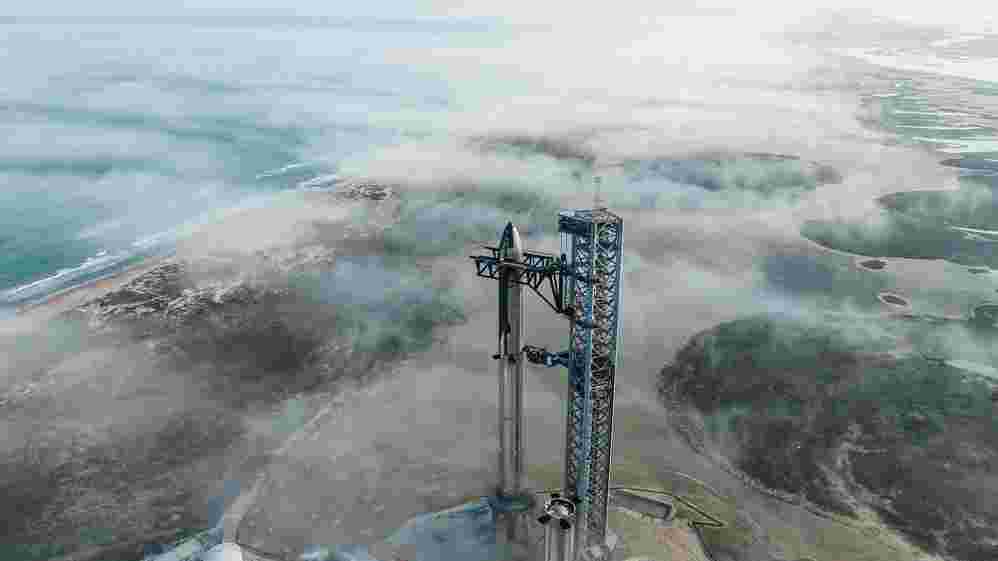
SpaceX is once again pushing the boundaries of what humanity believes is possible. Starship Flight 11 may be over, but its impact is only just beginning. With both stages completing controlled descents and landing sequences, the mission marked a defining moment in SpaceX’s relentless pursuit of full and rapid rocket reusability. Now, attention has shifted toward an even more ambitious goal—catching the Starship upper stage midair using the Mechazilla tower.
Elon Musk himself has ignited excitement across the space community by hinting that this historic milestone could happen as early as spring 2026. But how realistic is this timeline? What technical challenges still stand in the way? And how is SpaceX preparing its launch infrastructure, especially Pad B, to make this daring plan a reality?
Let’s break it all down.
Starship Flight 11: A Turning Point for SpaceX
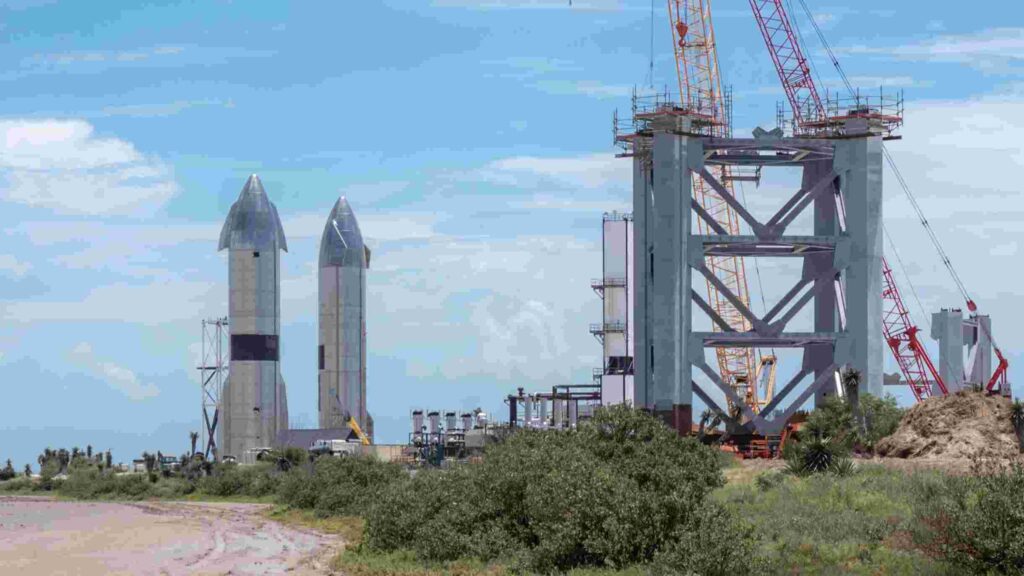
Starship Flight 11 exceeded expectations and reinforced SpaceX’s reputation for rapid learning and iteration. Both the Super Heavy booster and the Starship ship completed their missions with impressive precision, demonstrating remarkable progress compared to earlier flights.
Key Achievements of Flight 11
- Controlled hypersonic re-entry
- Stable descent and landing maneuvers
- Sustained hover capability
- Improved guidance and flight control systems
Elon Musk summarized the achievement perfectly when he stated that the rocket returned from space at hypersonic speed and then hovered precisely in position. While his words initially referred to the Super Heavy booster, they also applied to the ship itself—an important detail that fueled speculation about the next step: tower-based catching.
The Mechazilla Catch: Why It Matters
Catching Starship using the Mechazilla tower is more than just a dramatic visual—it’s a fundamental shift in rocket recovery philosophy.
Why Catching Starship Is Revolutionary
- Eliminates ocean landings
- Reduces refurbishment time
- Enables rapid turnaround
- Lowers launch costs dramatically
- Supports high-frequency launch schedules
A successful catch would mean Starship could be launched, caught, inspected, and reflown within days, redefining reusable rocketry forever.
Elon Musk’s “Springtime” Hint and the 2026 Timeline
Shortly after Flight 11, a fan asked Elon Musk on X when the tower might catch the ship. His reply was a single word:
“Springtime.”
This simple response sent shockwaves through the space community. Based on Musk’s previous comments, this points to spring 2026 as the earliest window for the first Starship ship catch.
How the Timeline Could Play Out
- Flight 12: Late 2025 or early 2026
- Flight 13: March 2026 (potential catch attempt)
- Flights 14–15: Backup options if delays occur
Musk has previously suggested that the catch attempt would occur between Flight 13 and Flight 15, making this timeline increasingly credible.
Flight 12: The Deciding Mission
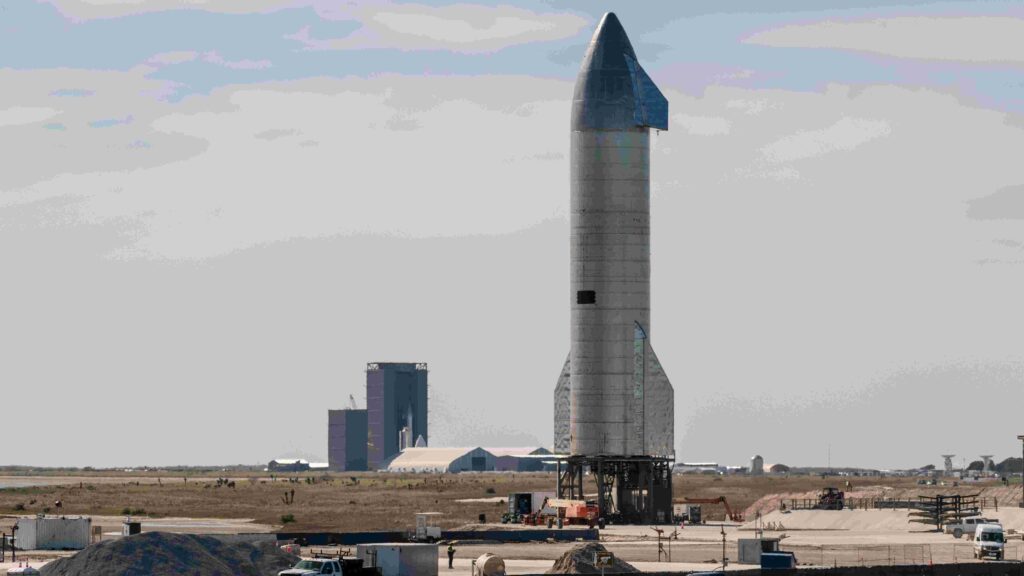
Flight 12 will play a crucial role in determining whether SpaceX is ready to attempt a ship catch.
What Flight 12 Needs to Prove
- Reliable ascent and descent performance
- Improved heat shield durability
- Stable fuel tank integrity
- Validation of Starship V3 upgrades
If Flight 12 succeeds without major anomalies, Flight 13 could become the historic mission. However, if serious issues arise, SpaceX may delay the catch attempt to ensure safety and reliability.
Starship V3: A Fundamentally New Vehicle
Flight 12 is expected to debut key elements of the Starship V3 configuration, representing a major evolution of the spacecraft.
Major V3 Upgrades
- Enhanced Raptor engines
- Refined grid fins on Super Heavy
- Improved hot-staging efficiency
- Optimized heat shield materials
- Experimental catch-assist systems
In many ways, Flight 12 serves as a bridge between experimental prototypes and an operational Starship system.
Heat Shield Challenges: Progress, but Not Perfection
Despite improvements from Flight 10 to Flight 11, the heat shield remains one of Starship’s biggest challenges.
Current Heat Shield Issues
- Tile leaks and oxidation
- Attachment method refinements needed
- Insulation gaps between tiles
The heat shield is not just protective—it’s essential for rapid reusability. A ship that requires extensive heat shield refurbishment after each flight defeats the purpose of SpaceX’s design philosophy.
Until the system is near-flawless, catching the ship may still require post-flight repairs, slowing turnaround times.
Fuel Tank Concerns: A Serious Engineering Priority
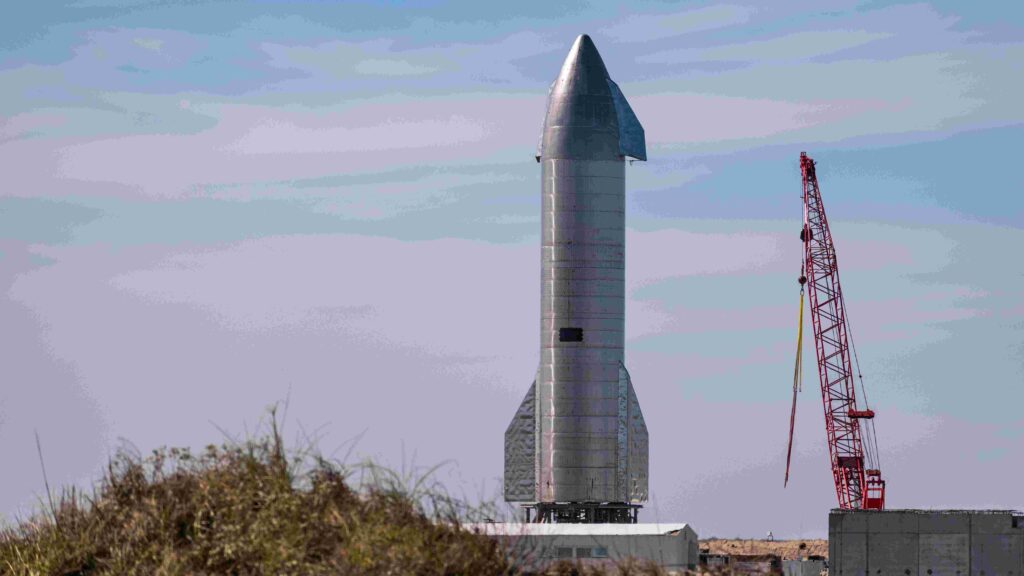
More concerning than the heat shield were indications of fuel tank damage during Flight 11.
What Went Wrong
- Possible leak in the nose cone payload tank
- Missing heat shield tiles exposed critical structures
- Localized fire and burn damage observed
- Potential deformation of the main liquid oxygen tank
While the mission was not compromised, these issues pose significant risks if left unresolved. Tank integrity is vital during every phase of flight, and even small flaws can escalate into catastrophic failures.
SpaceX engineers are expected to address this aggressively in future V3 designs.
Pad B and Mechazilla: Infrastructure Takes Center Stage
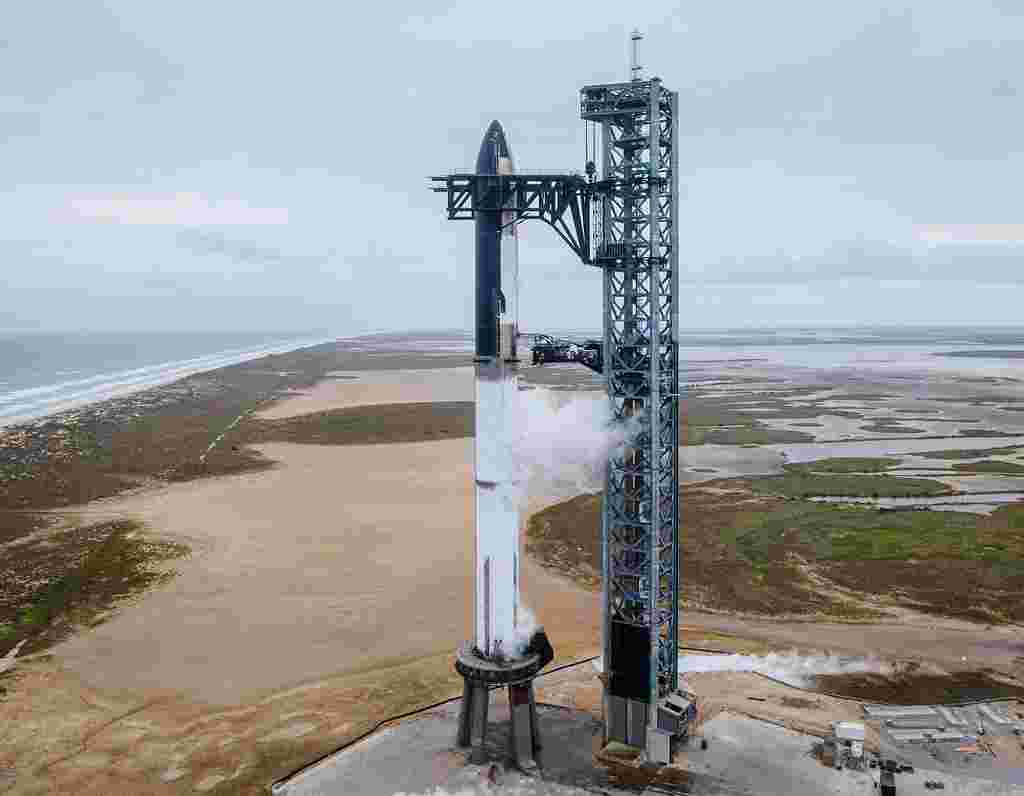
Rocket design is only half the battle. The other half lies in ground infrastructure, especially at Starbase’s Pad B.
Why Pad B Is Critical
- Dedicated to ship catching
- Separate from booster-catching Pad A
- Designed for high-frequency operations
Recent progress suggests Pad B is nearing operational readiness.
Chopsticks Pad B: Testing in Progress
The Mechazilla chopsticks at Pad B have shown significant recent activity.
Key Developments
- Chopsticks arms installed
- Actuators, ramps, and cladding integrated
- First arm movements observed
- Repeated lift tests confirmed system functionality
The next major step will be load testing using water-filled bags to simulate the mass of a returning Starship.
Do You Need a Full Orbital Launch Mount to Catch Ship?
Interestingly, catching the ship may not require a fully completed Orbital Launch Mount (OLM).
Possible Workaround
- Chopsticks catch the ship
- Ship lowered onto a temporary stand
- Mobile or partial OLM supports post-catch operations
This flexibility could allow SpaceX to attempt a catch before the full OLM is complete, accelerating the timeline.
The BQD Gantry System: A New Mystery Revealed
One of the most intriguing developments at Pad B is the BQD gantry system.
What We Know So Far
- Positioned next to the flame trench
- Likely supports booster quick-disconnect operations
- Designed for future refurbishment and adaptability
Thanks to detailed 3D renderings by Lewis Nag and his team, the space community now has a clearer understanding of how this system integrates into the broader launch complex.
Pad B Construction: Foundation for the Future
From an aerial view, Pad B’s progress is undeniable.
Key Construction Milestones
- Trench excavation completed
- Initial concrete layers poured
- Pipe systems installed
- Rebar reinforcement planned
- Flame bucket system pending
Once complete, Pad B will be one of the most advanced launch and recovery complexes ever built.
A New Era of High-Frequency Starship Launches
SpaceX’s ambitions don’t stop at catching Starship.
Staggering Future Goals
- 25 Starship launches in one year
- 400 launches over four years
- In-orbit refueling tests
- Rapid pad turnaround
- Expansion to Cape Canaveral
The infrastructure being built today is designed to support routine, airline-like spaceflight operations.
Catching Starship: Harder Than Catching Super Heavy
While Super Heavy has already been caught, Starship presents unique challenges.
Why Ship Catching Is Harder
- Lighter but faster
- More aerodynamically complex
- Requires tighter alignment tolerances
- Demands millisecond-level precision
Yet if any company can pull it off, it’s SpaceX.
Is SpaceX Truly Ready for a 2026 Catch?
Despite remaining challenges, all signs point toward yes.
Why Confidence Is Growing
- Two consecutive successful flights
- Rapid infrastructure progress
- V3 upgrades nearing readiness
- Elon Musk’s public timeline hints
While risks remain, the momentum is undeniable.
What a Successful Catch Would Mean for Spaceflight
A successful Starship catch would:
- Redefine reusable rocketry
- Slash launch costs
- Enable Mars missions
- Leave competitors years behind
It would mark the moment when rockets are no longer just reusable—but fully operational transportation systems.
Final Thoughts: Spring 2026 Could Change Everything
Flight 11 proved that control, precision, and stability are now within reach. Flight 12 will test the limits of Starship V3. And if all goes well, Flight 13 could make history.
Catching Starship may sound unbelievable—but so did reusable boosters once. As Elon Musk has hinted, springtime 2026 could usher in a new era of spaceflight.
One thing is certain:
All eyes are now on SpaceX.
The countdown to catching Starship has begun. 🚀
FAQs
1. What is the Starship catch mission?
The Starship catch mission involves using the Mechazilla tower to catch the Starship upper stage midair, eliminating the need for ocean landings and enabling rapid reuse.
2. When is SpaceX planning the first Starship catch?
Elon Musk hinted that the first Starship catch could happen in spring 2026, possibly during Flight 13.
3. What is Mechazilla?
Mechazilla is a tower equipped with robotic arms, nicknamed “chopsticks,” designed to catch both the Super Heavy booster and the Starship ship during descent.
4. Why is catching Starship important?
Catching Starship allows for faster turnaround, reduced refurbishment time, lower launch costs, and frequent reusable flights, revolutionizing space travel.
5. What progress has SpaceX made with Flight 11?
Flight 11 demonstrated controlled hypersonic re-entry, precise hovering, and successful landings for both stages, proving SpaceX’s increasing command over Starship.
6. What issues were observed during Flight 11?
Flight 11 showed heat shield damage, tile leaks, and possible fuel tank deformation, highlighting areas needing refinement before full reusability.
7. What upgrades are included in Starship V3?
Starship V3 includes enhanced Raptor engines, improved heat shields, refined grid fins, hot-staging, and catch-assist experimental systems.
8. How does Flight 12 impact the first catch attempt?
Flight 12 will test key V3 upgrades and performance reliability, determining whether Flight 13 can attempt the first ship catch.
9. What role does Pad B play in the catching mission?
Pad B is being upgraded to support Starship catching operations, including the installation of the Mechazilla chopsticks and associated infrastructure.
10. Are there risks associated with the ship catch?
Yes, risks include misalignment, timing errors, fuel tank failure, and heat shield damage, which could jeopardize the mission if not addressed.
11. Has SpaceX caught a rocket before?
Yes, the Super Heavy booster has been caught successfully, but catching the Starship upper stage is more complex due to its lighter weight and aerodynamic design.
12. What is the BQD gantry system?
The BQD gantry supports the booster quick-disconnect process and integrates with launch infrastructure, enhancing Starship launch and recovery efficiency.
13. Does the Orbital Launch Mount need to be complete to catch Starship?
Not necessarily. SpaceX may use a temporary stand below the chopsticks to secure the ship post-catch, allowing the attempt even without a fully completed OLM.
14. What improvements are happening at Pad B?
Pad B upgrades include concrete foundation, trench system, piping, flame bucket installation, chopsticks integration, and mobile OLM readiness.
15. What challenges remain for full Starship reusability?
Remaining challenges include perfecting the heat shield, resolving fuel tank vulnerabilities, ensuring mechanical precision, and completing infrastructure upgrades.
16. How many Starship launches does SpaceX plan in the near future?
SpaceX aims to launch 25 Starships in a single year and up to 400 launches over four years, supported by improved infrastructure and rapid turnaround capabilities.
17. Why is the first Starship catch a historic milestone?
It represents the first time a rocket stage will be caught midair and prepared for reuse without ocean landings, setting a new standard for reusable rocketry.
18. How does SpaceX test the Mechazilla chopsticks?
The chopsticks undergo movement and lift tests, as well as load testing with water bags to simulate the weight of returning Starship vehicles.
19. What will successful Starship catching mean for space exploration?
It will dramatically reduce costs, enable frequent missions, and pave the way for interplanetary travel, bringing humanity closer to sustainable deep-space exploration.
Read More:
- Elon Musk’s Grok records lowest hallucination rate in AI reliability study
- Tesla AI team burns the Christmas midnight oil by releasing FSD v14.2.2.1
- NVIDIA Director of Robotics: Tesla FSD v14 is the first AI to pass the “Physical Turing Test”
- Starlink passes 9 million active customers just weeks after hitting 8 million
- End of Apple. Elon Musk’s 2026 Tesla Starlink Pi Tablet FINALLY HERE
1 thought on “Elon Musk Revealed Crazy Schedule to Catch Starship on Pad B in 2026”